#KV cache bandwidth
145 related articles

·3 min
Kimi K3 Launch: A 2.8 Trillion Parameter Flagship Model Makes Its Grand Entrance
Moonshot AI launches Kimi K3 with 2.8 trillion parameters and 1M token context. Google delays Gemini 3.5 Pro, AI coding tools upgrade collectively as competition shifts to coding and Agent capabilities.
Read more →

·4 min
Colibri: Running a 744-Billion-Parameter LLM on an Ordinary Laptop
Colibri uses MoE hot-cold separation and 4-bit quantization to run 744B-parameter models like GLM 5.2 on consumer hardware. Learn about its three-tier memory architecture and speculative decoding.
Read more →

·4 min
Laguna S 2.1 Deep Dive: Hands-On Local Deployment of a 118B Parameter Coding Model
In-depth review of Poolside's Laguna S 2.1 open-source coding model: MoE architecture, RL training, DGX Spark local deployment, and real-world agentic coding tests with 8B active parameters.
Read more →

·3 min
Apple Silicon LLM Inference Speed Benchmarks: A Complete Guide to Local Large Model Performance on Mac
In-depth analysis of Apple Silicon local LLM inference speed benchmarks covering M-series memory bandwidth, model quantization, MLX framework optimization, and Mac configuration guidance.
Read more →

·2 min
DeepSeek V4 Official Release Imminent: What 1.6 Trillion Parameters Really Means
DeepSeek V4 official release is imminent. V4 Pro features 1.6 trillion parameters with million-character context. Explore the D-SPARK acceleration framework, dynamic pricing, and V4's leap to production-grade AI.
Read more →

·4 min
The Dao of DeepSeek: Liang Wenfeng on Vision, Restraint, and the Philosophy of Open Source
Analysis of DeepSeek founder Liang Wenfeng's rare investor dialogue, exploring the company's vision-driven culture, strategic restraint toward AGI, and open-source philosophy in the US-China AI race.
Read more →

·2 min
Google Flash and Flash-Lite Models Upgraded and Live: A New Lightweight, High-Efficiency AI Option
Google rolls out upgraded 3.6 Flash and 3.5 Flash-Lite models. Learn about the Flash series' positioning, upgrade highlights, and value for developers.
Read more →

·3 min
Opus 5 Hands-On: Powerful but Slow — Inference Speed Becomes the New AI Battleground
An AI practitioner tests Opus 5: powerful capabilities but painfully slow inference. Deep analysis of how LLM competition is shifting from intelligence to inference speed.
Read more →

·3 min
HuggingHack Update: S3 Storage, Dual-Engine Scheduling, and GGUF Inspection Get Major Upgrades
HuggingHack releases major updates with S3/MinIO storage, Ollama + vLLM dual-engine scheduling, GGUF inspection, and local accounts for enterprise-grade local LLM management.
Read more →

·3 min
DeepSeek Open-Sources DeepSpec: A Full-Stack Speculative Decoding Library with 60–85% Inference Speedup
DeepSeek open-sources DeepSpec, a full-stack speculative decoding library delivering 60–85% inference speedup and up to 661% throughput gains in production. MIT license, 9 checkpoints, 9 benchmarks.
Read more →

·5 min
Why Are China's Open-Source AI Models Getting Stronger? A Deep Dive Into Three Comeback Strategies
Facing US chip bans and closed-source monopoly, how do China's open-source AI models keep fighting back? A deep dive into three core paths: open-source pricing games, optical interconnect positioning, and on-device scenarios.
Read more →

·5 min
Why Are China's Open-Source AI Models Getting Stronger? A Deep Dive into Three Comeback Paths
Facing US chip bans and closed-source monopolies, how do China's open-source AI models keep striking back? A deep dive into three core paths: open-source pricing-power games, optical interconnect positioning, and edge-side use cases.
Read more →

·6 min
How the Creator of Redis Squeezed a 284B-Parameter DeepSeek into an Ordinary Laptop
Redis creator antirez built DS4 "Dwarf Star," a pure-C inference engine, using asymmetric quantization to compress DeepSeek V4 Flash from 500GB to 80.8GB for local 128GB unified-memory deployment at 26.7 tokens/sec.
Read more →

·6 min
How the Creator of Redis Squeezed a 284-Billion-Parameter DeepSeek Into an Ordinary Laptop
Redis author antirez built the pure-C inference engine DS4 "Dwarf Star," compressing DeepSeek V4 Flash from 500GB to 80.8GB via asymmetric quantization for local deployment on 128GB unified memory at 26.7 tokens/sec.
Read more →
·6 min
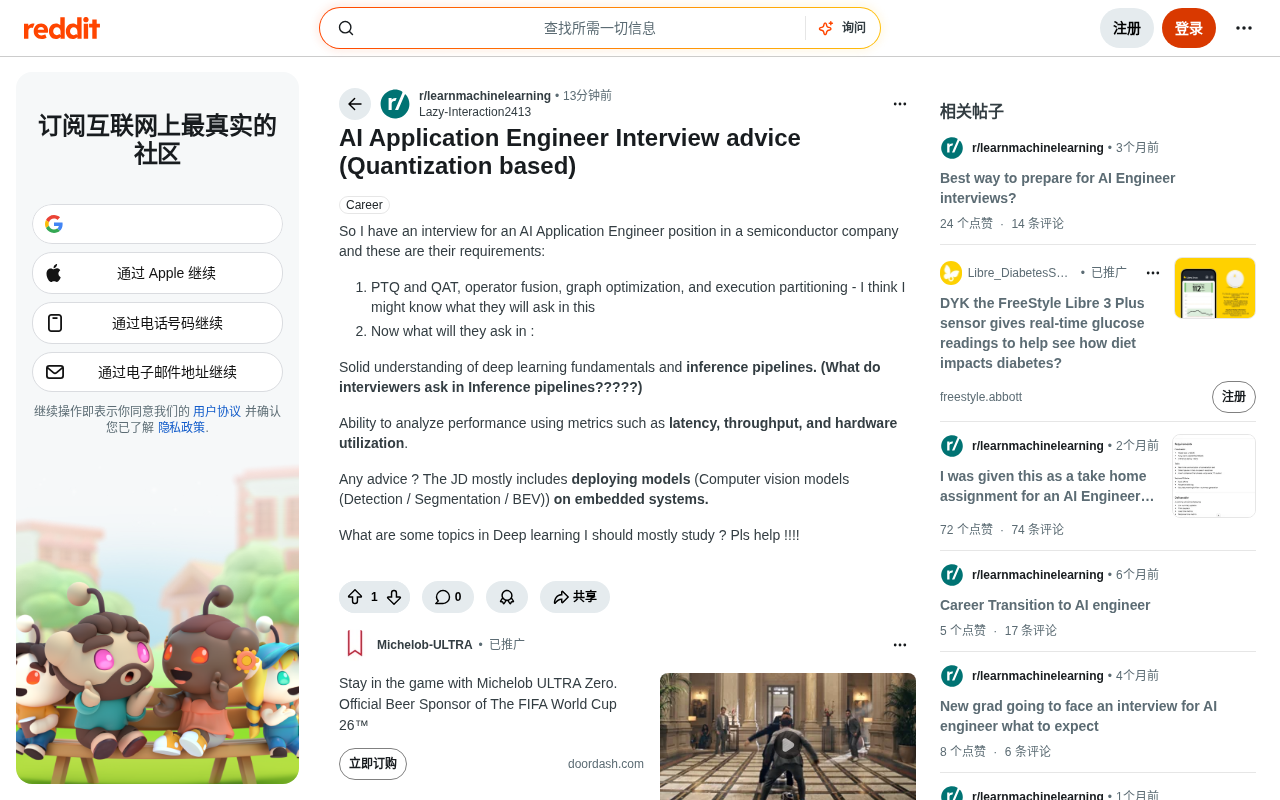
AI Application Engineer Interview Guide: Core Topics in Model Quantization and Inference Deployment
A systematic review of must-know topics for AI Application Engineer interviews: PTQ/QAT quantization, operator fusion, inference pipelines, latency/throughput analysis, and edge deployment of detection/segmentation/BEV models.
Read more →
·6 min
AI Application Engineer Interview Guide: Core Topics on Model Quantization and Inference Deployment
A systematic guide to must-know AI application engineer interview topics: PTQ/QAT quantization, operator fusion, inference pipelines, latency/throughput analysis, and edge deployment of detection/segmentation/BEV models.
Read more →

·3 min
DeepSeek's In-House AI Chip: A Critical Step Toward Breaking China's NVIDIA Dependence
DeepSeek is reportedly developing its own AI chip, moving from algorithms to hardware to achieve software-hardware co-optimization. An in-depth analysis of its strategic rationale, key challenges, and implications for China's AI industry autonomy.
Read more →

·6 min
Hands-On with Panel AI On-Premises Deployment: One-Click Enterprise Adoption and Unified Compute Cluster Scheduling
In-depth review of Panel AI v1.1.1: second-level installation, no-public-IP networking, batch compute cluster management. Learn how enterprise AI on-premises deployment barriers are dramatically lowered.
Read more →

·5 min
China Weighs Restricting Top AI Model Exports as DeepSeek Develops Its Own Inference Chip
China's Commerce Ministry weighs restricting overseas access to top open-weight AI models from Alibaba, ByteDance, and DeepSeek, while DeepSeek develops its own inference chip amid a US-China AI export standoff.
Read more →

·5 min
China Weighs Restricting Top AI Model Exports, While DeepSeek Quietly Builds Its Own Inference Chip
China's Ministry of Commerce is weighing restrictions on overseas access to top open-weight AI models from Alibaba, ByteDance, and DeepSeek. Meanwhile, DeepSeek is quietly building its own inference chip and raising ~$7B in first external funding.
Read more →