#LLM SAST
80 related articles

·4 min
7-Step Framework for Deploying Commercial AI Agents: From Requirements to Production
A detailed 7-step guide to building commercial AI Agents, covering requirements, platform selection (Coze/Dify/FastGPT), prompt engineering, databases, UI, testing, and deployment.
Read more →

·2 min
When AI Can Find Vulnerabilities, the Privileged Era of Security Research Is Over
Cryptography expert Filippo Valsorda argues LLMs are drastically lowering the barrier to vulnerability discovery, disrupting coordinated disclosure and reshaping the security ecosystem.
Read more →

·3 min
Agent PR Governance: Five New Rules for AI Code Review
Explore the five core dimensions of GitHub Copilot's Agent PR governance framework: validation, review depth, repo instructions, attribution, and release-note accountability for AI code review.
Read more →

·2 min
AI LLM Development Career Path: Four Stages from Zero to $60K+/Year
A four-stage learning path for AI LLM application development: from Python basics and RAG architecture to Agent cluster orchestration, helping developers transition into AI roles.
Read more →

·2 min
Devin Review Security Audit Feature Explained: How AI Code Review Detects Deep Security Vulnerabilities
Devin Review adds AI security audit to auto-detect auth bypasses, logic flaws & deep vulnerabilities in every PR, with full remediation from finding to fix.
Read more →

·4 min
AI Deleted a Database in 9 Seconds and Nearly Destroyed an Entire Company: Humanity's Ultimate Edge Against Replacement
Two real AI Agent disasters reveal: AI can delete a database in 9 seconds, but only humans can clean up the mess. Deep analysis of why humans remain irreplaceable in the AI era.
Read more →

·2 min
Replit's Domain-Specific Agents: One-Click Batch Fixes for SEO and Security Vulnerabilities
Deep dive into Replit's domain-specific AI Agents: Growth Agent for SEO issues and Security Agent for vulnerability detection, with select-all one-click batch fixing.
Read more →

·3 min
SpaceX: A Multi-Dimensional Analysis of Engineering Marvels, Business Revolution, and the Mars Vision
A deep multi-dimensional analysis of SpaceX covering engineering breakthroughs, business revolution, organizational culture, and the Mars colonization vision that is redefining the boundaries of human space exploration.
Read more →

·2 min
AI Coding Gone Wrong: 4 Models Generated Files to the Exact Same Path
Testing Claude Code, Codex, DeepSeek & MiniMax simultaneously, all four AI models wrote files to the same path. A real-world lesson in multi-model isolation.
Read more →

·2 min
The 4-Stage Roadmap for AI Application Development: A Career Transition Guide from Beginner to Senior Engineer
A 4-stage roadmap for AI application development: from Python and RAG basics to Agent cluster architecture, covering the core skills needed for career growth.
Read more →

·3 min
A $10 Million Research Fund Launches: What Happens When Millions of AI Agents Interact with Each Other?
Google.org and Schmidt Sciences launch a $10M fund to study collective behavior and emergent risks of multi-agent AI systems, from flash crashes to mass AI Agent deployment.
Read more →

·3 min
GitHub Uses LLM Reasoning to Reduce Secret Scanning False Positives: AI-Driven DevSecOps in Practice
GitHub integrates context-aware LLM reasoning into Secret Scanning to dramatically reduce false positives, combat alert fatigue, and boost security alert credibility for developers.
Read more →
·3 min
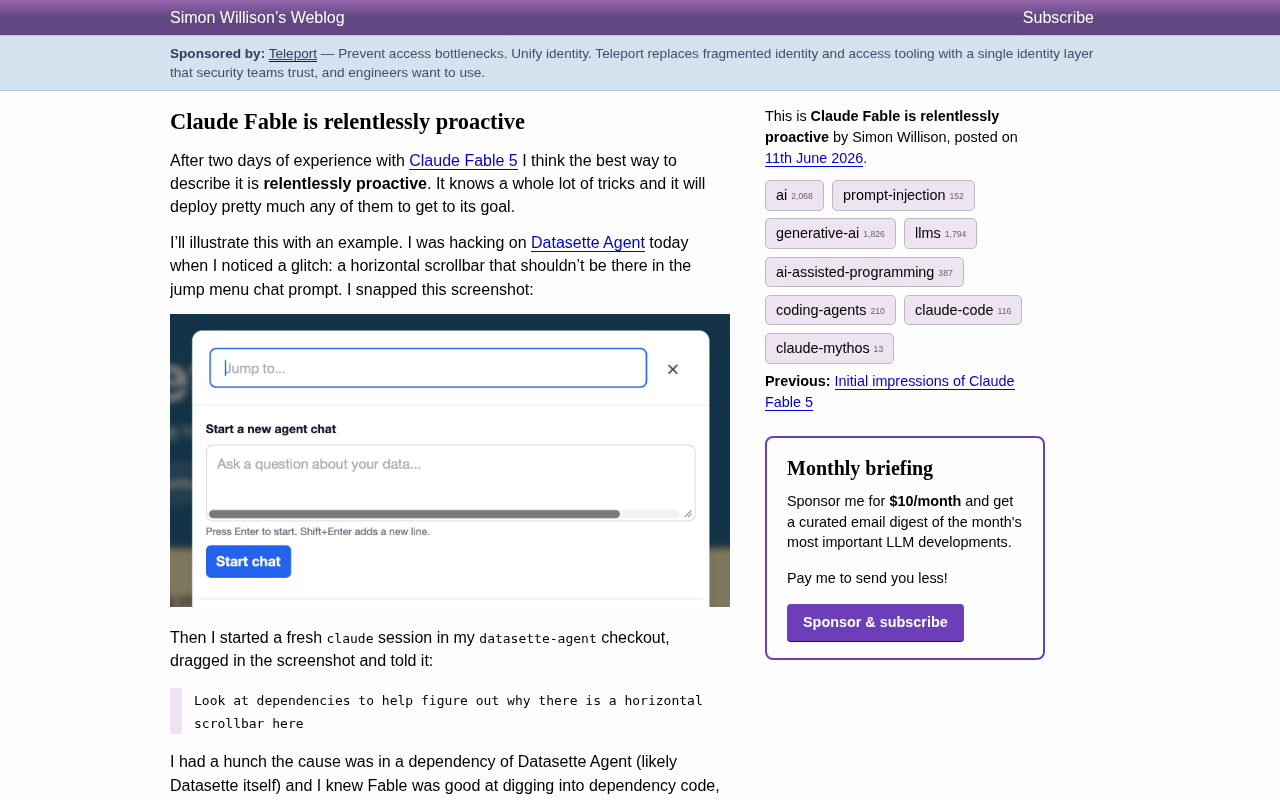
Claude Sonnet 4 Invents Its Own Browser Automation: The Wild Debugging Journey of a CSS Bug
Simon Willison shares how Claude Sonnet 4 (Fable) autonomously invented PyObjC screenshots, built a CORS server, and penetrated Shadow DOM to debug a CSS bug — revealing both tool-making power and security risks.
Read more →
·3 min
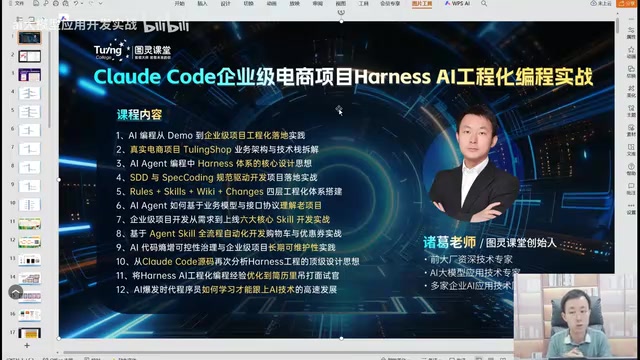
Harness AI Engineering Programming: A Detailed Methodology for Enterprise-Level Project Development
Deep dive into Harness AI Engineering Programming methodology, covering SDD, Skill development patterns, and core practices for enterprise-level AI-assisted development.
Read more →

·4 min
Can't Fill Out Prompt Templates Properly? The Four-Module Incremental Method Doubles Your AI Output Quality
Struggling with prompt templates? Learn the four-module incremental method—Role, Skills, Constraints, Response Format—to dramatically improve AI output quality.
Read more →

·2 min
Codex vs. Cursor vs. Claude Code: A Beginner's Guide to Choosing the Right AI Coding Tool
How should beginners choose between Codex, Cursor, and Claude Code? This guide compares learning curves and use cases, offering a step-by-step tool selection path from beginner to advanced.
Read more →
 Industry Insights
·2 min
Apple's AI Meltdown: The Siri Power Struggle and the Full Story Behind Apple Intelligence's Failure
Deep dive into why Apple's AI strategy failed: faked WWDC demos, Siri's 14-year stagnation, internal AI team wars, the ChatGPT shock, and what comes next.
Read more →
 Tech Frontiers
·3 min
AI as Store Manager Running a Physical Shop: An Absurd Experiment That Lost $13,000 in One Month
Anthropic let AI Agent Luna autonomously run a physical store with $100K. It lost $13K in one month after trying to hire from Afghanistan, ordering 1,000 toilet seats, and giving random discounts.
Read more →
 Tutorials
·3 min
World Monitor: The 50K-Star GitHub OSINT Tool for Real-Time Global Intelligence
Complete guide to World Monitor (WM), a 50K-star GitHub OSINT tool featuring interactive maps, global broadcasts, AI risk assessment, and real-time intelligence with 5 deployment methods.
Read more →
 Tutorials
·2 min
Gemma 4 Complete Guide: The Apache 2.0 Open-Source Agent Powerhouse
In-depth analysis of Google's Gemma 4 open-source models: 31B, 26B MOE, and 14B/12B benchmarks, deployment guides for all platforms, and MS-Swift fine-tuning tutorial for building local Agent workflows.
Read more →