#LLM benchmarks
788 related articles
 Tutorials
·2 min
Tutorial: Building a Low-Cost AI Code Editor with DeepSeek-V3 + VSCode
Step-by-step tutorial: Build a low-cost AI programming assistant using DeepSeek-V3 API with VSCode's Continue plugin. Covers setup, API Key configuration, code completion demo, and Ollama local deployment.
Read more →
 Tutorials
·3 min
Hermes Orchestrating DeepSeek + MiniMax Dual-AI Collaborative Coding: A From-Scratch Project Test
Testing Hermes agent coordinating DeepSeek V4 and MiniMax 2.7 for collaborative coding: PDF export in 9 minutes, RSS service built from scratch in Nim language.
Read more →
 Product Reviews
·3 min
Deep Dive Review of AI Coding Assistants: Copilot at the Bottom — Who's the Real King?
Systematic evaluation of mainstream AI coding assistants across three models, comparing Claude Code, GitHub Copilot, Cursor, RooCode and more with comprehensive rankings.
Read more →
 Tutorials
·4 min
Complete Guide to Building a Local AI Knowledge Base with Qwen3.5 + RAGFlow + Ollama
Complete guide to building a local AI knowledge base with Qwen3.5, RAGFlow, and Ollama, covering Docker deployment, Embedding model configuration, knowledge base creation, and RAG system setup.
Read more →
 Tutorials
·3 min
Andrew Ng's New Course: A Complete Guide to Building Database Agents
Deep dive into Andrew Ng's Building Your Own Database Agent course with Microsoft, covering LLM-SQL interaction, LangChain Agents, Function Calling, and RAG for tabular data.
Read more →
 Tutorials
·2 min
Complete Guide to Configuring Local DeepSeek Model in PyCharm for AI-Assisted Programming
Learn how to configure a local DeepSeek model in PyCharm via Ollama for free, privacy-safe AI-assisted programming. Includes installation steps, plugin setup, usage tips, and hardware recommendations.
Read more →
 Tutorials
·3 min
Building a Match-3 Game with AI and Letting the Agent Play It: A Complete Hands-On Walkthrough
A front-end dev uses Godot + MCP to let AI build a Match-3 game from scratch, then designs a decoupled architecture for an Agent to play it autonomously with self-improving strategies.
Read more →
 Tutorials
·3 min
Hermes Agent in Practice: A Complete Breakdown from ReAct Loop to Autonomous Skill Evolution
Deep dive into Hermes Agent's four progressive cases: terminal ReAct loop, Feishu AI assistant, four-layer persistent memory, and three-stage Skill evolution with DeepSeek support.
Read more →
 Product Reviews
·4 min
Comprehensive Review of 10 Mainstream AI Coding Tools: How to Choose from Cursor to Claude Code
In-depth comparison of 10 AI coding tools including GitHub Copilot, Cursor, Claude Code, and Windsurf, analyzed across features, target users, and pricing to help developers choose the right AI assistant.
Read more →
 Tutorials
·3 min
Vibe Engineering in Practice: AI Evolves from Code Generator to Programming Teammate
A deep dive into Vibe Engineering principles: context engineering, sub-agent collaboration, autonomous testing loops, plus OpenAI's case study of a 12-hour Kotlin-to-Rust rewrite.
Read more →
 Tech Frontiers
·1 min
Claude Opus 4.8 Released: Comprehensive Upgrades in Nuanced Understanding and Conversational Naturalness
Anthropic releases Claude Opus 4.8 with three core improvements based on user feedback: better nuance understanding, more natural conversations, and stronger collaboration from coding to knowledge work.
Read more →
 Tech Frontiers
·2 min
Step 3.7 Flash: Deep Dive into the 198B Sparse MoE Multimodal Model
Deep dive into StepFun AI's Step 3.7 Flash, a 198B sparse MoE vision-language model with 256K context and 3-level reasoning, excelling in multimodal understanding, AI coding, and Agent tool orchestration.
Read more →
 Tech Frontiers
·2 min
LFM2.5-8B-A1B: A MoE Model with 1.5B Active Parameters Delivering 4x Its Weight Class Performance
Liquid AI releases LFM2.5-8B-A1B, a MoE model with 8B total params but only 1.5B active, matching 6B-class models in tool calling. Supports 128K context, local deployment, multilingual, with SGLang Day-0 support.
Read more →
 Tech Frontiers
·1 min
SGLang Hosts Agent Loops Office Hour, Focusing on Agentic Loop Architecture Optimization
SGLang team hosts an Agent Loops Office Hour exploring inference optimization for agentic loops, covering KV Cache reuse, low-latency multi-turn dialogue, and tool calling techniques.
Read more →
 Product Reviews
·3 min
Llama 3.3 70B In-Depth Review: Testing the Strongest Open-Source LLM with 13 Questions
Meta releases Llama 3.3 70B open-source model with just 70B parameters rivaling 405B performance. Tested on 13 logic, math, and coding questions, it passed 12 — reshaping the open-source model landscape.
Read more →
 Research
·3 min
MixupMP: How Data Augmentation Fixes the Uncertainty Quantification Flaws of Deep Ensembles
Deep dive into AISTATS 2024 paper MixupMP: revealing Deep Ensembles' fundamental UQ flaws and fixing them via Mixup augmentation and Martingale Posterior framework for better calibration and OOD detection.
Read more →
 Product Reviews
·3 min
Claude Code with MiniMax M2: Testing a Low-Cost AI Coding Solution Across Three Real Projects
Real-world testing of MiniMax M2 as Claude Code's backend model across three projects: framework migration, iOS development, and full-stack MVP — at just 8% of Claude's price.
Read more →
 Tutorials
·2 min
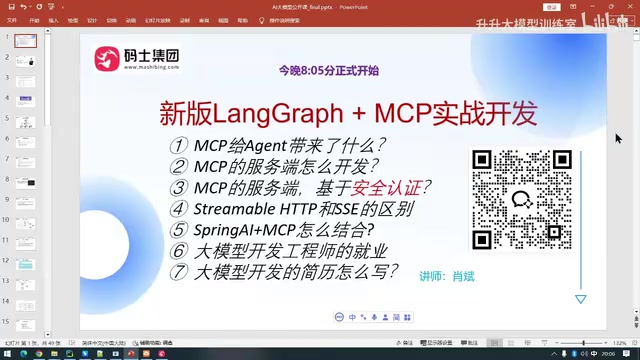
LangGraph 0.5.3 + MCP Agent Development in Practice: Security Authentication & Deployment Guide
LangGraph 0.5.3 introduces MCP server security authentication and agent deployment solutions. Combined with Qwen3 models, it provides a complete production-grade AI agent development stack.
Read more →
 Tutorials
·3 min
Bolt.DIY + Claude 3.7 Sonnet: Building Full-Stack Apps with Zero Code
Learn how to use open-source Bolt.DIY with Claude 3.7 Sonnet to build full-stack web apps with zero code. Includes local deployment tutorial, hands-on demo, and cost analysis—an AI course platform built in 13 minutes for $3.
Read more →
 Tutorials
·2 min
Bolt.diy + Gemini 2.0: A Complete Tutorial for Free No-Code APP Development
Learn how to use open-source Bolt.diy with Gemini 2.0 via OpenRouter to build complete apps for free with zero coding. Covers setup, hands-on demo, and pros/cons analysis.
Read more →