#LLM inference bottleneck
614 related articles

·2 min
Cursor Receives Investment from SpaceX and xAI — AI Coding Tools Enter a New Era of Computing Power
Anysphere, the company behind AI coding tool Cursor, secures investment from SpaceX and xAI, gaining world-class computing resources to reshape the AI coding landscape.
Read more →
·3 min
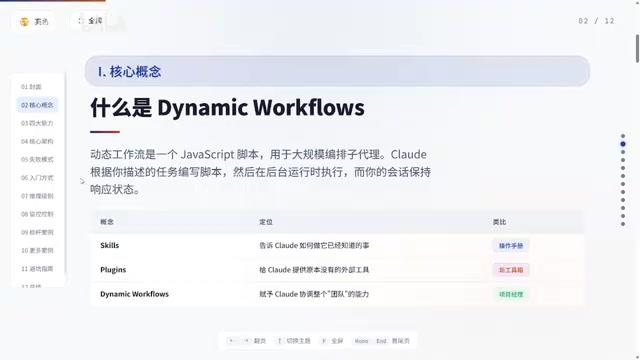
Claude Code Dynamic Workflows: Orchestrating Hundreds of Sub-Agents Working in Parallel
Deep dive into Claude Code Dynamic Workflows: enable parallel sub-agent orchestration via three methods for multi-agent collaboration and automated pipelines.
Read more →

·1 min
DiffusionGemma: Google's Open-Source Diffusion Language Model with 4x Faster Inference
Google releases DiffusionGemma, an open-source diffusion language model achieving up to 4x faster inference and real-time self-correction by generating text in parallel rather than token by token.
Read more →

·3 min
Compile First: Using AI to Revive the Dormant Files on Your Hard Drive
Explore how the open-source LLM Wiki project uses a compile-first paradigm to turn dormant local files into a searchable AI knowledge base, compared with traditional RAG approaches.
Read more →

·3 min
The Ultimate Guide to Squeezing Every Drop from Mythos/Fable: Burning Through $8,000 in Inference Credits in 10 Days
Deep dive into maximizing Anthropic's Fable/Mythos model: 5-hour limit workarounds, dual account rotation, multi-Agent orchestration, and Mac Mini remote deployment to get $8,000 of inference from a $200 subscription.
Read more →

·3 min
Planning with Files: Solving AI Coding's "Amnesia" Problem with Three Files
Planning with Files uses three Markdown files and Hooks to solve the context loss problem in AI coding tools like Claude Code and Cursor during long tasks.
Read more →

·3 min
Spring AI + Ollama: Run Large Language Models Locally at Zero Cost
Learn how to integrate Spring AI with Ollama to run open-source LLMs like Llama and Gemma locally for free. Covers setup, configuration, and code — switch from OpenAI by just changing dependencies.
Read more →

·3 min
Claude-mem: The Open-Source Memory System That Stops AI from Forgetting
Claude-mem is an open-source AI memory tool that gives Claude Code, Codex, and other AI coding assistants cross-session memory via semantic compression and vector retrieval — just 50 tokens of overhead, fully local storage.
Read more →

·2 min
MiniMax M3 Launches on Fireworks: 512K Context and MSA Sparse Attention Explained
MiniMax M3 launches on Fireworks with 512K context and multimodal input. MSA sparse attention delivers 9x prefill and 15x decode speedups. Deep dive into architecture, pricing, and open-model competition.
Read more →
·3 min
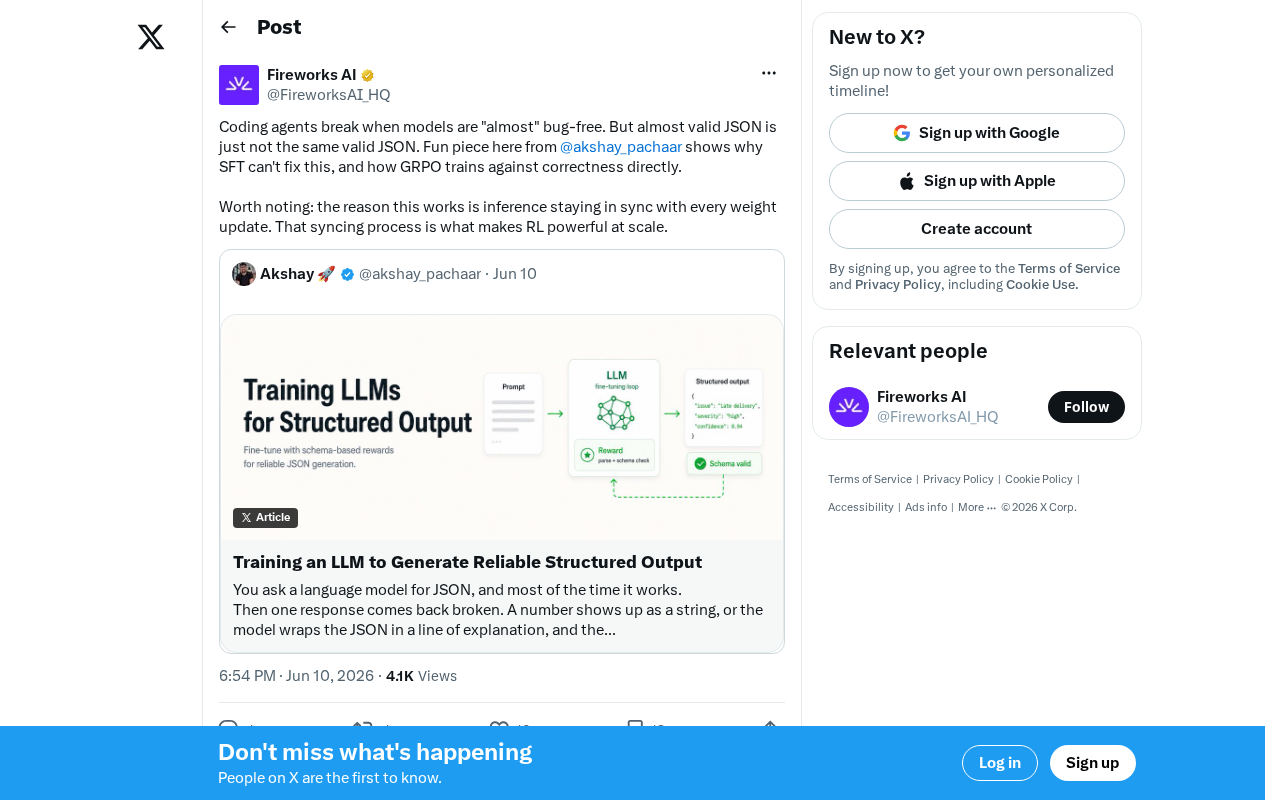
Why SFT Can't Fix the Root Cause of JSON Errors: How GRPO Correctness Training Breaks Through Coding Agent Bottlenecks
Analysis of why SFT can't fix coding agent JSON errors and how GRPO's binary reward signals and synchronized weight updates train directly for correctness.
Read more →

·3 min
Deploying a Multimodal AI Agent Locally on a 3080Ti: VRAM Management and a Deep Dive into All Five Modules
A detailed guide to deploying a multimodal AI Agent on a 3080Ti with 12GB VRAM, covering LLM, STT, TTS, image and video generation module selection, dynamic VRAM loading, and real-world performance.
Read more →

·4 min
5 Models Coding Showdown: Claude, GPT, DeepSeek, M3 — Who's the Best Engineering Tool?
Hands-on comparison of Claude Opus 4.8, GPT 5.5, MiniMax M3, DeepSeek V4 Pro, and Mimo 2.5 Pro across SVG drawing, 3D game generation, elevator scheduling, and real bug fixing.
Read more →

·2 min
DiffusionGemma: Google's Open-Source Diffusion Language Model Exceeding 500 Tokens/s
Google releases DiffusionGemma, an open-source diffusion language model with Apache 2.0 license. The 26B-parameter MoE model achieves over 500 tokens/s in real-world tests.
Read more →

·3 min
Andrew Ng's New Course Explained: A Practical Guide to Using OpenAI's O1 Reasoning Model
Deep dive into Andrew Ng and OpenAI's Reasoning with O1 course covering test-time scaling, new prompting paradigms, multi-model orchestration, and practical applications for developers.
Read more →

·3 min
Claude Code Installation Guide & The Five Stages of AI Programming Tools Explained
Complete Claude Code installation guide with the five stages of AI programming tools, from manual coding to agents. Learn 0-to-1 project building and 1-to-100 iteration challenges.
Read more →

·3 min
Codex vs Claude Code: An In-Depth Comparison of AI Coding Agents
In-depth comparison of Codex, Claude Code, and Cursor across pricing, features, GitHub integration, and team collaboration to help developers pick the best AI coding agent.
Read more →

·2 min
Nex N2 Pro Real-World Testing: Top 5 on Official Benchmarks, Only 12th in Independent Tests
Deep-dive testing of Nex N2 Pro open-source Agent model comparing official benchmarks vs independent results. The 397B parameter model shows decent frontend generation but ranks 12th independently, not top 5 as claimed.
Read more →

·2 min
A Complete Guide to LLM Infrastructure: Core Challenges from GPU Clusters to Inference Optimization
A deep dive into core challenges and key technologies for LLM infrastructure, covering GPU cluster management, inference optimization, distributed training, cost control, and observability.
Read more →

·3 min
Headroom: The Open-Source Compression Tool That Cuts AI Agent Token Costs by 10x
Headroom is an open-source token compression tool by a Netflix engineer that achieves 60%-95% token savings for AI coding tools through intelligent category-based compression.
Read more →

·3 min
LFM2.5 Local Deployment Hands-On: An 8B Parameter Model That Outperforms GPT-o3s in Tool Calling
Hands-on test of Liquid AI's LFM2.5 local deployment: architecture breakdown, 16GB VRAM troubleshooting, and GraphRAG tool-calling benchmarks vs GPT-o3s.
Read more →