#LLM vs agent
1000 related articles
 Tutorials
·3 min
LangGraph Multi-Agent Architecture: Core Principles and Enterprise-Level Implementation Guide
Deep dive into LangGraph multi-agent architecture covering Graph structure principles, MCP service integration, Time Travel debugging, and supervised multi-agent enterprise implementation patterns.
Read more →
 Tutorials
·2 min
Cursor AI in Practice: Building a Proxy IP Switching Browser in 10 Minutes
A detailed walkthrough of using Cursor AI with the FBro framework to build a proxy IP switching browser from scratch in 10 minutes, covering setup, prompt design, code generation, and proxy testing.
Read more →
 Tutorials
·2 min
Cursor Installation & Setup Guide: AI-Powered Python Project Development Demo
Complete guide to Cursor AI installation, interface layout, four AI modes, and a hands-on demo building a Python student management system from natural language in minutes.
Read more →
 Product Reviews
·3 min
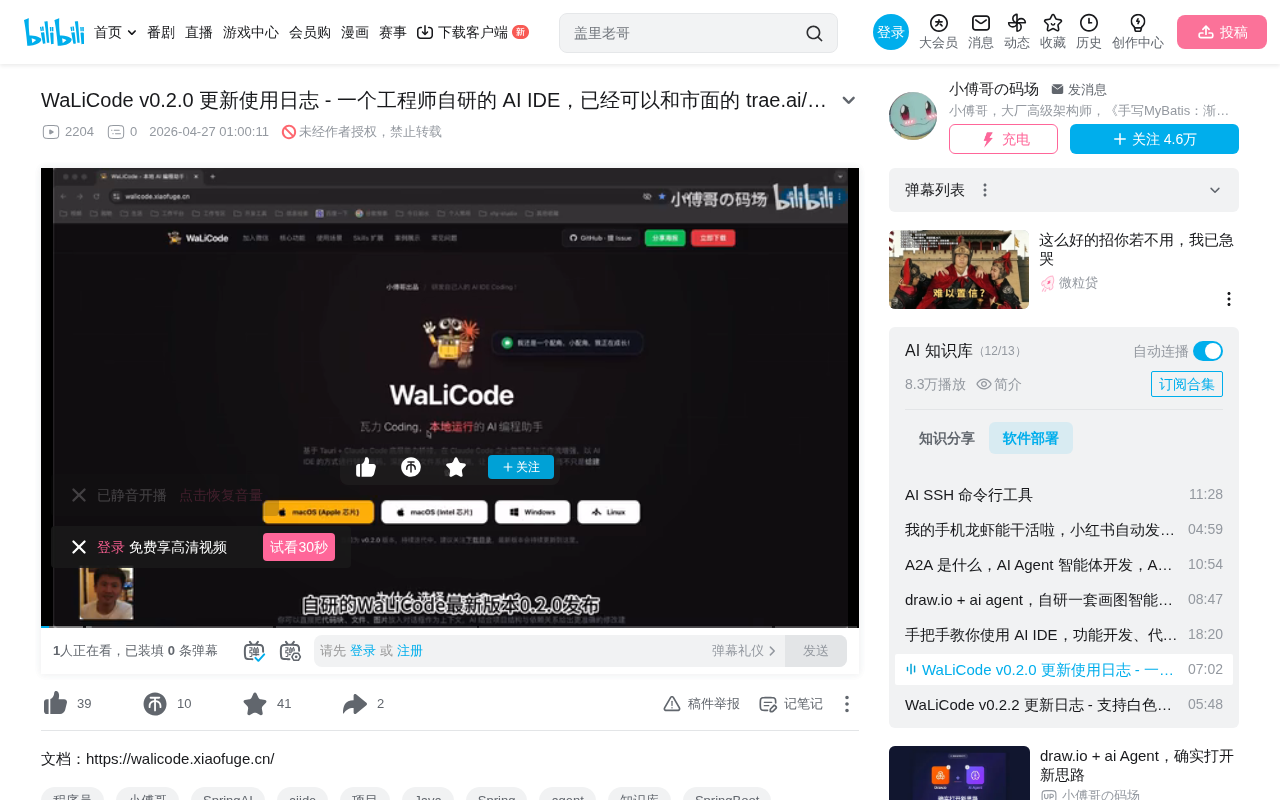
WaLiCode v0.2.0: Indie AI IDE Adds Multi-Project Chat and Task Decomposition
Indie developer releases AI IDE WaLiCode v0.2.0 with multi-project chat, task decomposition mode, and Ollama local model support, addressing pain points in mainstream AI IDEs.
Read more →
 Tutorials
·3 min
Cursor AI Beginner Tutorial: Rules Configuration & Agent Mode Practical Guide
Complete guide to Cursor AI installation, rules file configuration, and Agent mode in action. Master project-level and global rules setup to drive AI programming with natural language and boost coding efficiency.
Read more →
 Product Reviews
·3 min
Devin 2.0 In-Depth Review: Is the $20/Month AI Coding Agent Actually Worth It?
In-depth analysis of Devin 2.0: dropped from $500 to $20/month, 12x efficiency in code migration, but only 15% completion on complex tasks. Real test data on use cases and limitations.
Read more →
 Research
·3 min
110K PRs Tested: Which of 5 AI Coding Agents Is Most Reliable?
Empirical study of 110K open-source PRs comparing 5 AI coding agents (GitHub Copilot, Claude Code, Devin) on merge rates, code survival, and long-term maintainability—revealing AI code's 50% one-year survival rate.
Read more →
 Product Reviews
·3 min
Pair AI Integrates 6 Major Tools to Build an AI Coding Super Editor
Pair AI natively integrates 6 AI coding tools—Roo Code, SuperMaven, Perplexity, Memo, Continue—into one editor starting at $15/month, competing with Cursor and Windsurf.
Read more →
 Product Reviews
·3 min
AI Coding Tools Deep Dive: How to Choose Between Qoder, Cursor, Windsurf, and Devin
Deep comparison of Qoder, Cursor, Windsurf, and Devin across autonomy, reliability, and context capabilities to help developers choose the right AI coding assistant.
Read more →
 Tutorials
·3 min
Complete Vibe Coding Tutorial: 15 Key Steps to Building an AI Agent from Scratch
A systematic breakdown of 15 key steps for building AI Agents with Vibe Coding, covering environment setup, product docs, frontend UI, backend APIs, databases, and deployment.
Read more →
 Deep Dives
·3 min
Claude Sub-agents vs Agent Teams: How to Choose Between Two AI Multi-Agent Collaboration Patterns
Deep comparison of Claude sub-agents vs agent teams: architecture differences, use cases, and real-world results. A Pokémon RPG case study shows how agent teams achieve 95%+ feature completeness.
Read more →
 Tutorials
·2 min
Claude Code Sub-Agent: A Practical Guide to Multi-Agent Collaboration for Enhanced Development Efficiency
Deep dive into Claude Code Sub-Agent mechanism with a practical blog writing + Git commit case study, showing how multi-agent collaboration solves instruction loss and context bloat issues.
Read more →
 Tutorials
·2 min
LangGraph vs LangChain: How to Choose Your Agent Development Framework
In-depth comparison of LangGraph vs LangChain: controllability, extensibility, and FastAPI-powered performance. Covers storage, enterprise private deployment, and migration guidance for agent developers.
Read more →
 Tutorials
·3 min
From Programmer to Agent Developer: A Detailed Four-Stage Learning Roadmap
A systematic four-stage learning roadmap for programmers transitioning to AI Agent development, covering core theory, ReAct and classic paradigms, Prompt engineering, and hands-on projects.
Read more →
 Product Reviews
·3 min
Qwen 3.6 vs Gemma 4: In-Depth Comparison of Local AI Coding Models Through Real-World Development
Real-world comparison of Qwen 3.6 and Gemma 4 local AI models building a Markdown editor with Tauri, testing planning ability, code generation, and development efficiency.
Read more →
 Product Reviews
·2 min
Kimi K2.6 In-Depth Review: Comprehensive Evaluation of Coding, Multi-Agent, and Frontend Development Capabilities
In-depth review of Kimi K2.6 open-source model across frontend development, multi-agent collaboration, and long-horizon tasks, covering four professional modes, 3D/SVG generation, and pricing analysis.
Read more →
 Tutorials
·3 min
The Complete Guide to Claude Code: From Personal Assistant to AI Agent Development
A systematic breakdown of the Complete Guide to Claude Code course, covering context engineering, MCP protocol, claude.md configuration, multi-Agent architecture, and three progressive projects.
Read more →
 Product Reviews
·3 min
Gemini 3.1 Pro vs Claude Opus 4.6: Five Real-World Tests to Determine the Winner
Hands-on comparison of Gemini 3.1 Pro vs Claude Opus 4.6 across five real-world tests including SVG generation, interactive components, website building, and complex reasoning, with practical usage recommendations.
Read more →
 Tutorials
·3 min
Frontend Engineers Leveling Up to AI Agents: LangGraph.js Architecture Design & Practical Guide
How can frontend engineers advance into AI Agent development? This guide covers LangGraph.js core architecture (state, nodes, edges), LangChain comparison, and workflow agent design with practical examples.
Read more →
 Tutorials
·2 min
The Three-Layer Pyramid Model for Agent Development: From Beginner to Industrial-Grade Deployment
Deep dive into the Three-Layer Pyramid Model for Agent development, covering autonomous agents, collaborative multi-agent systems, and universal orchestration agents with a complete learning path from beginner to industrial-grade deployment.
Read more →