302 related articles
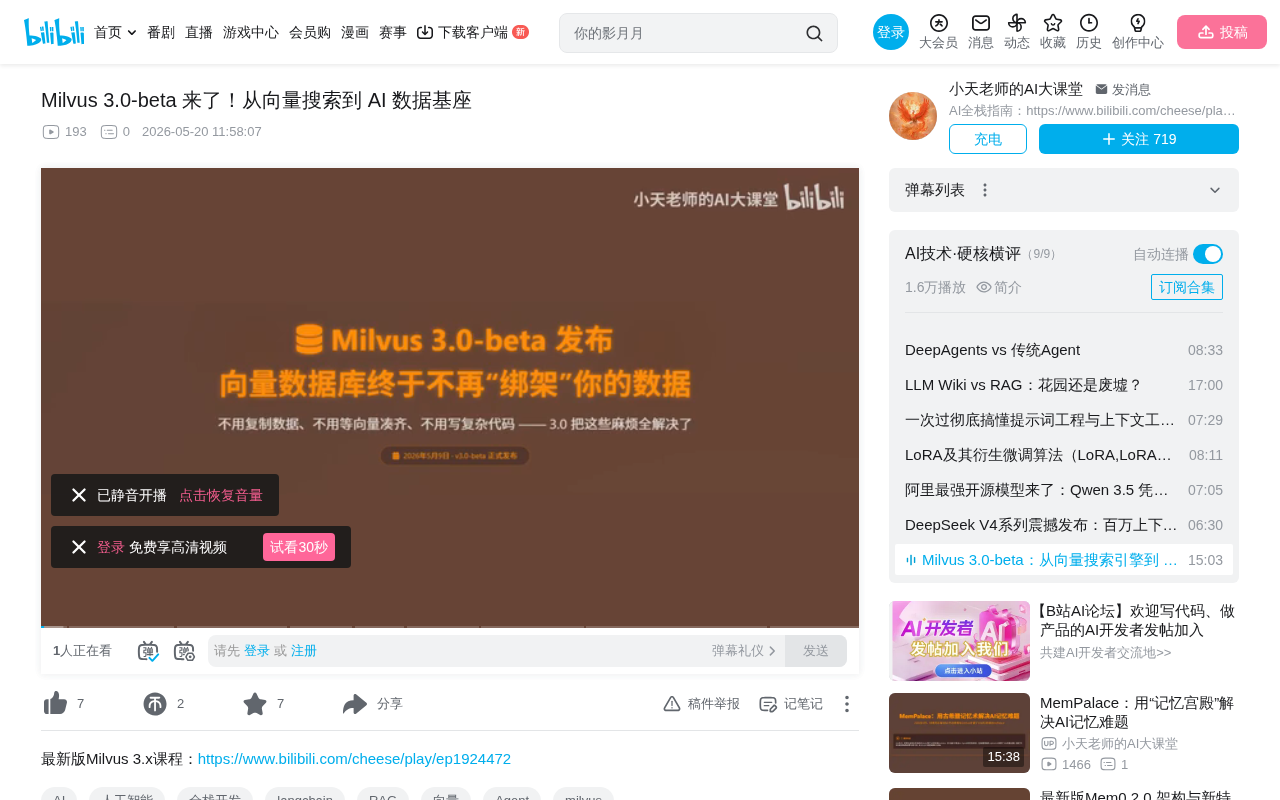
Product ReviewsDeep dive into Milvus 3.0-beta's ten core features: External Collection zero-copy queries, Snapshot read-write isolation, Order By aggregation, entity-level TTL, Storage V3 engine, and more.
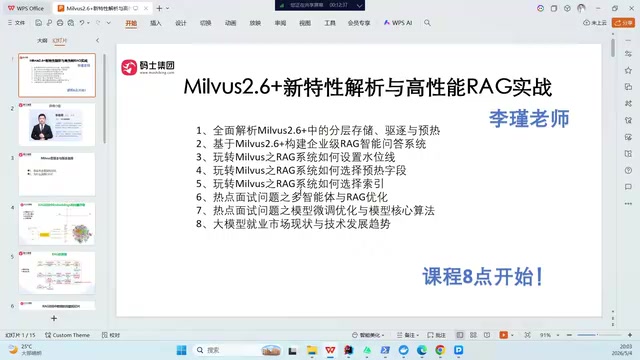
TutorialsDeep dive into Milvus 2.6.x core features including tiered storage, eviction strategies, warmup mechanisms, cloud-native architecture design, and key optimization strategies for building high-performance RAG systems.

Hubbele is an open-source note-taking app designed for both humans and AI Agents, supporting self-hosted deployment. This article analyzes its Agent-native design philosophy and implications for the future of knowledge management.

Explore Harness Engineering: the next evolution beyond context engineering for AI programming. Learn how to build enterprise-grade Skill systems and deliver real projects with mid-tier models.

A systematic breakdown of the AI LLM learning roadmap covering prompt engineering, AI Agent development, RAG knowledge bases, model fine-tuning, and hands-on projects for beginners.

How to learn AI Agent development from scratch? This article outlines a clear 3-step path: Python crash course, LLM theory & practice, and LangChain framework project implementation.

Complete guide for backend developers transitioning to AI/LLM engineering. Covers the 4 core skills—Python, RAG, Fine-tuning, and Agents—with a phased learning roadmap and practical project advice.

Deep dive into Spring AI framework's core features including provider-agnostic unified API abstraction, RAG retrieval-augmented generation, and structured output to help Java developers build enterprise AI apps.

Deep dive into Spring AI framework's core features including provider-agnostic unified API abstraction, RAG retrieval-augmented generation, and structured output to help Java developers build enterprise AI apps.

Deep dive into Agent skill routing: comparing pure model vs. pure retrieval approaches, with a detailed two-stage layered architecture balancing accuracy, latency, and cost.

Build an enterprise RAG knowledge base Q&A system using Spring AI 2.0, Cursor AI programming, Ollama local deployment, and Redis vector storage. Runs on just 4GB VRAM.

A comprehensive guide to AI Agent architecture and development, covering automated marketing, intelligent customer service, and investment analysis scenarios with single and multi-agent collaboration.

How to learn AI Agents from scratch? This guide covers two clear paths: developers go from Python to LLMs to open-source framework source code; practitioners use Claude Code or similar tools to get results fast.

Learn AI Agent core principles from scratch: understand how Agents differ from LLMs, their execution mechanisms, why rule design matters, and find the right learning path for your goals.

A deep dive into LLM Agent frameworks covering RAG, Agent core components (tools, memory, planning), and Agent Tuning workflows with cost considerations for production deployment.

A systematic guide to AI Agent development covering core modules, framework selection, tool calling, data preparation, and production deployment to help developers build production-ready Agent applications.

A beginner's guide to AI Agents: understand core principles, how Agents differ from LLMs, their execution mechanisms, and get tailored learning path recommendations.

Deep breakdown of 4 core AI Agent engineer competencies: business decomposition, multi-Agent architecture, quantitative evaluation, and engineering delivery—bridging the gap from Demo to production.

A systematic guide to AI Agent development across four stages: LLM fundamentals, ReAct paradigm, memory & tools, and multi-agent collaboration for developers.

A fresh grad interviewing for a GenAI Trainer role faced prime number coding and activation function questions while the interviewer used Gemini to generate questions live — exposing AI hiring chaos.