#RAG memory system
3131 related articles
 Industry Insights
·3 min
Risks of AI Account Rotation Tools Exposed: Security Threats Behind the Gray Market
Deep dive into how AI quota-cracking tools work, exposing the legal, compliance, and data security risks behind account rotation gray markets, with legitimate alternatives like API pay-per-use and subscription upgrades.
Read more →
 Tutorials
·3 min
Claude Code MCP Server Tutorial: Project-Level vs Global-Level Configuration Guide
Complete guide to adding MCP Servers to Claude Code in VSCode, covering stdio and HTTP connections, plus project-level vs global-level configuration with step-by-step instructions.
Read more →
 Tutorials
·4 min
Claude Code Installation & Configuration Pitfall Guide: From Environment Setup to Running Your First Command
Complete Claude Code installation guide covering Node.js setup, Git Bash config, network proxy settings, and API key management to help developers avoid common pitfalls.
Read more →
 Tutorials
·2 min
One Month Until CAICP Certification: A Zero-to-Hero Python Sprint Guide
With one month until the CAICP AI certification exam, this guide offers a Python sprint strategy for beginners and C++ developers, covering a 4-week study plan, training options, and fees.
Read more →
Deep Dives
Survival Strategies in Extreme Environ…
·2 min
Survival Strategies in Extreme Environments: A Complete Guide to Nature's Adaptive Wisdom
Explore animal survival strategies in extreme environments: from snow leopard cliff hunts to polar bear adaptation, orca teamwork to desert thermal limits — revealing nature's adaptive wisdom.
Read more →
 Deep Dives
·3 min
CodeRAG Technical Deep Dive: Four Core Components That Help AI Truly Understand Your Codebase
Deep dive into CodeRAG's four core technologies: vector similarity search, file system tools, Code Knowledge Graph (CKG), and DeepWiki — how they work together to help AI coding assistants truly understand enterprise codebases and eliminate hallucinations.
Read more →
 Tutorials
·2 min
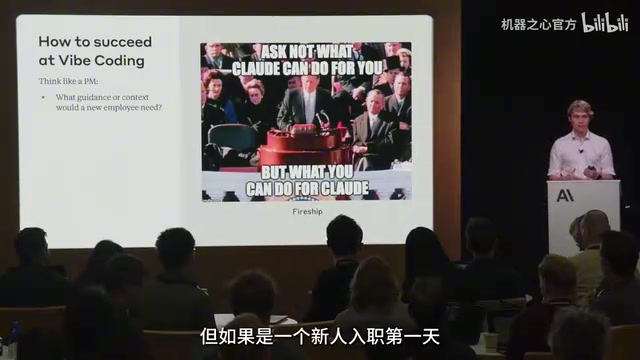
Anthropic Engineer Shares Four Golden Rules for Vibe Coding
Anthropic's coding agent lead shares four core principles for Vibe Coding in production: be AI's product manager, use it at leaf nodes, focus on verifiability, and embrace exponential growth.
Read more →
 Tutorials
·3 min
Vibe Engineering in Practice: AI Evolves from Code Generator to Programming Teammate
A deep dive into Vibe Engineering principles: context engineering, sub-agent collaboration, autonomous testing loops, plus OpenAI's case study of a 12-hour Kotlin-to-Rust rewrite.
Read more →
 Tutorials
·3 min
Review of a 648-Episode Complete Python Tutorial: Is It Worth Learning from Zero to AI Applications?
In-depth review of a 648-episode Python tutorial on Bilibili, analyzing its three-stage course structure, resource quality, and learning effectiveness with practical study tips for beginners.
Read more →
 Tutorials
·3 min
Building an AI Behavior Tree from Scratch: Python Window Capture Module Development Log
Detailed development log of a window capture module for an AI behavior tree game automation project, covering Python environment setup, OOP refactoring, and modular architecture design.
Read more →
 Industry Insights
·4 min
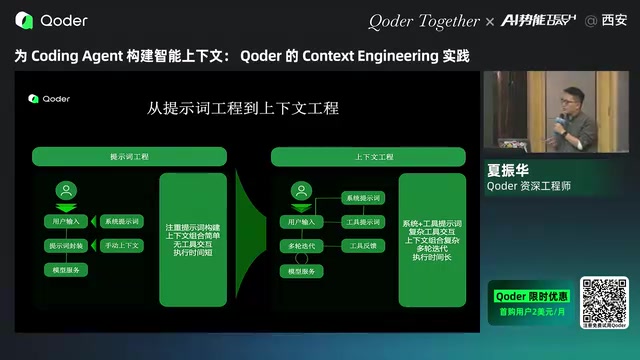
Qoder's Context Engineering in Practice: Four-Layer Retrieval Engine and Memory System Architecture
Deep analysis of Qoder's (Tongyi Lingma international edition) context engineering architecture, including its four-layer retrieval engine, memory engine, context caching, and core product design.
Read more →
 Product Reviews
·3 min
Ruflo: A Multi-Agent Orchestration Solution That Turns Claude Code into a 100-Person AI Team
Ruflo is an open-source multi-agent orchestration platform that upgrades single-threaded Claude Code into a distributed AI dev team with 100+ specialized Agents and a SANA self-learning engine.
Read more →
 Tech Frontiers
·2 min
Opus 4.8 Lands on Cosmos: Breaking Down Its Long-Running Autonomous Task Execution
Claude Opus 4.8 launches on Cosmos with multi-hour autonomous task execution, end-to-end ticket-to-PR workflows, and deep Linear/Sentry integration, marking a new era for AI coding assistants.
Read more →
 Product Reviews
·2 min
Agent Memory: Giving AI Coding Agents Persistent Memory Across Sessions
Agent Memory is an open-source local memory layer providing persistent, cross-session, cross-tool long-term memory for AI coding agents like Claude Code, Cursor, and Codex.
Read more →
 Tutorials
·3 min
The Right Way for Beginners to Build Products with AI: The Iterative Build Loop Explained
Vibe Coding isn't just chatting with AI. Learn the Iterative Build Loop: Discuss, Document, Develop, Learn — with VS Code and Claude Code to build products from scratch.
Read more →
 Tech Frontiers
·2 min
Gemini Spark Officially Launches: Google Builds a Cross-Service AI Action Assistant
Google Gemini Spark launches for AI Ultra subscribers. This intelligent action assistant works across apps, shifting AI from information provider to task executor. Deep dive into its capabilities and competitive edge.
Read more →
 Tutorials
·3 min
35 Lines of Prompts Let Codex Auto-Optimize Your Workflow — Reposted by OpenAI's President
An OpenAI employee used just 35 lines of prompts to have Codex analyze 30 days of work history, identify repetitive tasks, and generate reusable automated Skills. Combined with screen reading and long-term memory, Codex is becoming a proactive workflow optimization agent.
Read more →
 Tutorials
·3 min
A Complete Guide to Using AI Agents for Product Launch Videos, Growth Marketing, and Business Plans
How to use AI Agents for product launch videos, multi-platform growth marketing, and business plan writing — a complete workflow for indie developers building one-person companies.
Read more →
 Tech Frontiers
·2 min
OpenAI Voice Hackathon: 4 Real-Time Voice AI Projects Built in Just 6 Hours
OpenAI hosted Voice Hack Night where teams built 4 real-time voice agent projects in 6 hours. Deep analysis of technical challenges, use cases, and developer ecosystem trends in real-time voice AI.
Read more →
 Tutorials
·3 min
Build a Claude Code Agentic OS in 3 Steps — Stop Using AI Like a Slot Machine
Learn how to transform Claude Code from a random prompting tool into a systematic Agentic OS through three layers: architecture, Obsidian memory, and an observability dashboard.
Read more →