#SRE for AI Agents
70 related articles

·4 min
MCP + Skill in Practice: A Guide to Building an Automated Enterprise Regulatory Risk Alert System
A detailed guide on building an automated enterprise regulatory risk alert system using MCP protocol and Agent Skill, covering data collection, six evidence thresholds, applicability judgment, actionable measures, and delivery via Feishu/email.
Read more →

·4 min
Theo's Practical Methodology for Optimizing Claude Coding Agents: AGENTS.md and Skills Configuration Guide
Deep dive into how developer Theo optimizes AI coding agents through AGENTS.md, CLAUDE.md, and Skills files for Claude Code and Codex, covering global config, skill reuse, example-driven teaching, and data-driven optimization.
Read more →

·4 min
AI Reshaping the Software Industry: A New Era Where Everyone Can Be a Builder
AI coding tools are lowering software development barriers, enabling more people to become builders. This article analyzes SaaS disruption, agent-driven internet, personal brand rise, and how AI reshapes the future of software.
Read more →

·3 min
Argos: The AI Agent That Operates Your Browser for You
Argos is a browser AI agent that automatically performs real tasks like clicking and filling forms within your logged-in accounts. It supports Gmail, Google Docs, GitHub, and more with local data processing.
Read more →

·3 min
AI Agents from Writing Code to Deployment: Real-World Challenges and Solutions for Workflow Implementation
AI coding assistants excel at code generation, but a huge gap remains between writing code and deployment. This article analyzes the core challenges AI Agents face in deployment and explores practical solutions like GitOps and sandboxed execution.
Read more →

·3 min
The Blind Spot of the AI Automation Era: Human Exhaustion Is the Greatest System Risk
From USS Lincoln sailor exhaustion to the core paradox of AI automation: technology efficiency scales infinitely, but human limits remain constant. Exploring on-call fatigue, cognitive load, and system reliability.
Read more →

·4 min
Should You Build or Outsource Your Agent Evaluation Framework? An Open-Source Author's Deep Inquiry
Should AI Agent reliability verification be built in-house or outsourced? An open-source author's candid question sparks industry reflection on eval frameworks.
Read more →

·3 min
AI Agent Deems Open Source Maintainer 'Not Authoritative': A Collaborative Trust Crisis
An AI agent deemed a pygame-ce maintainer 'not an authoritative source,' sparking debate about trust, accountability, and governance when AI enters open source collaboration.
Read more →

·2 min
HyperProbe: How a Read-Only AI Agent Is Revolutionizing Production Debugging
HyperProbe is a YC S26 AI debugging agent that performs read-only debugging in production, helping engineers quickly identify root causes. Analysis of its design philosophy and market positioning.
Read more →

·3 min
Laguna S 2.1 Performance Upgrade: 10x Rate Limit Increase, 250B Tokens Processed Daily
Poolside announces major Laguna S 2.1 upgrade with 10x rate limits, 250B daily tokens on OpenRouter, 1M context dedicated deployment, and integration with cline, opencode, and other AI coding agents.
Read more →

·2 min
AI Agents Running a Real Company: Experiment Results and Capability Boundary Analysis
What happens when AI agents are tasked with running a real company? This analysis examines agent performance, critical shortcomings, and practical enterprise deployment advice.
Read more →

·3 min
Orca-Bench: Evaluating Whether AI Agents Can Handle Production Oncall Duties
Orca-Bench is a benchmark for evaluating AI agents' operational capabilities, testing LLMs on fault diagnosis, multi-tool orchestration, and risk decisions in simulated Oncall scenarios.
Read more →

·2 min
Pally: An AI Messaging Assistant Embedded in iMessage and WhatsApp That Automatically Replies on Your Behalf
Pally is an AI assistant natively integrated with iMessage and WhatsApp that monitors your inbox, alerts you to important messages, and auto-replies in your tone.
Read more →

·3 min
Cekura: A Deep Dive into the Automated Testing, Monitoring, and Self-Healing Closed-Loop Platform for Voice AI Agents
Deep analysis of how Cekura's five-step closed loop—scenario simulation, failure capture, root cause diagnosis, automatic prompt rewriting, and regression verification—solves voice AI agent quality assurance in production.
Read more →

·3 min
Local LLM Agent Lagging? Lowering num_gpu Is the Key
Local LLM crashing in Agent frameworks? The issue may be num_gpu set too high. Learn what num_gpu really controls (GPU layer offloading, not GPU count) and how to tune it for stable Agent performance.
Read more →

·3 min
Is Useful AI Just a Fantasy? A Deep Examination of Expectations vs. Reality
As AI hype sweeps the globe, have our expectations far exceeded reality? This article examines the demo-vs-production gap, self-reinforcing capital narratives, and cognitive biases to provide a sober framework for judging AI's true utility.
Read more →

·2 min
HuggingFace Open-Source Voice Assistant: A Complete Guide to Local Deployment
A deep dive into HuggingFace's speech-to-speech open-source project, covering its modular VAD, STT, LLM, and TTS pipeline architecture and the advantages of local deployment for privacy, cost, and latency.
Read more →
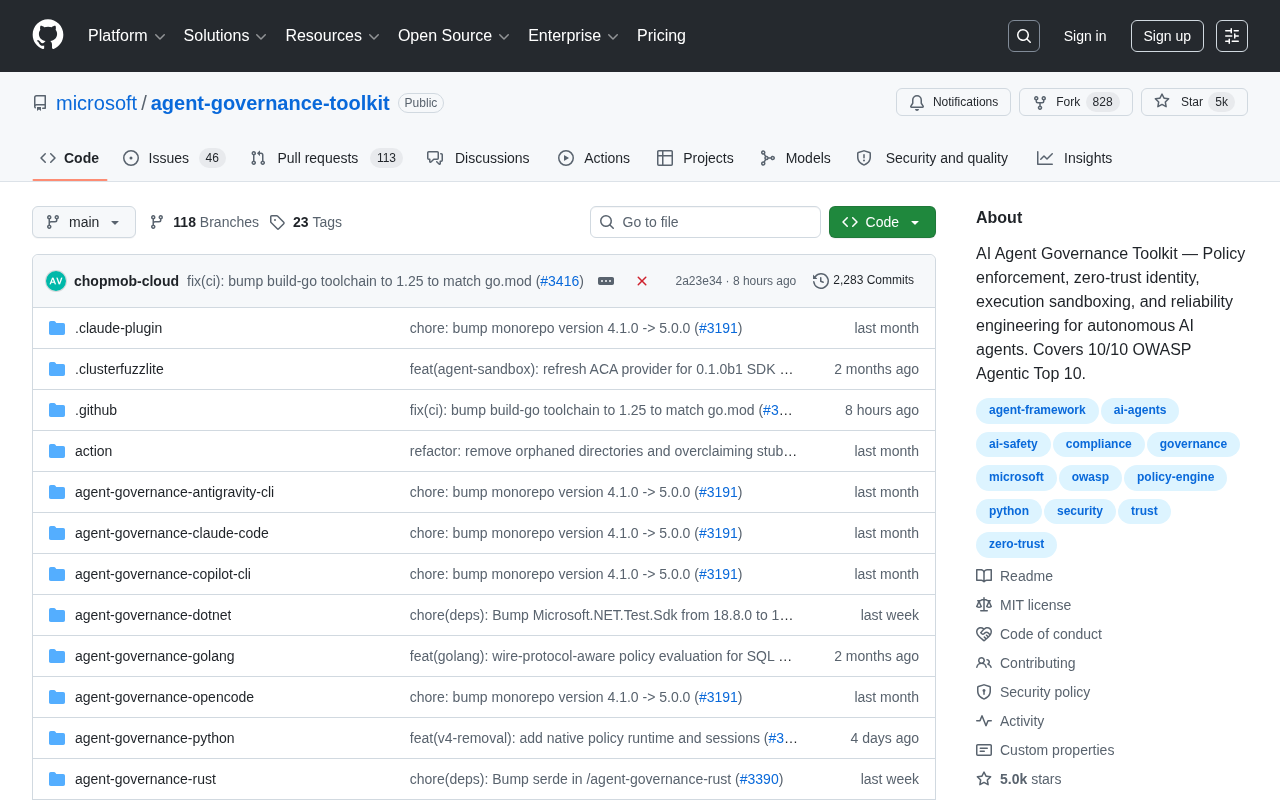
·4 min
Microsoft Open-Sources AI Agent Governance Toolkit: Comprehensive Coverage of OWASP Top 10 Risks
Microsoft open-sources agent-governance-toolkit covering all OWASP Agentic Top 10 risks through policy enforcement, zero-trust identity, execution sandboxing, and reliability engineering for production AI Agent deployment.
Read more →

·2 min
The Truth Behind Codex 'Build a Website in 5 Minutes': AI Isn't Creating Sites—It's Helping You Copy Them
Exposing the truth behind viral Codex 5-minute website videos: creators aren't building original sites with AI—they're copying shared prompts or scraping others' work. Learn AI coding tools' real limits.
Read more →

·3 min
The Truth Behind Codex 'Build a Website in 5 Minutes': AI Isn't Creating Sites — It's Helping You Copy Them
Exposing the truth behind viral Codex 5-minute website videos: creators aren't building original sites with AI — they're copying shared prompts or scraping others' work.
Read more →