#WorkTree multi-Agent
34 related articles

·4 min
Codex Major Upgrade: GPT-5.6 Powers Full-Stack Development from Idea to Deployment
OpenAI Codex gets a major upgrade with GPT-5.6: extended reasoning, multi-agent parallelism, browser control, one-click Sites deployment, task orchestration, and mobile dev support.
Read more →

·4 min
Loop Engineering in Practice: Designing and Deploying a Multi-Agent Collaborative Development System
A deep dive into Loop Engineering: how multi-agent collaborative dev systems achieve automated coding loops through workflow scheduling, step isolation, and validation.
Read more →
·3 min
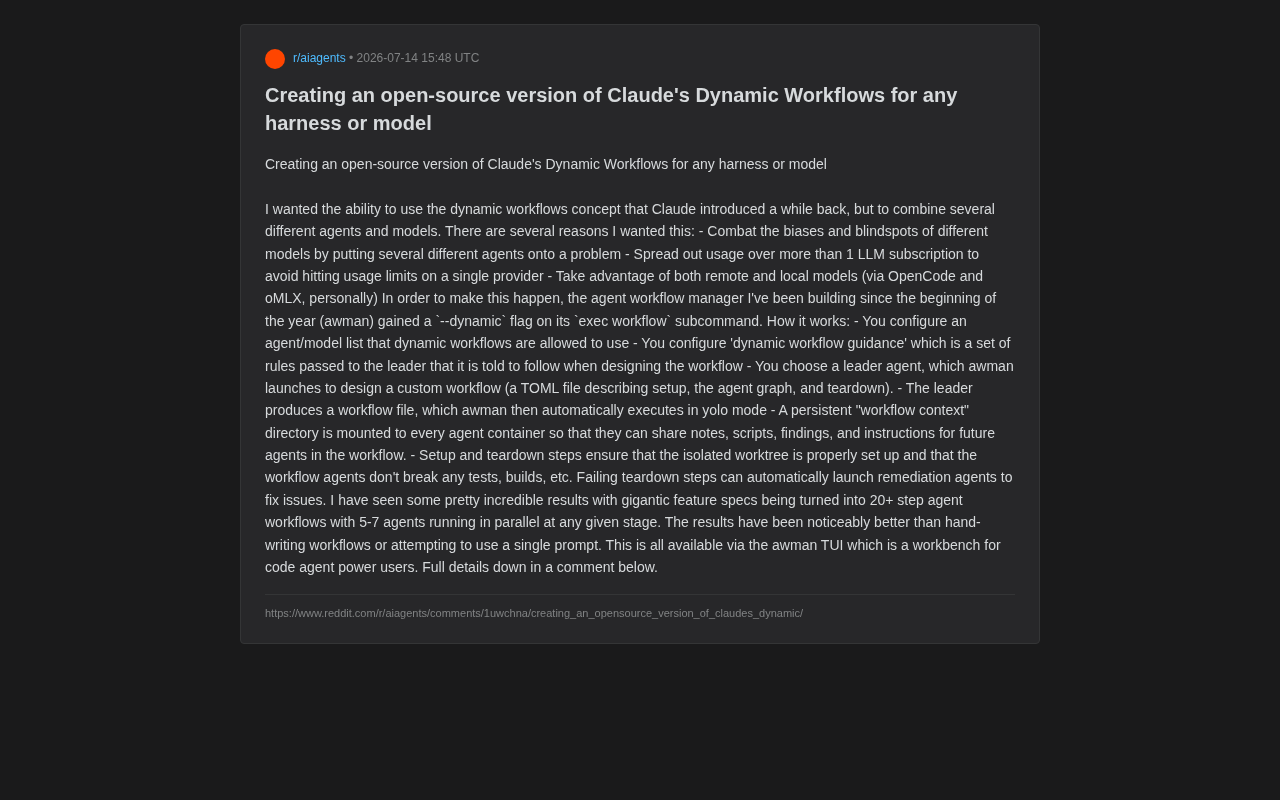
Open-Source Dynamic Workflows: How awman Enables Multi-Model Collaborative AI Programming
awman's --dynamic flag enables cross-framework dynamic workflows with multi-model collaboration. Explore its leader agent architecture, shared context design, and auto fault-tolerance mechanisms.
Read more →

·5 min
Maximizing Codex Weekly Quota: A Complete Guide to Goal Commands and Long-Running Agent Configuration
Master Codex's Goal command mechanism. Use five standard project settings—agents.md, context.md, active-context and more—to solve context forgetting and hallucination in long-running Agents and maximize your weekly quota.
Read more →
·3 min
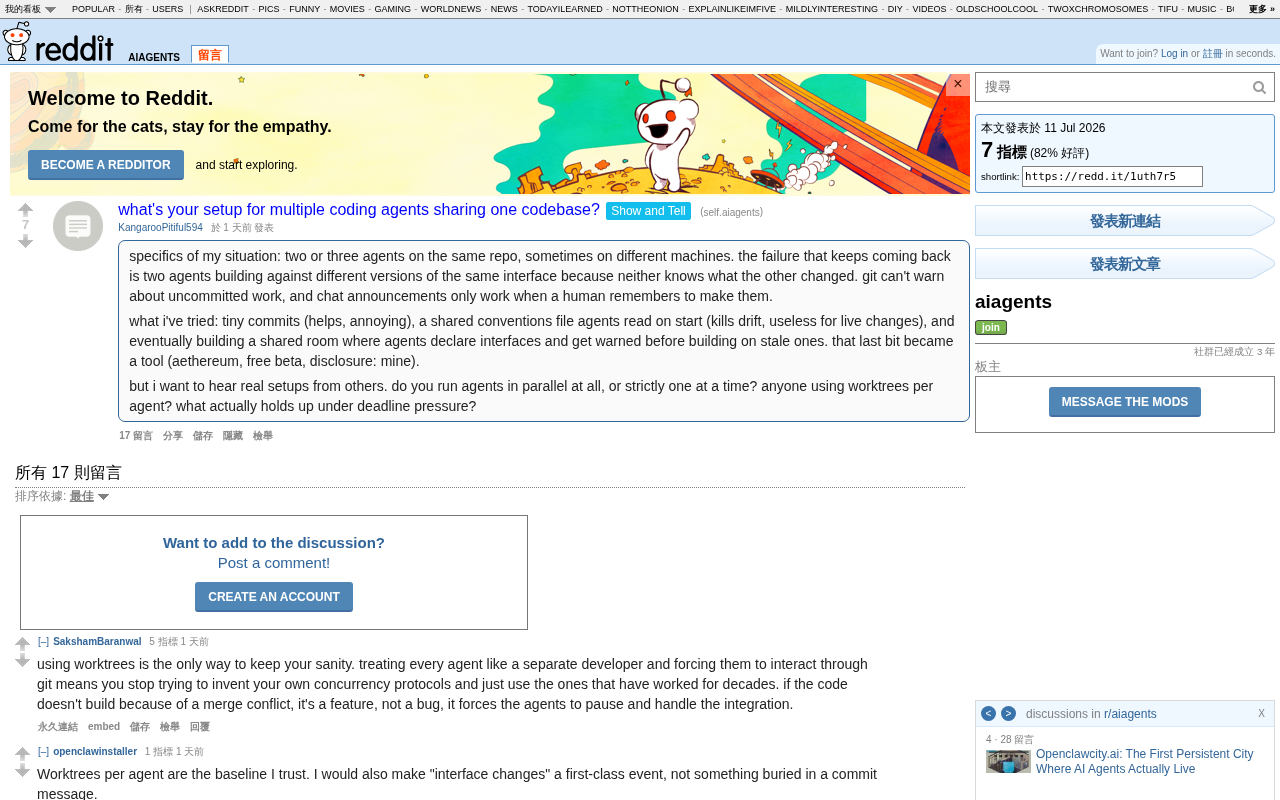
Multiple AI Agents Sharing a Codebase: Parallel Collaboration Conflicts and Practical Solutions
When multiple AI coding agents work on the same codebase simultaneously, how do you avoid interface conflicts and coordination chaos? A deep dive into Git worktree isolation, contract-first design, and intent declaration.
Read more →

·7 min
Fable AI Coding in Practice: Optimizing Reasoning Levels and Multi-Model Collaboration to Cut Costs
How developer Theo used Anthropic's Fable model to rebuild his AI coding workflow — controlling reasoning levels, multi-model routing with Codex, and sub-agent orchestration to cut costs from thousands to $150.
Read more →

·7 min
Fable AI Coding in Practice: Optimizing Reasoning Levels and Multi-Model Collaboration to Save Money
Hands-on guide: Use Anthropic's Fable model to optimize AI coding workflows — control reasoning levels, leverage Claude-Codex multi-model collaboration, and cut costs from thousands to $150.
Read more →

·4 min
Claude Code New Features Deep Dive: Remote Control, Multi-Agent Parallelism, and Auto Memory
Deep dive into Claude Code's major new updates: Remote Control for session takeover, Auto Mode to reduce interruptions, multi-agent code review, Auto Memory, and Routines for cloud automation workflows.
Read more →

·3 min
Loop Engineering Fully Deconstructed: The Paradigm Shift from Operator to System Designer
Deep dive into Loop Engineering's five building blocks: scheduling, worktrees, skills, plugins & connectors, and subagent separation, with three practical cases from minimal loops to enterprise-grade applications.
Read more →

·3 min
AI Programming Power User Workflow: A Practical Guide to Automated Loops and Multi-Model Collaboration
A deep dive into expert AI programming workflows covering Cursor rules, skills systems, automated loops, cloud agent parallel development, and multi-model collaboration strategies.
Read more →

·3 min
Claude Code's Hidden Advantages Explained: Design Choices Every AI Coding Tool Should Copy
Deep dive into Claude Code's leading design in agentic coding: skill script execution, CLAUDE.md imports, remote control, dynamic workflow orchestration, and why Cursor, Codex and others should adopt these features.
Read more →

·2 min
Databricks Open-Sources Omni: A Meta-Framework for Unified Management of All AI Agents
Databricks open-sources Omni under Apache 2.0 — a meta-framework unifying Claude Code, Codex & more AI Agents with shared sessions, cross-vendor review & enforced security policies.
Read more →

·4 min
Codex Technical Anatomy: From CLI to Cloud Agent to Multi-Agent Orchestration Platform
Deep dive into OpenAI Codex's three-layer architecture: CLI local Agent, cloud sandbox async execution, and Codex App multi-Agent orchestration command center.
Read more →

·4 min
A Complete Guide to Multi-Agent Teams in AI Coding: From Solo Work to Team Collaboration
Deep dive into multi-agent solutions from Cursor, Claude Code, and Tencent CodeBuddy — covering parallel exploration, cross-layer collaboration, context isolation, practical tips, and selection guide.
Read more →

·2 min
Anthropic Team in Practice: Claude Code Experience with 16 Parallel Agents Developing a Compiler
Deep analysis of Anthropic's real-world Claude Code practices: 16 parallel Agents building a C compiler, three-role architecture for full-stack apps, smart approvals solving 93% blind approval issues, and six official best practices.
Read more →

·3 min
Claude Code + Codex: The Best Practice of One-Writes-One-Reviews AI Programming
A detailed guide on using Claude Code for writing and Codex for reviewing in AI programming. Includes a five-step closed-loop workflow and cross-validation techniques.
Read more →
·2 min
Claude Code Complete Tutorial: Best Practices from Architecture to Parallel Development
DeepLearning.ai and Anthropic's joint Claude Code course covers architecture, parallel development, and MCP server integration. From RAG chatbots to Figma-to-code workflows, master AI coding assistant best practices.
Read more →

·3 min
The Four Stages of AI Coding Tool Evolution: From Code Completion to Multi-Agent Collaboration
A deep dive into the four stages of AI coding tool evolution: from code completion and chat Q&A to Agentic Coding and multi-Agent collaboration, explaining the design logic behind Claude Code, Cursor, and Codex.
Read more →
 Product Reviews
·1 min
Cursor 3.0 Deep Dive: Multi-Agent Parallelism, Design Mode & Best-of-N Model Comparison
Cursor 3.0 evolves from an AI coding assistant into an Agent fleet command center. Deep dive into multi-agent parallelism, Design Mode, and Best-of-N model comparison.
Read more →
 Product Reviews
·1 min
Cursor 3.0 Deep Dive: Multi-Agent Parallelism, Design Mode, and Best-of-N Model Comparison
Cursor 3.0 evolves from an AI coding assistant into an Agent fleet command center. Explore multi-agent parallelism, Design Mode, and Best-of-N model comparison.
Read more →