#agent benchmark
1277 related articles
 Product Reviews
·3 min
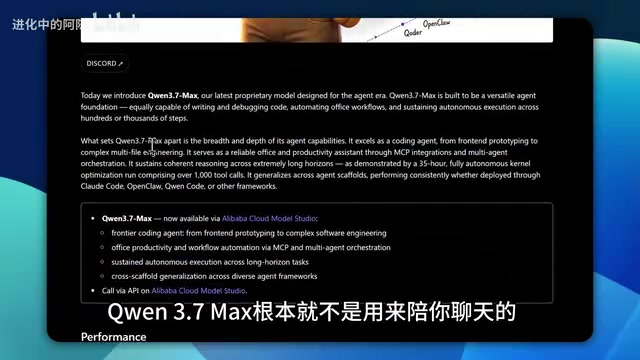
Deep Dive into Qwen3.7 Max: One-Tenth the Cost of GPT, Purpose-Built for AI Agents
Alibaba's Qwen3.7 Max targets AI agents with coding tasks at just $1.30 (one-tenth of GPT-5), supporting 35 hours of continuous execution. Deep analysis of its cost advantages, front-end capabilities, and three key limitations.
Read more →
 Tech Frontiers
·1 min
Claude Opus 4.8 Released: Comprehensive Upgrades in Nuanced Understanding and Conversational Naturalness
Anthropic releases Claude Opus 4.8 with three core improvements based on user feedback: better nuance understanding, more natural conversations, and stronger collaboration from coding to knowledge work.
Read more →
 Industry Insights
·2 min
What Problem Do You Most Want AI to Solve? A Deep Reflection on the Future Direction of AI
A simple tweet sparks wide discussion: What do you most want AI to solve? From healthcare to education equity and scientific research, exploring the shift from technology-driven to demand-driven AI.
Read more →
 Tech Frontiers
·1 min
OpenAI Codex New Version Released: A Major Upgrade for the AI Programming Assistant
OpenAI releases a new version of Codex with major improvements in code generation accuracy, multi-language support, and developer workflow integration. Analysis of its impact on the AI programming landscape.
Read more →
 Product Reviews
·3 min
Cursor 3.0 Deep Dive: The AI Agent Command Center Rewritten in Rust
Cursor 3.0 abandons VS Code entirely, rewritten from scratch in Rust as an AI agent management platform. Deep dive into its three evolutions, Composer 2 controversy, parallel agent orchestration, and the paradigm shift from assisted to autonomous coding.
Read more →
 Tech Frontiers
·1 min
Windsurf Integrates Claude Opus 4.7 Fast Mode with 2.5x Speed Boost
Windsurf integrates Claude Opus 4.7 fast mode with 2.5x speed boost while retaining full intelligence. Analysis of its impact on developer productivity and AI coding tool competition.
Read more →
 Tech Frontiers
·2 min
Step 3.7 Flash: Deep Dive into the 198B Sparse MoE Multimodal Model
Deep dive into StepFun AI's Step 3.7 Flash, a 198B sparse MoE vision-language model with 256K context and 3-level reasoning, excelling in multimodal understanding, AI coding, and Agent tool orchestration.
Read more →
 Tech Frontiers
·2 min
LFM2.5-8B-A1B: A MoE Model with 1.5B Active Parameters Delivering 4x Its Weight Class Performance
Liquid AI releases LFM2.5-8B-A1B, a MoE model with 8B total params but only 1.5B active, matching 6B-class models in tool calling. Supports 128K context, local deployment, multilingual, with SGLang Day-0 support.
Read more →
 Tech Frontiers
·1 min
SGLang Hosts Agent Loops Office Hour, Focusing on Agentic Loop Architecture Optimization
SGLang team hosts an Agent Loops Office Hour exploring inference optimization for agentic loops, covering KV Cache reuse, low-latency multi-turn dialogue, and tool calling techniques.
Read more →
 Product Reviews
·3 min
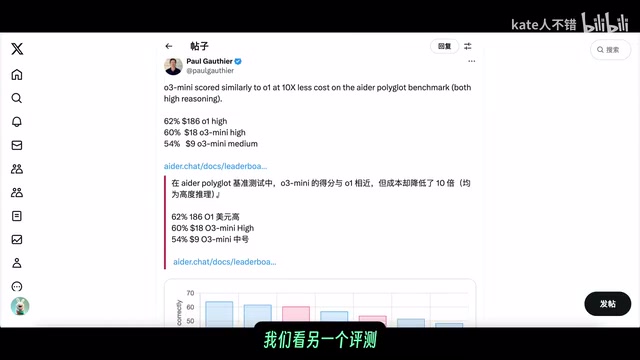
Deep Comparison of o1, o1 pro, and o3-mini-high Coding Capabilities: A Deep Research Analysis
Deep Research comparison of OpenAI o1, o1 pro, and o3-mini-high coding capabilities, covering code quality, optimization, error rates, and debugging with benchmarks and real-world cases.
Read more →
 Product Reviews
·3 min
Llama 3.3 70B In-Depth Review: Testing the Strongest Open-Source LLM with 13 Questions
Meta releases Llama 3.3 70B open-source model with just 70B parameters rivaling 405B performance. Tested on 13 logic, math, and coding questions, it passed 12 — reshaping the open-source model landscape.
Read more →
 Product Reviews
·2 min
AI Tool Rankings for Solo Businesses: Top Picks, Alternatives & Open-Source Options Across 7 Categories
A complete AI tool matrix for solo businesses across 7 categories—Text, Image, Video, Audio, Digital Avatars, Coding & Agents—with top picks, alternatives, and open-source options.
Read more →
 Product Reviews
·3 min
Claude Code with MiniMax M2: Testing a Low-Cost AI Coding Solution Across Three Real Projects
Real-world testing of MiniMax M2 as Claude Code's backend model across three projects: framework migration, iOS development, and full-stack MVP — at just 8% of Claude's price.
Read more →
 Tutorials
·2 min
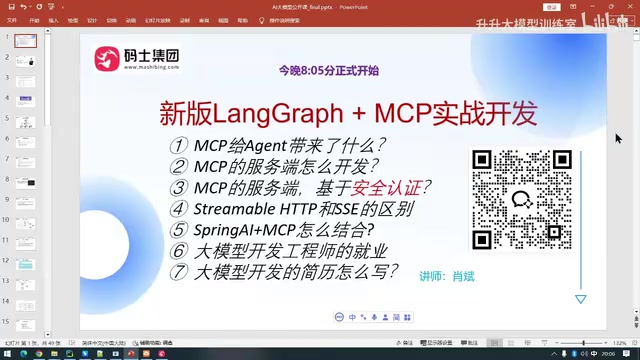
LangGraph 0.5.3 + MCP Agent Development in Practice: Security Authentication & Deployment Guide
LangGraph 0.5.3 introduces MCP server security authentication and agent deployment solutions. Combined with Qwen3 models, it provides a complete production-grade AI agent development stack.
Read more →
 Product Reviews
·3 min
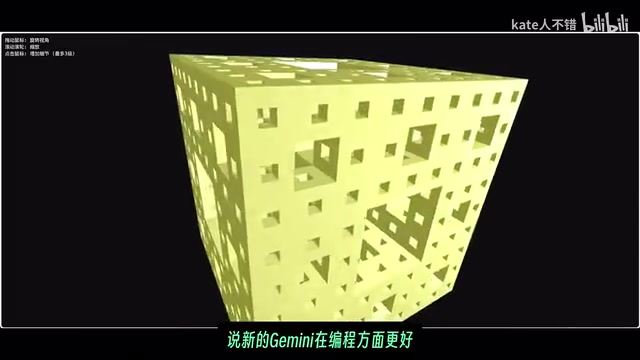
Gemini 2.5 Pro 0605 Hands-On Comparison with o3 and Claude Opus 4: Full Evaluation Across Coding, Reasoning, and Writing
Hands-on testing of Gemini 2.5 Pro 0605 across coding, reasoning, creative writing, and app development, compared head-to-head with OpenAI o3 and Claude Opus 4.
Read more →
 Product Reviews
·2 min
AI Coding Real-World Test: GPT-5, Gemini 2.5 Pro, Kimi K2, and Grok 4 All Fail at Web Scraping
Real-world test using Cursor IDE: GPT-5, Gemini 2.5 Pro, Kimi K2, and Grok 4 all fail at static web scraping while Claude leads with 126 pages. Deep analysis of why top AI models struggle.
Read more →
 Product Reviews
·2 min
Claude Opus 4.8 Launches on Cursor: Dual Improvements in Efficiency and Persistence
Cursor announces Claude Opus 4.8 is live. CursorBench shows significant gains in coding efficiency and task persistence. Analysis of key improvements and market impact.
Read more →
 Deep Dives
·3 min
memU Memory Framework Explained: Unifying Multi-Modal Agent Memory with a File System
Deep dive into the memU open-source memory framework: how it organizes Agent memory as a file system with three-layer semantic abstraction, dual-loop collaboration, and two retrieval modes.
Read more →
 Deep Dives
·3 min
Hermes Self-Evolution Framework: An Open-Source Solution for Automated AI Agent Prompt Optimization
Deep dive into NousResearch's open-source Hermes Agent self-evolution framework, using DSPy and GEPA for automated prompt optimization with five-layer safety mechanisms.
Read more →
 Tech Frontiers
·3 min
Generic Agent: A Self-Evolving AI Agent Built with Just 3,000 Lines of Code
Generic Agent builds a self-evolving AI agent with just 3,000 lines of code, 9 atomic tools, and a five-layer memory architecture — using only one-sixth the tokens of competitors.
Read more →