#agents.md configuration
84 related articles
 教程攻略
教程攻略·2 分钟
Claude Code Keeps Writing Garbage Code? A Configuration Guide for CLAUDE.md and AGENTS.md
Deep dive into CLAUDE.md and AGENTS.md configuration for Claude Code. Real cases show proper setup reduces context explanation time from 60% to near zero, letting AI truly understand your project.
阅读全文 →

·2 分钟
Bun Now Generates CLAUDE.md by Default: The AI-Native Development Era Has Arrived
Bun runtime now generates a CLAUDE.md file by default with bun init, signaling AI assistants becoming first-class citizens in the development toolchain.
阅读全文 →

·4 分钟
Complete Guide to Pi Coding Agent: Core Usage and Extension Techniques for a Minimalist Terminal AI Coding Tool
Complete guide to Pi coding agent: design philosophy, installation, shortcuts, session management, and 7-layer customization architecture. How this 45K-star minimalist terminal tool redefines AI coding workflows.
阅读全文 →

·4 分钟
GPT-5.6 Value Maxing Practical Guide: From Token Stacking to Output Optimization Methodology
Deep dive into OpenAI GPT-5.6 Value Maxing strategies covering Sol/Terra/Luna model selection, KV cache optimization, Prompt compression, and programmatic tool calling to help developers achieve more output with fewer Tokens.
阅读全文 →

·4 分钟
Advice from the Creator of Claude Code: Automation Is an Engineer's True Moat
Claude Code creator Boris argues top engineers should embrace AI-era automation leverage. By encoding domain knowledge into infrastructure, preview environments, and lint rules, engineers multiply output—the core path to Staff Engineer.
阅读全文 →
·3 分钟
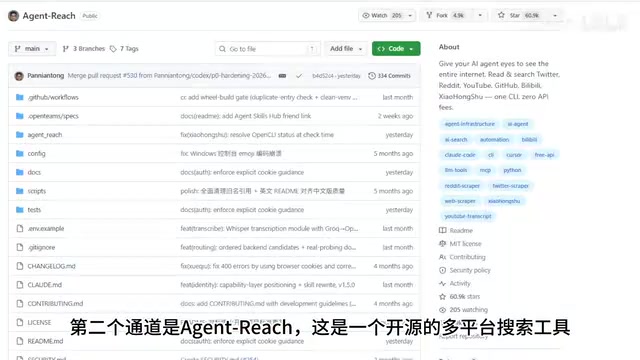
Open-Source Automated News Briefing Generator: A Zero-Technical-Barrier AI Deployment Analysis
An open-source automated news briefing system. No coding needed—just let an AI read the project docs to complete the entire deployment. Six-stage pipeline, four-channel search covering 16+ platforms, smart classification and dedup, daily auto-push to Feishu, completely free.
阅读全文 →

·3 分钟
Open-Source Newsletter Auto-Generation System: A No-Code AI Deployment Breakdown
An open-source newsletter auto-generation system requiring no coding—just have AI read the project docs to complete deployment. Six-stage pipeline, four-channel search covering 16+ platforms, smart classification & deduplication. Completely free.
阅读全文 →

·4 分钟
Gemini API in Practice: Building AI Agents with Files
Google's official hands-on: how to go from idea to production fast with AI Studio and build AI Agents using the now-GA Interactions API. The core idea—Agents are just combinations of files.
阅读全文 →

·5 分钟
Gemini API in Practice: Building AI Agents with Files
Official Google hands-on: go from idea to production fast with AI Studio, and build AI Agents with the now-GA Interactions API. The core idea: an Agent is just a composition of files—Markdown plus a few scripts, no complex Python loops needed.
阅读全文 →
·2 分钟
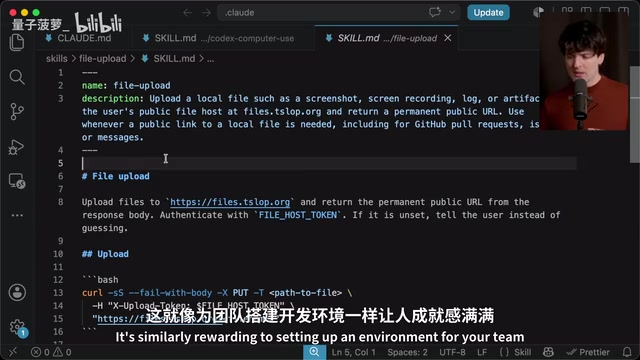
The Age of AI Coding: Why Tinkering Engineers Are Worth More Than Ever
Claude Code creator Boris and developer Theo reveal: in the AI Agent era, tinkering habits like automation, building small tools, and writing CLAUDE.md are becoming the core edge for reaching Staff engineer level.
阅读全文 →

·2 分钟
OpenCode: The Complete Guide to the Open-Source Coding Agent Chosen by 8 Million Developers
OpenCode has become the world's most popular open-source coding agent—8M monthly active developers, 75+ model providers, and custom sub-agent routing. This deep dive covers its core features, config tips, and business model.
阅读全文 →

·7 分钟
Harness Engineering: Why a Powerful Model Isn't Enough — Here's What Really Matters
A data-deletion disaster reveals the biggest AI Agent risk: the problem isn't the model, it's Harness design. Learn context management, process standards, and permission isolation.
阅读全文 →

·6 分钟
The Complete Codex Guide: From Beginner to Pro with the All-in-One AI Assistant
OpenAI Codex is more than a coding tool—it's an AI agent that writes code, makes slides, and operates browsers. This guide covers its four versions, permission modes, plugins, automation, and six best practices.
阅读全文 →

·4 分钟
Cross-Platform AI Agent Setup Guide: Breaking Free from Vendor Lock-In for Good
Model performance gaps are closing. Real competitive advantage lies in portable AI agent architecture. Learn how to build a workspace that works across Claude Code, Codex, and beyond — no vendor lock-in.
阅读全文 →

·4 分钟
7 Core Components for Designing Long-Running AI Agents
A deep dive into the 7 core components for building long-running AI Agents: Goal, Evaluator, Verifier, Loop, Orchestration, Observability, and Memory.
阅读全文 →

·3 分钟
GPT-5.6 Practical Guide: 7 Tips to Save Tokens and Boost Efficiency
7 practical GPT-5.6 optimization tips for Codex: control context windows, choose thinking modes, limit sub-agents, and trim agents.md to save tokens and cut costs.
阅读全文 →

·3 分钟
OpenCode In-Depth Review: Can This Open-Source Coding Agent Replace Claude Code?
OpenCode is an open-source terminal coding agent with 180K+ GitHub stars, supporting hundreds of models and a dual-layer agent architecture — completely free. See how it compares to Claude Code.
阅读全文 →

·3 分钟
Codex Practical Guide: A Complete Roadmap from Beginner to Advanced AI Programming
Master Codex AI programming assistant with this complete guide: CLI setup, slash commands, agents.md governance, MCP protocol, multi-agent systems, and enterprise plugin development.
阅读全文 →

·3 分钟
AI Coding Agents in Practice: An Efficient Configuration Guide for Cursor and Codex
How to configure Cursor, Codex, Devin, and other AI coding agents for context management, code quality, and cross-tool collaboration. Practical tips on rule files, TDD, and structured context storage.
阅读全文 →
Capn-hook: Breaking the Cycle of Repet…
·2 分钟
Capn-hook: Breaking the Cycle of Repetitive Exploration for Coding Agents
Capn-hook is an open-source hook-based tool that helps coding agents retain knowledge across sessions—eliminating redundant exploration and turning one-time discoveries into reusable engineering assets.
阅读全文 →