#cascading failure
158 related articles
·3 min
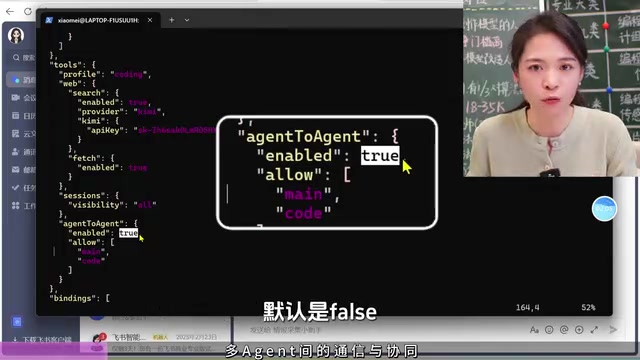
Multi-Agent Communication & Collaboration in Feishu: A Complete Guide to Configuration and Group Chat Orchestration
Learn how to configure Open Cloud for multi-Agent communication, including session_visibility, agent_to_agent toggle, and whitelist setup, plus Feishu group chat orchestration for AI team collaboration.
Read more →

·2 min
Andrew Ng on AI Agent Development: Evaluation and Error Analysis Are the Core Competitive Advantage
Andrew Ng argues that the core gap in AI Agent development isn't model selection — it's systematic evals and error analysis. A breakdown of his methodology.
Read more →

·2 min
GitHub May 2026 Availability Report: A Comprehensive Analysis of Nine Service Degradation Incidents
GitHub's May 2026 availability report reveals nine service degradation incidents. This article analyzes the frequency, historical trends, developer impact, and platform reliability implications.
Read more →

·4 min
OpenAI Engineer's Practice: Agent-Driven Development Methodology in the Era of Free Code
OpenAI engineer Ryan Lopopolo shares 9 months of pure AI agent coding practice, revealing core methodologies including prompt engineering, automated code review, and skill design in the new paradigm where code is free.
Read more →

·4 min
Getting Started with Vibe Coding: Setting Up Your AI Development Workspace from Platform to Local
A complete guide to setting up a local Vibe Coding workspace: export from platforms, run code with AI IDEs, make your first local edit, with prompting tips and error troubleshooting.
Read more →

·2 min
Claude Account False Ban Incident: Anthropic's Emergency Fix, Impact, and Full Analysis
Anthropic confirms Claude accounts were incorrectly suspended due to a technical issue. Full analysis of the incident, Anthropic's response, and implications for AI service reliability.
Read more →

·3 min
CreateNow Controlled Development in Practice: Getting AI to Write Code Requirement by Requirement
Hands-on with CreateNow's controlled AI development: from requirements breakdown to modular coding. Covers model selection, breakpoint-resume, and acceptance checks.
Read more →

·3 min
rsync Hit by AI Code Invasion: 36 Commits Trigger Open Source Infrastructure Trust Crisis
After rsync maintainer used Claude AI for 36 code commits, incremental backup functionality broke. Alpine Linux and Debian discuss rollbacks, exposing deep tensions between AI code quality and open source maintenance.
Read more →
 Product Reviews
·3 min
Claude Code v2.1.143 Update: Plugin Dependency Chain Management & Background Session State Persistence
Claude Code v2.1.143 brings intelligent plugin dependency chain management, background session model parameter persistence, Agent mode parameterized configuration, and critical Windows/macOS bug fixes.
Read more →
 Industry Insights
·3 min
AI API Aggregation Gateways: A Complete Analysis of Pros and Cons for Unified Multi-Model Access
In-depth analysis of API aggregation gateways for multi-model AI access: unified interfaces, intelligent routing, disaster recovery, plus key risks around security, latency, and compliance.
Read more →
 Tutorials
·3 min
Claude Code Agent Deployment: Comparing Three Approaches with a Selection Guide
A detailed guide comparing three Claude Code agent deployment methods—Cron Loop, Desktop/Cloud Routines, and Modal/Trigger.dev—analyzed by run location and determinism to help developers choose the best strategy.
Read more →
 Industry Insights
·4 min
Deep Dive into Claude Code's Open-Source Architecture: Six Core Design Principles and Engineering Practices Revealed
Deep analysis of Claude Code's open-source architecture: six core design principles including dual-loop mechanism, seven-step tool pipeline, four-layer token compression, multi-agent collaboration, and memory systems.
Read more →
 Expert Opinions
·3 min
The Salary Ceiling for Agent Engineers: Two Critical Dividing Lines
Agent engineer salary gaps hinge on two dividing lines: real production deployment experience and depth of foundational theory including deep learning, fine-tuning, and reinforcement learning.
Read more →
 Tutorials
·2 min
Complete Guide to Claude Code Hooks: Five Trigger Points & Practical Configuration Walkthrough
Deep dive into Claude Code Hooks' five trigger points (PreToolUse, PostToolUse, OnToolError, Notification, OnPrompt) with a practical file deletion protection example to build efficient automated dev workflows.
Read more →
 Tutorials
·4 min
Gemini CLI In-Depth Review: Real-World Experience and Tips for a Free AI Coding Tool
In-depth review of Google's open-source Gemini CLI: free tier analysis, comparison with Claude Code & Cursor, real project testing, configuration tips, and open-source architecture insights.
Read more →
 Product Reviews
·3 min
AI Coding Tools Deep Dive: How to Choose Between Qoder, Cursor, Windsurf, and Devin
Deep comparison of Qoder, Cursor, Windsurf, and Devin across autonomy, reliability, and context capabilities to help developers choose the right AI coding assistant.
Read more →
 Product Reviews
·3 min
Hermes Agent Desktop App: The Self-Evolving Open-Source AI Agent
Deep dive into Hermes Agent desktop app: closed-loop learning, persistent cross-session memory, multi-agent management, and tool integration. Discover how this open-source AI agent self-evolves to become a true productivity powerhouse.
Read more →
 Tutorials
·3 min
Enterprise AI Agent Four-Layer Architecture Design and PDCA Continuous Optimization Practical Guide
Deep dive into enterprise AI Agent four-layer architecture design (User, Gateway, Agent Service, Capability layers) with PDCA optimization methodology and dual manual+automated evaluation for production-grade Agent systems.
Read more →
 Product Reviews
·2 min
Trae Refresh Mode Commands Not Working? A Complete Guide to the Missing Environment Variables Issue
ByteDance's AI tool Trae loses PATH environment variables in refresh mode, making GCC and system commands unrecognizable while AI forces failed executions.
Read more →
 Industry Insights
·2 min
OpenAI Codex Powers a Self-Improving Tax AI Agent: A New Paradigm for Closed-Loop Evolution
OpenAI and Thrive Holdings launch a Codex-based Tax AI with closed-loop self-improvement: error tracing, auto-fixing, and test validation. A deep dive into this new AI Agent evolution paradigm.
Read more →