#context optimization
2595 related articles
 Product Reviews
·3 min
AI Coding Tools Deep Dive: How to Choose Between Qoder, Cursor, Windsurf, and Devin
Deep comparison of Qoder, Cursor, Windsurf, and Devin across autonomy, reliability, and context capabilities to help developers choose the right AI coding assistant.
Read more →
 Deep Dives
·3 min
Single-Agent vs Multi-Agent: A Three-Step Decision Framework for Choosing the Right Architecture
Based on Anthropic's engineering practices, a detailed three-step decision framework for single-agent vs multi-agent architecture: bottleneck identification, technical feasibility, and business value filtering.
Read more →
 Tutorials
·3 min
Complete Vibe Coding Tutorial: 15 Key Steps to Building an AI Agent from Scratch
A systematic breakdown of 15 key steps for building AI Agents with Vibe Coding, covering environment setup, product docs, frontend UI, backend APIs, databases, and deployment.
Read more →
 Product Reviews
·2 min
Google Stitch 2.0 Deep Dive: A Free AI Frontend Code Generation Tool Powered by Gemini
Deep dive into Google Stitch 2.0: Gemini 3.0 Pro reasoning engine, variant generation, predictive heatmaps, AI Studio and Jules export for a complete design-to-deployable-code workflow—completely free.
Read more →
 Deep Dives
·2 min
AI Agent Development Methodology: A Complete Guide from ReAct to Enterprise-Grade Tech Stack
A deep dive into AI Agent development methodology, from the ReAct theoretical framework to a four-layer enterprise tech stack covering model services, Agent types, LangChain, and production deployment.
Read more →
 Product Reviews
·3 min
Google Jules 2.0 Major Upgrade: Deep Dive into Seven New Features
Google's AI coding assistant Jules exits Beta with environment snapshots, Critic Agent reinforcement learning code review, interactive planning, web preview, web search, and more.
Read more →
 Tutorials
·3 min
SubAgent Architecture: The Core Implementation for Context Isolation
Deep dive into SubAgent context isolation architecture, covering parent-child Agent roles, tool definitions, run_subagent implementation, and differences from TodoList and Agent Teams.
Read more →
 Deep Dives
·3 min
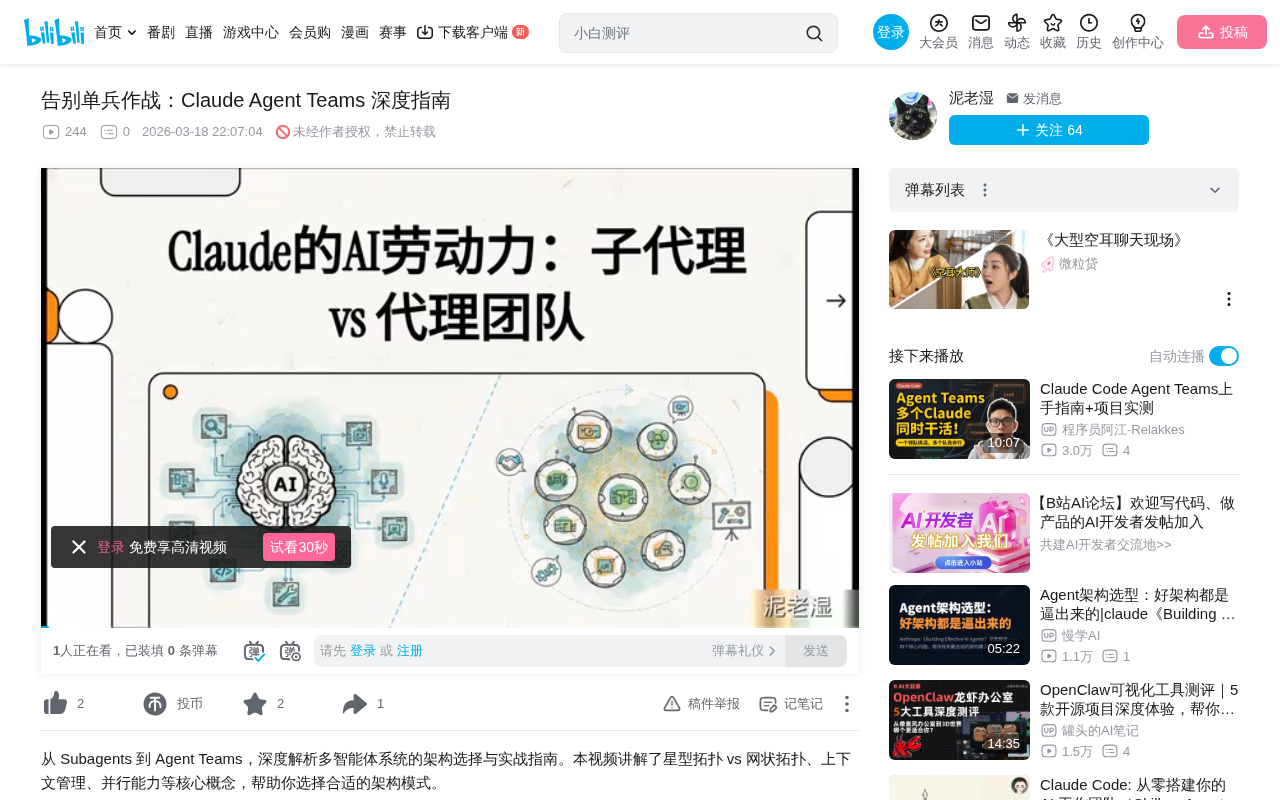
Claude Sub-agents vs Agent Teams: How to Choose Between Two AI Multi-Agent Collaboration Patterns
Deep comparison of Claude sub-agents vs agent teams: architecture differences, use cases, and real-world results. A Pokémon RPG case study shows how agent teams achieve 95%+ feature completeness.
Read more →
 Tutorials
·2 min
Claude Code Sub-Agent: A Practical Guide to Multi-Agent Collaboration for Enhanced Development Efficiency
Deep dive into Claude Code Sub-Agent mechanism with a practical blog writing + Git commit case study, showing how multi-agent collaboration solves instruction loss and context bloat issues.
Read more →
 Tutorials
·3 min
Harness Engineering: A Practical Guide to AI Development — From Prompts to Mastering AI Agents
A deep dive into Harness Engineering's three-layer architecture: Information, Constraint, and Automation layers, covering Agent failure modes, OpenAI and Anthropic best practices, and AI tool selection strategies for controlled AI development.
Read more →
 Deep Dives
·3 min
Deep Dive into MCP Code Execution & Agent Skills: Compressing 150K Tokens Down to 2,000
Deep analysis of two MCP ecosystem breakthroughs: code execution compresses tool definitions from 150K to 2K tokens, and Agent Skills enable capability packaging and reuse.
Read more →
 Tutorials
·3 min
Godot MCP + Codex in Practice: Using AI to Auto-Generate an Endless Runner Game
Learn how to integrate Godot MCP with OpenAI Codex to control the game engine via natural language, with a full walkthrough from setup to auto-generating an endless runner scene.
Read more →
 Tech Frontiers
·3 min
Google Introduces AI Assistant in Job Interviews, OpenAI Launches Cybersecurity-Specific Model GPT-5.5 Cyber
Google introduces Gemini AI assistant in hiring to assess AI proficiency, OpenAI launches GPT-5.5 Cyber for critical infrastructure defense, Anthropic nears trillion-dollar valuation, Mozilla fixes 271 Firefox bugs with AI in two months.
Read more →
 Tech Frontiers
·3 min
xAI Merges with SpaceX, GPT-5.5-Cyber Preview, Gemini 3.1 Flash Released
Musk announces xAI-SpaceX merger as SpaceX AI, OpenAI launches GPT-5.5-Cyber security model, Google releases Gemini 3.1 Flash, and Airbnb reveals AI writes 60% of new code.
Read more →
 Tutorials
·3 min
Open-Source Multi-Agent Intelligent Diagnostic System: Deep Dive into MCP + RAG + Skill Routing Architecture
Deep dive into an open-source multi-Agent diagnostic system built on modified OneCall, featuring MCP real-time interaction, RAG-enhanced Q&A, and Skill routing to minimize Token consumption.
Read more →
 Industry Insights
·2 min
NVIDIA Dynamo Snapshot: A Snapshot Recovery Solution for GPU Inference Cold Start Problems
Deep dive into how NVIDIA Dynamo Snapshot reduces LLM inference cold start time from minutes to seconds via GPU state snapshot and recovery, covering Kubernetes integration and elastic inference.
Read more →
 Product Reviews
·2 min
MemPalace: An Open-Source Tool That Gives AI Agents Local Long-Term Memory
MemPalace is an open-source local memory tool that builds long-term memory for AI Agents via verbatim storage, semantic retrieval, and MCP protocol, solving the pain of starting from scratch every session.
Read more →
 Tutorials
·2 min
Gemini 3.0 Pro + Claude Opus 4.5: A Practical Guide to Dual-Model Programming Workflows
Compare Gemini 3.0 Pro and Claude 4.5 Opus in programming tasks, build a dual-model workflow with KiloCode for architecture planning and code execution.
Read more →
 Deep Dives
·3 min
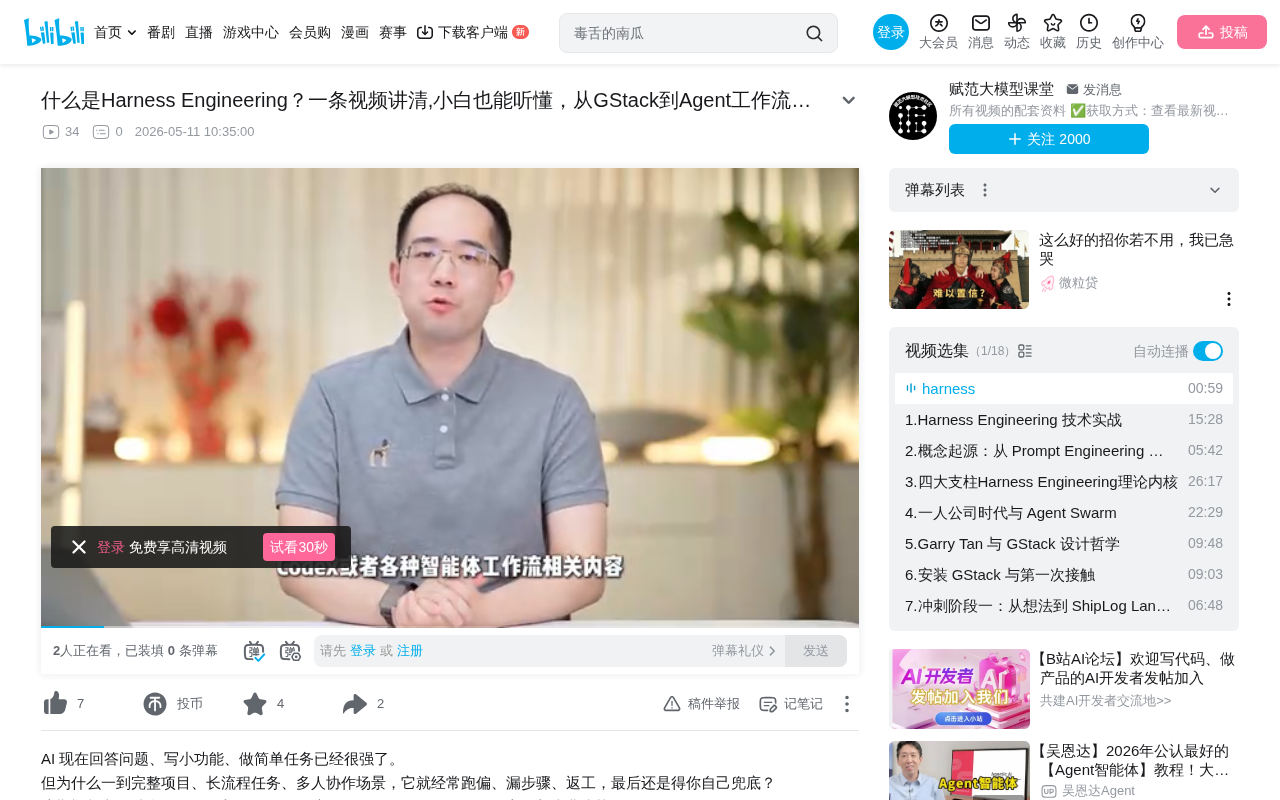
Harness Engineering Explained: Building Stable and Efficient Work Systems for AI
Deep dive into Harness Engineering: how to build execution environments, toolchains, and feedback loops for AI. From Prompt Engineering to system-level engineering for stable AI production.
Read more →
 Tutorials
·3 min
From Programmer to Agent Developer: A Detailed Four-Stage Learning Roadmap
A systematic four-stage learning roadmap for programmers transitioning to AI Agent development, covering core theory, ReAct and classic paradigms, Prompt engineering, and hands-on projects.
Read more →