#database security
1587 related articles
 Product Reviews
·3 min
Ruflo: A Multi-Agent Orchestration Solution That Turns Claude Code into a 100-Person AI Team
Ruflo is an open-source multi-agent orchestration platform that upgrades single-threaded Claude Code into a distributed AI dev team with 100+ specialized Agents and a SANA self-learning engine.
Read more →
 Product Reviews
·2 min
Agent Memory: Giving AI Coding Agents Persistent Memory Across Sessions
Agent Memory is an open-source local memory layer providing persistent, cross-session, cross-tool long-term memory for AI coding agents like Claude Code, Cursor, and Codex.
Read more →
 Tutorials
·3 min
Codex Chat History Recovery Guide: Migration Methods After API and Subscription Switching
Learn why Codex chat history disappears after switching between official subscriptions and third-party APIs, with step-by-step migration instructions for modifying session files and SQLite database.
Read more →
 Tutorials
·2 min
Complete Guide to Codex Installation, Registration & Usage: From Download to VS Code Integration
Step-by-step tutorial on installing OpenAI Codex, registering with overseas phone verification, choosing plans, and integrating with VS Code for AI-powered coding.
Read more →
 Tutorials
·2 min
Claude Code Segfaulted All Day — Turned Out to Be a Node.js Version Incompatibility
Claude Code crashes with Segmentation Fault on startup? This real debug case reveals the fix: Node.js V24 is incompatible with Claude Code. Switch to Node.js 22 LTS to resolve it instantly.
Read more →
 Tutorials
·3 min
Claude Code Hidden Configurations Fully Explained: From Chat Assistant to Semi-Automated Programming Workflow
Explore Claude Code's source code to unlock hidden configurations like Hooks, Agents, Permissions, and Memories. Transform your AI assistant into a customizable semi-automated development workflow.
Read more →
 Product Reviews
·3 min
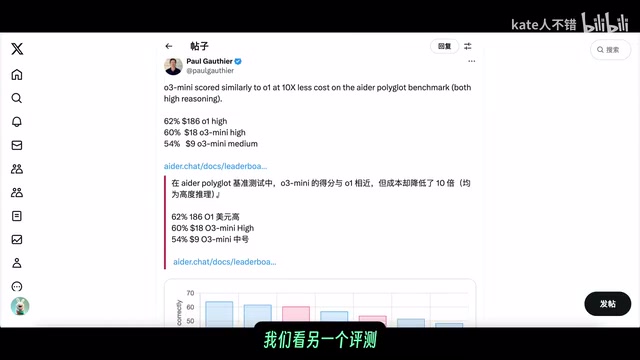
Deep Comparison of o1, o1 pro, and o3-mini-high Coding Capabilities: A Deep Research Analysis
Deep Research comparison of OpenAI o1, o1 pro, and o3-mini-high coding capabilities, covering code quality, optimization, error rates, and debugging with benchmarks and real-world cases.
Read more →
 Tutorials
·2 min
Claude Code Monitor Tool Explained: Event-Driven Replaces Polling, Saving Tokens More Efficiently
Deep dive into Claude Code's new built-in Monitor tool. Learn how event-driven monitoring replaces polling via Stream Filter and Poll and Diff modes, dramatically reducing token consumption.
Read more →
 Product Reviews
·2 min
Unified Management Tool for Claude Code and Codex: One-Click Multi-AI Programming Environment Setup
A deep dive into the unified management client for Claude Code and Codex, solving pain points like tedious configuration, high switching costs, and fragmented management with one-click setup and usage monitoring.
Read more →
 Tutorials
·2 min
Harness Engineering Deep Dive: Multi-Level Memory and Multi-Agent Collaborative Development in Practice
Deep dive into Harness Engineering: deconstructing Claude Code's multi-level memory, defense-in-depth, Hermes Agent autonomous evolution, and multi-Agent collaboration for industrial-grade AI development.
Read more →
 Product Reviews
·3 min
Claude Code with MiniMax M2: Testing a Low-Cost AI Coding Solution Across Three Real Projects
Real-world testing of MiniMax M2 as Claude Code's backend model across three projects: framework migration, iOS development, and full-stack MVP — at just 8% of Claude's price.
Read more →
 Product Reviews
·3 min
Deep Dive into Cursor's Pay-Per-Use Refill Plan: Is Using Official Pro Accounts at 65% Off Reliable?
Deep analysis of Cursor's pay-per-use refill plugin: account rotation mechanism, tiered discounts, full model support, and objective assessment of compliance risks and data security concerns.
Read more →
 Tutorials
·3 min
AI Programming Spec Sheets: 30 Lines of Configuration Saves Five Rounds of Rework
Replace vague prompts with spec sheets—30 lines of config gets AI coding right the first time. Covers the six-element framework, three-tier boundaries, and three iron rules to eliminate rework.
Read more →
 Tutorials
·3 min
Codex Security Guide: Five Key Principles for Permission Management
A detailed guide to OpenAI Codex permission management covering workspace setup, three permission modes, approval mechanisms, risk-level management, and five safety mantras for secure AI coding.
Read more →
 Industry Insights
·3 min
Deep Dive into Three Major LLM Career Paths: Requirements, Tech Stacks, and Career Prospects
Deep analysis of three core LLM roles—Application Engineer, Development Engineer, and Algorithm Engineer—covering technical requirements, salary thresholds, and career prospects including RAG, fine-tuning, and inference deployment.
Read more →
 Product Reviews
·3 min
Web Studio: Open-Source Local AI Coding Workbench Integrating Three Major Agents
Web Studio is an open-source desktop AI coding workbench integrating Cloud Code, Gemini CLI, and Codex into a local-first app with multi-repo management, structured code review, and smart PR workflows.
Read more →
 Tutorials
·3 min
AI Agent Practical Development: A Complete Guide from Concept to Building Production-Grade Intelligent Agents
A deep dive into AI Agent core principles and practical development paths, covering perception-decision-execution capabilities, MCP protocol tool integration, and analysis of Manus and AutoGLM.
Read more →
 Tutorials
·3 min
Bolt.DIY + Claude 3.7 Sonnet: Building Full-Stack Apps with Zero Code
Learn how to use open-source Bolt.DIY with Claude 3.7 Sonnet to build full-stack web apps with zero code. Includes local deployment tutorial, hands-on demo, and cost analysis—an AI course platform built in 13 minutes for $3.
Read more →
 Product Reviews
·2 min
Bolt.New Integrates Supabase: A Practical Guide to Building Full-Stack Apps with Zero Code
Learn how Bolt.New's deep Supabase integration enables zero-code full-stack app development with authentication, database, and file storage using natural language prompts.
Read more →
 Tech Frontiers
·2 min
Bolt Now Supports Expo: The Era of Zero-Code Native App Development Has Arrived
Bolt officially integrates Expo framework, enabling zero-code iOS and Android native app development. Learn about the Bolt+Expo technical approach and future EAS automated deployment plans.
Read more →