#event-driven
245 related articles

·3 min
Biological Neurons vs. Artificial Neurons: How Big Is the Computational Gap?
Research shows biological neurons far outperform classical artificial neurons. Explore dendritic computing, temporal coding, and what this means for next-gen AI architecture design.
Read more →

·3 min
AI Agent Learning Roadmap: A Four-Stage Plan from Zero to Hands-On
A systematic four-stage AI Agent learning roadmap covering LLM API calls, ReAct paradigm, memory mechanisms, and multi-agent collaboration for beginners.
Read more →

·3 min
Codex Loop Patterns: The Paradigm Shift of AI Agents from One-Shot Tasks to Continuous Loops
Deep dive into Boris Cherny's AI agent loop patterns: loop workflow elements, loop contracts, four practical loops (PR Babysitter, CI Health, Deploy Verification, Feedback Clustering), and failure prevention strategies.
Read more →

·3 min
Deep Dive into LangChain's Social Media Agent Open-Source Project: Architecture, Features, and Practical Value
In-depth analysis of LangChain's open-source social-media-agent: content sourcing, AI curation, scheduled publishing, Human-in-the-Loop design, and LangGraph architecture.
Read more →

·3 min
Codex Powers Hedge Fund: Economic Analysis Cut from 2 Days to 30 Minutes
Balyasny Asset Management adopts OpenAI Codex and o3/4o models, cutting economic analysis from 2 days to 30 minutes with 97% daily active AI adoption.
Read more →

·3 min
Erste Group's AI Transformation in Practice: How a European Bank Balances Compliance and Innovation
Erste Group's CPO shares real-world AI transformation lessons: connecting customer data from day one, dual-track strategy, serving the neglected 80%, and rapid iteration under European banking regulations.
Read more →

·2 min
Tsinghua and Zhipu Release Full-Stack Web Dev Benchmark: Top AI Models Fail Spectacularly
Tsinghua and Zhipu AI release a full-stack web dev benchmark with three difficulty levels. Top models like Gemini 2.5 Pro see scores plummet from 63 to 11.7 on full-stack tasks, exposing AI's real limits.
Read more →

·3 min
NestJS + LangChain: A Practical Guide for Frontend Engineers Transitioning to AI Full-Stack Architecture
How can frontend engineers transition to AI full-stack? This guide covers NestJS + LangChain, TypeScript fundamentals, AI Agent development, local model deployment, and cross-language architecture skills.
Read more →

·2 min
AI Coding Dependency: As Tools Get Stronger, Are Developers Getting Weaker?
Exploring the capability anxiety behind AI coding tool dependency. Analyzing the paradox of short-term efficiency vs. long-term skills, with strategies for developers to stay competitive in the AI era.
Read more →
·2 min
Claude Code: The Ultimate Beginner's Guide — A Deep Dive into the Open-Source Project That Hit 33K Stars in 3 Days
Deep dive into the viral Claude Code manual on GitHub (33K+ Stars): slash commands, memory system, MCP protocol, Hooks plugins, and how to build a full AI dev team.
Read more →

·4 min
Pi Coding Agent Deep Configuration Guide: A Complete Breakdown of Custom Tools, Sub-Agents, and the Skill System
A complete Pi Coding Agent configuration guide refined over two months, covering custom tools, sub-agents, persistent memory, security, and skill systems.
Read more →

·4 min
Full-Stack Development in a Todo App: 35 Core Technologies Every Programmer Should Know
Using a todo app's full development lifecycle as a guide, this article covers 35 core full-stack technologies from frontend to backend, databases, DevOps, cloud deployment, and scaling architecture.
Read more →

·3 min
AI Era Survival Guide for Programmers: The Transformation from Code Producer to AI Orchestrator
In-depth analysis of AI programming's impact on traditional developers, covering Vibe Coding trends, the emerging FDE role, and how programmers can transform through business acumen and architectural thinking.
Read more →
·3 min
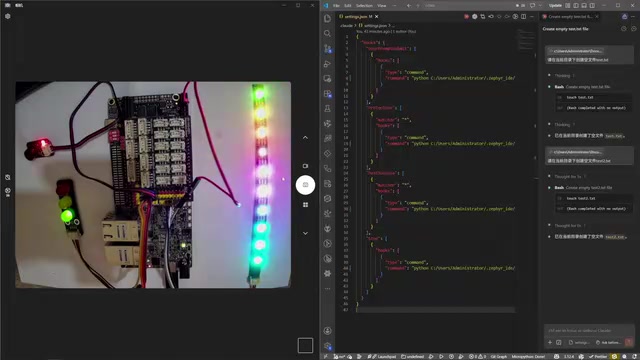
Claude Code Status Ambient Light: A Traffic Light System for Real-Time AI Programming Status
Build a traffic light system using Claude Code's Hooks callbacks to display real-time AI programming status via LEDs, light strips, and buzzers with serial communication on Zephyr RTOS.
Read more →

·2 min
A Beginner's Guide to Vibe Coding: Build Software with Natural Language, No Coding Required
Vibe Coding lets anyone build software without coding skills. Learn what it is, how to get started, and how to use natural language and AI to go from idea to app.
Read more →

·4 min
5 Viable Paths to Making Money Independently with Python
5 proven paths to making money independently with Python: automation scripts, AI app development, quantitative trading, tool/course sales, and full-stack web services, with pricing references and practical tips.
Read more →

·1 min
Windsurf Integrates Automation into Agent Workspace, Plus Limited-Time Half-Price Offer
Windsurf integrates Automations into Agents Window, letting developers create and manage AI Agents and automation in one workspace. New automation runs are half-price for a limited time.
Read more →

·2 min
Google AI Studio Mobile App Coming Soon: Full Vibe Coding Development Workflow on Your Phone
Google AI Studio is launching Android and iOS mobile apps, enabling Vibe Coding on phones with Firebase backend integration for full build-to-deploy workflows.
Read more →
 Industry Insights
·2 min
Five Design Patterns for Long-Running AI Agents: From Checkpoint Recovery to Cluster Orchestration
Deep dive into five core design patterns for long-running AI Agents from Google Cloud Next 26: checkpoint recovery, delegated approval, hierarchical memory, ambient processing, and cluster orchestration.
Read more →
 Tutorials
·2 min
UE5.7 Beginner's Guide: The Complete Path from Editor to Playable Game
Complete UE5.7 beginner tutorial covering editor operations, project structure, AI assistant, Blueprint visual programming, and game packaging for shareable playable builds.
Read more →