#feedback loop
1901 related articles

·3 min
Codex Computer Use Hands-On: Full Automation from Writing Code to Publishing a Release
Hands-on test of OpenAI Codex Computer Use: automating the full workflow from feature development, code push, DMG packaging to GitHub Release publishing, with comparison to Claude Computer Use.
Read more →

·2 min
Xiaomi MiMo Code Goes Open Source: How Cross-Session Memory Is Changing AI Programming Collaboration
Xiaomi's MiMo Code is an open-source terminal programming Agent with cross-session memory and multi-Agent collaboration. Explore its memory system, self-evolution mechanism, and how it differs from Claude Code.
Read more →
·3 min
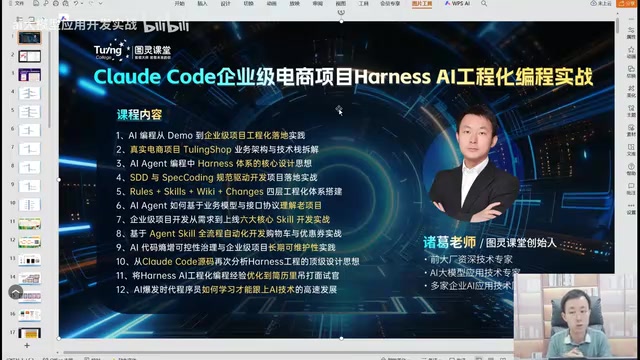
Harness AI Engineering Programming: A Detailed Methodology for Enterprise-Level Project Development
Deep dive into Harness AI Engineering Programming methodology, covering SDD, Skill development patterns, and core practices for enterprise-level AI-assisted development.
Read more →

·3 min
Nexent Open-Source Platform: Zero-Code Auto-Generation of Production-Grade AI Agents
Deep dive into Nexent's open-source platform for zero-code production-grade AI Agent generation, covering Harness Engineering, built-in controls, use cases, and comparisons with AutoGen and CrewAI.
Read more →

·2 min
CascadeFlow: Deep Dive into the AI Agent Cascading Runtime Optimization Framework
Deep dive into the CascadeFlow open-source framework and how it optimizes AI Agent cost, latency, quality, and policy decisions through cascading runtime mechanisms for production deployment.
Read more →
Claude Code Creator Reveals: How AI Pr…
·3 min
Claude Code Creator Reveals: How AI Programming Boosts Engineering Efficiency by 200%
Anthropic's Claude Code creator Boris Cherny shares AI programming practices: 90% of code written by AI, 200% engineer productivity gain, new hires productive in 2 days.
Read more →

·3 min
Codex Loop Patterns: The Paradigm Shift of AI Agents from One-Shot Tasks to Continuous Loops
Deep dive into Boris Cherny's AI agent loop patterns: loop workflow elements, loop contracts, four practical loops (PR Babysitter, CI Health, Deploy Verification, Feedback Clustering), and failure prevention strategies.
Read more →

·3 min
Deep Dive into LangChain's Social Media Agent Open-Source Project: Architecture, Features, and Practical Value
In-depth analysis of LangChain's open-source social-media-agent: content sourcing, AI curation, scheduled publishing, Human-in-the-Loop design, and LangGraph architecture.
Read more →

·3 min
Claude Code Loop Patterns in Practice: Community Insights and Best Practices
Explore Boris Cherny's Claude Code loop patterns with community insights on /loop commands, test-driven loops, multi-agent collaboration, and best practices to avoid loop divergence.
Read more →

·4 min
OpenAI Engineer's Practice: Agent-Driven Development Methodology in the Era of Free Code
OpenAI engineer Ryan Lopopolo shares 9 months of pure AI agent coding practice, revealing core methodologies including prompt engineering, automated code review, and skill design in the new paradigm where code is free.
Read more →

·2 min
Cursor Team Hints at Major Update: What's the Next Game-Changing Move?
Cursor's team tweeted a hint at a game-changing update. We analyze the competitive landscape, possible directions including stronger Agents and new paradigms.
Read more →

·3 min
OpenAI Realtime API Deep Dive: Use Cases, Technical Challenges, and Industry Trends
Deep dive into OpenAI Realtime API's core capabilities and developer ecosystem, covering use cases like smart customer service, language learning, and real-time translation, plus technical challenges and industry trends.
Read more →

·3 min
OpenAI Codex Deep Dive: Core Capabilities and Engineering Best Practices Guide
Deep dive into OpenAI Codex's core capabilities including multi-task parallelism, Agent Loop mechanism, and Specification-Driven Development (SDD), with learning resources and advanced paths for mastering AI programming workflows.
Read more →

·2 min
Claude Fable User Guide: Four Core Tips to Boost AI Development Efficiency
Anthropic shares four key tips for Claude Fable: assign bigger tasks, choose effort levels wisely, rewrite old instructions, and shift from tasks to goals.
Read more →

·3 min
Deep Dive into Google I/O 2025's Three Major Android Developer Productivity Updates
Deep dive into Google I/O 2025's three major Android productivity announcements: Android CLI stable release, Android Skills expansion, and Android Bench model evaluations for the Agentic Development era.
Read more →

·3 min
The Origin Story of Claude Code: From Internal Experiment to Programming Paradigm Shift
Deep dive into Claude Code's origin: from Anthropic's internal Labs Team prototype to a coding agent reshaping engineering productivity and the future of programming.
Read more →

·2 min
Integrating AI Agents into Project Management Tools: A Practical Upgrade from Chat Assistant to Task Execution
A developer upgraded their project management tool's AI from a simple chatbot to an intelligent Agent capable of data queries, document generation, and automated task execution using Function Calling.
Read more →

·2 min
LLM Observability & Eval in Practice: A Complete Guide to Monitoring and Evaluating Large Models in Production
A deep dive into LLM observability, evaluation systems, and experimentation loops for production AI. Covers OpenTelemetry, trace monitoring, five eval signal types, four scope levels, and automated improvement flywheels.
Read more →

·1 min
Vercel v0 Launches Browser Use: AI Autonomously Opens Apps to Debug and Fix Bugs
Vercel v0 launches Browser Use: AI can now autonomously open apps, simulate user actions, evaluate designs, and proactively fix bugs — a key leap from code generator to full-stack dev partner.
Read more →

·2 min
Root Causes of Long-Running AI Agent Failures and a Five-Layer Architecture for Control
Analyze the three root causes of long-running AI Agent failures — state loss, planning drift, and verification failure — with a five-layer architecture solution and six actionable engineering rules.
Read more →