#git worktree
85 related articles
Loop Engineering: The Paradigm Shift f…
·3 min
Loop Engineering: The Paradigm Shift from Prompt Engineering to Automated Programming Agents
Deep dive into Loop Engineering's five core components including worktree isolation, skill files, and sub-agent separation. Explore why loop design is harder than prompt engineering.
Read more →

·3 min
OpenAI Codex Deep Dive: Core Capabilities and Engineering Best Practices Guide
Deep dive into OpenAI Codex's core capabilities including multi-task parallelism, Agent Loop mechanism, and Specification-Driven Development (SDD), with learning resources and advanced paths for mastering AI programming workflows.
Read more →

·4 min
PeakCode Open-Source AI Coding Tool: An All-in-One Solution Combining Claude Code and Codex
PeakCode is an open-source AI coding tool combining Claude Code's engineering power with Codex's UX, featuring Web/desktop modes, plugins, Git integration, and automated Agent capabilities.
Read more →

·3 min
Andrew Ng and Anthropic Launch the Definitive Claude Code Tutorial: A Complete Breakdown
Andrew Ng and Anthropic launch the definitive Claude Code course covering core principles, multi-instance parallel development, MCP server integration, and three hands-on projects for AI-assisted programming.
Read more →

·2 min
Anthropic Team in Practice: Claude Code Experience with 16 Parallel Agents Developing a Compiler
Deep analysis of Anthropic's real-world Claude Code practices: 16 parallel Agents building a C compiler, three-role architecture for full-stack apps, smart approvals solving 93% blind approval issues, and six official best practices.
Read more →

·3 min
OpenAI Codex App In-Depth Review: Streets Parallel Development and Five Core Features Explained
In-depth review of OpenAI Codex App's five core features: Streets parallel development, deep Git integration, Skills system, Automation tasks, and MCP support.
Read more →

·3 min
Claude Code + Codex: The Best Practice of One-Writes-One-Reviews AI Programming
A detailed guide on using Claude Code for writing and Codex for reviewing in AI programming. Includes a five-step closed-loop workflow and cross-validation techniques.
Read more →
·2 min
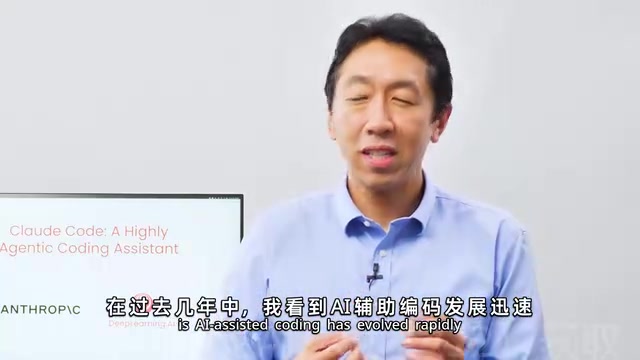
Claude Code Complete Tutorial: Best Practices from Architecture to Parallel Development
DeepLearning.ai and Anthropic's joint Claude Code course covers architecture, parallel development, and MCP server integration. From RAG chatbots to Figma-to-code workflows, master AI coding assistant best practices.
Read more →

·3 min
The Four Stages of AI Coding Tool Evolution: From Code Completion to Multi-Agent Collaboration
A deep dive into the four stages of AI coding tool evolution: from code completion and chat Q&A to Agentic Coding and multi-Agent collaboration, explaining the design logic behind Claude Code, Cursor, and Codex.
Read more →
 Product Reviews
·1 min
Cursor 3.0 Deep Dive: Multi-Agent Parallelism, Design Mode & Best-of-N Model Comparison
Cursor 3.0 evolves from an AI coding assistant into an Agent fleet command center. Deep dive into multi-agent parallelism, Design Mode, and Best-of-N model comparison.
Read more →
 Product Reviews
·1 min
Cursor 3.0 Deep Dive: Multi-Agent Parallelism, Design Mode, and Best-of-N Model Comparison
Cursor 3.0 evolves from an AI coding assistant into an Agent fleet command center. Explore multi-agent parallelism, Design Mode, and Best-of-N model comparison.
Read more →
 Tutorials
·3 min
Andrew Ng Recommends Claude Code: From Getting Started to Figma-to-Web App in Practice
Andrew Ng and Anthropic launch a Claude Code course covering RAG chatbots, data analysis, and Figma-to-web apps, with MCP server integration and parallel session best practices.
Read more →
 Product Reviews
·3 min
Claude Code v2.1.143 Update: Plugin Dependency Chain Management & Background Session State Persistence
Claude Code v2.1.143 brings intelligent plugin dependency chain management, background session model parameter persistence, Agent mode parameterized configuration, and critical Windows/macOS bug fixes.
Read more →
 Tutorials
·2 min
Five Mastery Levels of Claude: From Basic Q&A to Architect-Level Autonomous Systems
Based on 400+ hours of hands-on experience, a systematic breakdown of five progressive Claude mastery levels: from basic Q&A to architect-level autonomous systems with specific methods for each.
Read more →
 Tutorials
·3 min
The Complete Guide to Git & GitHub Core Concepts: Version Control in the AI Era
A systematic guide to Git and GitHub core concepts covering Commit, Branch, Merge, Pull Request and more. Master version control from local repos to remote collaboration using AI.
Read more →
 Tutorials
·4 min
Zero-Code in Practice: Building and Publishing a WeChat Mini Program from Scratch with AI
Complete guide to building and publishing a WeChat Mini Program with zero coding using ChatGPT and Codex — from account registration to AI-generated design, code, and question banks to review and launch.
Read more →
 Product Reviews
·3 min
Cursor 2.0 Deep Dive: Hands-On Testing of Five Major Features Including Custom Models and Multi-Agent Parallel Development
Deep dive into Cursor 2.0's five major updates: custom Composer model, Git Worktrees multi-agent parallel development, Agent View mode, built-in browser, and more—with hands-on evaluation.
Read more →
 Product Reviews
·3 min
Cursor 2.0 Deep Dive: The In-House Composer Model and Five Major Feature Upgrades
Deep dive into Cursor 2.0's five new features: the in-house Composer model with major speed gains, Git Worktree multi-Agent parallel development, Agent View mode, built-in browser, and more.
Read more →
 Product Reviews
·3 min
Claude Code 2.1 Deep Dive: Hooks Automation, MCP Ecosystem & Multi-Agent Collaboration Fully Explained
Full breakdown of Claude Code 2.1: Opus 4.6 model upgrade, Hooks deterministic automation, Skills multi-agent collaboration, MCP tool chain integration, plus IDE shortcuts and practical commands.
Read more →
 Tutorials
·3 min
The Complete Guide to Claude Code Commands: 10 Core Commands & Practical Workflows
A systematic guide to Claude Code's 10 core commands, keyboard shortcuts, CLI parameters & 4 practical workflows covering context management, code review, model switching & cost optimization.
Read more →