#hybrid reasoning model
564 related articles

·2 min
Nex N2 Pro In-Depth Review: How Does This Chinese Open-Source Agent Model Really Perform?
In-depth review of Nex N2 Pro, a Chinese open-source Agent model. Covers frontend code generation, Agent workflows, and benchmark comparisons, revealing gaps between official claims and independent tests.
Read more →

·3 min
Building an AI Stock Analysis System with Qwen3 + Dify: A Hands-On Tutorial
A hands-on guide to building a real-time AI stock analysis system using Dify workflows and Qwen3. Covers deployment, technical indicators (RSI/MACD/Bollinger Bands), and trading strategy generation.
Read more →

·3 min
Codex vs Claude Code Cost Comparison: Breaking Down the Real Reasons Behind the 10x Price Gap
Codex costs $15 vs Claude Code's $155 for the same task. We break down the 10x price gap across Token pricing, consumption, and work patterns with practical tips.
Read more →

·3 min
AI Engineering in Practice: The Progression Path from Vibe Coding to Enterprise-Level Development
Deep dive into AI engineering methodology, comparing Vibe Coding vs enterprise development, covering Claude Code, Codex tool selection, SuperPower plugin practices, and the path from prototype to production.
Read more →

·3 min
Pi: A Lightweight AI Coding Agent Framework — Setup & Hands-On Guide
A deep dive into Pi, a minimalist AI coding Agent framework covering multi-model support, extensions, skill loading, and hands-on custom extension building with model mixing strategies.
Read more →

·3 min
The Complete Evolution of RAG: A Six-Generation Journey from Naive Retrieval to Multimodal
A complete guide to RAG evolution from Naive RAG through Advanced, Agentic, Graph, and Multimodal RAG — covering core techniques, pain points solved, and real-world use cases.
Read more →
·3 min
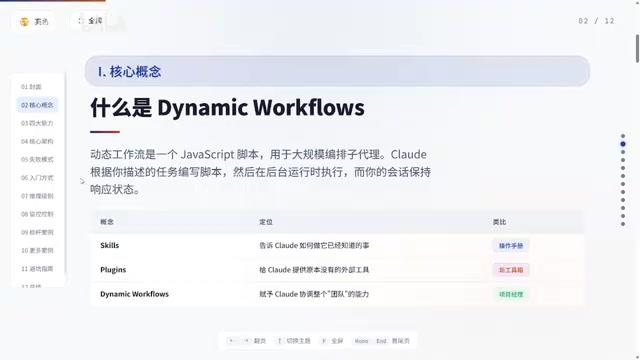
Claude Code Dynamic Workflows: Orchestrating Hundreds of Sub-Agents Working in Parallel
Deep dive into Claude Code Dynamic Workflows: enable parallel sub-agent orchestration via three methods for multi-agent collaboration and automated pipelines.
Read more →

·1 min
DiffusionGemma: Google's Open-Source Diffusion Language Model with 4x Faster Inference
Google releases DiffusionGemma, an open-source diffusion language model achieving up to 4x faster inference and real-time self-correction by generating text in parallel rather than token by token.
Read more →

·3 min
Spring AI + Ollama: Run Large Language Models Locally at Zero Cost
Learn how to integrate Spring AI with Ollama to run open-source LLMs like Llama and Gemma locally for free. Covers setup, configuration, and code — switch from OpenAI by just changing dependencies.
Read more →

·2 min
MiniMax M3 Launches on Fireworks: 512K Context and MSA Sparse Attention Explained
MiniMax M3 launches on Fireworks with 512K context and multimodal input. MSA sparse attention delivers 9x prefill and 15x decode speedups. Deep dive into architecture, pricing, and open-model competition.
Read more →

·3 min
AI Agent Hands-On Learning Path: A Complete Guide from Beginner to Enterprise-Level Development
A systematic AI Agent development learning roadmap covering prompt engineering, RAG, multi-Agent collaboration, tool calling, and more—with phased learning advice and 28 hands-on project references.
Read more →

·4 min
Local Deployment of Claude Code: Principles and Practical Guide for Three Approaches
A detailed guide to locally deploying Claude Code with three approaches (LM Studio, Ollama, vLLM), covering architecture, protocol translation, hardware selection, and model recommendations.
Read more →

·3 min
Loopcraft Explained: Loop-Stacking Architecture Design in AI Agent Development
Deep dive into Loopcraft loop-stacking architecture for AI Agent development, covering retry, self-validation, and meta-learning loops to boost reliability.
Read more →

·3 min
HarmonyOS 7 Developer Beta Launches: A Deep Dive into System-Level Transformation for the Agent Era
HarmonyOS 7 developer Beta launches, claiming to be the world's first AI-native OS. Deep analysis of Xiaoyi Agent, StarShield security, Galaxy Interconnect, and the OS AI competition landscape.
Read more →

·3 min
A Three-Month Roadmap to LLM Development: A Deep Dive into the Learning Path from Zero to Freelancing
A deep dive into the three-step LLM development learning path: from prompt engineering and RAG knowledge bases to AI Agent development, with realistic timelines for beginners and experienced developers.
Read more →

·1 min
Gemma 4 12B: Google's Open-Weight Model Runs Locally on Your Laptop
Google releases Gemma 4 12B, an open-weight model that runs locally on laptops. Learn about its performance, local deployment value, and the open-source LLM competitive landscape.
Read more →

·2 min
Perplexity Partners with Intel: Local AI Models and Hybrid Inference Come to Laptops
Perplexity partners with Intel to bring local AI models and hybrid inference to Core Ultra Series 3 laptops. We break down the architecture, NPU capabilities, and the cloud-to-edge AI trend.
Read more →

·3 min
AI Large Model Learning Roadmap Breakdown: Three Stages from Application Development to Model Fine-Tuning
Deep breakdown of a popular AI large model learning roadmap covering LangChain, RAG, Agent, and LoRA fine-tuning across three stages, with analysis of its strengths and limitations for career changers.
Read more →

·4 min
AI Agent Development: A Complete 6-Week Systematic Learning Roadmap
A 6-week systematic learning roadmap for AI Agent development, covering core architecture, ReAct principles, multi-agent collaboration, RAG integration, and deployment.
Read more →

·3 min
Andrew Ng's New Course Explained: A Practical Guide to Using OpenAI's O1 Reasoning Model
Deep dive into Andrew Ng and OpenAI's Reasoning with O1 course covering test-time scaling, new prompting paradigms, multi-model orchestration, and practical applications for developers.
Read more →