#lightweight object detection
125 related articles
Morph Reflexes: Building Real-Time Beh…
·4 min
Morph Reflexes: Building Real-Time Behavioral Guardrails for AI Agents with Multi-Head Classifiers
Morph Reflexes is an open-source AI agent monitoring tool that uses multi-head classifiers for real-time trace classification — enabling safety guardrails, quality scoring, and training data filtering.
Read more →

·7 min
Inside the AI Fraud Industry Chain: Deepfakes and Identity Deception Revealed Through the Lily Jay Incident
The Lily Jay incident exposes the AI fraud industry chain: how deepfakes, image synthesis, and content automation create fake identities. Practical methods for identifying false content in the AI era.
Read more →

·4 min
Claude Code New Features Deep Dive: Remote Control, Multi-Agent Parallelism, and Auto Memory
Deep dive into Claude Code's major new updates: Remote Control for session takeover, Auto Mode to reduce interruptions, multi-agent code review, Auto Memory, and Routines for cloud automation workflows.
Read more →

·7 min
Vibecoding in Practice: How to Guide AI to Precisely Borrow from Open-Source Projects Without Going Off Track
In AI-assisted coding, having AI borrow from open-source projects often leads to wholesale copying. This article uses the GapGun audio tool as a case study to show how to set borrowing boundaries and guide AI precisely.
Read more →

·6 min
Agent Studio: A Unified Platform for Authoring AI Roles and Skills
Agent Studio unifies AI Agent role definition (Subagents) and Skills on one platform, enabling coordinated orchestration through a shared MCP endpoint, progressive disclosure, and moderated community publishing.
Read more →

·6 min
The New Normal of AI Programming: How Autonomous Agent Development Is Reshaping Software Engineering
AI Agent autonomous programming is evolving from niche experiments to the industry default. This article analyzes the three stages of AI-assisted programming, its impact on developer skills, process restructuring, and key challenges.
Read more →

·2 min
Vibe Coding in Practice: Creating Particle Effects and Retro Camera Filters with Zero Code
A hands-on Vibe Coding walkthrough using Qwen 3.7 Max and CoderWork to build gesture-controlled 3D particle systems and retro camera filters with zero code.
Read more →

·3 min
Industrial Defect Detection: OpenCV vs. YOLO — A Complete Guide to Scenario-Based Decision Making
Compare OpenCV vs. YOLO for industrial defect detection. Analyze selection criteria across data needs, accuracy, deployment, and get learning roadmap advice.
Read more →
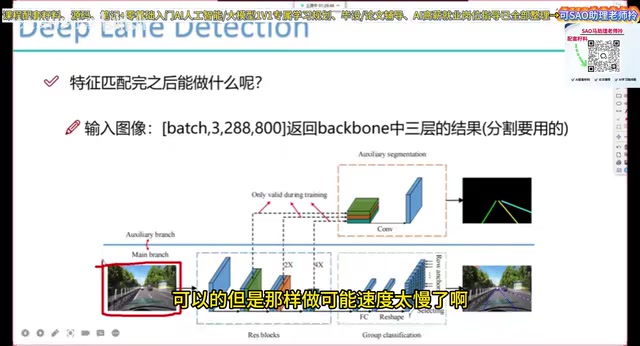
·4 min
Deep Learning Lane Detection: From Segmentation to Classification for 300+ FPS Real-Time Inference
Deep learning lane detection algorithm that simplifies dense segmentation into efficient grid classification, achieving 300+ FPS real-time inference with row selection, Focal Loss, and expectation-based localization.
Read more →

·3 min
NVIDIA XR AI Platform Explained: Full-Stack AI Agent Development for AR Glasses
Deep dive into how NVIDIA's XR AI platform enables AI Agent development for AR glasses through cloud-edge architecture, covering visual perception, voice interaction, and multimodal reasoning.
Read more →

·4 min
Deep Dive into Six AI Development Tools: Loop Recipe Library, Vercel Agent Framework, and More
Deep analysis of Loop workflow recipes, Vercel's open-source Agent framework, Pyker AI-native project management, Arrow P2P tool, DBX database client, and NVIDIA's Skill Spectre security tool.
Read more →

·4 min
Dark Mode for WeChat Mini Programs: One-Click Color Scheme Generation with Pencil MCP
Complete guide to WeChat Mini Program dark mode: from generating dark color schemes with Pencil MCP and AI image generation, to building a Theme.js switching architecture with CSS variables and system dark mode detection.
Read more →

·3 min
Developing a 2D RPG with Godot 4: A Hands-On Tutorial for Complete Beginners
A complete tutorial on building a 2D RPG from scratch with Godot 4 and GDScript, covering tilemaps, character controls, enemy AI combat, and scene transitions for beginners.
Read more →

·4 min
Building a 2D Shooter with Cocos + Trae: A Complete Zero-Code AI Programming Walkthrough
Learn how to build a Vampire Survivors-style 2D shooter using Cocos Creator and Trae CN with zero coding — from setup and design docs to AI code generation and debugging.
Read more →

·2 min
Claude Proactively Discovers Bugs in an Open-Source Library: AI Evolves from Coding Assistant to Collaborator
Simon Willison releases asyncinject 0.7, fixing bugs proactively discovered by Claude. This case shows AI evolving from passive coding assistant to active code reviewer and collaborator.
Read more →

·3 min
Getting Started with AI Agents: A Complete Learning Path from Zero to Production
A comprehensive guide to AI Agent architecture covering ReAct paradigm, multi-agent collaboration, RAG integration, and the planning-memory-tools framework, with a complete learning path from concepts to production deployment.
Read more →

·2 min
CascadeFlow: Deep Dive into the AI Agent Cascading Runtime Optimization Framework
Deep dive into the CascadeFlow open-source framework and how it optimizes AI Agent cost, latency, quality, and policy decisions through cascading runtime mechanisms for production deployment.
Read more →

·4 min
Cursor Deep Dive: Core Advantages and Use Cases of an AI-Native Programming Tool
Deep dive into Cursor's four core features, six-dimension comparison with traditional IDEs, and analysis of target users. Learn how this AI-native code editor redefines programming through natural language interaction.
Read more →

·3 min
OpenAI Researcher: Spec Documents Are the Real Code
OpenAI researcher Sean Grove argues code is only 10-20% of value—spec documents are the real source code. From Vibe Coding insights to model alignment, why writing specs will be the scarcest skill in the AI era.
Read more →
Meta SAM 3D Receives CVPR Best Paper H…
·2 min
Meta SAM 3D Receives CVPR Best Paper Honorable Mention: A Segmentation Breakthrough from 2D to 3D
Meta AI's SAM 3D wins CVPR 2026 Best Paper Honorable Mention, extending universal segmentation from 2D images to 3D space with major implications for robotics, autonomous driving, and AR/VR.
Read more →