#multi-Agent collaboration
1138 related articles
 Industry Insights
·4 min
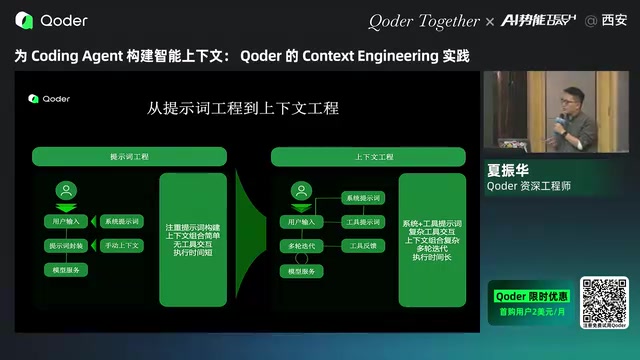
Qoder's Context Engineering in Practice: Four-Layer Retrieval Engine and Memory System Architecture
Deep analysis of Qoder's (Tongyi Lingma international edition) context engineering architecture, including its four-layer retrieval engine, memory engine, context caching, and core product design.
Read more →
 Product Reviews
·3 min
Ruflo: A Multi-Agent Orchestration Solution That Turns Claude Code into a 100-Person AI Team
Ruflo is an open-source multi-agent orchestration platform that upgrades single-threaded Claude Code into a distributed AI dev team with 100+ specialized Agents and a SANA self-learning engine.
Read more →
 Product Reviews
·2 min
Agent Memory: Giving AI Coding Agents Persistent Memory Across Sessions
Agent Memory is an open-source local memory layer providing persistent, cross-session, cross-tool long-term memory for AI coding agents like Claude Code, Cursor, and Codex.
Read more →
 Product Reviews
·2 min
Cursor Composer 2.5 Hands-On: An AI Coding Model That's Faster and 10x Cheaper
Hands-on review of Cursor Composer 2.5's Agent view, Plan mode, and right panel features. Coding ability matches Claude and GPT top models at up to 10x lower cost with significantly faster speed.
Read more →
 Tutorials
·3 min
35 Lines of Prompts Let Codex Auto-Optimize Your Workflow — Reposted by OpenAI's President
An OpenAI employee used just 35 lines of prompts to have Codex analyze 30 days of work history, identify repetitive tasks, and generate reusable automated Skills. Combined with screen reading and long-term memory, Codex is becoming a proactive workflow optimization agent.
Read more →
 Tutorials
·3 min
Claude Code Hidden Configurations Fully Explained: From Chat Assistant to Semi-Automated Programming Workflow
Explore Claude Code's source code to unlock hidden configurations like Hooks, Agents, Permissions, and Memories. Transform your AI assistant into a customizable semi-automated development workflow.
Read more →
 Tech Frontiers
·2 min
LFM2.5-8B-A1B: A MoE Model with 1.5B Active Parameters Delivering 4x Its Weight Class Performance
Liquid AI releases LFM2.5-8B-A1B, a MoE model with 8B total params but only 1.5B active, matching 6B-class models in tool calling. Supports 128K context, local deployment, multilingual, with SGLang Day-0 support.
Read more →
 Tutorials
·2 min
Orchestrating AI Agents as State Machines: Stop Being a Human Confirmation Button
Explore the next evolution of AI coding: applying CI/CD engineering practices to orchestrate Agents as state machines with YAML templates, Gates, and Dashboards for autonomous multi-Agent progression.
Read more →
 Tutorials
·3 min
BMad-Method: Building an AI Agile Development Team with a Multi-Agent Framework
Deep dive into BMad-Method, an open-source multi-agent framework simulating a full agile team—from business analysis to QA—supporting Claude Code, Cursor, and more.
Read more →
 Product Reviews
·3 min
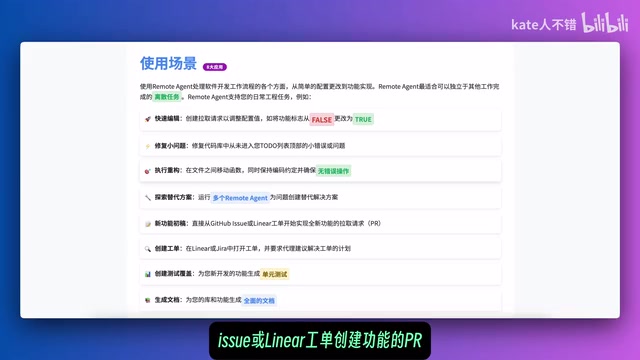
Augment Remote Agent Hands-On: Running 10 Cloud AI Agents in Parallel for Programming
Hands-on review of Augment Remote Agent: 10 cloud AI Agents coding in parallel, covering bug fixes, PR generation, documentation, and more with detailed workflows and real-world examples.
Read more →
 Tutorials
·3 min
Spring AI Agent Utils: A Java Agent Toolkit Reverse-Engineered from Claude Code's Core Features
Deep dive into Spring AI Agent Utils toolkit covering Skill modules, Ask a User Question, To Do Write, Auto Memory, and multi-Agent orchestration — empowering Java developers to build powerful AI Agents.
Read more →
 Tutorials
·2 min
Harness Engineering Deep Dive: Multi-Level Memory and Multi-Agent Collaborative Development in Practice
Deep dive into Harness Engineering: deconstructing Claude Code's multi-level memory, defense-in-depth, Hermes Agent autonomous evolution, and multi-Agent collaboration for industrial-grade AI development.
Read more →
 Tutorials
·1 min
Context Engineering Replaces Prompt Engineering: A Guide to Boosting Programming Efficiency with Claude Code
Learn how Context Engineering replaces Prompt Engineering to boost Claude Code efficiency. Build complex multi-Agent projects with zero coding using structured context files.
Read more →
 Industry Insights
·3 min
AI Fully Automated Orchestration in Practice: How Software Production Costs Are Being Completely Disrupted
Deep analysis of AI fully automated software orchestration: from Claude Code workflows to parallel orchestration strategies, exploring how models like MiniMax M1 drive software production costs toward zero.
Read more →
 Product Reviews
·2 min
Claude Opus 4.8 Hands-On: What Can You Build in One Hour?
Hands-on testing of Claude Opus 4.8's coding and creative abilities, including Mario game and Slay the Spire-style card game development, quota consumption, and real-world bug frequency.
Read more →
 Tutorials
·2 min
MCP Protocol Practical Guide: The Standard Interface for Connecting LLMs to Everything
Deep dive into MCP (Model Context Protocol) principles and practical applications. Learn how LLMs connect to external tools via MCP to become agents, covering Java tech stacks, MCP Server ecosystem, Cherry Studio demos, and A2A protocol comparison.
Read more →
 Tutorials
·3 min
Practical Guide to Building Multi-Agent Collaborative Applications with CrewAI + FastAPI
Learn how to build a multi-Agent collaborative system with CrewAI and FastAPI. Covers Agent, Task, Crew concepts, GPT/Tongyi Qianwen/Ollama integration, with complete code examples and model comparisons.
Read more →
 Tutorials
·2 min
WenzAgent Open-Source Framework: A Practical Tutorial for Multi-Agent Collaborative Management on LAN
A detailed guide on deploying WenzAgent, an open-source multi-Agent management framework under Apache License, supporting LAN-based multi-device AI agent collaboration with Server-Client architecture.
Read more →
 Tutorials
·2 min
Building an Agent Framework from Scratch: Breaking Down the Four Core Modules with Code Implementation
Learn how to split AI Agent capabilities into four modules—Tool Registry, Message Store, Agent Runtime, and Built-in Tools—and build a reusable, extensible Agent framework using Python decorators.
Read more →
 Tutorials
·3 min
Getting Started with LangChain: Core Concepts and Hands-On Guide for LLM and Agent Development
A systematic guide to LangChain's core features, covering LLM vs. Agent concepts, unified interface design, multi-provider support, environment setup, and hands-on code examples for AI app development.
Read more →