#multi-agent development
1157 related articles
 Industry Insights
·3 min
AI Fully Automated Orchestration in Practice: How Software Production Costs Are Being Completely Disrupted
Deep analysis of AI fully automated software orchestration: from Claude Code workflows to parallel orchestration strategies, exploring how models like MiniMax M1 drive software production costs toward zero.
Read more →
 Product Reviews
·2 min
Claude Opus 4.8 Hands-On: What Can You Build in One Hour?
Hands-on testing of Claude Opus 4.8's coding and creative abilities, including Mario game and Slay the Spire-style card game development, quota consumption, and real-world bug frequency.
Read more →
 Tutorials
·2 min
MCP Protocol Practical Guide: The Standard Interface for Connecting LLMs to Everything
Deep dive into MCP (Model Context Protocol) principles and practical applications. Learn how LLMs connect to external tools via MCP to become agents, covering Java tech stacks, MCP Server ecosystem, Cherry Studio demos, and A2A protocol comparison.
Read more →
 Product Reviews
·2 min
Dyad: A Free, Open-Source AI Full-Stack Builder — An In-Depth Look at This Lovable Alternative
In-depth review of Dyad, an open-source AI full-stack builder. Supports local execution, multiple AI models, and component-level editing. A free, privacy-first alternative to Lovable and Bolt.new.
Read more →
 Tutorials
·2 min
CrewAI Multi-Agent Collaboration in Practice: Core Concepts, Model Comparison & API Deployment
A deep dive into CrewAI's four core concepts for multi-agent collaboration, with hands-on FastAPI deployment and a comparison of GPT-4o-mini, Qwen MAX, and Llama 3.1.
Read more →
 Tutorials
·3 min
Practical Guide to Building Multi-Agent Collaborative Applications with CrewAI + FastAPI
Learn how to build a multi-Agent collaborative system with CrewAI and FastAPI. Covers Agent, Task, Crew concepts, GPT/Tongyi Qianwen/Ollama integration, with complete code examples and model comparisons.
Read more →
 Tutorials
·2 min
WenzAgent Open-Source Framework: A Practical Tutorial for Multi-Agent Collaborative Management on LAN
A detailed guide on deploying WenzAgent, an open-source multi-Agent management framework under Apache License, supporting LAN-based multi-device AI agent collaboration with Server-Client architecture.
Read more →
 Tutorials
·3 min
The Complete Guide to Spring AI: A Full Learning Path for Java Engineers Building AI Applications
A comprehensive guide to Spring AI covering LLM integration, prompt engineering, RAG knowledge bases, and five AI Agent patterns, with three enterprise projects for Java engineers.
Read more →
 Tutorials
·3 min
Getting Started with LangChain: Core Concepts and Hands-On Guide for LLM and Agent Development
A systematic guide to LangChain's core features, covering LLM vs. Agent concepts, unified interface design, multi-provider support, environment setup, and hands-on code examples for AI app development.
Read more →
 Tutorials
·3 min
AI Agent Learning Roadmap: From Beginner to Enterprise-Level Development in Three Months
A detailed three-month AI Agent learning roadmap covering LLM basics, ReAct paradigm, LangChain, memory mechanisms, tool calling, and multi-agent collaboration with practical project suggestions.
Read more →
 Tutorials
·3 min
The Complete Guide to Cursor 2.0: Plan, Agent, and Ask — Three AI Modes Explained
A detailed guide to Cursor 2.0's three AI modes (Plan, Agent, Ask) and core features including inline editing, multi-Agent parallelism, project rules, and version control for efficient AI-powered development.
Read more →
 Product Reviews
·2 min
Cursor 2.0-2.3 Core Evolution: AI Programming Enters the Era of Fleet Command
Deep dive into Cursor 2.0-2.3: multi-agent parallel programming, auto-evaluation, built-in browser, runtime debugging—pushing developers from coders to AI fleet commanders.
Read more →
 Product Reviews
·3 min
Cursor 2.0 In-Depth Review: Five Major New Features Including Custom Model, Multi-Agent Parallelism, and More
In-depth analysis of Cursor 2.0's five core updates: custom Composer model speed tests, Git Worktrees multi-agent parallel development, built-in browser, and a three-model comparison of Claude, GPT-5, and Composer.
Read more →
 Tech Frontiers
·2 min
Claude Opus 4.8 Deep Dive: Honesty Matters More Than Benchmarks
Claude Opus 4.8 core upgrade: code bug oversight rate reduced 4x, model becomes more honest. Covers Dynamic Workflows parallel orchestration, Claude Code quota reset, effort control, and upcoming Miscells model.
Read more →
 Tutorials
·2 min
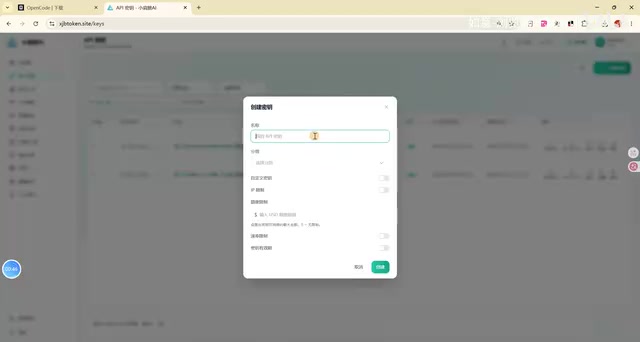
Complete Tutorial: Using GPT to Automatically Configure Claude Opus 4
Learn how to use GPT's high-intensity thinking mode to automatically configure Claude Opus 4.6/4.7 Max thinking mode in OpenCode, including proxy channel setup, API Key creation, and environment configuration.
Read more →
 Tutorials
·3 min
Harness Engineering: A Practical Guide to AI Programming — From Prompts to Mastery
Explore the three stages of AI programming evolution: from Prompt Engineering to Context Engineering to Harness Engineering. Master enterprise-grade AI coding with Cloud Code + VS Code.
Read more →
 Industry Insights
·3 min
Warp Bets on GPT-5.5: How AI Coding Agents Are Reshaping Open-Source Development Workflows
Warp deeply integrates GPT-5.5 to build cross-environment AI coding agents spanning local terminals, cloud deployment, and open-source collaboration. Explore its architecture, open-source strategy, and differentiation from GitHub Copilot.
Read more →
 Product Reviews
·3 min
Superpowers vs GStack In-Depth Comparison: How to Choose Your Claude Code Plugin
In-depth comparison of Claude Code's top open-source plugins Superpowers and GStack — their skills, workflows, and use cases to help developers choose the best AI coding assistant setup.
Read more →
 Tutorials
·3 min
Cursor Multi-Agent Workflow: A Practical Guide to Main Thread & Grunt Collaboration
Learn the Cursor "Main Thread & Grunt" multi-agent workflow: use a high-tier model for complex tasks and a low-tier model for simple tasks in parallel to maximize AI coding efficiency.
Read more →
 Industry Insights
·3 min
How Jane Street Built a Custom AI Programming Toolchain for OCaml
Jane Street's AI team details how they built a custom LLM toolchain for OCaml, covering workspace snapshot training data, RL with code evaluation, and the AID editor architecture.
Read more →