#non-programmer
97 related articles

·1 min
Deep Dive into Cursor: How an AI-Native IDE Differs from Traditional Code Editors
A comprehensive analysis of Cursor AI IDE's core features, intelligent code generation, and context awareness vs traditional editors in completion, debugging, and refactoring.
Read more →

·2 min
The Golden Age of the Early Internet: What Did We Really Lose?
From GeoCities homepages to algorithmic filter bubbles, the early internet's spirit of openness and creativity is fading. Can the AI era bring it back?
Read more →

·3 min
Codex vs Claude Code: AI Coding Agent Tool Comparison & Getting Started Guide
In-depth comparison of OpenAI Codex and Anthropic Claude Code — two top-tier AI coding agents. Explore their capabilities, ideal users, and practical tips to get started.
Read more →

·3 min
Codex vs. Claude Code: A Complete Beginner's Guide from Registration to Hands-On Practice
A detailed comparison of Codex and Claude Code AI agent programming tools, with a step-by-step guide to GPT account registration, phone verification, and subscription cost-saving tips.
Read more →

·4 min
Vibe Coding Beginner's Guide: Tool Selection Across Three Categories with Practical Examples
A comprehensive guide to Vibe Coding's three tool categories: Agent frameworks, CLI Coding, and IDE tools, with practical examples including Snake game and data analysis workbench.
Read more →

·3 min
Cursor vs Codex In-Depth Comparison: Where Should You Spend Your $200?
In-depth comparison of Cursor and Codex AI programming tools — their strengths, ideal use cases, and cost differences. Find out where your $200 is best spent.
Read more →

·4 min
Making 5-Figure Monthly Income with AI-Developed Chrome Extensions: A Complete Hands-On Guide
Learn how to use AI tools to develop Chrome extensions for overseas monetization, covering demand research, Cursor development, store review, and subscription revenue with a 28-day timeline.
Read more →

·4 min
AI Programming for Complete Beginners: A Full Guide from Installation to Real Projects
A complete beginner's guide to AI programming with Claude Code: installation, model setup, cost-saving tips, and hands-on projects using natural language — no coding experience required.
Read more →

·3 min
Guo Yu on the AI Agent Era: The End of Software and the Fate of Knowledge Workers
Former ByteDance engineer Guo Yu analyzes the AI Agent revolution: how Claude Code's Skill feature signals the end of traditional software, the SaaS collapse, and the future of knowledge workers.
Read more →

·3 min
Vibe Coding in Practice: Building a GPS Check-in App from Scratch with AI — A Complete Walkthrough
A detailed guide to the four-step document-driven Vibe Coding method: from requirements docs to code generation, building a GPS check-in app with AI from scratch.
Read more →

·2 min
Using HTML Instead of PPT for Dynamic Presentations: 1 Hour to Complete 3 Days of Work
A designer tested using AI-assisted HTML coding in Cursor to create dynamic presentations, cutting 3 days of work to 1 hour. Covers animation, interaction design, and Cursor workflow.
Read more →

·2 min
Bolt.new Mobile App Teaser: Vibe Coding Coming to Your Phone
Bolt.new team teases Android and iOS Vibe Coding app development, expanding AI-assisted programming from desktop to mobile. Learn about the concept, significance, and industry trends.
Read more →
·2 min
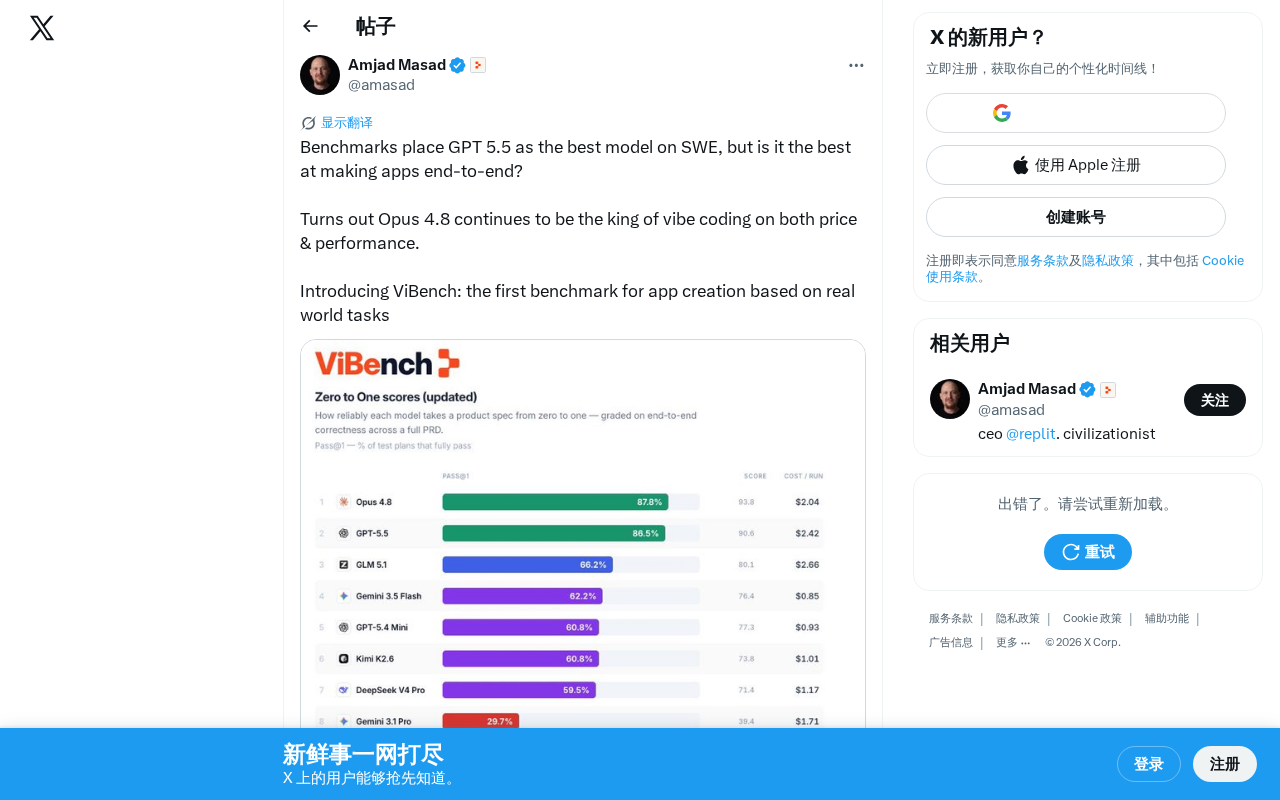
ViBench Benchmark: End-to-End App Creation Evaluation Reveals the True Level of AI Programming
ViBench is the first end-to-end app creation benchmark based on real-world tasks. Results show Claude Opus 4.8 leads in performance and cost-effectiveness, revealing gaps between SWE-bench scores and actual development capability.
Read more →
 Tutorials
·3 min
The Vibe Coding 6-Step Method: A Complete Process for Building Real Products with AI and Zero Coding Experience
A detailed guide to the Vibe Coding 6-Step Method: from requirements alignment and high-fidelity prototyping to technical planning, modular implementation, testing, and launch — helping non-coders build real products with AI.
Read more →
 Tutorials
·3 min
Master Git Without Coding: 5 Plain-Language Commands to Let AI Handle Version Control for You
How can coding beginners use natural language to operate Git? With just 5 plain-language commands via an AI assistant, handle initialization, saving, rollback, branching, and pushing to GitHub—zero experience required.
Read more →
 Tutorials
·3 min
Building a Vocabulary App with Claude Using Zero Code: From Requirements Description to Deployment
A non-programmer built a vocabulary app with human-like pronunciation, verb conjugation lookup, and SM2 spaced repetition by conversing with Claude AI—zero coding required.
Read more →
 Tutorials
·2 min
Five Mastery Levels of Claude: From Basic Q&A to Architect-Level Autonomous Systems
Based on 400+ hours of hands-on experience, a systematic breakdown of five progressive Claude mastery levels: from basic Q&A to architect-level autonomous systems with specific methods for each.
Read more →
 Tech Frontiers
·2 min
Google AI Studio Now Directly Connects to Gmail/Drive/Sheets for One-Stop AI App Development
Google AI Studio adds direct connectivity to Gmail, Google Drive, and Google Sheets, enabling developers to build, test, and share AI apps connected to Google Workspace in one place.
Read more →
 Tutorials
·2 min
Dify 1.8 Deployment Guide: Complete Walkthrough from Docker Installation to AI App Development
Step-by-step Dify 1.8 Docker deployment guide covering environment setup, configuration, service startup, and first-use walkthrough for building low-code AI apps.
Read more →
 Tutorials
·2 min
Dify 1.8 Deployment Guide: Complete Walkthrough from Docker Installation to AI App Development
Step-by-step Dify 1.8 Docker deployment guide covering environment setup, configuration, service startup, and first-use walkthrough for building low-code AI apps.
Read more →