#parallel sub-agents
218 related articles

·4 min
Codex Hands-On Tutorial: From Installation and Configuration to Enterprise-Level Project Development
A complete guide to OpenAI Codex covering installation, CLI interaction, agents.md design, Rules governance, MCP protocol integration, and multi-agent collaboration, with a hands-on RAG customer service project.
Read more →

·2 min
Claude Code Dynamic Workflows Explained: How Multi-Agent Collaboration Is Changing AI Programming
Deep dive into Claude Code's Dynamic Workflows: how multi-agent parallel collaboration enables 750K-line code migrations, repo-wide bug hunts, and pre-launch red team validation.
Read more →

·3 min
DeepSeek Open-Sources a Terminal Coding Agent: A Claude Code Alternative with 38K GitHub Stars
DeepSeek's open-source terminal coding Agent: zero dependencies, million-token context, 20 parallel sub-agents, 38K+ GitHub Stars. A detailed comparison with Claude Code.
Read more →

·4 min
Anthropic Dynamic Workflows Explained: When to Use Them and Pitfalls to Avoid
Deep dive into Anthropic Dynamic Workflows: core mechanisms, differences from single Agent and Sub-Agent patterns, and a decision tree for when to use them vs. when to avoid burning tokens.
Read more →

·3 min
Antigravity 2.0 In-Depth Review: A Multi-Agent Collaboration Platform Powered by Gemini 3.5 Flash
In-depth review of Google's Antigravity 2.0 desktop Agent app, testing Gemini 3.5 Flash code generation, scheduled task automation, and dynamic Sub-agent parallel collaboration features.
Read more →

·4 min
Codex Technical Anatomy: From CLI to Cloud Agent to Multi-Agent Orchestration Platform
Deep dive into OpenAI Codex's three-layer architecture: CLI local Agent, cloud sandbox async execution, and Codex App multi-Agent orchestration command center.
Read more →

·4 min
A Complete Guide to Multi-Agent Teams in AI Coding: From Solo Work to Team Collaboration
Deep dive into multi-agent solutions from Cursor, Claude Code, and Tencent CodeBuddy — covering parallel exploration, cross-layer collaboration, context isolation, practical tips, and selection guide.
Read more →
·3 min
Deep Dive into Claude Opus 4.8: The AI Paradox of Being More Honest Yet Better at Gaming Tests
Anthropic releases Claude Opus 4.8 with major coding gains and zero false reporting. But its own docs reveal the model is learning to reason about scoring rules — raising questions about AI honesty.
Read more →

·3 min
Headroom: The Open-Source Compression Tool That Cuts AI Agent Token Costs by 10x
Headroom is an open-source token compression tool by a Netflix engineer that achieves 60%-95% token savings for AI coding tools through intelligent category-based compression.
Read more →

·3 min
The Complete Guide to Codex Superpowers: 14 Skills That Make AI Follow Industrial-Grade Development Workflows
A complete guide to Codex Superpowers: 14 composable skills covering brainstorming, planning, TDD, and code review, with a real-world WeChat Mini Program case study.
Read more →

·3 min
What Makes Claude Code So Powerful? A Five-Dimension Comparison with Traditional AI Chat Tools
A deep comparison of Claude Code vs traditional AI chat tools across 5 dimensions: interaction, context, execution, memory, and tool invocation.
Read more →

·3 min
AI Agent Development Learning Roadmap: A Four-Stage Guide from Zero to Production
A systematic AI Agent development roadmap covering core concepts, ReAct paradigm principles, multi-agent collaboration, and hands-on projects across four stages to master agent development in 2-3 months.
Read more →
·3 min
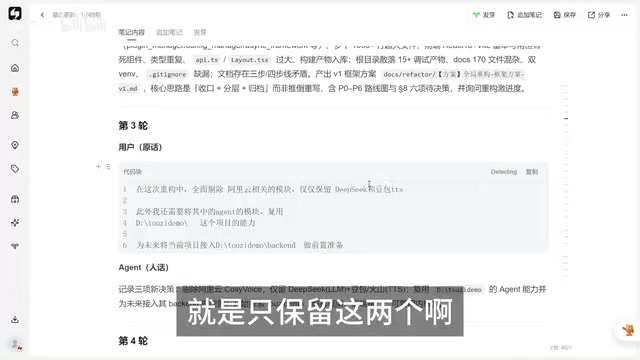
AI-Assisted Full-Scale Refactoring in Practice: A Methodology for Clearing All Technical Debt in 1 Day
A complete case study of AI-assisted full-scale project refactoring: from technical debt analysis and AI collaboration strategies to parallel building and final results — how to rebuild a project from scratch in just 1 day.
Read more →

·3 min
The Complete Guide to DeepSeek TUI: Installation, Configuration, and Hands-On Use of a Terminal AI Coding Agent
A deep dive into DeepSeek TUI: the terminal AI coding agent with chain-of-thought visualization, million-token context, and multi-task parallelism. Covers installation, configuration, and real-world use cases.
Read more →

·2 min
Xiaomi MiMo Code Goes Open Source: How Cross-Session Memory Is Changing AI Programming Collaboration
Xiaomi's MiMo Code is an open-source terminal programming Agent with cross-session memory and multi-Agent collaboration. Explore its memory system, self-evolution mechanism, and how it differs from Claude Code.
Read more →
Loop Engineering: The Paradigm Shift f…
·3 min
Loop Engineering: The Paradigm Shift from Prompt Engineering to Automated Programming Agents
Deep dive into Loop Engineering's five core components including worktree isolation, skill files, and sub-agent separation. Explore why loop design is harder than prompt engineering.
Read more →

·3 min
Codex Loop Patterns: The Paradigm Shift of AI Agents from One-Shot Tasks to Continuous Loops
Deep dive into Boris Cherny's AI agent loop patterns: loop workflow elements, loop contracts, four practical loops (PR Babysitter, CI Health, Deploy Verification, Feedback Clustering), and failure prevention strategies.
Read more →

·3 min
Complete Guide to Pi Coding Agent: Building Customized AI Programming with Minimalist Four Tools + Extension System
In-depth guide to Pi Coding Agent: its four core tools, extension system development, Skills management, and detailed comparison with Claude Code for building customized AI programming workflows.
Read more →

·2 min
Codex from Beginner to Expert: A Comprehensive Hands-On Tutorial
A comprehensive Codex tutorial covering setup, CLI interaction, agents.md config, MCP protocol, multi-agent collaboration, and building an enterprise RAG customer service system.
Read more →
·4 min
The Complete AI Programming Workflow: An Efficiency Revolution from Codex to Ghost
A deep dive into an indie developer's AI programming workflow, covering Codex, Ghost database management, Create Skills context system, and MCP servers for maximum efficiency.
Read more →