#research automation
1236 related articles

·4 min
PeakCode Open-Source AI Coding Tool: An All-in-One Solution Combining Claude Code and Codex
PeakCode is an open-source AI coding tool combining Claude Code's engineering power with Codex's UX, featuring Web/desktop modes, plugins, Git integration, and automated Agent capabilities.
Read more →

·4 min
Feedback Loops in Coding Agents: How Failure Becomes Fuel for Fixes
Deep dive into coding Agent feedback loops: how AI tools turn errors and test failures into correction signals. Covers context management, root cause analysis, death loop avoidance, and more.
Read more →

·3 min
Andrew Ng and Anthropic Launch the Definitive Claude Code Tutorial: A Complete Breakdown
Andrew Ng and Anthropic launch the definitive Claude Code course covering core principles, multi-instance parallel development, MCP server integration, and three hands-on projects for AI-assisted programming.
Read more →

·1 min
OpenAI Workspace Agents in Practice: A Complete Guide from Building to Scaled Deployment
A deep dive into building OpenAI ChatGPT Workspace Agents and enterprise deployment strategies, covering Agent Builder demos, Chief of Staff agent setup, and financial services use cases.
Read more →

·4 min
Claude + Trae IDE with Yakit: Automated Penetration Testing via MCP in Practice
Learn how to use Claude LLM with Trae IDE and MCP protocol to orchestrate Chrome browser and Yakit for automated penetration testing, covering setup, agents, and vulnerability detection.
Read more →

·2 min
Tsinghua and Zhipu Release Full-Stack Web Dev Benchmark: Top AI Models Fail Spectacularly
Tsinghua and Zhipu AI release a full-stack web dev benchmark with three difficulty levels. Top models like Gemini 2.5 Pro see scores plummet from 63 to 11.7 on full-stack tasks, exposing AI's real limits.
Read more →

·4 min
Agent Beginner's Guide: Architecture Principles and Practical Efficiency Tips
A deep dive into AI Agent principles, core architecture, and practical applications. Learn how Agents differ from LLMs and how to leverage Agent Skills to boost productivity.
Read more →

·4 min
MCP Protocol Explained: Architecture Principles and Hands-On Configuration Guide
Deep dive into MCP (Model Context Protocol): core concepts, four-layer architecture, and hands-on configuration. Learn how MCP transforms AI from a suggestion generator into a true executor.
Read more →

·4 min
MCP Hands-On Tutorial: Using AI to Automate Reverse Engineering of JS Encryption Algorithms
A detailed guide on MCP protocol setup and hands-on workflow showing how AI can automatically locate encrypted APIs, analyze obfuscated JS, set breakpoints, and restore sign algorithms to generate Python scraper code.
Read more →

·4 min
Coze Workflow in Practice: Complete Tutorial for AI One-Click Product Promo Video Generation
Step-by-step guide to building a Coze workflow for AI product promo videos, integrating HappyHours and Jimeng across 12 nodes with nine-grid storyboards and polling loops.
Read more →

·3 min
Roo Code Deep Dive: A Guide to the Multi-Model AI Coding Assistant for VS Code
Deep dive into Roo Code (formerly Roo Cline) VS Code extension: multi-AI backend switching, auto-diff code review, terminal command execution, and Architect Mode explained with practical tips.
Read more →

·2 min
Anthropic Sales Rep Builds AI Tools with Claude, Transforms from Account Executive to GTM Architect
Anthropic account exec Jared built Clasps, an AI email tool using Claude and RAG architecture, saving 2-3 hours daily and transforming into a GTM Architect.
Read more →

·3 min
AI Agent Development Tutorial: A Practical Guide from Zero to One-Person Company
A systematic guide to AI Agent development covering the three-stage learning path, core tech stack including LLM, RAG, and LangChain, plus how to build a one-person company through automated Agent workflows.
Read more →

·2 min
Hermes Agent in Practice: A Complete Guide from VPS Deployment to Telegram Integration
A detailed guide to deploying Hermes Agent on VPS with Docker, integrating Telegram Bot, configuring scheduled tasks, and scaling with multi-agent strategies.
Read more →

·2 min
Anthropic London Developer Conference: Claude Model Upgrades, Enterprise Agent Platform, and Developer Tools Fully Evolved
Anthropic's first London Code with Claude event unveiled Opus 4.7, Mythos, Cloud Managed Agents, Claude Code Routines, and more for AI-assisted development.
Read more →
Deep Dive into the Three AI Programmin…
·3 min
Deep Dive into the Three AI Programming Frameworks: The Right Way to Do Specification-Driven Development
Deep dive into the three frameworks of Specification-Driven Development (SDD) for AI programming: Blueprint, Execution Flow, and Change Records — solving the problem of AI code going off the rails.
Read more →

·3 min
Vibe Coding in Practice: A Junior Student Uses Cursor to Build a Multi-Agent System with 51 AI Officials Based on the Three Departments and Six Ministries Framework
A junior student uses Cursor and Vibe Coding to build a multi-agent system with 51 AI officials modeled on China's Three Departments and Six Ministries, featuring task distribution, approval workflows, and Token cost visualization.
Read more →
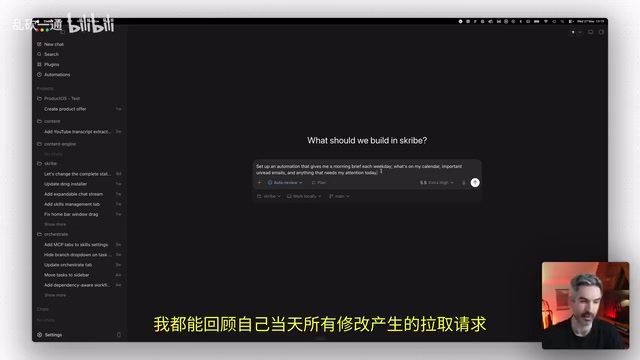
·2 min
AI Super App Showdown: A Comprehensive Comparison of Cursor, Codex, Claude, and Anti-Gravity
In-depth comparison of four AI Super Apps — Cursor, Codex, Claude Desktop, and Anti-Gravity — across 11 dimensions to help you find the best AI dev tool.
Read more →

·4 min
Agent Development Learning Roadmap: A Four-Stage Systematic Guide from Beginner to Practitioner
A systematic four-stage learning roadmap for AI Agent development, covering core concepts, classic paradigms like ReAct, multi-agent collaboration frameworks, and hands-on projects to master Agent development skills in 2-3 months.
Read more →

·4 min
The 8 Core Modules of Prompt Engineering: A Complete Guide from Fundamentals to Advanced Techniques
A systematic breakdown of the 8 core modules of prompt engineering, covering fundamentals, CoT, Few-shot, prompt security, and real-world AI applications.
Read more →