#responsible AI
1634 related articles
 Tutorials
·3 min
No Code Written: Launching a Personal Website in Two Hours with Gemini + Qoder
Build a website with zero coding! Learn how to use Gemini 3 for frontend code generation and Qoder for debugging and deployment to launch a personal site in two hours.
Read more →
 Tutorials
·4 min
Claude Code Installation & Configuration Pitfall Guide: From Environment Setup to Running Your First Command
Complete Claude Code installation guide covering Node.js setup, Git Bash config, network proxy settings, and API key management to help developers avoid common pitfalls.
Read more →
 Tutorials
·4 min
Vibe Coding in Practice: From Idea to Deployment in Just Five Steps
A detailed guide to the complete Vibe Coding workflow: design UI with Google Stitch, generate frontend with AI Studio, build backend with AntiGravity—go from idea to deployed app in five steps with zero coding experience.
Read more →
 Tutorials
·2 min
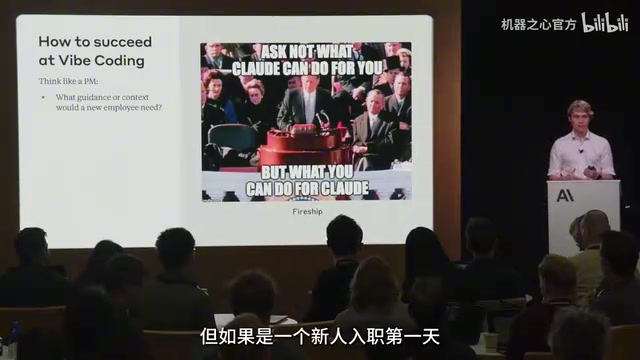
Anthropic Engineer Shares Four Golden Rules for Vibe Coding
Anthropic's coding agent lead shares four core principles for Vibe Coding in production: be AI's product manager, use it at leaf nodes, focus on verifiability, and embrace exponential growth.
Read more →
 Product Reviews
·4 min
Windsurf AI Game Development Test: Worst Performer Among Four Tools
Real-world test of Windsurf AI for 2D Super Mario game development: frequent timeouts, poor code quality, nearly an hour with persistent issues. Ranked last among DeepSeek, ChatGPT Codex, and GitHub Copilot.
Read more →
 Tutorials
·3 min
Vibe Engineering in Practice: AI Evolves from Code Generator to Programming Teammate
A deep dive into Vibe Engineering principles: context engineering, sub-agent collaboration, autonomous testing loops, plus OpenAI's case study of a 12-hour Kotlin-to-Rust rewrite.
Read more →
 Tutorials
·3 min
Building an AI Behavior Tree from Scratch: Python Window Capture Module Development Log
Detailed development log of a window capture module for an AI behavior tree game automation project, covering Python environment setup, OOP refactoring, and modular architecture design.
Read more →
 Product Reviews
·3 min
Ruflo: A Multi-Agent Orchestration Solution That Turns Claude Code into a 100-Person AI Team
Ruflo is an open-source multi-agent orchestration platform that upgrades single-threaded Claude Code into a distributed AI dev team with 100+ specialized Agents and a SANA self-learning engine.
Read more →
 Industry Insights
·3 min
Should Custom Software Teams Go All-In on LLMs? ChatGPT Itself Gave the Answer
Should custom software teams go all-in on LLMs? Through a deep conversation with ChatGPT, we analyze scenario selection, Token costs, and industry fit to provide a rational decision framework for ToB developers.
Read more →
 Tutorials
·2 min
CLAUDE.md Configuration Guide: Write Your Project Spec Using a Six-Section Structure
A detailed guide to configuring CLAUDE.md with a six-section structure covering project overview, features, tech stack, directory structure, code conventions, and constraints to boost AI coding efficiency.
Read more →
 Tech Frontiers
·2 min
SGLang v0.5.12.post1 Released: DeepSeek V4 Stability Fixes and Blackwell Adaptation
SGLang v0.5.12.post1 stability patch details: 12 critical fixes covering DeepSeek V4 garbled text and crashes, NIXL PD disaggregated inference logic, Blackwell B300 adaptation, and cold start optimization.
Read more →
 Tutorials
·2 min
Orchestrating AI Agents as State Machines: Stop Being a Human Confirmation Button
Explore the next evolution of AI coding: applying CI/CD engineering practices to orchestrate Agents as state machines with YAML templates, Gates, and Dashboards for autonomous multi-Agent progression.
Read more →
 Tutorials
·3 min
BMad-Method: Building an AI Agile Development Team with a Multi-Agent Framework
Deep dive into BMad-Method, an open-source multi-agent framework simulating a full agile team—from business analysis to QA—supporting Claude Code, Cursor, and more.
Read more →
 Tutorials
·3 min
Claude Code Source Code Study Guide: Efficiently Mastering Core AI Agent Development Architecture
Learn AI Agent development from Claude Code's 510K lines of source code, covering Agent Loop, context compression, multi-Agent orchestration, and two efficient study methods.
Read more →
 Tutorials
·3 min
Spring AI Agent Utils: A Java Agent Toolkit Reverse-Engineered from Claude Code's Core Features
Deep dive into Spring AI Agent Utils toolkit covering Skill modules, Ask a User Question, To Do Write, Auto Memory, and multi-Agent orchestration — empowering Java developers to build powerful AI Agents.
Read more →
 Industry Insights
·3 min
AI Fully Automated Orchestration in Practice: How Software Production Costs Are Being Completely Disrupted
Deep analysis of AI fully automated software orchestration: from Claude Code workflows to parallel orchestration strategies, exploring how models like MiniMax M1 drive software production costs toward zero.
Read more →
 Industry Insights
·3 min
Deep Dive into Three Major LLM Career Paths: Requirements, Tech Stacks, and Career Prospects
Deep analysis of three core LLM roles—Application Engineer, Development Engineer, and Algorithm Engineer—covering technical requirements, salary thresholds, and career prospects including RAG, fine-tuning, and inference deployment.
Read more →
 Tutorials
·2 min
MCP Protocol Practical Guide: The Standard Interface for Connecting LLMs to Everything
Deep dive into MCP (Model Context Protocol) principles and practical applications. Learn how LLMs connect to external tools via MCP to become agents, covering Java tech stacks, MCP Server ecosystem, Cherry Studio demos, and A2A protocol comparison.
Read more →
 Tutorials
·2 min
CrewAI Multi-Agent Collaboration in Practice: Core Concepts, Model Comparison & API Deployment
A deep dive into CrewAI's four core concepts for multi-agent collaboration, with hands-on FastAPI deployment and a comparison of GPT-4o-mini, Qwen MAX, and Llama 3.1.
Read more →
 Expert Opinions
·3 min
Anthropic Co-founder's Vatican Speech: Emotion-Like Signals Found Inside AI, Governance Can't Be Left to Tech Alone
Anthropic's co-founder delivered a landmark Vatican speech, admitting AI companies face structural conflicts of interest, revealing emotion-like signals found inside AI models, and calling for society-wide participation in AI governance.
Read more →