#technical interview tips
31 related articles

·5 min
Halo: A Real-Time Anti-Deepfake Tool That Detects AI Face-Swapping in Video Calls
Halo is a local real-time deepfake detection tool that identifies AI-synthesized faces during Zoom, Teams, and Google Meet video calls to prevent face-swapping fraud.
Read more →

·4 min
OpenAI Employee Shares How to Build an AI Work Operating System with Codex
OpenAI's Jason Liu shares how he uses ChatGPT Workbench and Codex to build an AI work OS: Chief of Staff automation, persistent threads, Skills/Plugins, browser control, and app-building methodology.
Read more →

·3 min
Codex Beginner's Guide: Hands-On Review of OpenAI's Programming Assistant with Practical Tips
A detailed guide to OpenAI Codex's core features, real-world usage, comparison with Claude Code, and DeepSeek configuration tips for developers choosing AI programming tools.
Read more →

·2 min
The Complete Methodology for Landing an Offer Using Claude for Mock Interviews
A job seeker used Claude for AI mock interviews, fixing rambling answers and buried examples through iterative feedback, and landed the offer. Full methodology inside.
Read more →

·2 min
Why Does Speech-to-Text Keep Failing? A Practical Guide to Optimizing Messy Audio Transcription
Meeting recordings, mixed languages, and background noise causing speech-to-text to drop words or produce gibberish? This article dives deep into ASR hallucination causes and offers practical solutions.
Read more →

·3 min
Java Developers Pivoting to AI: Why the Agent Direction Is the Best Choice
How can experienced Java and backend developers pivot to AI? This deep-dive explains why the Agent direction is the best fit — skills transfer well, market demand is high, and the path from "using frameworks" to "understanding source code" is clear.
Read more →

·3 min
Building LangGraph from Scratch in TypeScript: A Complete Agent Development Guide for Frontend Engineers
How can frontend developers get into AI Agent development with TypeScript? This guide covers a four-stage path from API calls to building LangGraph from scratch, including Zod, state management, and node-edge design.
Read more →

·4 min
LLM Job Interviews: Multi-Agent and Harness Engineering Are Now Must-Know Topics
Deep analysis of LLM job interview essentials: Multi-Agent architecture, Harness engineering, Agent Loop, sandbox isolation, and memory management with career transition tips.
Read more →

·4 min
Claude + Hexels MCP Hands-On: Three Multiplayer Games from a Single Prompt, Total Cost $68
Creator Adil used Claude Fable 5 and Hexels MCP to build three multiplayer games in one afternoon with zero code for just $68, attracting nearly 4,000 players.
Read more →

·2 min
AI Programming Learning Roadmap: A Complete Six-Stage Guide from Beginner to Expert
A systematic breakdown of the six-stage AI programming learning roadmap, from zero-code start to mastering Cursor and professional tools, methodology frameworks, advanced patterns, and project practice.
Read more →

·3 min
Deep Dive into Claude Sonnet 4: Replicating Lovable with Just Two Prompts
Deep dive into Claude Sonnet 4: replicate Lovable with two prompts, generate McKinsey-grade reports, build 2D games, and explore the AI Agent building block economy.
Read more →
·3 min
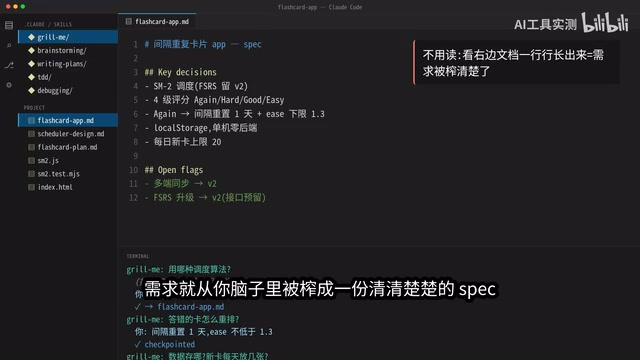
5 Daily Claude Code Tips: Let AI Interrogate You Instead
5 daily Claude Code tips: Grill Me for requirements, Brainstorming for architecture, Writing Plan for execution, TDD for testing, and Debugging for precise fixes — a complete AI coding workflow.
Read more →
·2 min
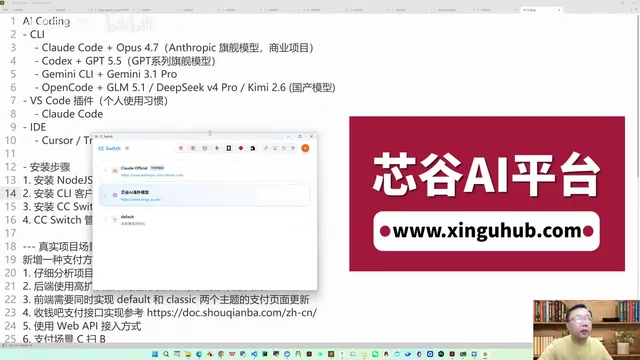
Claude Code Practical Guide: From Installation & Configuration to Production-Grade Project Delivery
Complete guide to Claude Code + Opus for production projects: CC Switch setup, engineering-minded prompting, and a real case study delivering a complex payment system in 4 hours.
Read more →

·4 min
A Complete Guide to Multi-Agent Teams in AI Coding: From Solo Work to Team Collaboration
Deep dive into multi-agent solutions from Cursor, Claude Code, and Tencent CodeBuddy — covering parallel exploration, cross-layer collaboration, context isolation, practical tips, and selection guide.
Read more →

·3 min
Getting Started with AI Agent Development: A Detailed Three-Stage Learning Roadmap
A complete roadmap for learning AI Agent development from scratch, covering Python & LLM basics, five core skills, and hands-on RAG projects in 1-2 months.
Read more →

·2 min
Getting Started with AI Agent Development: A Three-Stage Learning Roadmap Explained
A complete roadmap for learning AI Agent development from scratch. Covers Python basics, LLM concepts, five core capabilities, mainstream frameworks, and RAG knowledge base projects.
Read more →

·3 min
AI Agent Productivity Guide for Developers: Practical Methods to Automate 84% of Non-Coding Work
Developers spend 84% of their time on non-coding tasks. Learn how to use AI Agents to automate Jira tickets, tech docs, and multi-project management with Claude Code and Tmux workflows.
Read more →
 Tutorials
·3 min
In-Depth Review of a 628-Episode Python Full-Stack Tutorial: Can a Free Course Launch Your Career?
In-depth review of a 628-episode free Python full-stack tutorial on Bilibili, analyzing its strengths, limitations, and providing learning strategy advice for Python beginners.
Read more →
 Tutorials
·3 min
Why Learning AI from Scratch Leaves You More Confused — A Clear, Systematic Roadmap for Beginners
Confused learning AI from scratch? This guide breaks down why fragmented learning fails and provides a complete path from Python to deep learning with practical tips.
Read more →
 Tutorials
·3 min
Lyra Prompt Optimizer Guide: Generate High-Quality Prompts with Meta-Prompts
A detailed guide to Lyra Prompt Optimizer's methodology and practical usage. Its four-stage framework helps you generate structured, high-quality prompts through conversational guidance.
Read more →