UniwebPay: Payment Infrastructure That Lets AI Developers Start Earning the Moment They Ship

UniwebPay lets AI developers accept payments instantly without traditional payment infrastructure setup.
UniwebPay Skill launched on Product Hunt as financial infrastructure for the AI era, targeting developers who want to monetize AI products without dealing with complex payment integration. It offers instant payment links, global payment method support, and no merchant onboarding requirements — compressing weeks of setup into a plug-and-play capability designed for the unique needs of AI products.
The Last Mile of AI Product Monetization
In the current wave of AI entrepreneurship sweeping the globe, countless developers can build a usable AI product prototype in days or even hours. Yet between "usable" and "profitable" lies a long-overlooked gap — payments. Recently launched on Product Hunt, UniwebPay Skill targets precisely this pain point, positioning itself as "Financial Infra for the AI era" to help developers start collecting payments the moment their product goes live.
The product currently ranks #10 on Product Hunt's daily chart with 72 upvotes, categorized across Fintech, Payments, and Artificial Intelligence.
Core Value: Skip the Tedious Payment Setup Process
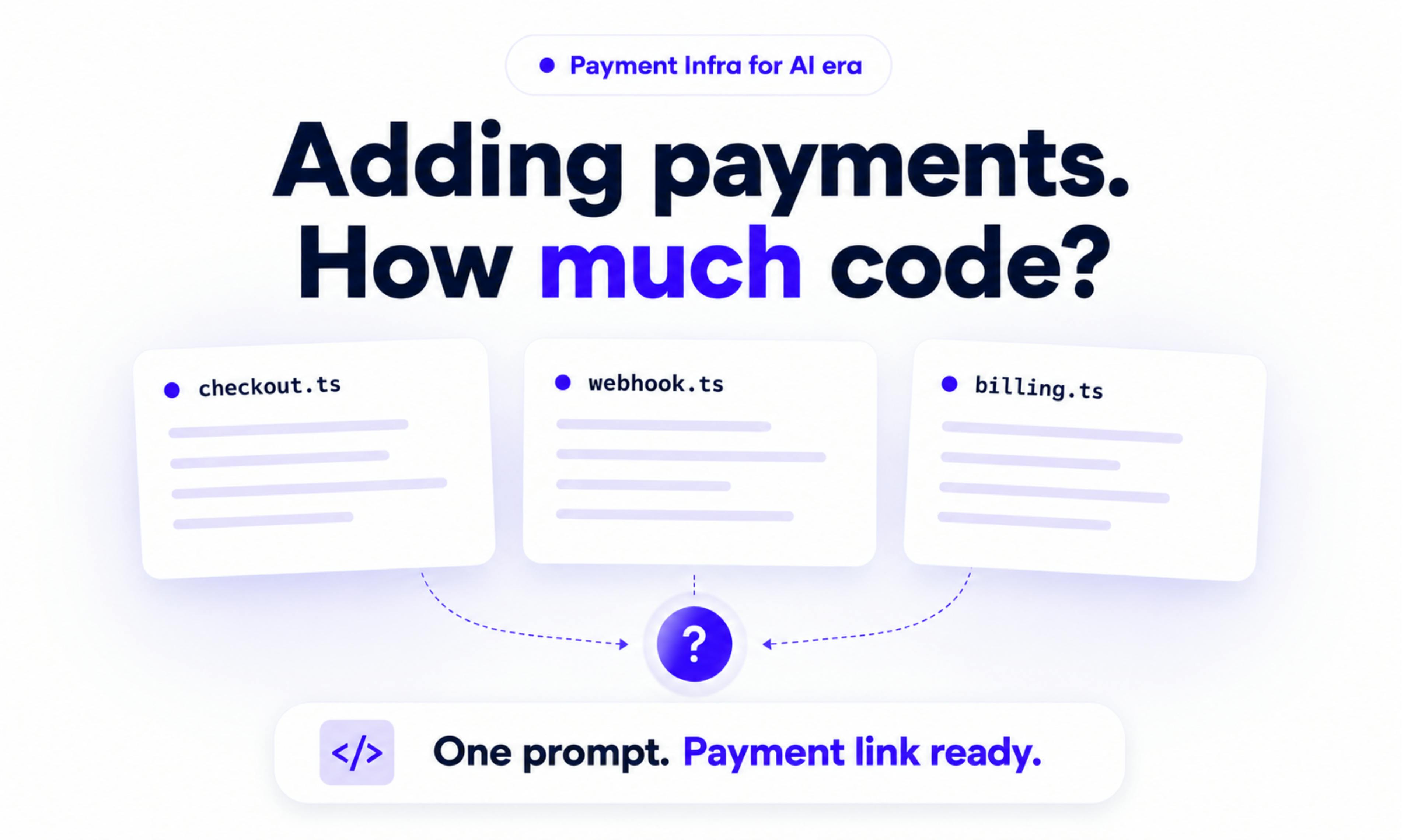
For most indie developers and small teams, integrating payments has never been easy. The traditional process typically involves: applying for a merchant account, passing lengthy merchant onboarding reviews, integrating payment gateway APIs, handling compliance and risk management, and ultimately maintaining an entire payment infrastructure. For AI teams focused on polishing their products, this work is both time-consuming and outside their core expertise.
It's worth noting that merchant onboarding is a standard compliance process in the payment industry, typically involving identity verification (KYC/KYB), business risk assessment, anti-money laundering (AML) checks, and credit risk evaluation, among other steps. For cross-border payment scenarios, merchants must also meet regulatory requirements across different countries and regions. Payment gateways serve as the technical middleware connecting merchants with banks and card networks, responsible for encrypting payment information, routing transaction requests, and returning authorization results. Traditional payment integration typically requires developers to understand PCI DSS compliance standards, handle differentiated interfaces for various payment methods, and deal with operational issues like chargebacks and dispute resolution. For AI startup teams of just one or two people, these barriers can consume weeks or even months of effort.
UniwebPay's core proposition is "Accept payments the moment you ship." According to its official description, developers can:
- Quickly generate payment links
- Accept global payment methods
- Start collecting payments without traditional payment setup, merchant onboarding, or infrastructure investment
In other words, UniwebPay aims to compress what traditionally takes weeks or months of payment integration work into a near "out-of-the-box" capability (Skill).
Why the AI Era Needs a New Payment Layer
UniwebPay defines itself as "financial infrastructure" rather than simply a payment tool — a deliberate choice reflecting deep insight into industry trends. With the rise of AI Agents, AI assistants, and various automation products, the initiator of transactions is gradually shifting from "a person clicking a button" to "a program triggering automatically." Traditional checkout processes designed for manual operation feel cumbersome and inefficient under this new paradigm.
The AI Agent (intelligent agent) mentioned here refers to an AI system capable of autonomously perceiving its environment, making decisions, and executing actions. In payment scenarios, an AI Agent might automatically complete purchase decisions on behalf of users, renew subscriptions, or invoke paid APIs on demand. This model fundamentally differs from traditional e-commerce's "click-confirm-pay" flow: transactions may occur in milliseconds without human intervention, and transaction frequency can far exceed manual operations. This places entirely new demands on payment systems — requiring support for programmatic invocation, real-time authorization, micropayments, and machine-to-machine (M2M) authentication mechanisms. Early discussions about "AI wallets" and "Agent payment protocols" have already emerged in the industry, signaling that payment infrastructure is facing a paradigm-level restructuring opportunity.
Payment needs in the AI era exhibit several notable characteristics:
Lighter Integration Methods
AI products iterate rapidly, and developers want to integrate payments with minimal code in the shortest time possible. UniwebPay delivers its service in the form of a "Skill," with a design philosophy closer to modular, plug-and-play invocation, dramatically reducing technical integration costs.
Global Payments as a Default Requirement
AI products are inherently cross-border — users could come from anywhere in the world. Therefore, "supporting global payment methods" is no longer optional but a foundational capability. UniwebPay highlights global payments as a core selling point, directly addressing the reality of global AI product distribution.
Dramatically Lowering the Startup Barrier
The product explicitly states its goal to "turn AI products into businesses." This means its target users are those with product-building skills but lacking financial and payment resources — indie developers, small AI startup teams, and side-project creators.
Market Positioning and Competitive Landscape Analysis
From a market perspective, UniwebPay's space is not short on giants — Stripe, PayPal, Lemon Squeezy, and other players have been deeply entrenched for years. However, UniwebPay has chosen a relatively clear angle: exclusively serving product developers in the AI era.
To understand the significance of this positioning, it helps to know the existing competitive landscape. Stripe, founded in 2010, disrupted traditional payment integration with its developer-friendly core proposition and clean API design, currently valued at over $50 billion and serving millions of businesses. PayPal boasts over 400 million active users with extremely high consumer-side brand recognition. Lemon Squeezy focuses on payments and tax compliance for digital products and SaaS, primarily serving the indie developer community. Additionally, platforms like Paddle and Gumroad are also competing for the creator economy's payment market. The competitive core in this space revolves around: integration simplicity, fee transparency, global coverage, and value-added services (such as tax calculation and subscription management). New entrants typically need to find a differentiated angle in a specific vertical to establish themselves in a market dominated by giants.
The value of this vertical positioning lies in its ability to deeply optimize for typical AI product scenarios, including:
- Recurring billing for subscription-based AI tools
- Per-use billing for API services
- Transaction settlement automatically triggered by AI Agents
Compared to the all-encompassing approach of general payment platforms, UniwebPay's focused approach to specific scenarios can deliver a more tailored experience. For individual developers and small teams, "one fewer review, one less layer of infrastructure" is often the decisive factor in whether a product can monetize quickly.
That said, the payment space involves complex compliance, risk management, and fund security issues. UniwebPay's currently public information remains largely at the marketing-level value proposition. Its performance regarding fee structures, settlement cycles, compliance credentials, and actual integration experience still awaits validation through more real user feedback.
Conclusion: The Next Frontier of AI-Native Infrastructure
The emergence of UniwebPay Skill reflects a rapidly forming industry trend: as AI products experience explosive growth, the supporting infrastructure built around them — including payments, billing, identity verification, and deployment — is becoming a new startup hotspot. As "building an AI product" becomes increasingly easy, "turning it into a business" becomes the next competitive focal point.
So-called AI-native infrastructure refers to technology stacks designed from the ground up specifically for AI workloads and AI product characteristics, rather than simple adaptations of traditional architectures. This ecosystem has already spawned multiple sub-categories: model inference deployment (e.g., Replicate, Modal), AI application monitoring and evaluation (e.g., LangSmith, Braintrust), vector databases (e.g., Pinecone, Weaviate), AI identity authentication and permission management, and AI-specific billing systems. Together, these infrastructure components form the complete chain from AI product prototype to commercialization. As a critical link in this chain, making payments "AI-native" means natively supporting per-token billing, elastic pricing, Agent automatic settlement, and other AI-specific business models. It's foreseeable that as the AI application layer continues to explode, entrepreneurial opportunities at the infrastructure layer will emerge in parallel.
For indie developers riding the AI wave, whether tools like UniwebPay can truly eliminate the payment barrier is worth ongoing attention. And for the industry as a whole, it represents an important exploratory direction within the broader thesis of "AI-native infrastructure."
Related articles

cMCP: Adding Signed Receipts to AI Agent Tool Calls for Auditable Denial Mechanisms
cMCP introduces cryptographic signed receipts for AI agent tool call denials under the MCP protocol, enabling auditable refusal credentials for AI governance.

Oxide Computer Raises $445 Million to Rebuild Server Architecture from the Ground Up
Cloud hardware startup Oxide Computer raises $445M to redefine server architecture with open-source firmware and integrated rack-scale design for on-premises cloud experiences.

Media File Organizer: A Free, Open-Source Tool for Automatically Organizing Your Plex Media Library
Media File Organizer is a free, open-source desktop tool that auto-matches TMDB metadata to batch rename and organize movie and TV files into Plex-compatible formats with preview before changes.