Why Substack Authors Need an Independent Website: Platform Dependency Risks and Solutions

Why Substack authors need independent websites to protect their digital assets from platform dependency risks.
This article examines the risks Substack authors face from platform dependency—including loss of distribution control, technical lock-in through email infrastructure, and the historical pattern of platforms declining or pivoting against creator interests. It advocates for a pragmatic dual approach: using Substack as a growth engine while maintaining an independent website as home base for long-term asset security, with alternatives like Ghost, static site generators, and WordPress.
The Sweet Trap of Content Platforms
Substack is undeniably one of the most successful content subscription platforms in recent years. It lets writers focus purely on creation without worrying about email systems, payment gateways, or server maintenance—sign up, publish with one click, and monetize directly through paid subscriptions. For many independent creators, it's nearly the ideal starting point.
However, a heated discussion on Hacker News (66 upvotes, 54 comments) raised a thought-provoking point: Substack authors, you need your own website. This seemingly contrarian advice touches on a core issue long overlooked in the content creation space—what do you actually own?
When you build all your content, reader relationships, and brand on a third-party platform, you're essentially building a house on someone else's land. No matter how beautiful the house, the land never belongs to you.
The Real Risks of Platform Dependency
You Don't Own the Distribution Channel
One of Substack's biggest value propositions is the email subscriber list. On the surface, these subscribers are "your" readers. But in reality, the platform holds the ultimate decision-making power over distribution. Once the platform adjusts its algorithm, modifies recommendation logic, or throttles certain types of content, creators are often left powerless.
Substack's distribution mechanism relies on its internal recommendation algorithm (Substack Notes and Recommendations features) and email delivery infrastructure. While creators can export subscriber lists in CSV format, email deliverability is highly dependent on sender domain reputation and IP reputation. After long-term use of Substack's sending infrastructure, subscribers' email clients have already marked Substack's sending domains as trusted sources. Once you migrate to your own email system, even with the same subscriber list, initial open rates and deliverability may drop significantly because the new domain needs to rebuild its reputation. This implicit technical lock-in is far harder to deal with than the surface-level claim of "data exportability."
Many developers and creators in the discussion shared similar experiences: over-reliance on a single platform means handing your fate to someone else's business decisions. When platform policies change—whether it's commission rate adjustments, tightening content moderation, or product direction pivots—creators can only passively accept the outcome.
Platforms Can Disappear or Deteriorate
Throughout internet history, countless content platforms have gone from flourishing to decline. Medium's paywall model has flip-flopped multiple times, Tumblr has changed hands repeatedly, and many more platforms have simply shut down. When a platform no longer meets your needs—or disappears entirely—your hard-earned content and reader relationships can vanish overnight.
Medium's case is particularly illustrative: founded in 2012 by Twitter co-founder Ev Williams, it initially attracted many quality creators with its open writing platform positioning. However, its business model went through multiple pivots—from advertising to paywall (2017) to "membership program"—with each transition causing dramatic fluctuations in creator revenue and traffic. Tumblr was acquired by Yahoo for $1.1 billion in 2013, then experienced content policy tightening and user exodus, before being acquired again by Automattic in 2019 for less than $3 million. Google Reader's shutdown in 2013 directly destroyed the entire RSS reading ecosystem. These cases repeatedly prove: a platform's business interests don't always align with creators' interests, and when the two conflict, the platform will always prioritize its shareholders and investors.
Owning an independent website is essentially taking out an "insurance policy" for your digital assets.
The Core Value of an Independent Website
Control Your Data and Digital Identity
Owning your own domain and website means you truly control where your content lives and how you reach your readers. You can freely export email lists, migrate content, and switch tech stacks without being bound to any platform.
More importantly, an independent domain is the anchor of your digital identity. The professionalism and brand trust conveyed by yourname.com is something no yourname.substack.com subdomain can replace. The long-term benefits of search engine optimization (SEO) also accrue to you, not the platform.
From a search engine perspective, Domain Authority is one of the important ranking signals. When you publish content under a substack.com subdomain, the backlinks and content signals you accumulate primarily boost substack.com's overall domain authority, not your personal brand's independent domain. This means if you migrate content to an independent website in the future, the ranking advantages accumulated in search engines are nearly impossible to transfer. Even with 301 redirects set up, there will be significant loss in authority transfer. Owning an independent domain starts accumulating your own search authority from day one—a digital asset that compounds over time.
Flexibility and Scalability
An independent website gives you near-unlimited possibilities: you can customize design, integrate different analytics tools, add membership systems, sell ebooks or courses, and embed interactive components. As your creative career grows, your website can evolve with it, unconstrained by platform feature limitations.
Pragmatic Strategies for Using Substack and an Independent Website Together
Interestingly, the prevailing view in the community discussion wasn't asking creators to "choose one or the other," but rather emphasizing using both in tandem.
Substack excels at customer acquisition and monetization—its recommendation network, convenient payment flow, and low barrier to entry are extremely attractive to new creators. An independent website, on the other hand, serves as the long-term asset repository.
Recommended Combination Approach
A frequently mentioned practical path is:
- Use Substack as a growth engine: Leverage its network effects to attract new readers and handle subscription payments;
- Use your independent website as home base: Host core content, build brand image, and maintain ownership of reader emails;
- Regularly sync and export: Ensure critical data (especially email lists) always has a copy under your control.
Recommended Substack Alternatives
For creators with stronger technical capabilities, the discussion also mentioned several alternatives:
-
Ghost: A self-hostable open-source publishing platform with native support for membership subscriptions and paid features. Ghost is built on Node.js, using Handlebars templating engine and MySQL/SQLite database. Its biggest differentiator is "self-hostability"—creators can deploy Ghost on their own servers (such as DigitalOcean, AWS, or Hetzner), giving them complete control over data and infrastructure. Ghost natively integrates Stripe payments, supports free/paid tiered membership systems, and has built-in email sending capabilities. Its API-first design also allows developers to build custom frontends (using Next.js or Gatsby, for example), implementing a headless CMS architecture pattern. For creators who don't want to manage their own infrastructure, Ghost also offers an official managed service, Ghost(Pro), starting at $9/month.
-
Static site generators + email services: Such as pairing with Buttondown or MailerLite. Static site generators (SSGs) like Hugo, Eleventy, Astro, etc., work by compiling Markdown files into pure HTML pages at build time. Since no server-side dynamic rendering is needed, static sites can be hosted on edge networks like Netlify, Vercel, or Cloudflare Pages, achieving near-zero hosting costs and extremely fast page load speeds. Combined with Buttondown (a minimalist newsletter service supporting Markdown writing and API integration) or MailerLite (an email marketing platform with visual email editors and automation workflows), creators can build a fully self-controlled publishing pipeline. This combination has a steeper learning curve, but once set up, maintenance costs are minimal and flexibility is extremely high.
-
WordPress + membership plugins: A mature ecosystem with abundant plugins. WordPress currently powers over 40% of websites on the internet, with tens of thousands of themes and plugins available. Through plugins like MemberPress, Paid Memberships Pro, or WooCommerce Subscriptions, you can quickly set up a paid subscription system. Its advantages lie in ecosystem maturity and broad community support, though ongoing maintenance costs for security updates and performance optimization should be noted.
These solutions retain the Substack-style subscription experience while giving you complete control over your tech stack.
Implications for Content Creators
The essence of this discussion is really a deeper reflection on digital ownership. In today's highly developed platform economy, convenience often comes at the cost of surrendering control.
For creators who treat writing as a long-term career, the key question isn't "whether to use Substack," but "whether to put all your eggs in one basket." A healthy creative strategy should balance current growth efficiency with long-term asset security.
Building an independent website may require additional time, effort, and even some technical learning. But as one commenter in the discussion put it: only what truly belongs to you is worth your full commitment. When you own your own digital home, no matter how platform winds shift, your core assets remain secure.
Conclusion
Substack is an excellent tool, but a tool is ultimately just a tool. For serious content creators, an independent website isn't a nice-to-have bonus—it's the infrastructure for building a sustainable creative career.
While enjoying platform convenience, don't forget to reserve a piece of digital land that truly belongs to you.
Related articles

New Orleans Uses AI to Answer 911 Emergency Calls: An Experiment Sparking Debates Over Efficiency and Safety
New Orleans is deploying AI to answer 911 emergency calls amid operator shortages. This analysis explores the system's efficiency gains and the debates over error tolerance, liability, and public trust.
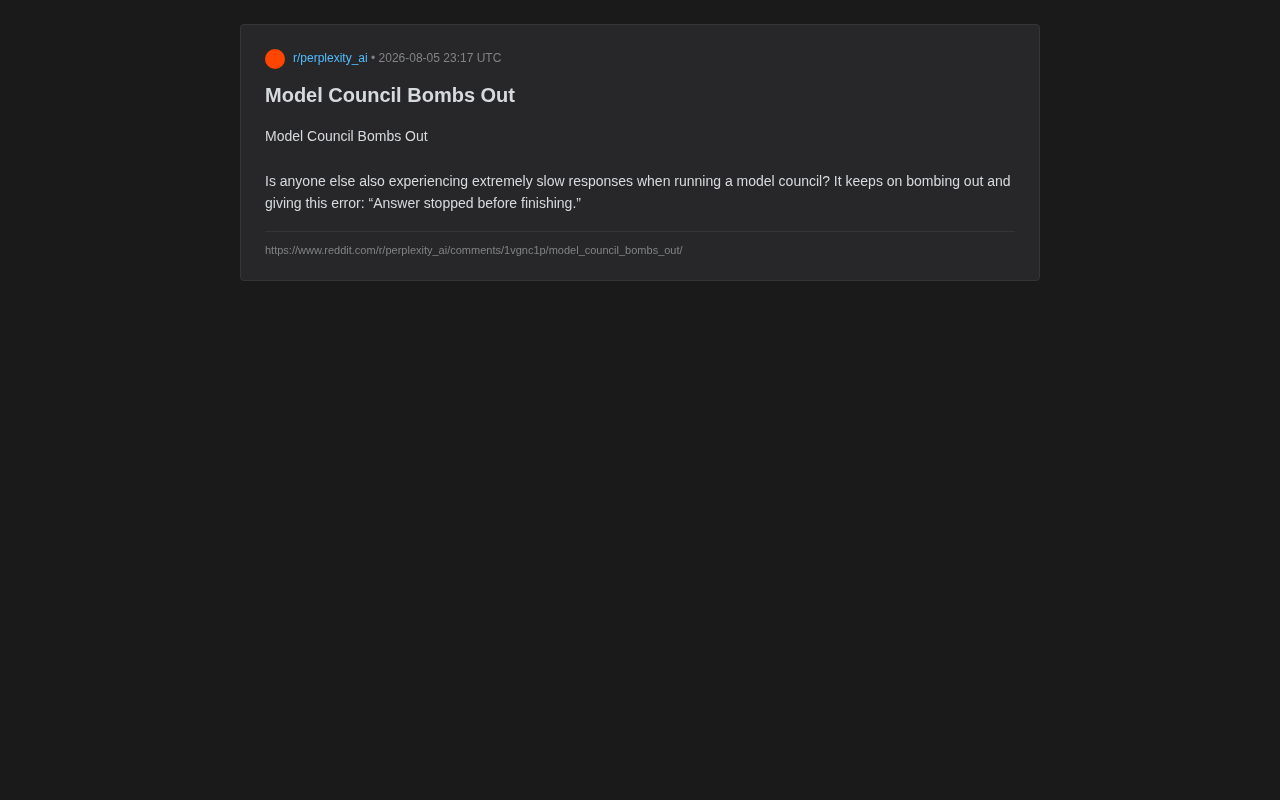
Model Council Frequent Errors: Why Multi-Model Collaboration Is Unstable
Users report Model Council frequently showing 'Answer stopped before finishing' errors and slow responses. This article analyzes technical causes and offers practical solutions.

The Sylvester–Gallai Theorem: Why Every Finite Point Set Must Have an Ordinary Line
An in-depth analysis of the Sylvester–Gallai Theorem: its history, Kelly's minimal distance proof, and its profound impact on combinatorial geometry. Learn why any finite non-collinear point set must have an ordinary line.