10 Open-Source Tools That Stop AI Agents From Going Off the Rails

10 open-source tools that use engineering constraints — not smarter models — to make AI Agent failures impossible.
This article reviews 10 open-source AI Agent projects selected by an overseas blogger, all built around a single thesis: instead of waiting for models to get smarter, use engineering to make specific failure modes impossible. From Unreal Agent's deduplication runtime and JSON Render's locked component catalogs, to Mobile MCP's accessibility-tree testing and Reverse Skill's 175-regression-test routing system, each project targets a real, recurring failure pattern. Anthropic's own Claude for Financial Services labels every output as "for human review," reflecting compliance-aware boundary design. The top pick, Bend, is the most radical: it introduces a rule file where invariants are mathematically proven at compile time, so code that violates them simply won't build.
AI Agents haven't gotten smarter this past year, but they've picked up job titles — analyst, penetration tester, mobile QA engineer, architecture diagrammer. One blogger abroad rounded up 10 open-source projects that aren't chasing hype. Instead, they quietly make a specific class of bug illegal — so agents stop going off the rails in real-world scenarios. Here's a rundown of that list in reverse order, along with the engineering philosophy behind each entry.
The Foundation: Runtimes and Interface Constraints
Coming in at #10, Unreal Agent isn't a chatbot or a product — it's the bare skeleton that supports them: an actor runtime plus conversation logging. Picture this: at 9:38 PM, two duplicate tool calls land in the same inbox nine milliseconds apart. Without deduplication, an agent might pay for the same flight ticket twice. Unreal Agent maintains an append-only, fork-supporting session history, validates every tool call against a schema before execution, and never blocks the event loop. It ships as a library, a CLI tool, and a benchmark suite — small enough that most framework developers don't even know it's running underneath. The blogger's advice is blunt: before your own framework "poorly reinvents session forking," take a look at this first.
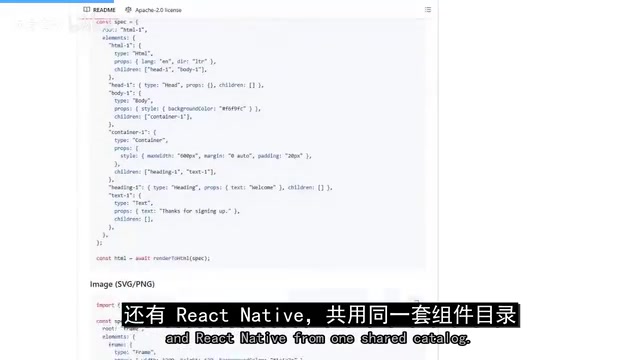
At #9, JSON Render tackles a different kind of risk — preventing the model from "designing its own UI" and instead forcing it to pick from your pre-approved component catalog. At 11:14 PM, a customer service bot decides the fastest way to close a ticket is to generate its own refund button — and nearly succeeds. JSON Render locks generation to a component catalog you define, with real schemas, returning output as a JSON stream that can be progressively rendered in React, Vue, Svelte, or React Native from that same catalog. State watchers can trigger real actions when values change, and the system prompt describing all rules is auto-generated from the catalog, ensuring rules never drift from the code.
Append-only session history and forking are classic design patterns from distributed systems, borrowed from Event Sourcing architecture. Append-only means history only grows — it's never overwritten — giving you a complete audit trail where you can replay to any point in time. Forking lets you branch off from a historical state into a new execution path — think Git branches — so an agent can "hypothetically" explore a reasoning path without disrupting the main flow, then return to the fork point on failure. This matters enormously for multi-step, multi-tool agents: if something goes wrong in the middle, you don't have to restart the entire session from scratch — you resume from the last verified checkpoint. Schema validation ensures tool call parameters conform to type and format constraints before execution, acting like a pre-approval step that intercepts a huge class of side effects caused by malformed inputs.
Team Collaboration and Reusability: Templates and Configuration Governance
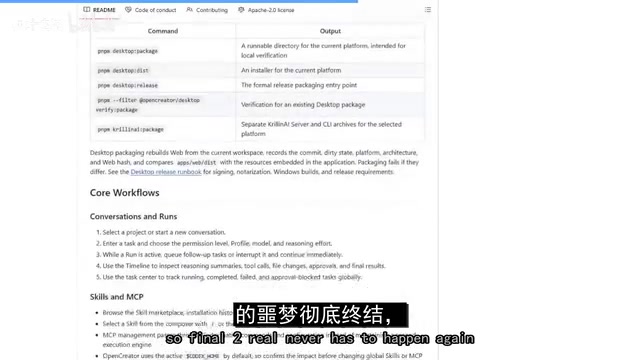
At #8, Claude Code Templates doesn't add new capabilities to Claude Code — it hands you over a hundred pre-built, tested components that others have already made: Agents, Hooks, Commands, and Connectors. The classic pain point: your team has five versions of the same config file, one of which was written by someone who left in March, and nobody dares delete the wrong hook. A single command lets you browse the full catalog and install specific agents, commands, or connectors by name, with health checks and a live analytics dashboard. A security audit agent, a database schema agent, a payment connector — each is one parameter away, not a copy-paste from a blog post you'll never find again.
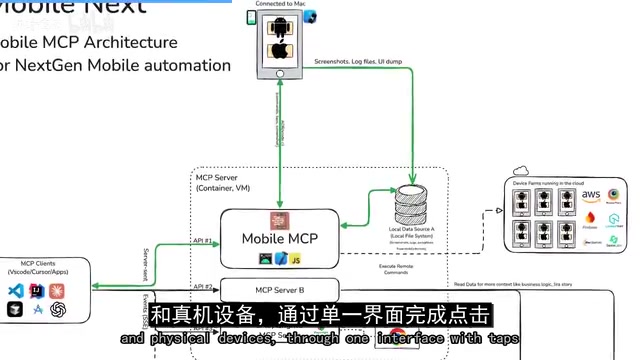
At #7, Mobile MCP turns its attention to mobile testing. Rather than guessing where buttons are from screenshots, it reads the accessibility tree that screen readers have been using all along. At 1:47 AM, a QA script crashes because a button moved four pixels after a design update — the 17th brittle test this sprint that has nothing to do with whether the app actually works. Mobile MCP drives real iOS and Android apps and simulators directly, reading the true name and position of every button from the accessibility tree, eliminating pixel-based fragility at the root.
The Accessibility Tree is a semantic UI structure maintained by operating systems and browsers for assistive technologies like screen readers. It describes each UI element's role (button, textfield, etc.), name, state (clickable, disabled, etc.), and hierarchy in a tree structure — completely decoupled from visual pixel coordinates. Traditional UI automation relies on screenshots or absolute coordinates; when a design change shifts a button by a few pixels, the script breaks — that's the root cause of so-called "flaky tests." Accessibility tree-based locators depend on an element's semantic identity rather than its visual position, so tests don't break from layout adjustments as long as a button's name and role remain unchanged. A bonus: tests written for assistive functionality simultaneously serve as continuous validation of accessibility compliance.
Code Understanding and Content Creation
At #6, GitDiagram turns a codebase into a diagram. A new hire gets a 40,000-line repo, and the onboarding docs say just: "go read the code." GitDiagram is like a nosy neighbor watching a moving truck — fast, uninvited, yet uncannily accurate about what's inside. It generates interactive architecture diagrams with streaming explanations; click any component to jump to the source file, and export the whole diagram as an image or Mermaid source. Replace hub with diagram in any GitHub URL and the visualization starts building itself.
At #5, OpenCreator doesn't ask you to learn a timeline editor — you edit through conversation while a dashboard shows you the underlying clip changes in real time. At 12:52 AM, there are 14 files named things like "final2" and "real," and a subtitle file has developed a half-second grudge against the audio track after the ninth export. OpenCreator handles video translation across 101 languages, thumbnail generation, subtitle alignment, and stick-figure animation in a single agent conversation. It runs on Codex, saves every revision as a separate version, and all 10 creative tools run locally with your own accounts and storage.
Controlled Execution, Specialized Routing, and Industry Applications
At #4, Strands Harness doesn't want to run your agent on someone else's server — it's a library that lives inside your own process. At 10:29 PM, six minutes before a demo, the managed agent platform's status page turns that shade of yellow that makes you distrust the API for an hour. Strands Harness works like a great stage crew — completely invisible, running entirely behind the scenes. It stays model-agnostic across Bedrock, Anthropic, OpenAI, Gemini, and others; the loop has built-in turn limits, token budgets, and cancellation; and every decision is traceable through interceptable hooks.
At #3, Reverse Skill doesn't reverse-engineer anything itself — it correctly decides which of 45 tools to use. At 2:36 AM, the same obfuscated string survives a fourth decompilation attempt, and the routing table that should have always known which tool to call was never actually consulted. Reverse Skill applies 44 routing rules across APK, iOS, binary, and firmware scenarios, backed by 175 regression tests that validate the routing logic itself. It connects to real tools like Burp Suite and Binary Ninja via MCP, rather than guessing command syntax from memory. It plugs into Claude Code, Cursor, and Cline.
At #2, Claude for Financial Services is built by Anthropic itself. It doesn't make investment decisions — it drafts the memo, model, or checklist that a licensed human then signs off on. It includes 11 named agents covering pitch preparation, earnings review, modeling, valuation, reconciliation, and KYC screening, with connectors into real data from FactSet, Moody's, PitchBook, and S&P Global. Every output is explicitly labeled as "analyst work product, for human review, not independent advice." It can run as a collaborative plugin or as a headless managed agent with a single API call.
The Champion: Turning Bugs Into "Won't Compile"
At #1, Bend represents the most radical engineering philosophy on this list — it doesn't catch bugs after the fact; it refuses to compile code that violates rules you've already proven to be true. At 3:04 AM, a shipped feature quietly lets a player win a game the design doc says is impossible to win. The code is permanently in an unwinnable state, and the patch notes explaining it take longer to write than the bug itself. Bend introduces a file called laws.bend where rules like "winning is impossible" are declared once and proven (not assumed). The moment you modify code in a way that breaks that proof, the compiler rejects it before anything goes live — a mathematical rejection, not a verbal promise. It runs near C speed on CPU and uses CUDA on GPU; proof checks complete in under a second (where other proof assistants take minutes); and it can distribute work across thousands of cores without hand-written threads or locks.
As the blogger put it: every other tool on this list gave an agent a job, while Bend simply removes its ability to claim it did the job when it didn't. An analyst, a penetration tester, a mobile QA engineer, an architecture diagrammer, and a law no one can break twice — that's the new Agent engineering paradigm these ten open-source projects collectively sketch out: rather than making the model smarter, draw boundaries it cannot cross.
The core idea behind Bend comes from the field of Formal Verification. Traditional software testing discovers errors by running specific test cases, but testing can only prove "the program didn't fail on these inputs" — it can't enumerate every possibility. Formal verification instead uses mathematical logic to rigorously prove program properties: by defining invariants — "regardless of input, this rule must always hold" — and having a proof checker verify at compile time that code satisfies those invariants. If a code change causes a proof to fail, the compiler refuses outright, making it physically impossible to ship code that violates a proven rule. This approach has decades of history in safety-critical domains like aviation and chip design, with tools like Coq, Lean, and Isabelle, but those tools carry steep learning curves and slow verification times. Bend claims to compress proof checking to seconds and leverages GPU parallelism for acceleration — an attempt to bring formal verification to a level of practical engineering that ordinary developers can actually use.
Related articles

Felix Rieseberg Personal Homepage
Felix Rieseberg's personal homepage sparks attention on Hacker News. This article covers the Slack engineer's technical background, the rise and fall of nativefier, and the value of a developer homepage as a tech calling card.

@ai-sdk/vue 3.0.306 Patch Release Syncs with [email protected] Update
@ai-sdk/vue 3.0.306 released, synced with [email protected]. A routine patch release for the Vercel AI SDK ecosystem with no public API changes; the Vue adapter layer stays version-aligned with the core package.

Gemini 4 Argon API Launches: The Era of Million-Token Output Begins
Google launches Gemini 4 Argon with sparse MoE architecture, up to 1M output tokens, and a 68.90% Vals Index score, available across API, AI Studio, and the Gemini app.