12 AI Agent Tools That Go Beyond Q&A: A Complete Guide

A practical guide to 12 AI agent tools across general assistants, dev frameworks, and business automation.
AI tools are evolving from chatbots into autonomous agents that execute tasks across applications. This guide covers 12 representative tools in three categories: general-purpose assistants (Gemini, Copilot Studio) for everyday use; developer frameworks (OpenAI Agents SDK, Crew AI, LangGraph) for multi-agent orchestration; and business automation tools (N8n, Make, Zapier, Salesforce AgentForce, Relevance AI, Lindy) for embedding AI judgment into existing workflows. The recommendation: start with your most time-consuming tasks, not the most feature-rich tool.
AI tools are evolving from simple "question-and-answer bots" into intelligent agents (AI Agents) capable of autonomously executing tasks, coordinating workflows, and even assembling "virtual teams." The core value of these tools is no longer answering your questions — it's completing real, multi-step work across applications on your behalf. This article breaks down 12 noteworthy AI agent tools across three categories: general-purpose assistants, developer frameworks, and business automation, helping you choose the right solution for your specific needs.
General-Purpose AI Assistants: Coverage for Everyday Scenarios
If your work requires constantly switching between multiple applications, general-purpose agents are the most straightforward entry point. Google Gemini handles research, document processing, creative tasks, and code writing, making it a strong fit for users who want a single tool that covers most scenarios.
Microsoft Copilot Studio leans more toward enterprise use cases, allowing you to build agents connected to your own data and workflows — so AI can work within your actual business context rather than spinning its wheels in an information silo.
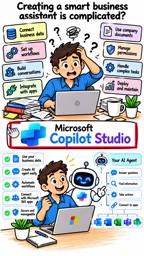
What these tools share is a low barrier to entry — you don't need to write complex code to let AI take over a portion of your repetitive work.
Developer Frameworks: Building Orchestrated Agent Systems
For developers who want to build their own agent systems, several specialized frameworks offer much greater control.
OpenAI's Agents SDK lets developers build agents that can call tools and delegate tasks, with the core idea being that multiple "AI specialists" work together. Similarly, Crew AI focuses on coordinating "AI teammates" with different roles, tools, and goals — solving the problem of a single agent not being able to master everything.
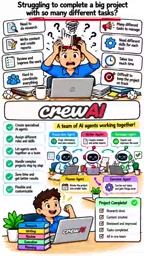
When agent logic grows complex, structure becomes a necessity. LangGraph helps developers build workflows with checkpoints, branching decisions, and state management, making agent behavior more controllable and traceable.
Another tool tailored for coding scenarios is Claude Code, which can inspect files, assist with code editing, and run development tasks based on instructions — particularly useful as a programming assistant when working with large codebases.
The core mechanics of multi-agent collaboration are worth a brief explanation. A single agent faces context window limitations and gaps in skill coverage. The multi-agent architecture addresses this by breaking complex tasks into subtasks, assigning them to agents with different "specializations," and having an Orchestrator consolidate the results. Tool Calling is the key capability here — agents don't just generate text; they can query search engines, execute code, read and write files, or call APIs, upgrading them from language models to true action-takers. The Checkpoints mechanism in LangGraph solves the problem of resuming long-running workflows after interruption: the agent saves a state snapshot after each step, so if a step fails, the system can retry from the most recent checkpoint rather than rerunning the entire workflow from scratch.
Business Automation: Connecting AI to Real Workflows
Business automation is one of the most mature areas for deploying agents. The value of these tools lies in embedding AI judgment into existing automated processes.
N8n lets you build AI agents that execute tasks based on workflows and integrations. Make AI Agents emphasizes combining AI decision-making with visual automation — ideal for scenarios that require "judgment" rather than fixed rules. Zapier AI Agents layers AI-powered reasoning on top of its established automation platform, reducing the time wasted manually copying information between apps.
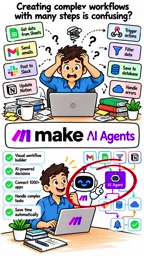
On the customer service and business operations front, Salesforce AgentForce enables agents to call on business data and actions to handle customer tasks, directly addressing the relentless volume of requests facing support teams.
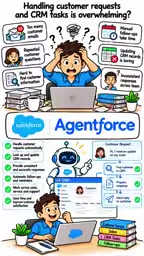
Relevance AI helps users create specialized agents for research, sales, and business operations — essentially building an "AI workforce." Meanwhile, Lindy provides AI assistance for daily tasks and repetitive workflows, designed specifically for users drowning in emails and follow-ups.
N8n, Make, and Zapier are fundamentally all iPaaS (Integration Platform as a Service) platforms. Their original core capability was connecting hundreds of SaaS applications through pre-built connectors, automatically passing data between them via "trigger-action" rule chains. The most significant change brought by adding an AI agent layer is replacing "fixed rules" with "conditional reasoning": branching logic that once required manually enumerating every scenario can now be handled dynamically by a language model. This allows automation workflows to process unstructured inputs — like email bodies or customer service messages — rather than being limited to neatly formatted structured data. For teams already using these platforms, the migration cost is minimal: simply insert an "AI node" into an existing workflow to gain reasoning capabilities.
How to Choose the Right Agent Tool for You
A clear layered logic emerges from this list:
- Want something ready to use out of the box: Start with general-purpose options like Gemini or Copilot Studio.
- Need deep customization and orchestration: Developers can explore OpenAI Agents SDK, Crew AI, or LangGraph.
- Focused on business process automation: N8n, Make, and Zapier are great for no-code/low-code setups, while Salesforce AgentForce and Relevance AI target enterprise-level operations.
The explosion of agent tools reflects a broader trend: AI's capability boundary is expanding from "generating content" to "taking action." As the tooling ecosystem matures, both individual users and enterprises can hand off more of their work to AI at lower and lower cost. Rather than chasing the tool with the most features, the better approach is to start with your most time-consuming repetitive tasks — and find the one that actually saves you time.
Related articles

Felix Rieseberg Personal Homepage
Felix Rieseberg's personal homepage sparks attention on Hacker News. This article covers the Slack engineer's technical background, the rise and fall of nativefier, and the value of a developer homepage as a tech calling card.

@ai-sdk/vue 3.0.306 Patch Release Syncs with [email protected] Update
@ai-sdk/vue 3.0.306 released, synced with [email protected]. A routine patch release for the Vercel AI SDK ecosystem with no public API changes; the Vue adapter layer stays version-aligned with the core package.

Gemini 4 Argon API Launches: The Era of Million-Token Output Begins
Google launches Gemini 4 Argon with sparse MoE architecture, up to 1M output tokens, and a 68.90% Vals Index score, available across API, AI Studio, and the Gemini app.