$149 AI Digital Candle: Simulating Real Flames with a Custom Model

Kevin Bates launches a $149 AI digital candle that uses a custom model to simulate realistic flames on an LED grid.
Maker Kevin Bates, previously known for flexible Tetris, has launched a $149 digital candle that uses a custom AI model to generate realistic flickering flames on an LED grid instead of relying on prerecorded animation or simple flicker circuits. The article analyzes its technical approach—deploying lightweight AI inference on consumer-grade hardware—and the premium maker-hardware positioning implied by the $149 price. The author argues the product's significance lies not in the candle itself but in demonstrating how a custom AI model can be treated as part of hardware design, reflecting the trend of AI models permeating from software into physical consumer devices, while noting that model details and actual performance remain to be verified.
From Flexible Tetris to an AI Candle: Kevin Bates's New Hardware Experiment
According to an RSS source, maker Kevin Bates—previously known for building flexible Tetris that could wrap around a magazine—is back with something new: a $149 digital candle. The product uses a custom AI model to simulate a realistic flickering flame effect on an LED grid.
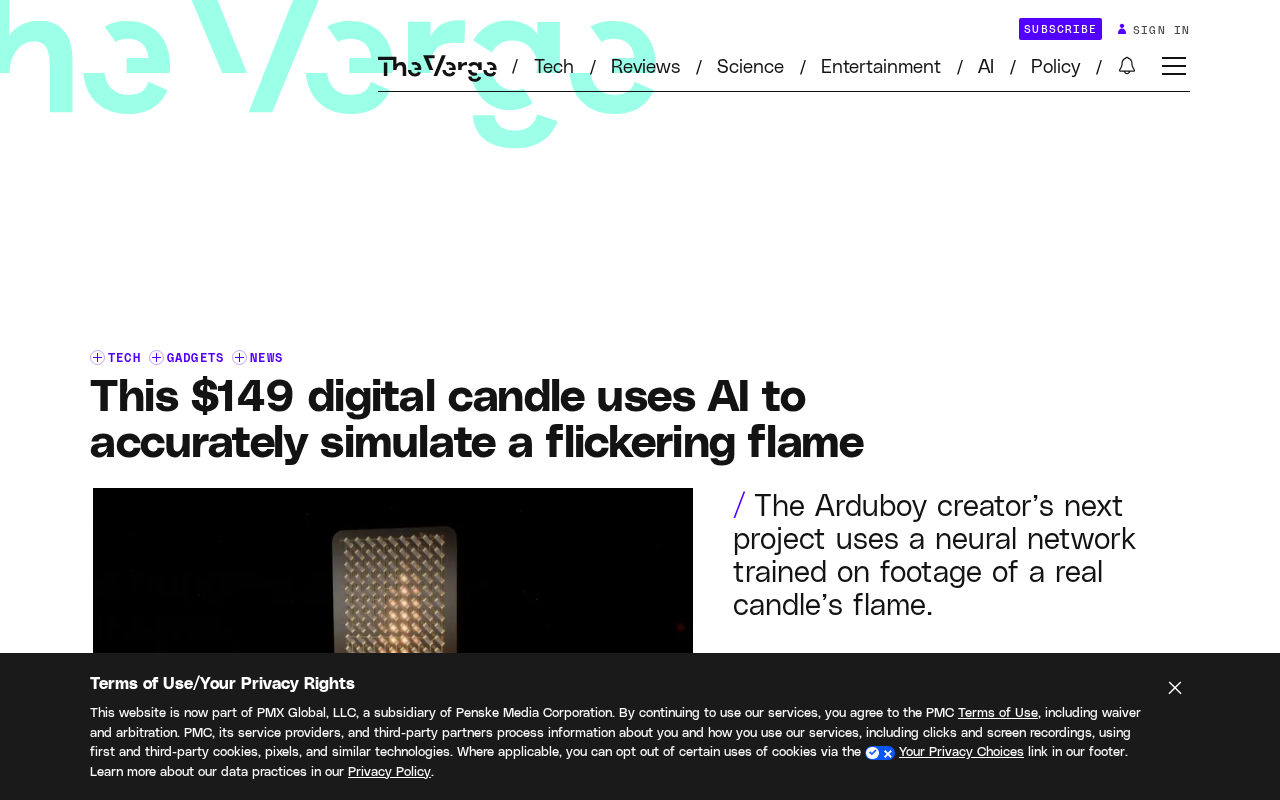
The kind of device Bates is known for is a far cry from this candle, but that crossover is exactly what makes the project interesting—it pulls an AI model out of the cloud or the screen and stuffs it into an everyday object.
How a Custom AI Model Drives the LED Flame
The core of this candle isn't a prerecorded animation loop but a purpose-trained AI model. It generates the dynamic appearance of the flame on the LED grid, making the flicker look closer to a real candle flame rather than a mechanically repeating on-off pattern.
From a technical standpoint, this is an attempt to deploy lightweight AI inference onto consumer-grade hardware. A custom model means the developer can optimize specifically for the visual characteristics of a flame without relying on a general-purpose model or hand-written animation rules. Bates hasn't disclosed the model's specific architecture or training data, but the word "custom" suggests an approach tailored specifically for this scenario.
LED Grid and Flame Simulation
An LED grid is a display array of light-emitting diodes arranged in rows and columns, commonly found in dot-matrix displays and maker projects. In a flame simulation scenario, each LED acts as a pixel, and the model must generate time-varying brightness and color values for each pixel. The characteristics of a real candle flame include irregular flicker frequencies, a color-temperature gradient from the flame core to the outer flame, and random jitter caused by air currents. Driving an LED grid with an AI model means the model learns the statistical patterns of these pixel-level dynamics rather than applying fixed animation curves. Compared with preprogrammed animation, model inference can introduce controlled randomness so that no two flickers are exactly alike, bringing it closer to the unpredictable feel of a real flame. The cost of this approach is that it requires some compute, so the model must be lightweight enough to run in real time under the cost and power constraints of consumer-grade hardware.
The $149 Price Point and Product Positioning
The $149 price tag clearly places it in the "premium hardware" bracket rather than that of cheap decorative items. Behind this price, the supporting factors are likely the differentiated experience delivered by the custom AI model and the cost structure of small-batch maker products.
Compared with common electronic candles on the market—most of which use simple LED flicker circuits or preprogrammed animation—this product's selling point is "accurate simulation" rather than "roughly similar." For users who want ambiance without the risk of an open flame, this constitutes a new option.
Premium Hardware and Maker Product Pricing
Premium hardware typically refers to consumer electronics aimed at specific scenarios, emphasizing design and experiential differentiation, often priced above mass-market products with similar functionality thanks to brand character, attention to detail, or unique technology. Maker products, by contrast, are mostly built by independent developers or small teams, with low production volumes; molds and component procurement are hard to amortize, so unit costs are naturally higher. The $149 digital candle sits at the intersection of these two logics: on one hand, the custom AI model and LED grid hardware form a differentiated selling point; on the other, small-batch production means it can't be pushed down to a few dollars like mass-produced electronic candles. The price therefore reflects an experience premium and a small-scale cost structure more than mere bill-of-materials cost.
The AI-ification Trend in Maker Hardware
Bates's candle reflects a larger trend: AI models are permeating from the software layer into physical devices. As the barrier to custom models drops, independent developers and small teams can embed intelligent behavior into concrete physical products.
This path differs from the AI hardware strategies of large manufacturers. It relies more on the creator's engineering ability and understanding of the scenario; the products aren't large-scale, but they tend to be more targeted in the details of the experience. The digital candle category itself isn't new, and redoing it with AI shows that even mature categories still have room to be transformed by model capabilities.
Lightweight AI Inference and Edge Deployment
Lightweight AI inference refers to running trained models on devices with constrained compute, memory, and power, typically requiring model compression, quantization, or architecture streamlined for specific tasks. Edge deployment means completing inference locally on the device rather than sending data to the cloud and waiting for results. For products like a digital candle, edge deployment is a necessity: the flame effect needs real-time response, can't depend on network round trips, and also involves privacy and offline availability. In recent years, maturing model toolchains have lowered the barrier to deploying custom models on microcontrollers or low-cost chips, enabling independent developers to embed intelligent behavior directly into physical products. This is the technical foundation of the AI-ification trend in maker hardware—models are no longer just software features but part of the hardware experience.
Editorial View
The significance of this product lies not in the candle itself but in demonstrating a method: treating a custom AI model as part of hardware design rather than a feature bolted on afterward. Whether $149 is worth it depends on how much users care about the realism of the flame; but from an industry perspective, experiments like this are expanding the imaginative boundaries of consumer-grade AI hardware.
It should be noted that current information about this product comes from a brief RSS report; model details, actual performance, and mass-production status await further verification.
Related articles
Mistral Large 4 Open-Sources a Trillion Parameters, Microsoft Offers Voluntary Severance to 60,000 Employees
Mistral Large 4 open-sources a trillion-parameter multimodal model with a coding agent score of 48; SanDisk earnings show AI inference reshaping NAND demand; Google Gemini adds in-app file editing, OpenAI raises Codex quotas, and Microsoft offers voluntary severance to 60,000 employees.
Mistral Large 4 Opens Its Weights: AI Morning Brief Roundup of Models and Ecosystem Trends
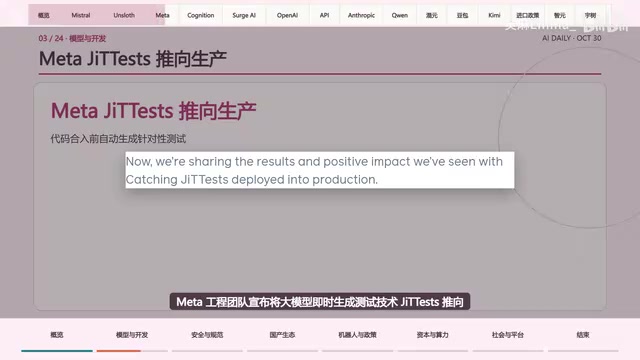
Mistral Large 4 opens its weights, a 1-trillion-parameter MoE architecture that can run locally on MacStudio; Meta's test-generation technology enters production; top tax benchmark pass rate only 10.8%; Canadian government takes a stake in Cohere; Doubao Work opens third-party model calls. This AI Morning Brief rounds up model, ecosystem, capital, and policy developments.

Mistral Large 4 Goes Open Source: A 1T-Parameter European Qwen Challenging DeepSeek
Mistral Large 4 is now open source: 1T total parameters, 52B activated, focused on coding and cybersecurity, with ~610G NVFP4 weights. We analyze its comparison with DeepSeek V4 Flash, API pricing, demo realism, and local deployment value.