1752vc Pitch Deck Analyzer: Know How Investors Will React Before You Hit Send
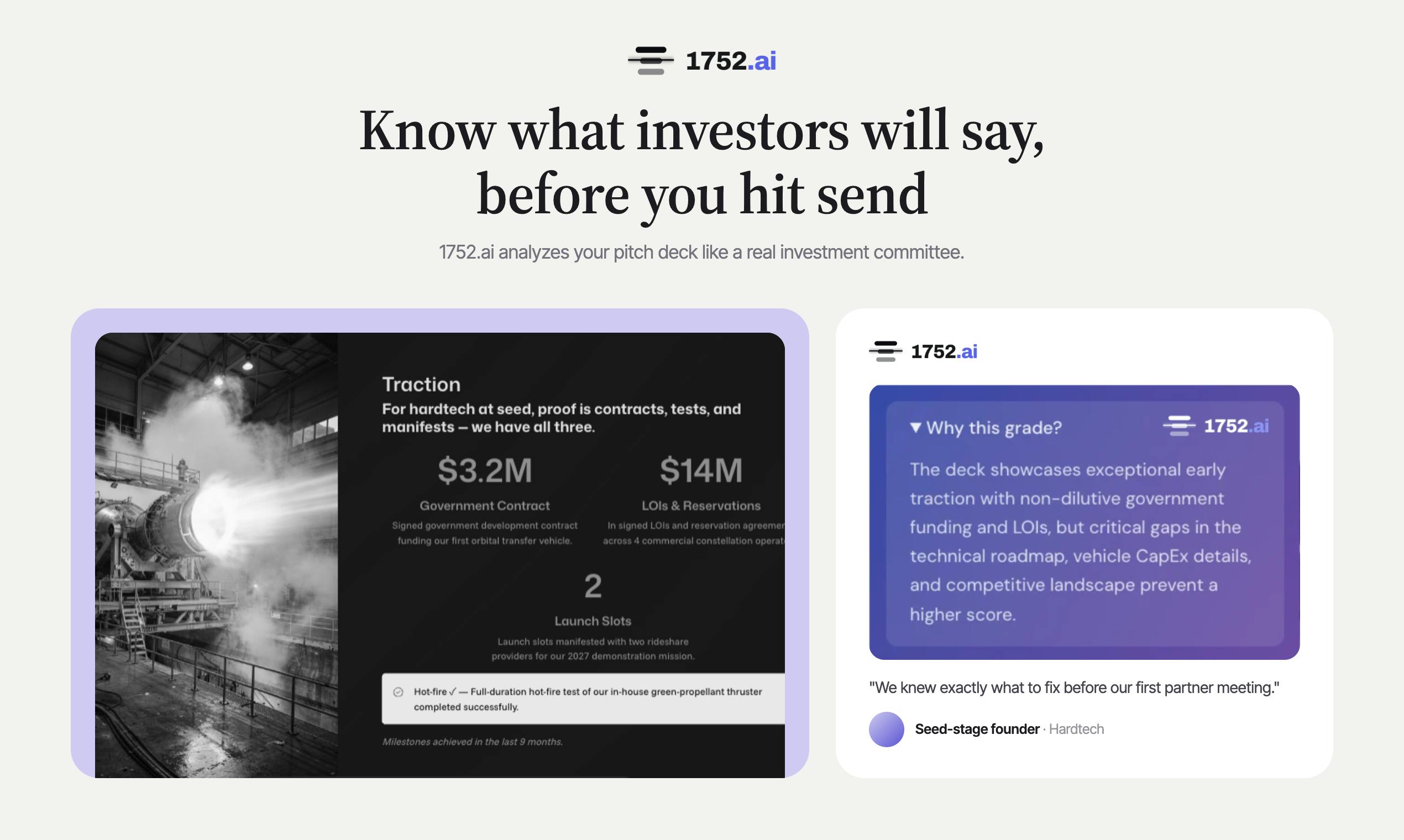
1752vc's AI tool predicts investor reactions to your pitch deck before you send it.
Built by VC firm 1752vc using 25,000+ real pitch decks and their investment outcomes, Pitch Deck Analyzer provides slide-by-slide fundability feedback, narrative cohesion checks, and contradiction cross-validation. It helps founders anticipate investor reactions, fix inconsistencies, and refine their fundraising story before hitting send.
An AI Fundraising Tool Built by VCs
For founders, the moment you send a pitch deck to an investor is filled with uncertainty — you never know whether they'll frown or light up when they reach a particular slide. Pitch Deck Analyzer, launched by venture capital firm 1752vc, aims to solve this pain point: letting you know what investors will think before you hit send.
This pitch deck analysis tool quickly shot to the top of Product Hunt's daily rankings, earning 129 upvotes and 46 comments. It's categorized under Venture Capital, AI, and Fundraising. Its core value proposition is crystal clear — get "investor-level" feedback on your pitch deck in just a few minutes.
Trained on 25,000 Real Pitch Decks
Unlike many generic AI writing assistants, Pitch Deck Analyzer's biggest differentiator lies in the uniqueness of its training data. According to the team, the tool was trained on over 25,000 real pitch decks, along with the corresponding investment decisions that followed.
This means it's not just analyzing text quality — it's learning what kind of messaging actually convinced investors and what kind of content led to rejection. This "outcome-driven" dataset is a scarce resource that individual founders and general-purpose LLMs simply can't access.
1752vc, the firm behind the tool, is itself an active venture capital firm that reportedly evaluates over 4,000 startups per year. This background gives the product inherent credibility — it's not a guessing tool built by outsiders, but rather an insider's investment evaluation logic, productized.
Slide-by-Slide Fundability Analysis
The tool's core feature provides slide-by-slide fundability feedback. It delivers stage-calibrated assessments based on your current fundraising stage, meaning evaluation criteria differ between seed rounds and Series A — avoiding a one-size-fits-all approach.
Precisely Catching the Contradictions Investors Will Spot
Beyond slide-level scoring, this AI pitch deck analyzer offers two deeper capabilities worth noting:
First is narrative cohesion checking. A great pitch deck isn't just a collection of data across slides — it's a self-consistent, compelling story. The tool evaluates whether your overall narrative logic flows smoothly, or whether it suddenly breaks down on a particular slide, causing investors to lose confidence.
Second is cross-checking claims for contradictions. This is exactly the kind of nitpicking seasoned investors excel at — for example, you might state a TAM of $10 billion on your market size slide, yet present growth assumptions on your financial projections slide that don't align. These kinds of inconsistencies are immediately spotted during due diligence and severely damage credibility. The Analyzer catches these gaps for you in advance.
Practical Value for Startup Fundraising
From a product positioning standpoint, this tool addresses a real anxiety for early-stage founders: information asymmetry. Founders typically lack the opportunity to rehearse with a large number of investors repeatedly, and investors' true thoughts are rarely shared directly. Pitch Deck Analyzer essentially opens up a VC firm's internal evaluation perspective to founders.
Interestingly, the value of AI fundraising tools like this depends heavily on data quality and the authenticity of the evaluation logic. 1752vc's identity as an actual VC firm serves as its strongest trust signal. That said, founders should remain realistic: AI feedback can help you spot red flags and refine your narrative, but it can't replace solid business fundamentals. Behind a logically flawless pitch deck, you still need a strong product, market, and team.
Which Founders Benefit Most
- First-time founders: Those who lack pitching experience and most need to preview the investor's perspective;
- Teams refining their materials: Those looking to fill gaps and eliminate inconsistencies before officially sending their deck;
- Efficiency-minded serial entrepreneurs: Those who want structured feedback in minutes rather than waiting weeks for network-based input.
Final Thoughts
1752vc Pitch Deck Analyzer is a textbook example of a vertical AI application: rather than trying to be an all-purpose assistant, it packages a venture capital firm's accumulated professional judgment and real-world data into a highly focused tool. For founders eager to improve their fundraising success rate, "knowing what investors will say before you send" is undeniably a compelling form of certainty.
Of course, a tool is still just a tool. It can help you tell a better, more rigorous story — but what ultimately determines fundraising success is still the business in your hands that's truly worth investing in.
Related articles
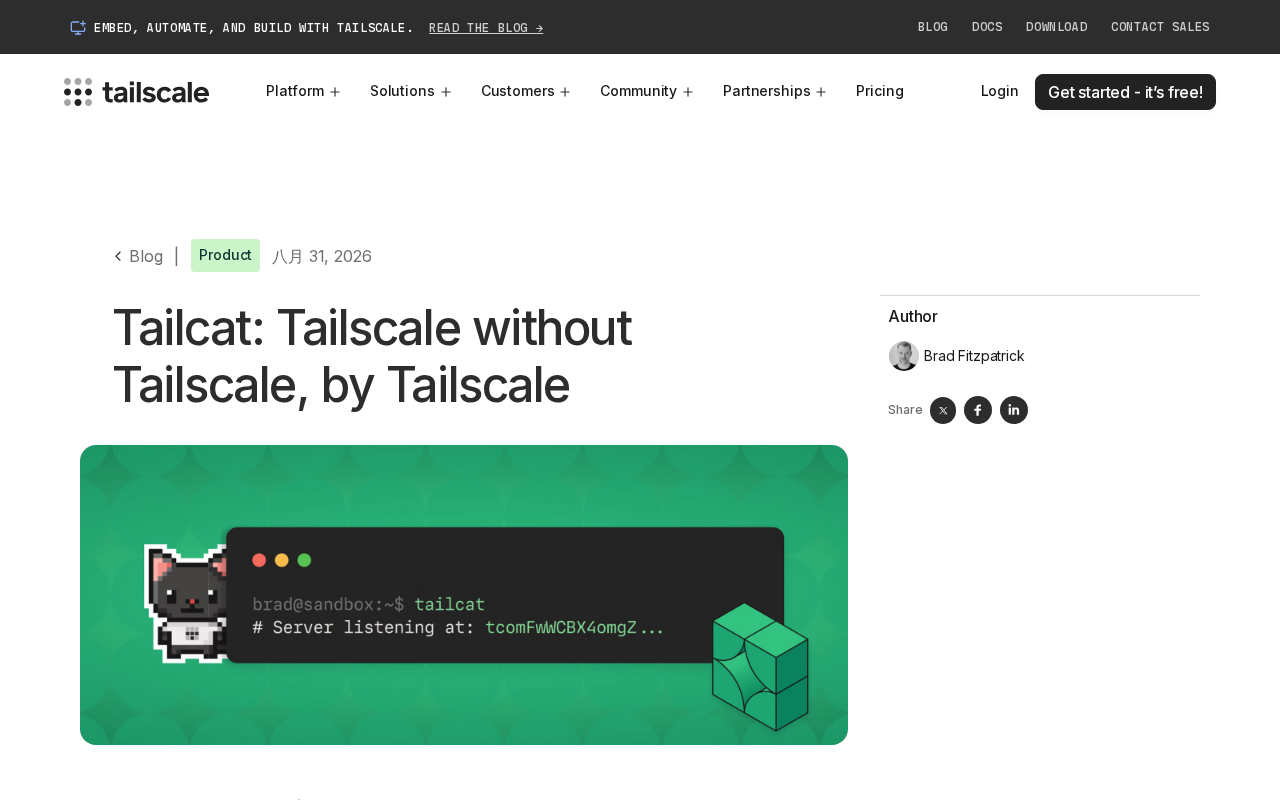
Tailcat: Tailscale's Official Decentralized Minimalist Networking Solution
Tailcat is Tailscale's official decentralized networking project that strips control plane dependencies, offering self-hosting users a more autonomous, privacy-focused WireGuard mesh experience.
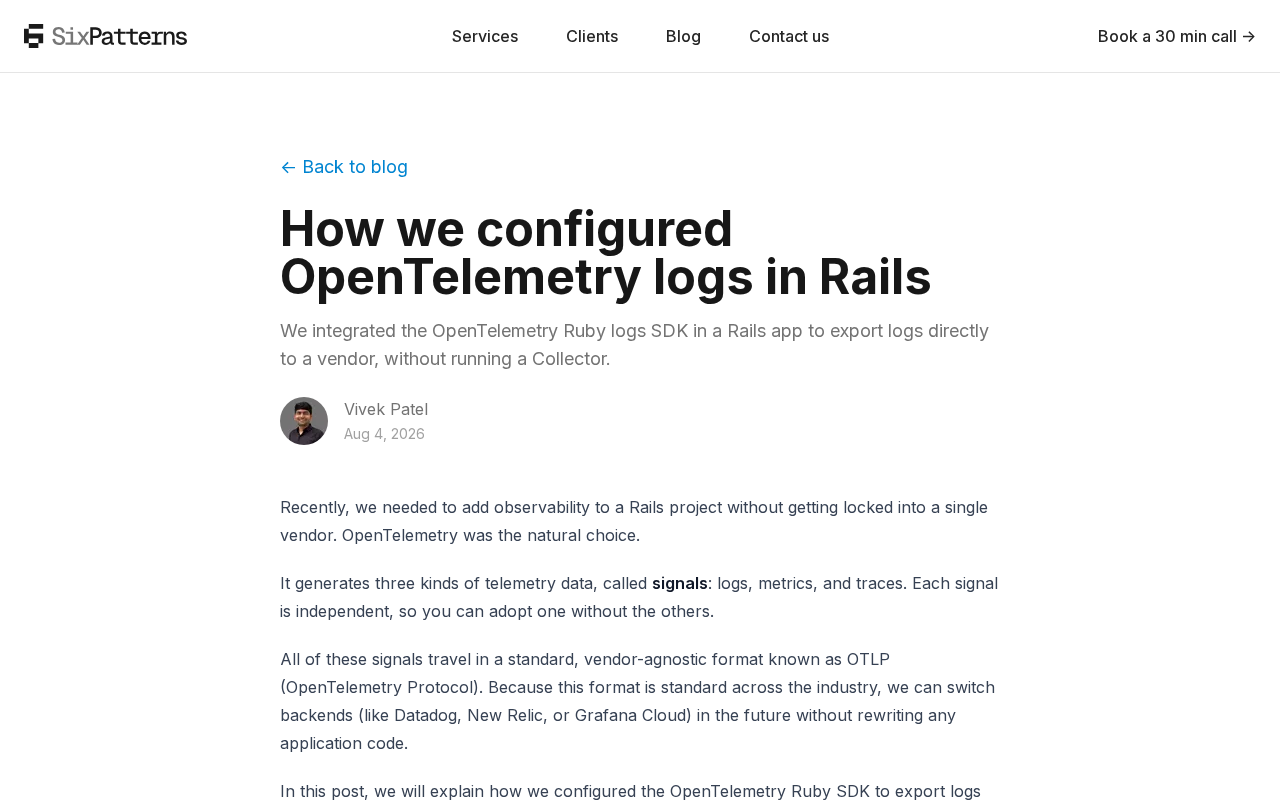
Configuring OpenTelemetry Logs in Rails: From Integration to Production
Learn how to configure OpenTelemetry logs in Rails, covering OTel SDK setup, trace context injection, structured log export, and performance optimization for seamless log-trace correlation.
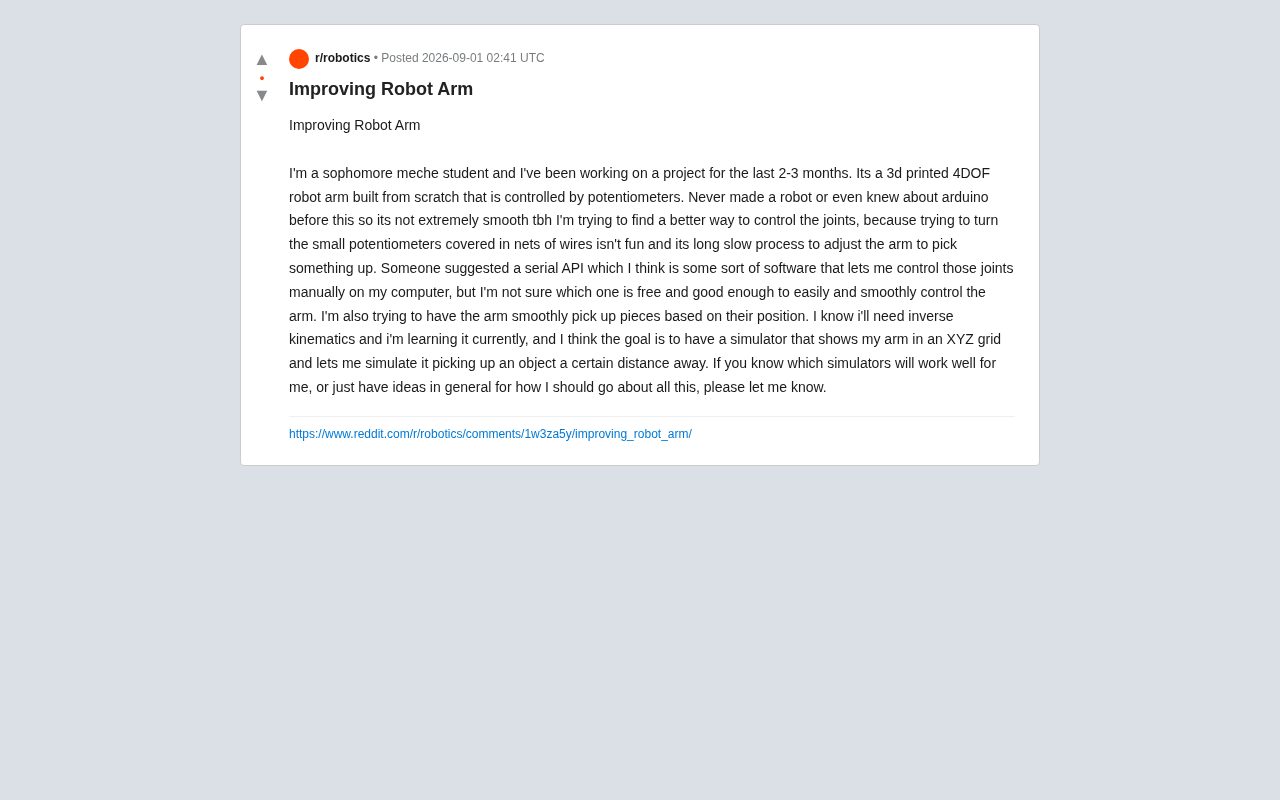
4DOF Robotic Arm DIY Tutorial: A Progressive Guide from Potentiometer Control to Inverse Kinematics
Complete guide to building a 4DOF robotic arm: from potentiometer control to Python serial communication, inverse kinematics, PyBullet simulation, and vision-based grasping for Arduino robotics beginners.