28 Enterprise-Grade AI Agent Projects: A Complete Guide That Even Beginners Can Deploy

28 complete, deployable enterprise AI Agent projects that beginners can run and learn from.
This guide presents 28 fully reproducible enterprise-grade AI Agent projects covering code debugging, financial analysis, information monitoring, and intelligent customer service. With complete source code and one-click deployment, it helps learners cross the theory-to-practice gap while explaining core concepts like RAG, ReAct, LoRA, and multi-agent collaboration.
Why Most People Fail to Learn AI Agents
In today's world where AI Agents have become a technology hotspot, many learners fall into the same trap: they bookmark piles of tutorials and memorize all kinds of theoretical concepts, yet they never manage to build a project that actually runs. The reasons behind this deserve careful reflection.
An AI Agent is an AI system capable of perceiving its environment, making autonomous decisions, and taking actions to accomplish specific goals. Unlike traditional Q&A-style large language models, an Agent possesses the closed-loop capability of "planning – tool invocation – execution – reflection." Its core architecture typically comprises four components: the brain (the LLM serving as the reasoning engine), memory (short-term context and long-term vector storage), tools (API calls, code execution, browser operations, etc.), and the action module.
It's worth noting that this layered design of "brain–memory–tools–action" didn't emerge out of nowhere—it deeply mirrors the findings of cognitive science research on human working memory and long-term memory. Working memory (corresponding to the short-term context window) handles the immediate information processing of the current task, long-term memory (corresponding to the vector database) stores persistent knowledge across sessions, and tool invocation corresponds to the metacognitive ability of humans to solve problems with the help of external resources. This bio-inspired design enables Agents to dynamically allocate information resources in a manner similar to human cognition when handling complex, multi-step tasks.
The rise of Agents owes much to the maturation of Function Calling capabilities in large models like GPT-4—a feature formally introduced in the GPT-3.5-turbo-0613 version. It allows developers to declare tool interfaces in JSON Schema format, and the model can automatically determine when to call which tool and output structured parameters. The maturation of this capability is a key milestone in Agent engineering. Combined with the widespread adoption of development frameworks like LangChain, AutoGen, and CrewAI, building AI applications that autonomously complete multi-step tasks became possible. It is precisely this architectural complexity that makes it very difficult to truly master the engineering implementation of Agents through theory alone.
Most Agent examples online are "half-finished products"—with incomplete code, frequent errors, and missing critical environment configuration workflows. They often only demonstrate basic functionality but can't truly be applied to work, study, or side-business scenarios. The result is that after studying for a long time, learners find it completely unusable, wasting a great deal of time.
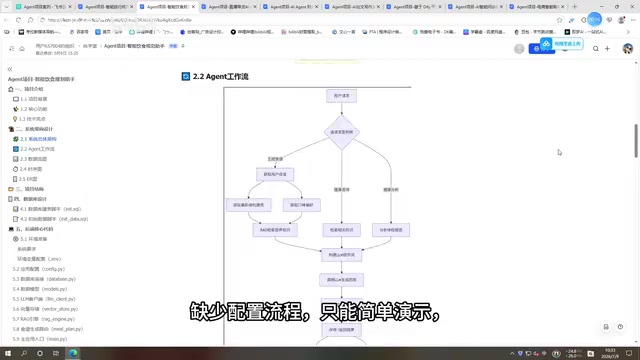
This "armchair theorizing" style of learning is the biggest trap in the AI Agent beginner phase. The gap between theory and practice is exactly the root cause of why most people stall in their progress.
The Core Value of Complete, Deployable Projects
Unlike fragmented demos, truly valuable learning resources should be complete, reproducible projects that have been tested and debugged. According to the tutorial, its project collection has several key features: complete source code, detailed steps, and full configuration—achieving the goal of "saying goodbye to armchair theorizing and engaging in pure real-world hands-on practice."
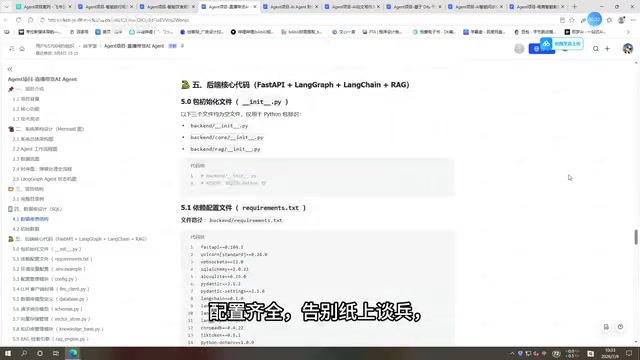
An important threshold design of such projects is that they require no deep programming background—even complete beginners can deploy them with one click and directly replicate them. Learners can start by "running along," understanding the working mechanisms of AI Agents through practice, and then gradually transition to secondary development and customization.
For learners at different stages, complete AI Agent hands-on projects offer clear practical value:
- Beginners: Accumulate hands-on experience and enrich their resume portfolio
- Developers with a foundation: Perform secondary development to adapt to personal business needs
- Working professionals: Improve work efficiency or launch AI-related side businesses
Covering High-Frequency, Essential Scenarios Across Industries
This set of projects covers high-frequency, essential scenarios across multiple industries with strong practicality. Judging from the public project list, the range of directions covered is quite broad:
Development and Technology
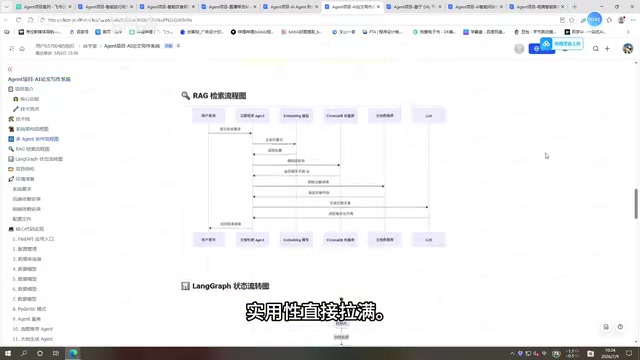
- Code Debugging and Development Agent: Assists developers with code review, error localization, and debugging—a practical tool for boosting programmer productivity. Such Agents typically integrate Code Interpreter capabilities—a tool invocation mechanism that allows the LLM to dynamically generate and execute code in a sandbox environment. Compared to pure text-based reasoning, a Code Interpreter can handle tasks such as precise computation, data processing, and logic verification, greatly improving the reliability of Agents in technical scenarios. The sandbox isolation mechanism is the core guarantee of Code Interpreter security: no matter what code the Agent generates, its execution environment is strictly isolated from the host system, preventing malicious code or misoperations from harming the production environment. OpenAI's Code Interpreter plugin and the open-source E2B sandbox are both representative implementations in this direction, with the latter also supporting custom runtime environments that can preinstall specific versions of Python libraries and system dependencies.
Data Analysis
-
Financial Data Analysis Agent: Focused on data processing and analysis for financial scenarios, suitable for users with quantitative or investment research needs. Financial scenarios have extremely high requirements for data security and computational precision. Such Agents typically combine structured data querying (Text-to-SQL) with time-series data analysis capabilities, converting natural language queries into database operations and lowering the barrier for non-technical personnel to obtain data insights. The core challenge of Text-to-SQL technology lies in handling the ambiguity of specialized financial terminology—the same business concept may correspond to different table names and field names across different companies' databases. Therefore, production-grade financial Agents usually need to maintain a domain-specific schema description document to help the model accurately understand the data structure.
-
Web-Wide Information Monitoring Agent: Automatically crawls and monitors information across the web, suitable for scenarios such as public opinion monitoring and competitor analysis. The core capability of such Agents lies in unifying data sources such as web crawlers, RSS subscriptions, and social media APIs, and using the LLM for semantic classification and summarization, achieving automatic conversion from "information overload" to "structured intelligence." In terms of engineering implementation, such Agents typically adopt an event-driven architecture: the data collection layer is responsible for continuously pulling multi-source information streams, a message queue (such as Kafka or Redis Streams) serves as a buffer layer to smooth out peak traffic, the LLM analysis layer asynchronously consumes messages and outputs structured labels, and finally the alerting module triggers notifications based on preset rules—this layered, decoupled design ensures the system's stability under high-concurrency scenarios.
Services and Education
-
24/7 Intelligent Customer Service Agent: Automatically responds to customer inquiries around the clock, a typical application for enterprises to cut costs and improve efficiency. Modern intelligent customer service Agents commonly adopt a RAG (Retrieval-Augmented Generation) architecture—vectorizing enterprise knowledge bases, product documentation, and FAQs in advance and storing them in a database (such as Chroma, Milvus, or Pinecone). When a user asks a question, the most relevant document snippets are retrieved in real time, and the LLM then generates an accurate answer by combining the retrieval results.
The RAG architecture arose from two inherent limitations of large language models: the knowledge-timeliness problem caused by the training data cutoff date, and the model's tendency to "hallucinate" when answering domain-specific questions. RAG converts external knowledge bases into dense representations (Embeddings) in a high-dimensional vector space, and at inference time uses cosine similarity or approximate nearest neighbor algorithms (ANN) to quickly locate relevant document snippets, injecting the retrieval results into the prompt as context—thereby decoupling the model's parametric knowledge from external structured knowledge, so that updating the knowledge base requires no retraining of the model. Current engineering directions for RAG also include hybrid retrieval (dense vectors + sparse BM25 keyword matching), reranking (Reranker), and query rewriting, which further improve retrieval accuracy. Among these, the advantage of hybrid retrieval is that it balances semantic similarity and exact keyword matching: dense vector retrieval excels at capturing content that is semantically similar but phrased differently, while BM25 performs more stably when handling queries containing specific model numbers, code identifiers, and other exact strings. This mechanism effectively ensures that customer service answers are strictly based on the enterprise's real information rather than the model's training memory.
-
Student Intelligent Teaching Assistant Agent: An intelligent tutoring tool for educational scenarios. Unlike general Q&A, educational Agents emphasize Socratic guidance—instead of directly giving answers, they use follow-up questions and hints to help students develop autonomous reasoning abilities. This imposes higher requirements on the Agent's dialogue strategy design: the System Prompt needs to clearly constrain the model's answer style, while the Agent needs to maintain the student's learning progress state and dynamically adjust question difficulty based on the knowledge points already mastered—this is precisely the core challenge of short-term memory management in educational scenarios.
The design covering multiple industries allows learners from different backgrounds to find an entry point that matches their own needs.
Lightweight and Extensible Engineering Design
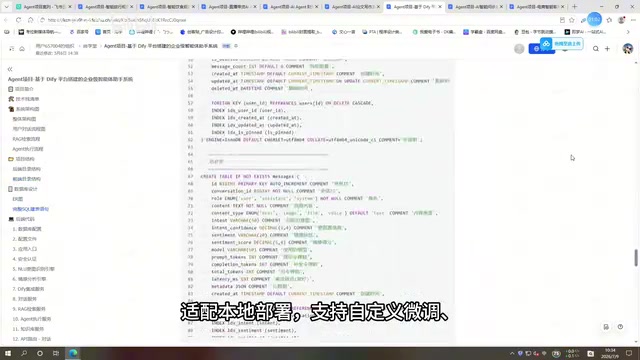
What's worth noting is that these AI Agent projects emphasize being lightweight and low-barrier in their engineering design, adapted for local deployment.
The technical path for local deployment mainly relies on local model runtime frameworks such as Ollama and LM Studio, combined with open-source large models such as Llama 3, Qwen2, and Mistral. Compared to calling cloud APIs like OpenAI or Claude, the advantages of local deployment are: data never leaves the local machine (meeting compliance requirements for high-privacy scenarios such as finance and healthcare), no Token fees (reducing long-term operating costs), and controllable network latency.
For individual developers, local deployment combined with quantization techniques (such as 4-bit quantization in GGUF format) can smoothly run most practical Agents on consumer-grade graphics cards. GGUF (GPT-Generated Unified Format) is a model storage format defined by the llama.cpp project, designed and optimized for CPU inference. The core principle of quantization is compressing model weights from 32-bit or 16-bit floating-point numbers into 4-bit or 8-bit integer representations, combined with group quantization and mixed-precision strategies (retaining higher precision for attention layers). In actual benchmarks, the 4-bit quantized version of a 7B-parameter model shows only about a 0.5–1% increase in perplexity compared to the original FP16 version, while VRAM usage drops from 14GB to about 4GB—running a 7B-parameter model typically requires only at least 8GB of VRAM or 16GB of RAM. The specific implementation of group quantization is to divide the weight matrix into groups of fixed size (usually 32 or 64 elements), with each group independently computing a quantization scaling factor. This fine-grained quantization strategy effectively reduces the precision loss caused by global quantization. On this basis, the Ollama framework encapsulates model downloading, version management, and a REST API service, lowering the operational barrier of local deployment to an experience similar to using Docker. For individual developers and small teams, this means lower costs and higher data security, without relying on expensive cloud services.
In terms of functional extensibility, the projects support three key capabilities:
-
Custom Fine-tuning: Model behavior can be adjusted according to specific business scenarios, making the Agent better fit actual needs. Fine-tuning continues training a pretrained model on a domain-specific dataset so that its output style, use of specialized terminology, and task response format better meet business expectations. For individual developers with limited resources, parameter-efficient fine-tuning methods such as LoRA (Low-Rank Adaptation) require training only a small number of additional parameters—its principle is to add two low-rank matrices in parallel alongside the original weight matrix (the rank is usually set to 4–16), freezing the original weights during training and updating only the low-rank matrices, with the final parameter count typically not exceeding 1% of the original model—enabling effective model customization on consumer-grade hardware. QLoRA further combines LoRA with 4-bit quantization, making it possible to fine-tune a 13B-parameter model on a single 24GB graphics card.
-
Scheduled Tasks: Supports automated scheduling to achieve unattended continuous operation. The scheduled task mechanism enables Agents to proactively execute tasks according to a preset schedule rather than passively waiting for user triggers, which is especially critical for scenarios such as information monitoring and periodic report generation. In terms of engineering implementation, this is usually accomplished by connecting APScheduler (Python) or system-level Cron jobs with the Agent's task entry function.
-
Multi-Agent Collaboration: Multiple Agents divide labor and collaborate to handle more complex task pipelines—this is also an important direction in the current evolution of Agent technology.
Multi-Agent Collaboration represents the industry's cutting-edge trend, and current mainstream frameworks differ significantly in their design philosophies. Understanding these differences is crucial for architecture selection. CrewAI adopts a "role-playing" paradigm, where each Agent is given a clear role description, goal, and backstory, and hands off tasks through a natural-language protocol—suitable for scenarios with clear business processes and fixed role divisions. LangGraph, on the other hand, models workflows as directed graphs, where developers explicitly define routing logic between nodes in code; each node represents a processing step and each edge represents conditional routing logic, enabling developers to precisely control the Agent's decision branches and loop cycles. Compared to linear chain-based scheduling, this graph-structured approach offers stronger fault tolerance and observability, making it suitable for complex tasks that require precise control of the execution path. Microsoft's AutoGen adopts a "conversational" multi-Agent framework, where Agents negotiate through message passing, supporting human-in-the-loop workflows—offering unique advantages in enterprise scenarios that require human review of critical decision nodes. The choice among the three usually depends on: whether the task process is fixed, whether the execution path needs dynamic adjustment, and the team's tolerance for code complexity. Compared to a single Agent, the collaboration of multiple specialized Agents can handle more complex tasks that require multi-step reasoning and division of labor—an important foundation for building enterprise-grade AI applications.
How to Rationally View "Get a Job Right After Completing the Training"
Such tutorials often use the slogan "get a job right after completing the training," toward which we need to maintain a rational understanding. Complete AI Agent hands-on projects are indeed an effective way to quickly accumulate experience and build a portfolio, offering substantial help for job hunting and resumes.
But real capability improvement lies not in how many projects you got running by "running along," but in understanding the design logic behind each project. The current mainstream Agent planning paradigms are mainly three: ReAct (Reasoning + Acting, alternating between reasoning and action), Plan-and-Execute (first generating a complete plan and then executing step by step, suitable for long tasks), and Reflection (the Agent self-critiques and corrects its own output).
The ReAct paradigm was formally proposed by Yao et al. in the paper "ReAct: Synergizing Reasoning and Acting in Language Models," published on arXiv in October 2022 and accepted by NeurIPS in 2023. Its core insight is to interweave Chain-of-Thought reasoning with tool invocation: before each action, the Agent first writes out its reasoning process in natural language (Thought), then decides which tool to call (Action), and after observing the result (Observation), continues the next round of reasoning. This "think while doing" mechanism enables the Agent to dynamically adjust its strategy based on real-time feedback, and it is currently the most widely implemented planning paradigm in engineering.
However, ReAct has known limitations in engineering practice: the number of reasoning steps grows linearly with task complexity, leading to a significant rise in Token consumption and latency; moreover, if an early tool invocation makes a misjudgment, subsequent steps will continue reasoning on the wrong premise, forming an "error propagation" problem. This is precisely the design motivation of the Plan-and-Execute paradigm—by decoupling planning from execution, it completes global task decomposition before execution, reducing the impact of single-step errors on the overall task. The Reflection paradigm serves as a complementary mechanism to both: after completing a round of execution, the Agent calls an independent "critic" model (or a different role prompt of the same model) to evaluate output quality, and if the score fails to reach a threshold, it triggers replanning, forming a self-improving closed loop. Understanding the applicable boundaries of these three paradigms is the key leap from "knowing how to use Agents" to "knowing how to design Agents."
The choice of the tool chain is equally critical: when to use a vector database for semantic retrieval (RAG), when to call external APIs, and when a Code Interpreter is needed to perform computations—these design decisions directly affect the Agent's task completion quality and stability. Only by understanding the differences behind these paradigms—why the Agent workflow is designed this way, how to choose the appropriate tool chain, and how multiple Agents communicate and coordinate—can you make reasonable architecture choices when facing new business scenarios, rather than blindly applying templates.
Only by transforming "replication" into "understanding," and then into "creation," can you truly form transferable engineering capabilities. Learners are advised to take a progressive path: first reproduce, then dissect, and finally transform. Treat every project you get running as an experimental platform for understanding Agent architecture, not as the endpoint.
Conclusion
Learning AI Agents should not stop at collecting theory and fragmented demos. Engaging in hands-on practice through complete, deployable, and battle-tested enterprise-grade projects is an effective path to cross the "can't learn it" trap. This collection of AI Agent projects—covering multiple scenarios such as code debugging, financial analysis, information monitoring, and intelligent customer service—provides learners of different levels with a practical foundation from beginner to advanced, thanks to its lightweight deployment, custom fine-tuning, and multi-Agent collaboration capabilities. Ultimately, the real value lies in transforming hands-on experience into a deep understanding of the essence of AI Agent technology—from the ReAct planning paradigm to multi-Agent collaboration architectures, from local model quantization deployment to RAG tool chain design and selection—every dimension of deepening will constitute irreplaceable engineering competitiveness.
Related articles

The Truth Behind Codex 'Build a Website in 5 Minutes': AI Isn't Creating Sites—It's Helping You Copy Them
Exposing the truth behind viral Codex 5-minute website videos: creators aren't building original sites with AI—they're copying shared prompts or scraping others' work. Learn AI coding tools' real limits.

Getting Started with AI Agent Development: A Complete Guide from Concept to Practice
A comprehensive guide to AI Agent architecture and development, covering automated marketing, intelligent customer service, and investment analysis scenarios with single and multi-agent collaboration.

The Truth Behind Codex 'Build a Website in 5 Minutes': AI Isn't Creating Sites — It's Helping You Copy Them
Exposing the truth behind viral Codex 5-minute website videos: creators aren't building original sites with AI — they're copying shared prompts or scraping others' work.