3.6x Faster Text-to-Image Model Training: Technical Pathways and What It Means
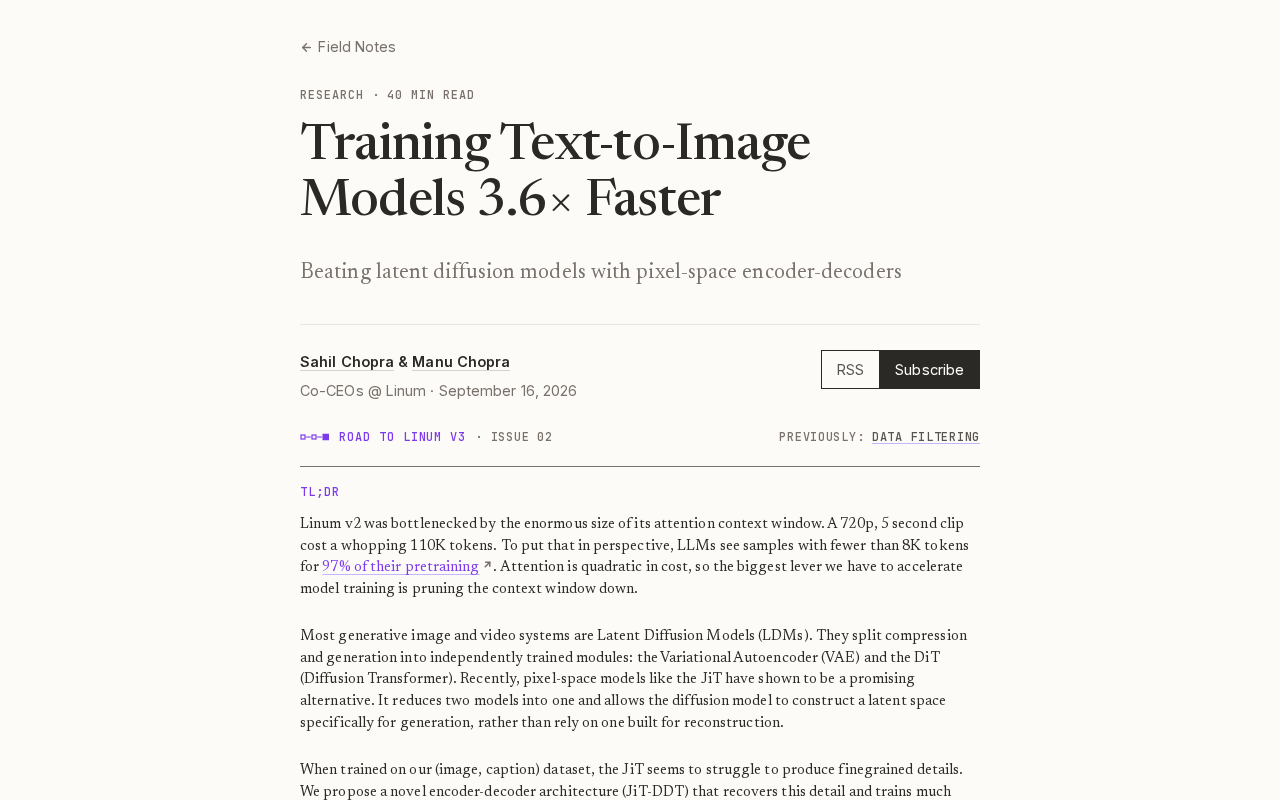
A Hacker News post claims 3.6x faster text-to-image training — we break down the likely techniques and why skepticism is warranted.
A technical post on Hacker News claims to achieve a 3.6x speedup in text-to-image model training, which would cut training time and compute costs to roughly one-third. The article examines three main technical pathways that could enable such gains — diffusion process and training objective optimization (e.g., Consistency Models, improved noise schedules), computational efficiency improvements (e.g., FlashAttention, mixed-precision training), and data pipeline and distributed training optimization. While acknowledging the industry value of training efficiency gains, the article cautions that the post lacks benchmarks, reproduction details, and community validation, urging readers to wait for more complete technical evidence before drawing conclusions.
Introduction: The Cost Problem in Text-to-Image Training
Text-to-image (Text-to-Image) generation models have become one of the most closely watched areas in AI in recent years. From Stable Diffusion to various diffusion models, their visual generation capabilities continue to push new boundaries. However, the training costs for these models have remained stubbornly high — often requiring hundreds or even thousands of GPUs, enormous compute resources, and significant time. For research institutions and smaller teams, the steep barrier to training has always been a difficult obstacle to overcome.
A technical post that surfaced on Hacker News made a striking claim: that it achieves a 3.6x speedup in training text-to-image models. If this efficiency gain can be reliably reproduced in real-world scenarios, its implications for the entire industry would be significant.
What a 3.6x Speedup Actually Means
A 3.6x improvement in training speed directly translates to a dramatic reduction in both time and cost. If a model originally took 36 days to train, it would now complete in roughly 10 days; the compute budget required could correspondingly drop to nearly one-third of the original.
For teams that rely on rapid iteration, the value of this kind of speedup goes beyond cost savings — it fundamentally accelerates the pace of development. Faster training loops mean more architectural changes, hyperparameter combinations, and data mix experiments can be explored within the same timeframe, enabling more efficient navigation of the model performance frontier.
It's worth noting that efficiency gains of this magnitude typically come from a combination of engineering and algorithmic optimizations — such as more efficient data loading pipelines, mixed-precision training, optimized attention computation, improved sampling strategies, or a fundamental redesign of the diffusion process itself. Given the limited information in the original post, it's not yet possible to confirm the core technical source of this speedup.
Common Technical Pathways Behind Training Acceleration
While the Hacker News post itself is brief, drawing on the mainstream directions in text-to-image training optimization today, we can hypothesize several technical approaches that could plausibly yield such significant speedups:
Training Objectives and Diffusion Process Optimization
Diffusion model training typically involves a large number of denoising steps. By improving noise schedules, adopting more efficient loss functions, or introducing new paradigms such as Consistency Models, it's possible to reduce the number of training steps while maintaining generation quality.
Consistency Models are a new class of generative paradigm proposed by OpenAI in 2023, designed to address the slow inference problem of traditional diffusion models. Conventional diffusion models require dozens or even hundreds of denoising iterations to generate an image, whereas Consistency Models learn a direct mapping from "any noisy step back to the original data" during training, theoretically enabling single-step generation. On the training side, this design also reduces the length of denoising trajectories that need to be simulated, thereby decreasing the computational load per training iteration. Additionally, the design of the noise schedule has a significant impact on training efficiency — more aggressive scheduling strategies allow the model to cover a sufficiently diverse range of noise levels in fewer steps, reducing redundant computation. Alternative training objectives such as Flow Matching have also demonstrated faster convergence than traditional DDPM, making them a hot topic in recent training acceleration research.
Computational Efficiency Optimization
This includes using efficient attention implementations like FlashAttention, mixed-precision (FP16/BF16) training, gradient checkpointing, and GPU operator fusion. These engineering techniques can significantly improve hardware utilization and reduce wasteful computation.
FlashAttention is an IO-aware attention computation algorithm proposed by researchers at Stanford University. Its core idea is to accelerate standard Transformer attention by computing in tiles (Tiling) and reducing the number of HBM (High Bandwidth Memory) read/write operations. In the U-Net or DiT (Diffusion Transformer) architectures used in diffusion models, attention layers are typically the primary consumer of memory and compute time. FlashAttention can deliver 2–4x speedups in attention layers without changing mathematical equivalence. Gradient Checkpointing is a time-for-memory trade-off technique: instead of storing all intermediate activation values during training, they are recomputed on demand during backpropagation. This significantly reduces memory usage, allowing larger batch sizes, which in turn improves GPU utilization and overall throughput. Used together, these two techniques are now standard engineering practice for large-scale diffusion model training.
Data Pipeline and Distributed Training
In large-scale training, data loading and communication overhead frequently become bottlenecks. Optimizing data preprocessing, caching mechanisms, and multi-node multi-GPU communication strategies can often yield substantial improvements in overall throughput.
Potential Industry Impact
If efficient training methods like this could be widely adopted, the most direct beneficiaries would be resource-constrained researchers and startup teams. Lowering the training barrier would help enable more diverse model exploration, rather than leaving the field dominated by a handful of well-resourced players with massive compute.
From a broader perspective, improvements in training efficiency also align with the AI industry's growing focus on sustainable development. Reducing compute consumption means not only lower costs, but also a smaller energy footprint — a consideration that is increasingly important as large model scale continues to expand.
A Measured Take: More Validation Is Needed
It's important to note that this particular post has received minimal community attention — only a handful of upvotes and comments — and lacks detailed technical documentation, benchmark results, and reproduction instructions. Any claim about training acceleration should be grounded in rigorous controlled experiments, including quality comparisons before and after the speedup, quantitative metrics on standard datasets, and stability tests across different hardware configurations.
In the AI field, efficiency claims are plentiful, but only methods that can withstand community reproduction and gain broad adoption hold lasting value. For information like this, it's worth staying curious while remaining cautious — and waiting for more complete technical details to be made public before drawing firm conclusions.
Conclusion
The claim of a 3.6x speedup in text-to-image model training points toward a core goal the AI community continuously pursues: doing more with less. Regardless of whether this specific method ultimately holds up to scrutiny, training efficiency optimization will remain one of the key battlegrounds in the future of generative AI. For practitioners in this space, continuously tracking such technical developments and understanding the underlying principles and applicable boundaries is the surest way to extract genuine value.
Related articles
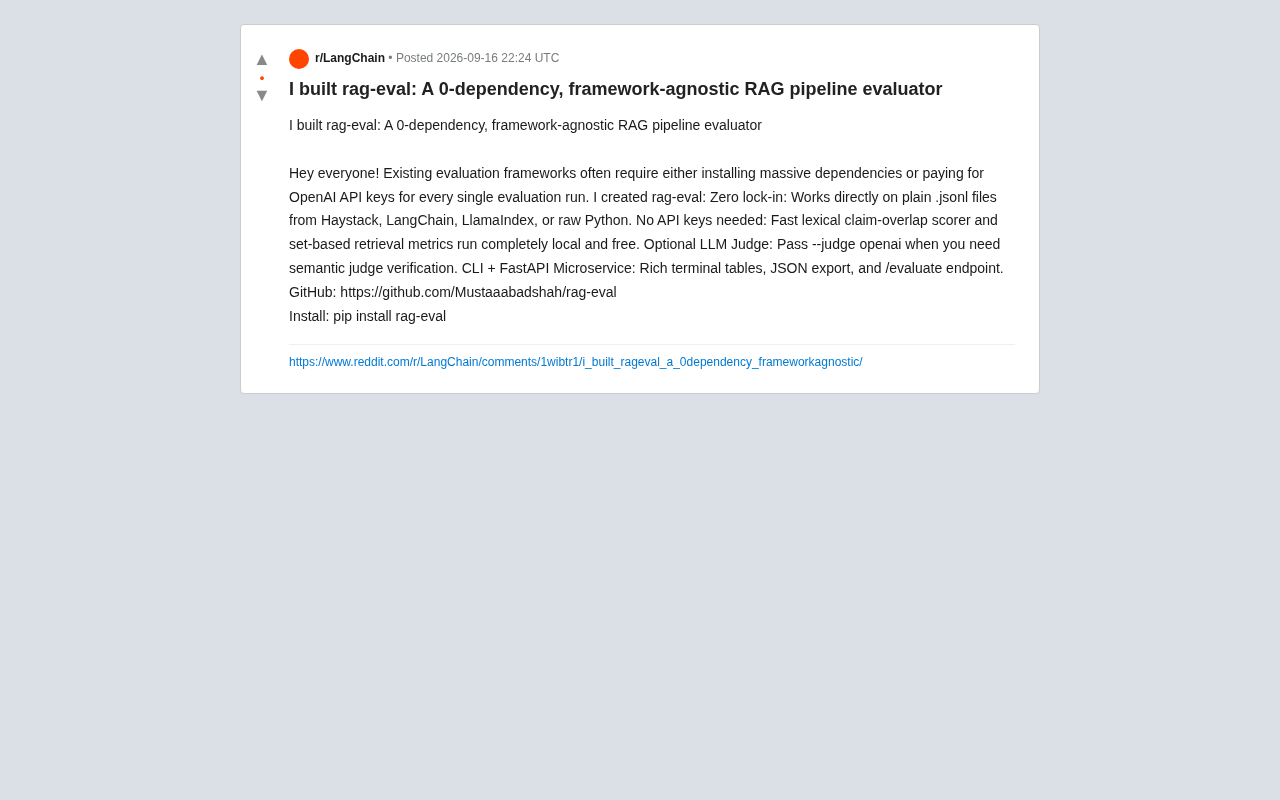
rag-eval: A Zero-Dependency, No-API-Key RAG Evaluation Tool
rag-eval is a zero-dependency, framework-agnostic open-source RAG pipeline evaluation tool. It supports free local lexical and retrieval metrics with no API keys required, and offers optional LLM Judge for semantic validation. Compatible with Haystack, LangChain, and LlamaIndex.
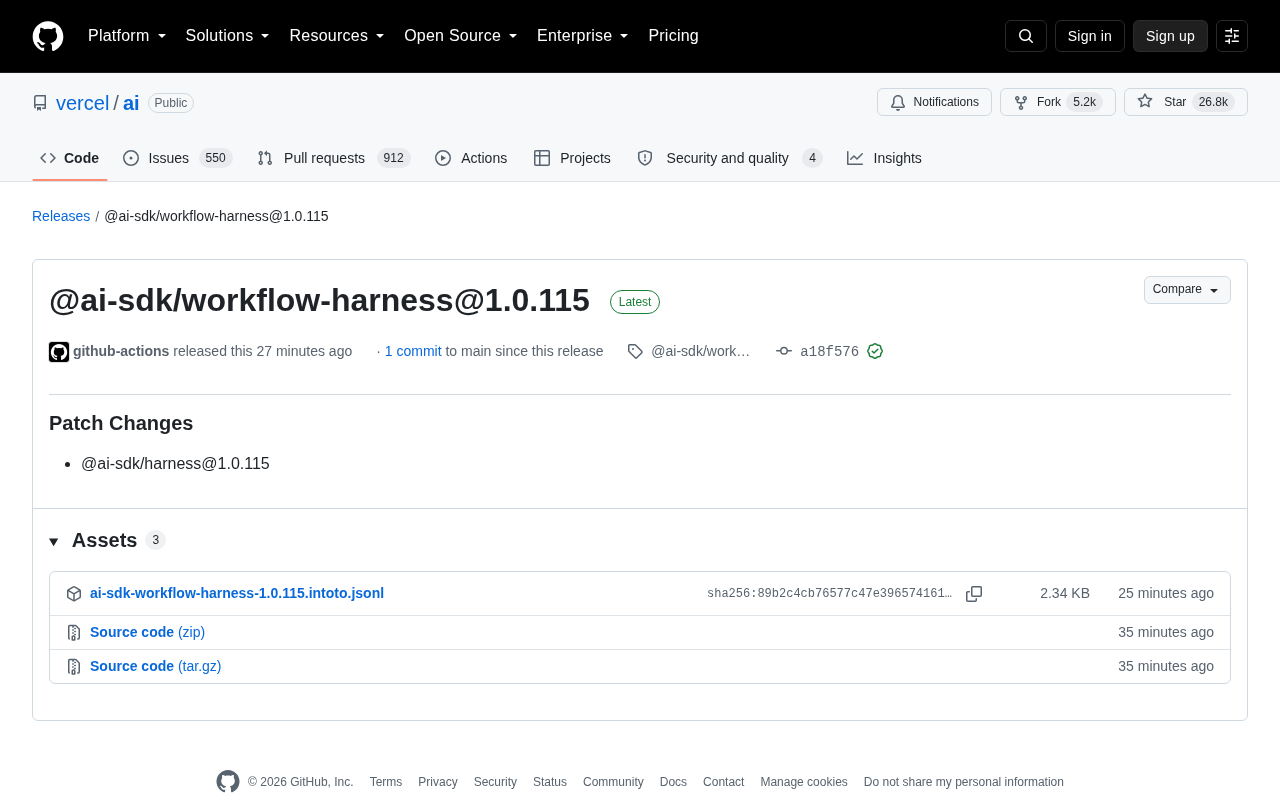
Vercel AI SDK Releases workflow-harness 1.0.115 Patch Update
Vercel AI SDK releases @ai-sdk/workflow-harness 1.0.115 patch update, syncing the @ai-sdk/harness dependency. Learn about the update, release mechanism, and what it means for developers.
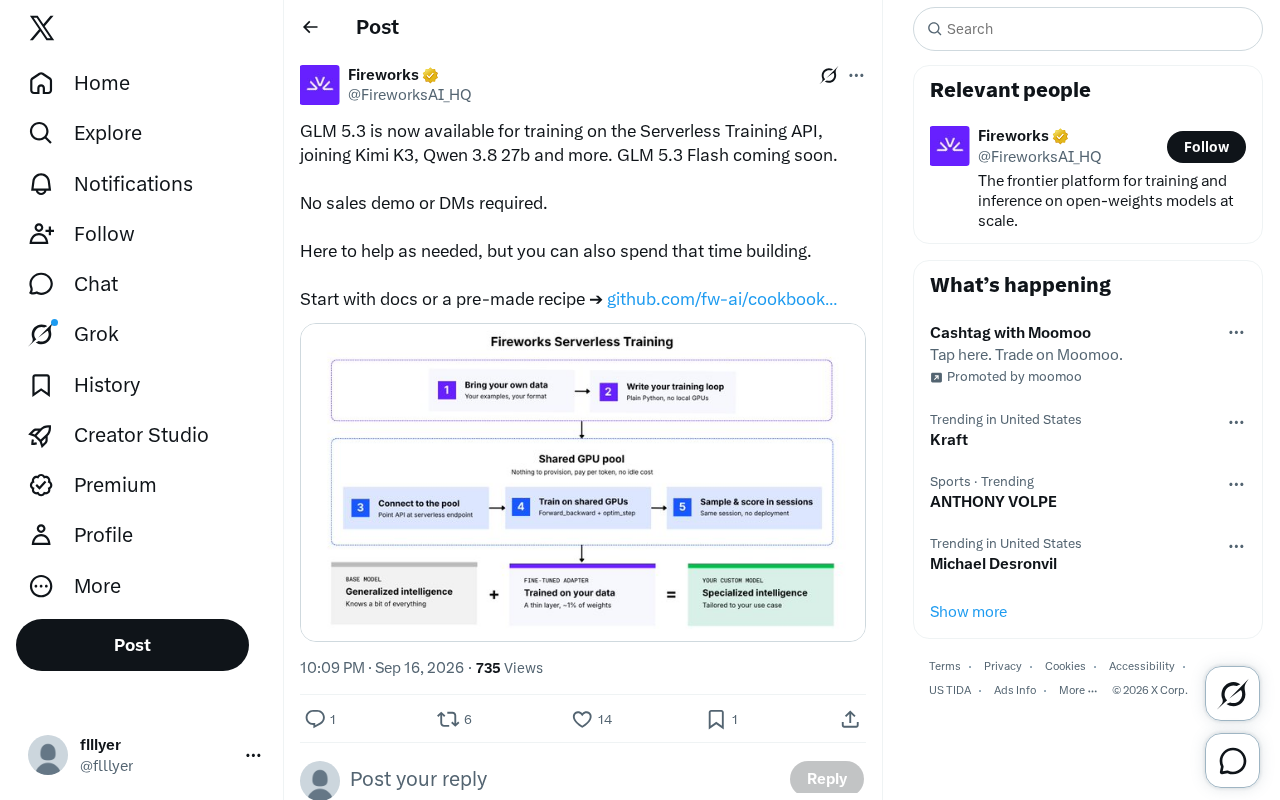
GLM 5.3 Now Available on Serverless Training API — No Sales Process Required
GLM 5.3 is now available on Serverless Training API alongside Kimi K3 and Qwen 3.8 27b. No sales process needed — start fine-tuning directly via docs or pre-made recipes.