GLM 5.3 Now Available on Serverless Training API — No Sales Process Required
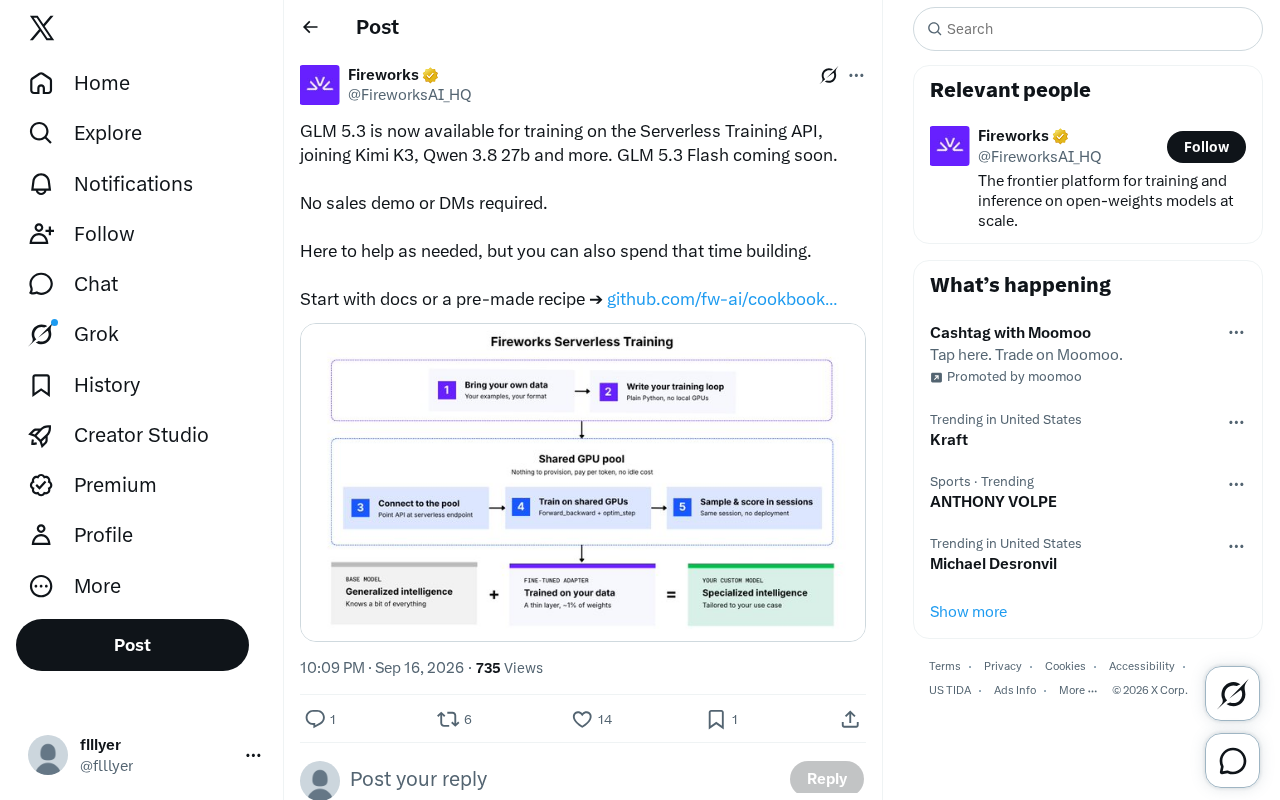
GLM 5.3 joins Serverless Training API alongside Kimi and Qwen, making fine-tuning more accessible than ever.
GLM 5.3 is now officially available on a Serverless Training API platform, joining Kimi K3, Qwen 3.8 27b, and other major open-source models, with GLM 5.3 Flash teased as coming soon. The Serverless training model abstracts GPU cluster management and resource scheduling behind an API, enabling on-demand, pay-per-use fine-tuning with no sales process required — developers can get started directly via documentation or pre-made recipes. Multi-model hosting enables easier benchmarking, lower migration costs, and reduced vendor lock-in. This development reflects two key trends in the open-source model toolchain: the Serverless-ification of training infrastructure, and the rise of unified multi-model hosting platforms.
GLM 5.3 Joins the Serverless Training Lineup
A product update shared on Twitter reveals that GLM 5.3 is now available for training on a Serverless Training API, joining a growing list of supported open-source models that includes Kimi K3 and Qwen 3.8 27b. The platform also teased that GLM 5.3 Flash is coming soon.
For developers focused on fine-tuning open-source LLMs, the significance here isn't any single model — it's the rapid expansion of platform-level training coverage across major model families. When a training platform simultaneously supports models from GLM, Kimi, Qwen, and others, developers can compare and switch between them within a unified workflow, without having to stand up a separate training environment for each one.
The Core Value of Serverless Training
Serverless Training means developers don't need to manage GPU clusters, handle resource scheduling, or maintain underlying infrastructure. Training jobs are triggered on demand and billed by usage. This model significantly lowers the barrier to fine-tuning — where teams previously had to procure or rent compute, configure distributed frameworks, and wrangle environment dependencies before running a single customized training job, Serverless abstracts all of that behind an API.
One line from the original announcement captures the product philosophy well: "No sales demo or DMs required." Developers don't have to navigate lengthy procurement processes — they can get started directly through documentation or pre-made recipes. As the team put it: "Here to help as needed, but you can also spend that time building." The idea is to give developers back both control and time, so they can focus on building rather than coordinating.
From a technical standpoint, Serverless Training typically relies on a cloud provider's elastic compute pool. Through containerization and task queue mechanisms, GPU instances are dynamically allocated when a training job is submitted and released once it completes. Compared to long-term GPU rentals (such as AWS EC2 p3/p4 instances or bare-metal A100s), the key advantage of the Serverless model is zero idle cost — you only pay when compute actually runs. For teams with irregular training schedules, this can meaningfully reduce real-world spend. The trade-offs: cold-start latency on job initiation, and limited room for deep customization in very large-scale runs. For these reasons, Serverless Training is best suited to small-to-medium fine-tuning scenarios (e.g., LoRA, QLoRA, and other parameter-efficient methods) rather than pretraining billion-parameter foundation models from scratch.
What Multi-Model Coverage Actually Means
GLM, Kimi, and Qwen each come from different research teams and differ in parameter scale, architectural design, and language capabilities. A training platform that can host all of them simultaneously has clearly built a sufficiently general abstraction layer for model integration.
For users, this translates into several concrete benefits:
- Easier benchmarking: Run the same dataset and training configuration across multiple base models to quickly generate comparison results and inform model selection.
- Lower migration costs: When a new version drops (e.g., from GLM 5.3 to the upcoming GLM 5.3 Flash), switching base models requires minimal changes.
- Avoiding vendor lock-in: Not tying all fine-tuning work to a single model ecosystem leaves room for flexibility down the road.
The GLM 5.3 Flash teaser also signals a classic "standard + lightweight" product tiering strategy — Flash variants typically offer faster inference and lower cost, making them well-suited for latency- and budget-sensitive use cases.
For context: GLM (General Language Model) is jointly developed by Tsinghua University's KEG Lab and Zhipu AI, with bidirectional attention and autoregressive blank infilling as core architectural features. The Qwen series comes from Alibaba's Tongyi Lab, known for multilingual capability and long-context support. Kimi K3 is from Moonshot AI, with a differentiated focus on long-document processing. The architectural differences mean the same dataset can produce meaningfully different results across these base models. A platform's ability to host all of them uniformly typically relies on standardized wrapping of the Hugging Face Transformers interface — which the vast majority of mainstream open-source models already support — dramatically reducing the engineering cost of model integration and eliminating the need for bespoke adapters per model.
Getting Started via Docs or Pre-Made Recipes
The official onboarding path is straightforward: start from the documentation, or jump straight into a pre-made training recipe. The recipe-based design is especially approachable for newcomers — it packages common fine-tuning tasks (like instruction tuning or domain adaptation) into reusable templates, so developers only need to swap in their data and adjust a few parameters to get running, without writing training scripts from scratch.
This "ready out of the box" philosophy is increasingly becoming the standard for AI training tooling, and it reflects a broader trend: model fine-tuning is moving from a niche skill reserved for specialists toward something accessible to a much wider population of application developers.
The concept of a "recipe" draws from PyTorch's official torchtune project and the design language of various MLOps platforms — it refers to packaging a complete training experiment's hyperparameters, data processing pipeline, and model configuration into a version-controllable config file or script template. Common fine-tuning recipes include: Full Fine-tuning (updating all model parameters), LoRA (Low-Rank Adaptation, which trains only a small set of low-rank matrices to reduce memory usage), and QLoRA (LoRA with 4-bit quantization, enabling fine-tuning on a single consumer-grade GPU). For most vertical domain adaptation tasks, QLoRA or LoRA recipes can achieve results close to full fine-tuning while keeping memory requirements manageable — which is precisely why Serverless platforms tend to prioritize supporting these methods.
Summary
GLM 5.3's addition to the Serverless Training API is, on the surface, a routine platform capability expansion. But it reflects two broader directions in the open-source model toolchain: the Serverless-ification of training infrastructure, which hides compute and operational complexity behind an API; and the unified multi-model hosting model, which lets developers freely weigh options across GLM, Kimi, Qwen, and others. For teams that want to validate ideas quickly without being slowed down by process overhead, this kind of "less coordinating, more building" positioning genuinely addresses a real pain point.
One caveat: the original post was a brief product announcement. Specifics around GLM 5.3's training performance, supported fine-tuning methods, and pricing have not yet been disclosed. Refer to the official documentation for authoritative details.
Related articles
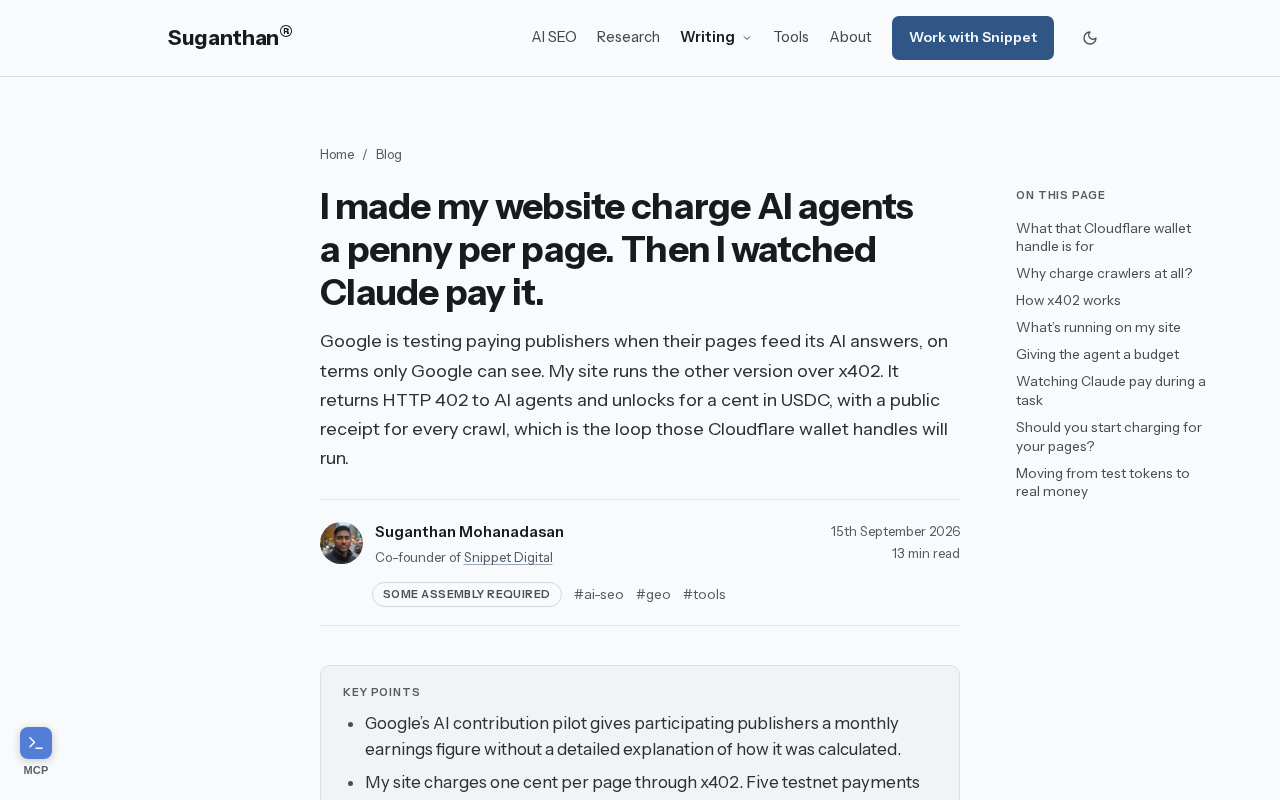
Charging AI Agents Per Web Page: I Watched Claude Pay a Penny Per Visit
A developer charged AI agents one cent per page and watched Claude pay automatically. This experiment reveals new possibilities for micropayments, agent economics, and content monetization.
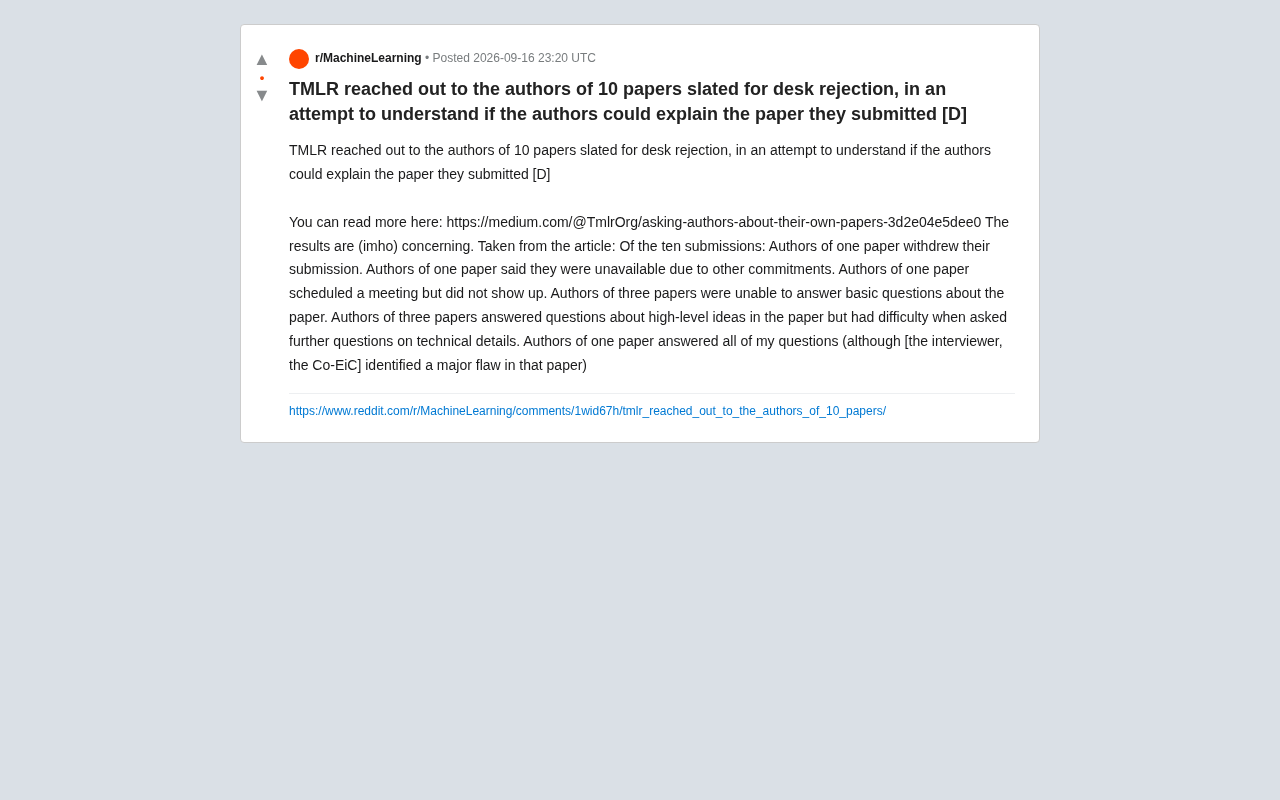
TMLR's Bold Experiment: Asking Authors to Explain Their Own Papers — The Results Are Alarming
TMLR contacted authors of 10 desk-rejected papers and asked them to explain their submissions. The results were alarming — none passed. A wake-up call on AI-era academic integrity.
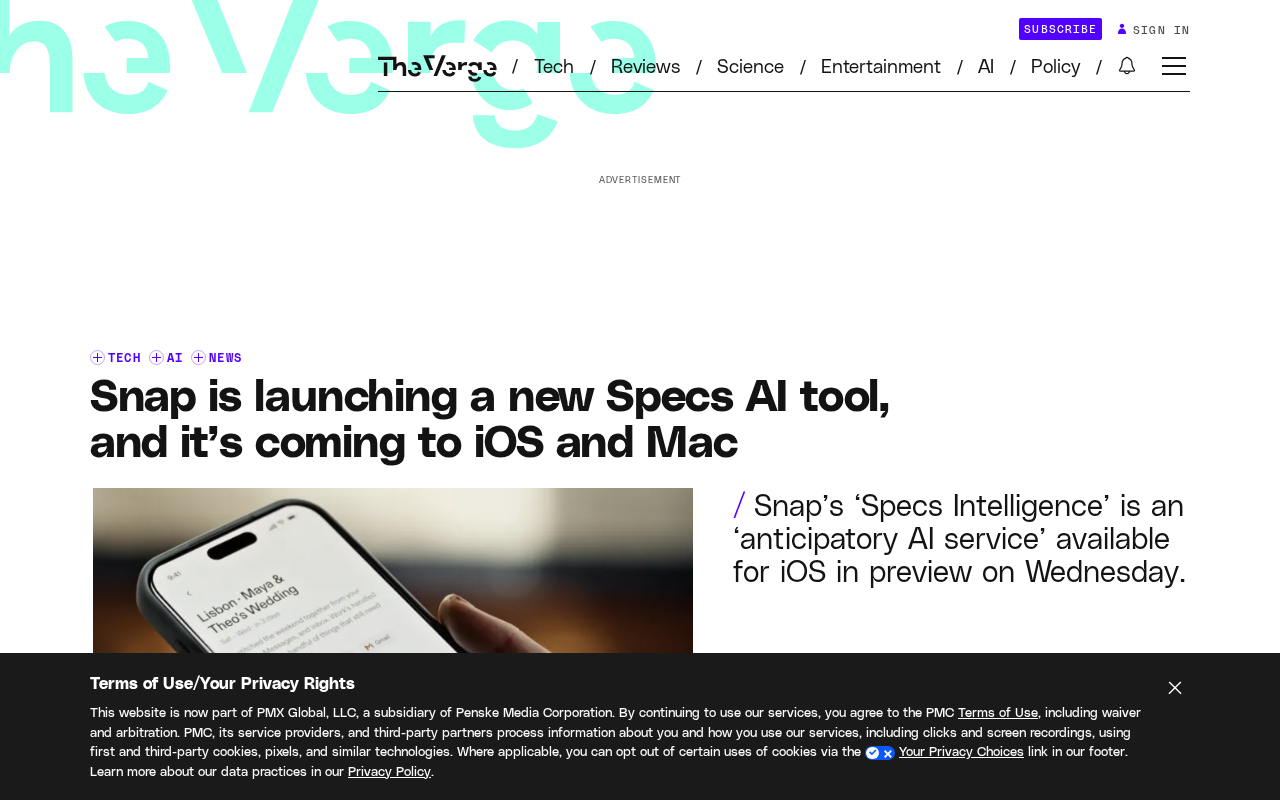
Snap Launches Specs Intelligence: A Cross-Platform AI Assistant Coming to iOS and Mac
Snap launches Specs Intelligence, an anticipatory AI assistant connecting digital accounts for work and travel, coming to iOS and Mac to compete with Meta Muse and Gemini Spark.