Vercel AI SDK Releases workflow-harness 1.0.115 Patch Update
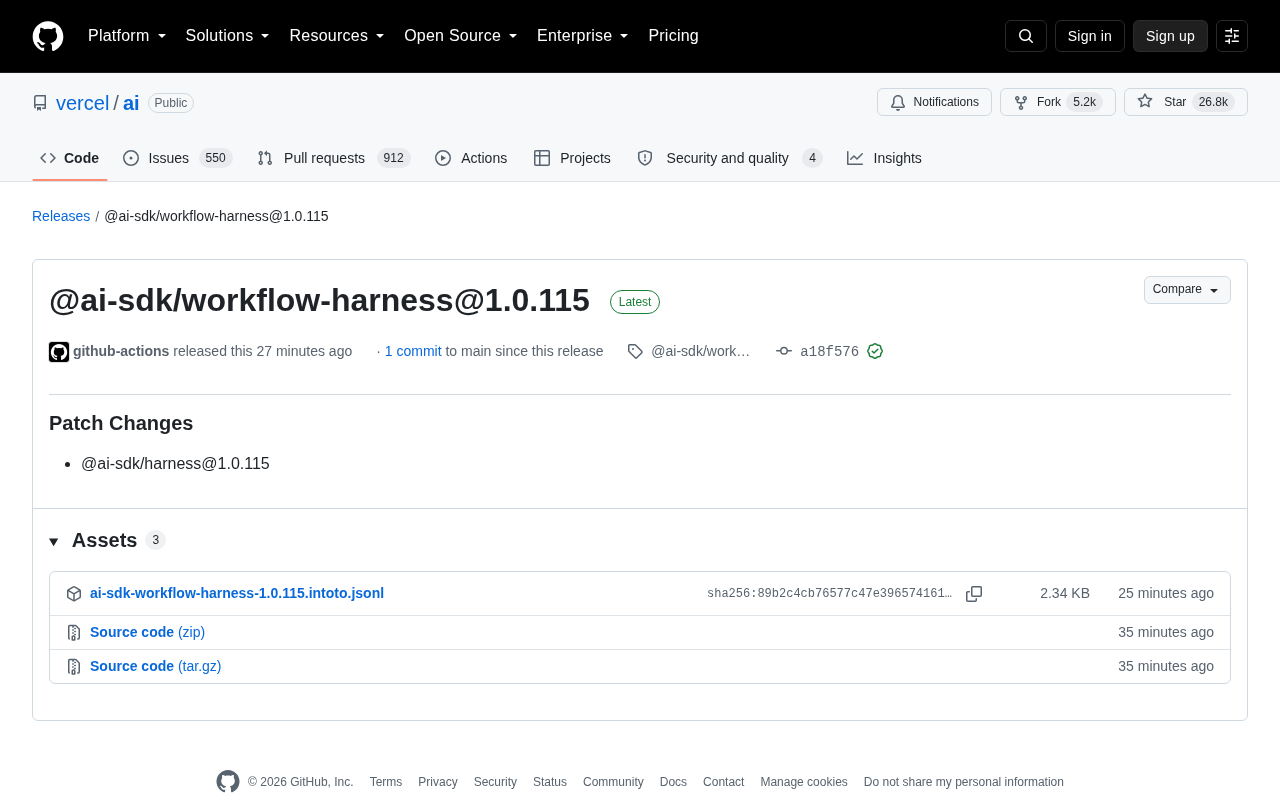
Vercel AI SDK releases workflow-harness 1.0.115 patch, syncing dependencies with automated publishing and supply chain security practices.
`@ai-sdk/workflow-harness@1.0.115` is a routine patch update in Vercel's official AI SDK ecosystem, primarily syncing the internal `@ai-sdk/harness` dependency to the same version. Published via GitHub Actions and verified with GPG signing and Vigilant Mode, it reflects mature supply chain security practices for a widely used open-source library. The `workflow-harness` module supports testing and orchestration of AI workflows, providing a reproducible execution environment for complex AI pipelines. The update contains no breaking changes, making it a safe upgrade for existing users, while `vercel/ai` (26.8k+ stars) remains a top choice for building AI applications.
Overview
Vercel's officially maintained open-source project vercel/ai has released @ai-sdk/workflow-harness@1.0.115. This is a patch-level update, primarily accompanying a synchronized upgrade of the internal dependency @ai-sdk/harness@1.0.115. The release was triggered automatically via GitHub Actions and verified through GitHub's trusted signing mechanism (GPG key ID: B5690EEEBB952194).
As one of the most actively developed open-source repositories in the AI application space, vercel/ai has accumulated over 26.8k stars and 5.2k forks, making it a foundational toolkit for developers building AI-powered applications.
What Is workflow-harness
workflow-harness is a module within the Vercel AI SDK ecosystem. Based on its name, it primarily supports testing and execution scaffolding for AI workflows — "harness" in software engineering typically refers to a testing or runtime framework. The core value of such tooling lies in providing developers with reusable, testable workflow orchestration capabilities, helping standardize task execution and validation in complex AI application scenarios.
This 1.0.115 release is a typical patch update, marked as Patch Changes, with the primary change being a version alignment with the dependency package @ai-sdk/harness. Updates of this nature generally do not include breaking changes, so developers can upgrade with confidence.
In software engineering, a Test Harness refers to an infrastructure for automated testing, typically comprising test drivers, stubs, mock objects, and result collection mechanisms. Applying this concept to AI workflow scenarios, workflow-harness can be understood as providing a repeatable, observable execution environment for complex AI pipelines composed of multiple LLM calls, tool calls, conditional branches, and more. This is especially meaningful in AI application development — given the non-deterministic nature of large model outputs, traditional unit tests struggle to cover AI workflows directly. A dedicated harness tool, through techniques like record/replay and deterministic input injection, helps developers verify the structural correctness and error-handling logic of their workflows.
Reliability of the Release Mechanism
Notable in this release is the level of engineering rigor applied. The version was published via a github-actions automated workflow, the commit carries a verified GitHub signature, and vigilant mode was enabled. This approach reflects best practices in supply chain security for large open-source projects:
- Automated publishing: Reduces human error and ensures consistency in version numbers and dependency relationships.
- Signature verification: Ensures the published artifacts have not been tampered with, increasing trust for downstream consumers.
- Dependency synchronization:
workflow-harnessandharnessshare the same version number (1.0.115), simplifying version management and issue tracing.
For teams building production-grade applications on top of AI SDKs, this kind of rigorous release process is an important factor when choosing foundational libraries.
Vigilant Mode is a GitHub security feature designed to enhance commit trustworthiness. When enabled, GitHub flags all unsigned or unverifiable commits in a repository as "unverified," making it easy for contributors and users to distinguish which code changes come from trusted sources. Combined with GPG signing, every commit from a maintainer carries a cryptographic signature — any tampering with the commit content will cause signature verification to fail. This is especially critical for foundational libraries depended upon by thousands of projects. Supply chain attacks have become one of the primary security threats to the open-source ecosystem in recent years, with attackers often compromising downstream projects en masse by poisoning upstream dependencies. The automated + signature verification approach adopted by Vercel AI SDK is a direct engineering response to this class of threat.
What This Means for Developers
While a single patch version carries limited information, the high-frequency iteration cadence of Vercel AI SDK signals that the project is in a state of active maintenance. Frequent patch releases indicate sustained investment in bug fixes and dependency upkeep — a positive signal for production environment stability.
Developers using @ai-sdk/workflow-harness are encouraged to review the changelog, assess whether this dependency upgrade affects existing workflows, and verify in a test environment before upgrading. For developers who haven't yet adopted the SDK, vercel/ai remains one of the mainstream choices for building AI applications — especially in combination with Next.js.
Summary
@ai-sdk/workflow-harness@1.0.115 is a routine patch update whose core change is a dependency version sync. It introduces no new features, but reflects Vercel AI SDK's mature automated release and security signing practices. For existing users of this library, this is a safe, maintenance-oriented upgrade to follow.
Related articles
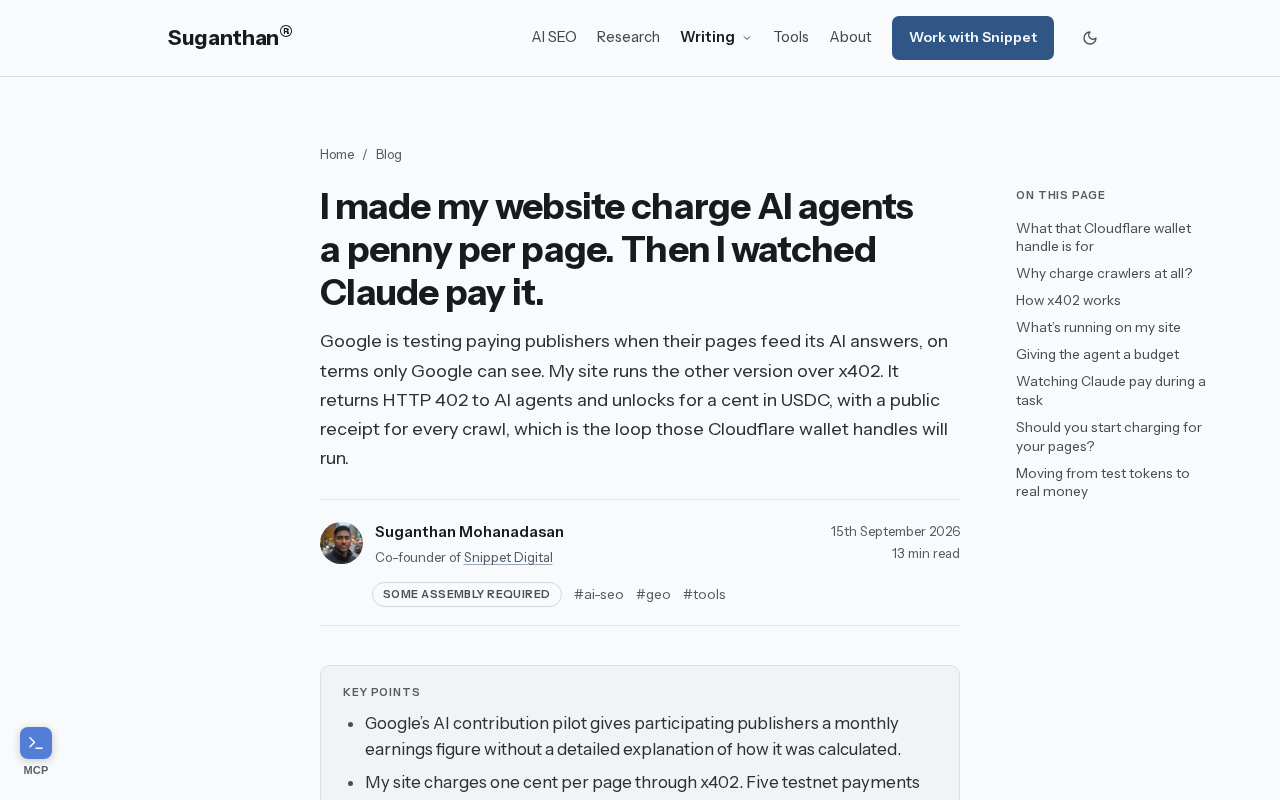
Charging AI Agents Per Web Page: I Watched Claude Pay a Penny Per Visit
A developer charged AI agents one cent per page and watched Claude pay automatically. This experiment reveals new possibilities for micropayments, agent economics, and content monetization.
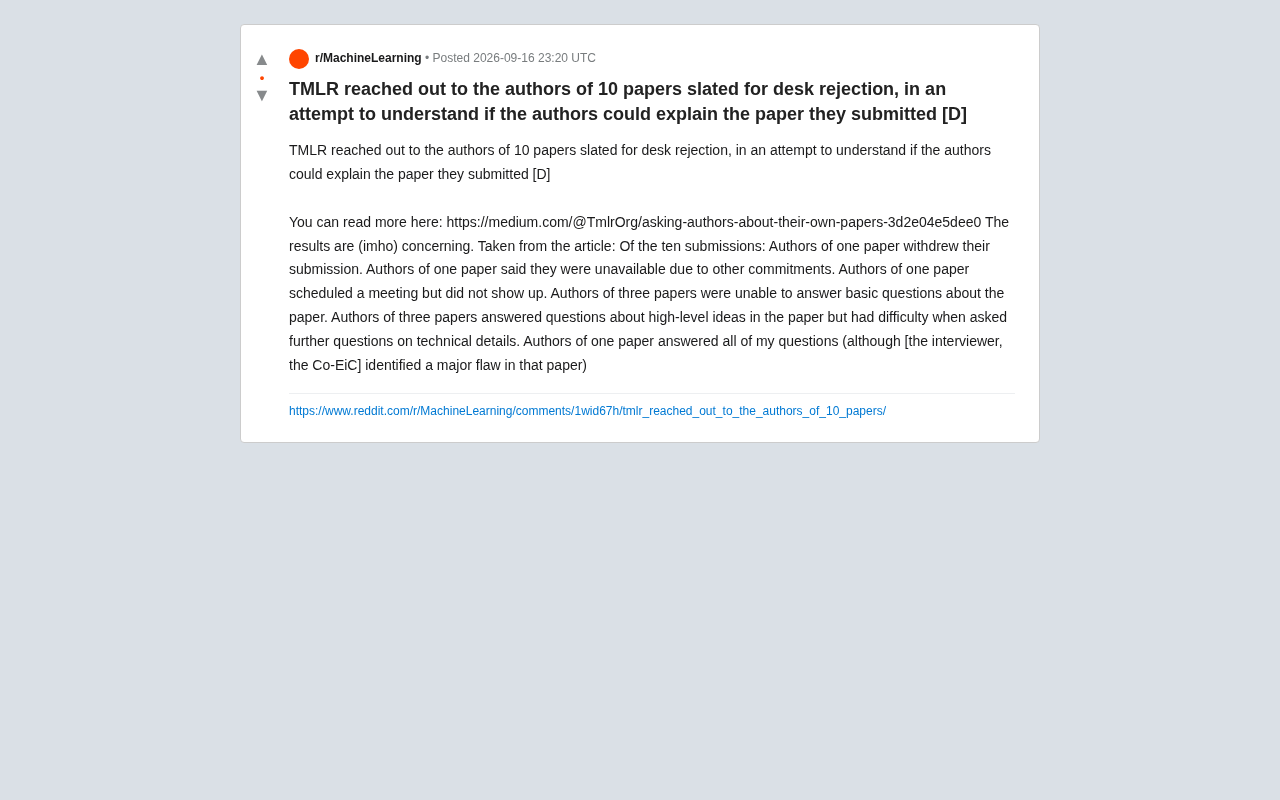
TMLR's Bold Experiment: Asking Authors to Explain Their Own Papers — The Results Are Alarming
TMLR contacted authors of 10 desk-rejected papers and asked them to explain their submissions. The results were alarming — none passed. A wake-up call on AI-era academic integrity.
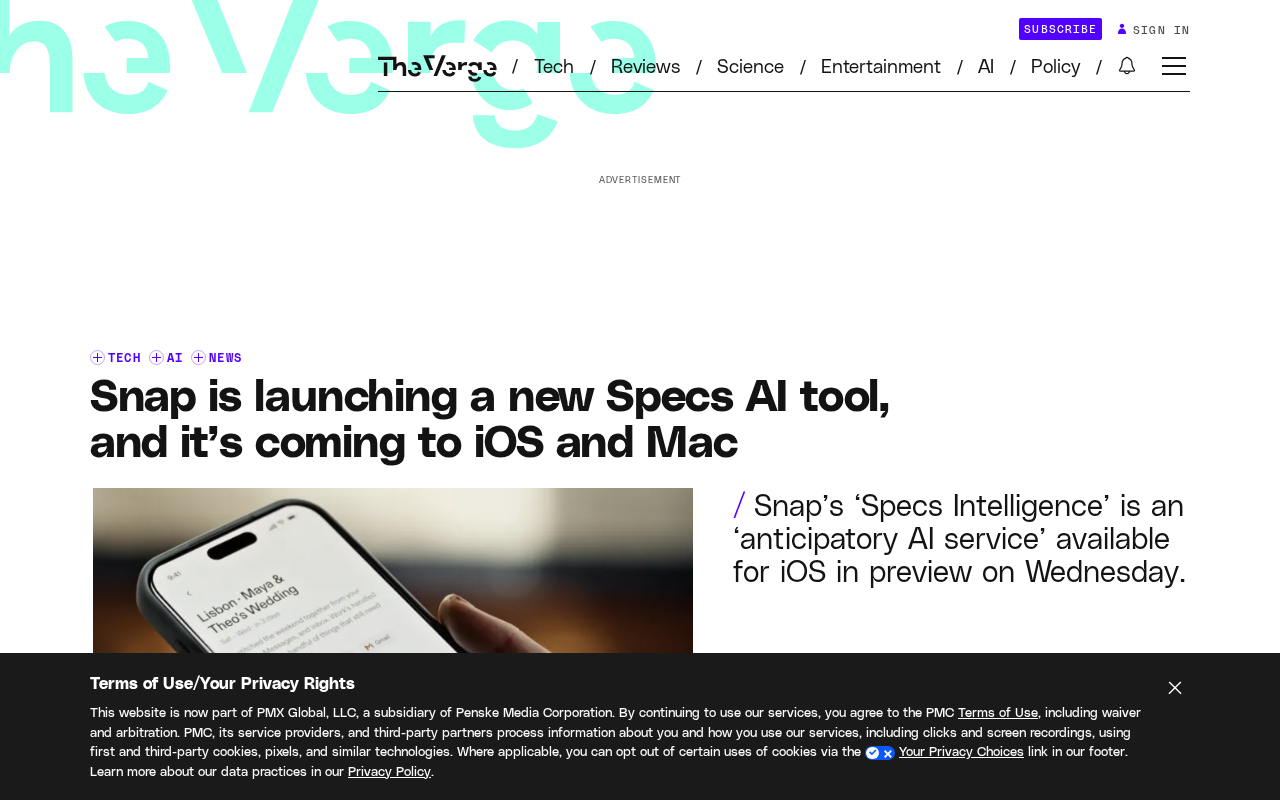
Snap Launches Specs Intelligence: A Cross-Platform AI Assistant Coming to iOS and Mac
Snap launches Specs Intelligence, an anticipatory AI assistant connecting digital accounts for work and travel, coming to iOS and Mac to compete with Meta Muse and Gemini Spark.