3BCAD: Open-Source Parametric CAD with Built-In 3D Printing Preprocessing
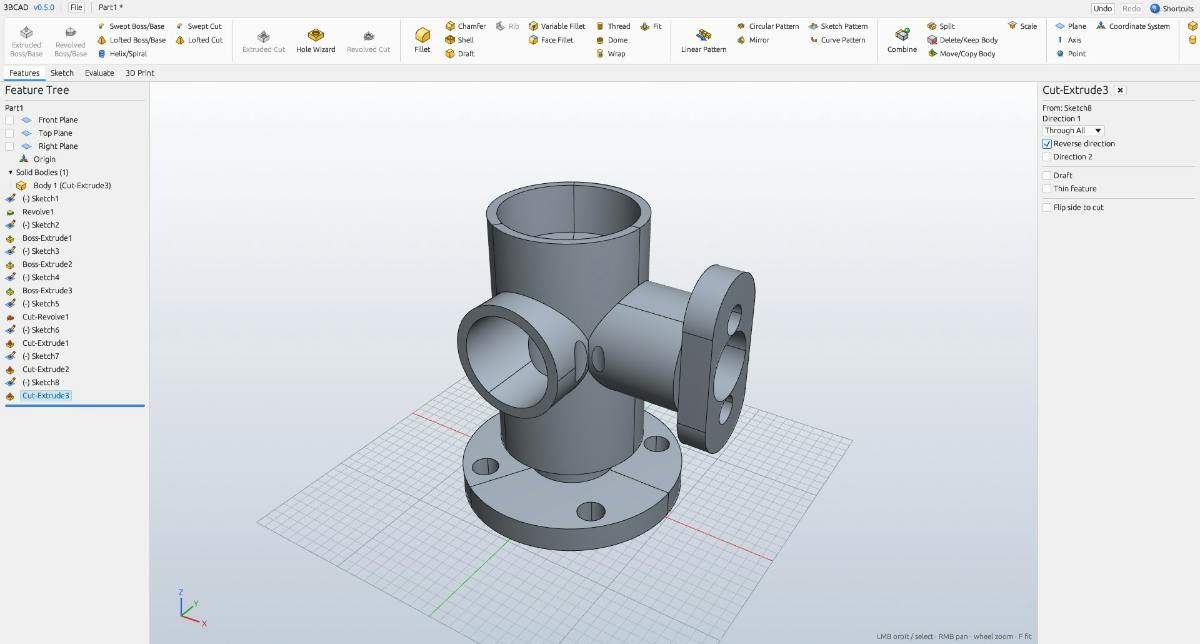
3BCAD is open-source parametric CAD written in Rust that builds 3D printing checks into modeling.
3BCAD is a free, open-source parametric CAD application written in Rust for Windows, macOS, and Linux. It covers constrained sketching, feature modeling (extrude, revolve, sweep, loft), assembly mates, and 2D drawing output (PDF, SVG, DXF). Its key differentiator is embedding 3D printing preprocessing into CAD: check overhang angles and thin walls while modeling, lay parts flat, and export 3MF directly to slicers. The article notes it focuses on the maker/3D printing niche rather than rivaling industrial CAD; with only 67 Product Hunt votes and 2 comments, open-source CAD still faces hurdles in user habits and ecosystem building, but the direction is worth watching.
In the fields of 3D printing and mechanical design, parametric CAD software has long been dominated by commercial products, while open-source alternatives are often feature-incomplete or rough around the edges. A tool called 3BCAD, which appeared on Product Hunt, aims to break this situation—it's a free, open-source parametric CAD application written in Rust, and its biggest highlight is that 3D printing preprocessing is built directly into the modeling workflow.
From Sketch to Part: A Complete Parametric Modeling Loop
3BCAD's modeling capabilities cover the most commonly used operations in mechanical design. Users can draw sketches under a constraint system, then build parts through features such as extrude, revolve, sweep, loft, fillet, and thread. Parametric means any dimension can be modified later and the model updates automatically—an advantage that traditional direct modeling tools struggle to match.
For users accustomed to SolidWorks or Fusion 360, this workflow is familiar. What sets 3BCAD apart is that it's fully open-source and cross-platform, written in Rust to ensure consistent performance on Windows, macOS, and Linux. Rust's memory safety features also give the software more confidence when handling complex geometric computations.
Parametric vs. direct modeling: Parametric modeling centers on feature history and dimensional constraints—each geometry is defined by parameterized sketches and feature operations, and when parameters change, the model recomputes in history order and updates automatically. Direct modeling, by contrast, directly pushes and pulls solid faces without retaining parametric history; it's flexible to edit but hard to control dimensional relationships precisely. The parametric approach 3BCAD adopts means design intent is fully recorded, making it well-suited to mechanical parts that require repeated dimensional iteration.
Constrained sketch system: Sketch constraints fall into geometric constraints (horizontal, vertical, tangent, concentric, etc.) and dimensional constraints (length, angle, radius, etc.). The solver determines the degrees of freedom of sketch elements based on the constraint equations—only a fully constrained sketch can be reliably used for subsequent features. This mechanism is the foundation of parametric CAD precision.
Built-In 3D Printing Checks, Saving the Back-and-Forth
3BCAD's most noteworthy innovation is embedding print preparation into the CAD environment. Designers can check overhang angles and thin-wall issues at the modeling stage, rather than discovering the model is hard to print only after opening the slicer. The software also supports laying parts flat on the print bed and exporting 3MF files directly to the slicer.
This design approach hits a real pain point: in the traditional workflow, modeling, printability checks, bed arrangement, and slicing are spread across different tools, and repeated exporting and importing is both time-consuming and error-prone. 3BCAD consolidates these steps into a single interface, which can significantly reduce iteration costs for makers and small workshops.
Overhang angles and thin-wall checks: In FDM printing, when a model surface makes an angle of less than about 45° with the horizontal plane, the upper layers lack sufficient support from below and tend to sag or string—such regions are called overhangs. Thin-wall issues refer to regions where wall thickness is less than the nozzle diameter (commonly 0.4mm), which slicers may simply ignore or produce gaps in. Flagging these regions at the CAD stage allows you to adjust fillets, add thickness, or change orientation during modeling, avoiding rework after slicing reveals problems.
3MF format: 3MF (3D Manufacturing Format) is an open, XML-based print file format that, compared with STL, preserves metadata such as units, color, multi-material, and placement orientation. It's supported by mainstream slicers like PrusaSlicer and Bambu Studio. Exporting 3MF directly from CAD reduces information loss caused by intermediate conversions.
Assembly and 2D Drawings: Not Just a Modeling Toy
Beyond single-part modeling, 3BCAD also offers assembly functionality, supporting the assembly of multiple parts through mate relationships. For use cases requiring multi-component mechanisms, this is essential.
Even more complete is the 2D engineering drawing module—supporting section views and dimensioning, and exportable as PDF, SVG, or DXF. This means 3BCAD aims to cover the entire workflow from concept sketch to manufacturing documentation, rather than stopping at "being able to draw a model." For engineers, being able to directly produce deliverable drawings is a key indicator of whether a CAD tool is practical.
Assembly mates: Assemblies use mate constraints (coincident, concentric, distance, angle, etc.) to determine the relative positions and degrees of freedom between parts, and the solver computes each part's pose accordingly. Good mate design ensures correct assembly and also enables motion interference checks—a key step in judging whether a multi-component mechanism design is feasible.
Engineering drawing formats: PDF is suitable for archiving and review, SVG is a vector format convenient for layout, and DXF is the universal format for exchanging 2D geometry between CAD programs, readable directly by downstream processes such as laser cutting and sheet metal fabrication. DXF export support means models can enter the actual manufacturing chain, not just remain on-screen presentations.
Challenges and Opportunities for Open-Source CAD
3BCAD received 67 votes on Product Hunt, ranking 16th. Discussion wasn't particularly heated—only 2 comments. This reflects the reality open-source CAD faces: high technical barriers, entrenched user habits, and long ecosystem-building cycles. Commercial CAD software has accumulated decades of feature depth and plugin ecosystems, and open-source projects find it hard to match them across the board in the short term.
But 3BCAD's entry point is clever—it doesn't try to replicate a complete industrial-grade CAD, but focuses on the niche of "makers + 3D printing," using print preprocessing as its differentiator. The choice of Rust also gives it performance potential. If the community can keep contributing, tools like this could well become viable options for lightweight design workflows.
For users who want to escape commercial software subscriptions while still needing parametric modeling capabilities, 3BCAD is worth watching. Its maturity still needs time to prove, but the direction is right: open-source tools don't need to do everything—find your scenario, go deep, and you'll find your users.
One-line Summary
3BCAD is an open-source parametric CAD written in Rust that builds 3D printing checks into the modeling workflow.
Paragraph Summary
3BCAD is a free, open-source parametric CAD application written in Rust, supporting Windows, macOS, and Linux. It covers constrained sketching, feature modeling such as extrude, revolve, sweep, and loft, and offers assembly mates and 2D engineering drawing output (PDF, SVG, DXF). Its biggest differentiator is embedding 3D printing preprocessing into the CAD environment: overhang angle and thin-wall issues can be checked at the modeling stage, parts can be laid flat and arranged, and 3MF can be exported directly to slicers, reducing back-and-forth between modeling, checking, and slicing. The article argues it doesn't aim to match industrial-grade CAD across the board but focuses on the maker and 3D printing niche; with only 67 votes and 2 comments on Product Hunt, it shows open-source CAD still faces challenges in user habits and ecosystem building, but the direction is worth watching.
Related articles

Why the FBI's AI Hacker Warning Hinges on a Single Word from Microsoft
FBI says AI tool Artex attacked 2,250+ organizations, but the citation trail leads to Microsoft's wording of "attempted sign-ins." The gap between attempts and breaches reveals the attack's true scale.
Fable 5.2 Powers the Creation of Getsumen Express: A Browser-Based Lunar and Martian Exploration Game
A developer used Fable 5.2 to build Getsumen Express, a browser game where players explore the Moon and Mars, scan real landmarks, shoot aliens, and ride an interstellar train. Built on Three.js and WebGPU for about $730, it showcases AI-assisted development.
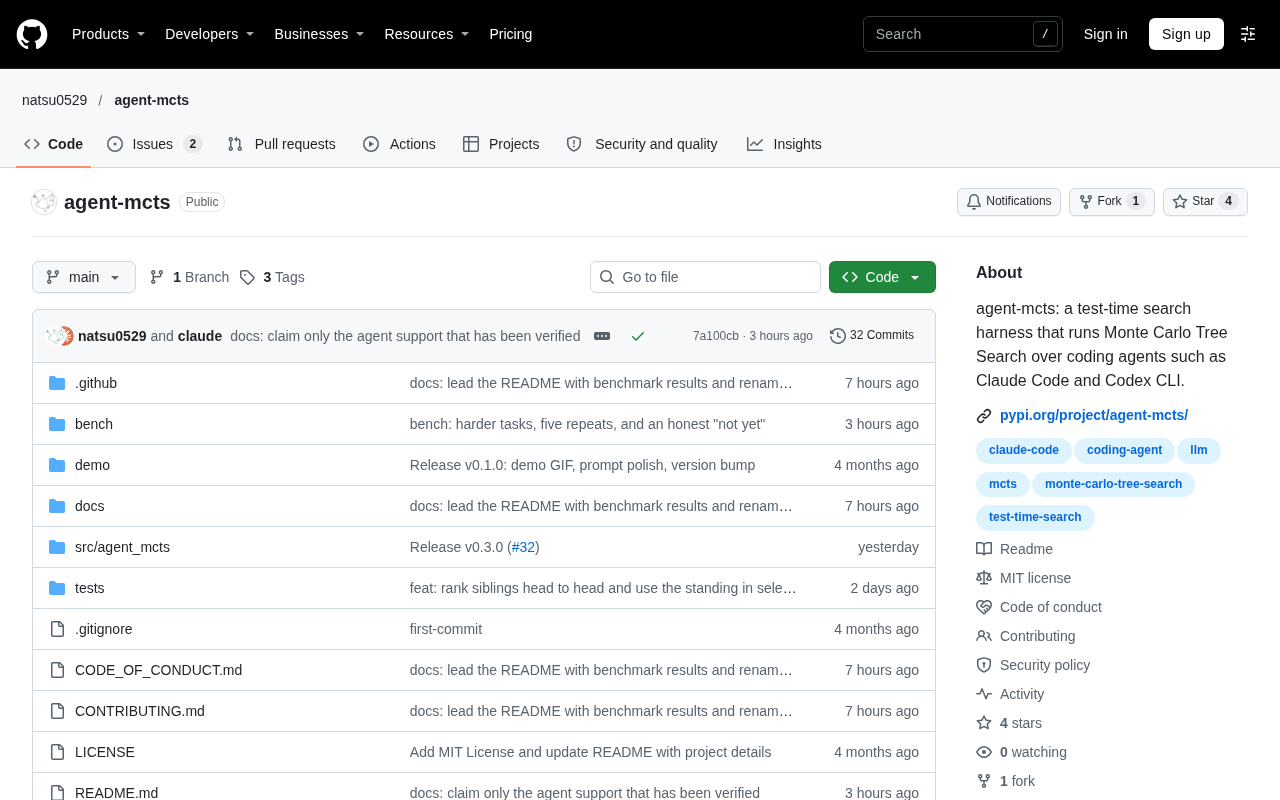
agent-mcts: Adding Monte Carlo Tree Search to Claude Code
agent-mcts is a Show HN open-source project that layers Monte Carlo Tree Search on top of Claude Code. This article analyzes its technical approach, the significance of MCTS for coding agent decision-making, and the cost and engineering challenges facing search-enhanced agents.