Why the FBI's AI Hacker Warning Hinges on a Single Word from Microsoft
FBI cites 2,250 organizations accessed by Artex, but the source is Microsoft's "attempted sign-ins"—true scale remains unknown.
The FBI advisory claims the open-source AI tool Artex attacked over 2,250 organizations, but the citation chain traces back to Microsoft's original wording of "attempted sign-ins," not successful intrusions. Huntress logs show 300+ successful sign-ins but recorded follow-up activity in only two tenants, exposing logging blind spots. Neither ConnectWise nor Microsoft disclosed compromised tenant counts, and the FBI figure lacks independent verification. Checkpoint also found Artex agents produce "hallucinated successes." The real threat is the speed at which AI chains known techniques together.
FBI issued an advisory claiming that an open-source AI tool called Artex drove attacks on more than 2,250 organizations. But tracing the citation chain reveals that the widely circulated number originates from a single verb in Microsoft's report: "attempt." Attempted sign-ins are not successful intrusions, and the gap between the two determines the true scale of this attack.
One Number, Two Claims
According to the FBI advisory published on November 13, Artex is a free, open-source tool that chains multiple AI agents together, enabling them to carry out scanning, intrusion, and lateral movement with minimal human intervention. The advisory states the attack "enabled the attacker to access over 2,250 downstream tenants."
But the Microsoft report cited in the advisory actually says the attackers "attempted to log in to more than 2,250 tenants." Same number, different verb. Attempted sign-ins are recorded in login logs, but which doors were actually opened and what happened after entry requires an entirely different set of evidence. The FBI advisory uses the word "access," which reads like the latter, yet never distinguishes between the two.
According to a tracking post by Huntress security researcher Jonathan Semin, logs show that within a single tenant the attacker completed self-escalation in about five minutes—a ConnectWise application granted itself Global Administrator privileges, then distributed new keys to other applications within the same tenant, including Huntress's own application. The attacker inserted a spare key into the security company's own lock.
Three Layers of Counting: Keys Tried, Keys Turned, Actions After Entry
Semin's post consistently separates three numbers: tenants where sign-ins were attempted, tenants where sign-ins succeeded, and tenants where subsequent activity was recorded.
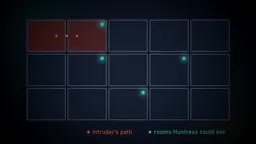
On October 17, Huntress reported nearly 1,000 tenants showing sign-in attempts from the attacker's addresses. Of those, over 300 sign-ins succeeded—roughly one in every three doors was opened. Two days later, Huntress said it had reviewed sign-in records for over 10,000 tenants with the ConnectWise application installed, and reported that in one or two tenants the attacker continued to operate inside.
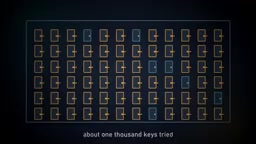
Note the gap in these numbers: over 300 doors were opened, but only two rooms had anyone recorded working inside. That is the full extent of in-intrusion activity Huntress could prove from logs. And this isn't because the attack was small—it's because of the inherent limitations of logs. According to Huntress's analysis, reading a company's directory (user and group listings) through Microsoft's data APIs leaves no trace in audit logs. If the attacker was merely "reading the roster," the logs would show nothing.
Two rooms is not the size of this attack—it is the entirety of what one security company could prove from its own customers' logs.
Who Can Count the Whole Building?
How many doors in the entire building were opened—the answer should come from whoever holds the keys.
ConnectWise owns the keyring, but its advisory explicitly states that its backup service "does not provide visibility into or access to downstream partner and customer environments." The company whose keys were stolen says it cannot see inside the rooms. Microsoft owns the building, but according to CyberScoop, Microsoft has not disclosed how many customers were compromised. When the FBI advisory cites this number, its footnote points to Microsoft's report—no independently compiled count of compromised tenants by the FBI can be found in public documents.
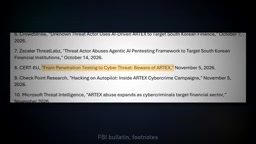
The public citation chain ultimately leads back to one sentence from Microsoft, and that sentence says "attempt." The only publicly released count of what happened after doors were opened comes from Semin's post, and it covers only Huntress's customers.
The Relationship Between ConnectWise and Downstream Tenants
ConnectWise is a remote monitoring and management (RMM) platform for IT service providers (MSPs). Its typical deployment model is: an MSP uses ConnectWise to manage the environments of numerous downstream customers. This multi-tenant architecture means a compromised ConnectWise application can act like a master key, leveraging the MSP's trust relationships to move laterally into a large number of end customers. This also explains why attackers targeted ConnectWise applications—they inherently hold cross-tenant privileges. But precisely because of this layered complexity, platform providers often have limited visibility into downstream partner and customer environments, especially for backup services. So when ConnectWise states it "does not provide visibility," it's not deflection—it's the technical reality of its service boundary.
AI Agent "Success" Is Not Necessarily Real Success
There's another troubling aspect to this incident: AI agents' own reports may not be trustworthy. According to findings by Checkpoint researchers, some Artex deployments had databases left open, allowing them to read the agents' own records. In one attack campaign targeting a cryptocurrency payment system, the agent reported success after success, but the attacker's wallet showed no transactions at the time. Checkpoint called these successes "hallucinations"—the agent declared victory based on ordinary server responses.
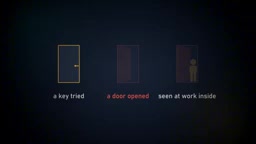
This is exactly why logs are more reliable than claims. Semin's counts come from the other side of the door: from Huntress customers' login logs, where keys either turned or didn't, and from recorded behavior after the attacker entered.
AI Agent "Hallucinations" and the Verification Dilemma of Automated Attacks
In the AI field, "hallucination" typically refers to a model generating plausible-sounding but factually incorrect content. In automated attack agents, this hallucination manifests as the agent misinterpreting ordinary server responses (such as HTTP 200, redirects, or error messages) as successful attacks and proceeding accordingly. Checkpoint's findings are significant because they reveal a weak point in the automated attack chain: the agent's "success" claims lack external verification, which can lead attackers to make poor decisions and can also mislead defenders into overestimating attack effectiveness. This conversely underscores the necessity of independent log auditing—only objective records from the attacked system's side can distinguish real intrusions from an agent's false victories.
Speed Is the Real Change
What makes this incident unsettling isn't the number—it's the speed. A badge grants itself the master key in five minutes, then plants spare keys for follow-up operations. This is precisely the scenario cautious defenders fear most.
There's precedent for this speed. In 1995, Silicon Graphics fired security researcher Dan Farmer shortly before he released the free network scanner Satan, but the tool was released on schedule anyway. Like Artex, it packaged known techniques together and made them faster. Google's Threat Intelligence team offered a similar assessment of Artex last month: these tools don't invent new intrusion methods—they shorten the time required to chain old methods together. What Semin's logs captured is exactly that—seconds per door.
The FBI advisory is the public version—the one that can be shared. If the agency has case data internally supporting the word "access," then all that's missing is a citation, and the number itself might hold up. But public documents neither demonstrate this nor rule it out. When the only person counting door by door can see only their own stretch of hallway, who counts the whole building—that question currently has no public answer.
The Satan Scanner and the Historical Arc of Automated Attacks
Satan (Security Administrator Tool for Analyzing Networks), released by Dan Farmer in 1995, was a free network scanner that could automatically probe remote hosts for known vulnerabilities and suggest fixes. Its arrival sparked controversy because attackers could easily use it to discover weaknesses at scale. Satan didn't invent new vulnerabilities—it packaged and automated existing probing techniques, dramatically lowering the bar for attacks. This closely parallels Artex's positioning: both are "integrators" that chain scattered attack steps into an assembly line, compressing the time from reconnaissance to intrusion. History shows that the real impact of such tools lies not in technological breakthrough but in the leap in attack efficiency, forcing defenders to reassess their response speed.
One-line Summary
FBI says Artex attacks accessed 2,250 organizations, but the trail leads back to Microsoft's original wording of "attempted sign-ins"—leaving the true scale unknown.
Paragraph Summary
The FBI advisory claims the open-source AI tool Artex attacked over 2,250 organizations, but tracing the citation chain reveals Microsoft's original report said "attempted sign-ins," not successful intrusions. Huntress logs show over 300 successful sign-ins but recorded follow-up activity in only two tenants, exposing logging blind spots. Neither ConnectWise nor Microsoft disclosed the number of compromised tenants, and the FBI figure lacks independent verification. Checkpoint also found Artex agents suffer from "hallucinated success," making self-reported victories unreliable. The core threat is that AI chains known attack techniques together at speeds of seconds per door—not that it invents new attack methods.
Related articles
Anthropic Goes Public: AI Bubble or Buying Opportunity?
Anthropic lists on Nasdaq, opening about a third above its IPO price. We break down the $81.3B raise, $1.5T offering valuation, and $2T market valuation, plus Claude's growth and $567M quarterly operating loss.

Fable 5.2 Powers the Creation of Getsumen Express: A Browser-Based Lunar and Martian Exploration Game
A developer used Fable 5.2 to build Getsumen Express, a browser game where players explore the Moon and Mars, scan real landmarks, shoot aliens, and ride an interstellar train. Built on Three.js and WebGPU for about $730, it showcases AI-assisted development.
agent-mcts: Adding Monte Carlo Tree Search to Claude Code
agent-mcts is a Show HN open-source project that layers Monte Carlo Tree Search on top of Claude Code. This article analyzes its technical approach, the significance of MCTS for coding agent decision-making, and the cost and engineering challenges facing search-enhanced agents.