5 Core Concepts Every AI Coder Must Know: From Autocomplete to Agent Orchestration

AI coding has crossed the inflection point: developers are shifting from writing code to conducting agents, and must master context engineering and the security boundary.
Based on IBM Technology's presentation, the article outlines five progressive changes brought by AI coding agents: the development paradigm has reached an inflection point, moving from autocomplete to whole-feature delegation, with spec-driven development replacing iterative correction; the developer role is shifting from implementer to conductor, with value concentrated in architecture decisions, goal definition, and milestone breakdown; commanding agents requires context engineering and loop engineering, supported by skills, automation, subagents, and MCP servers; understanding LLMs' lack of human-like time sense and the VRAM layout of weights and KV cache improves results; and prompt injection is a real threat, so agents should run in disposable sandboxes by default. The conclusion: engineering won't disappear—it will shift to system design and orchestration.
AI coding agents are changing the underlying logic of software development. In a widely shared presentation, IBM Technology outlines this shift through five progressively layered concepts—from the inflection point in the development paradigm, to the restructuring of the developer role, to context engineering, model fundamentals, and the security boundary. This article is based on the core points of that presentation and combines them with the current tool ecosystem for a systematic overview.
The Inflection Point Has Arrived: From Autocomplete to Whole-Feature Delegation
The presenter opens with a personal anecdote: while talking with a software engineer, the person pulled out a phone mid-conversation to approve a code change—it turned out this engineer had multiple agents running in the background, including a developer, a code reviewer, and an operations agent, each handling work corresponding to different roles on a team. Even more unexpectedly, this person was not a formally trained engineer; his actual profession was a pilot.
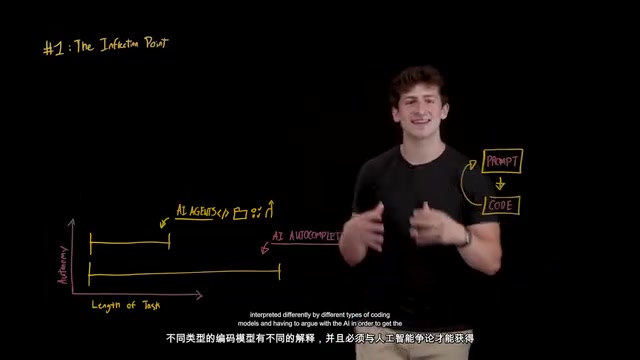
This detail points to the first concept: the inflection point. In the past, developers treated AI as an autocomplete tool for writing functions and tests, but often found that fixing AI output took more time than writing it by hand. Now the situation has reversed—an entire feature can be handed directly to a coding agent. Work that once took weeks or even months is compressed to the scale of minutes.
This shift also brings a change in how people work. In the past, it was about arguing back and forth with AI to get the correct output; now what is more common is spec-driven development: first write clear requirement specs and expected results, then hand them to agents and models, which produce the project and its various artifacts. Developers have gone from being "line-by-line implementers" to "spec definers."
From Implementer to Conductor: The Shift in the Center of Gravity of the Role
The second concept is the shift from implementing to conducting. The presenter makes it clear that he does not believe developers will disappear, but priorities are indeed changing.
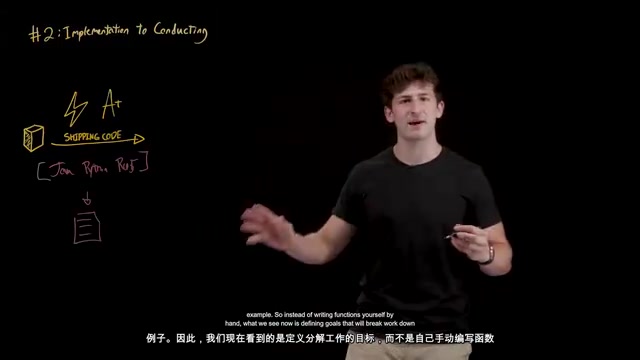
For decades, from writing code to shipping it, the two biggest bottlenecks were: how fast you can write and how high the quality is. Companies competed to hire competitive-programming-style engineers, valuing who could complete the most complex programming tasks. But now mainstream models have already mastered languages such as Java, Python, and Rust, and can push tickets coming into the team all the way through staging, production, QA, and other stages. When the "implementation" link can be handled by AI, what becomes important?
The answer is becoming a conductor—like an orchestra conductor or a ship's captain, making architectural decisions that affect where the software will go a year from now. You no longer hand-write functions; instead, you define goals, break the work down into concrete milestones, and then hand them to models or agents.
Context Engineering and Loop Engineering
To conduct well, you must first understand two engineering concepts.
Context management: understanding the resource limits of the model's context window, as well as all the additional components stuffed into the window beyond the codebase—tools, skills, MCP servers that provide external data, and so on. Organizing these well is context engineering.
Loop engineering: instead of a human repeatedly sending prompts to an agent and iterating round by round, you design a system that does the iteration for you. It is like a recursive goal: humans define the purpose, and AI loops through execution until the task is complete.
MCP (Model Context Protocol) is a standardized protocol launched and open-sourced by Anthropic at the end of 2024, used to let large models connect to external data sources and tools in a unified way. It can be compared to the USB-C port of the AI world: before this, every integration between a tool and a model required custom code, whereas MCP servers package capabilities such as databases, file systems, code repositories, and third-party APIs into standard interfaces that models can call, and the model only needs to discover and invoke them according to the protocol. This makes external information in the context window no longer ad hoc prompts, but versionable, reusable connectors, and it also forms an important physical foundation of context engineering.
Understanding the Model Itself: Sense of Time and VRAM Layout
The third concept is often overlooked but extremely critical: understanding the basic principles of AI models.
The presenter gives a vivid example. If you ask a model "how long does it take to make a third-person RPG game," it may answer "weeks to months"; but if you pair the same model with a coding agent and actually have it do the work, it may give you a runnable sample within five minutes. The reason is that LLMs do not understand time and memory the way humans do—this is one of their inherent limitations.
Another example is how models are stored in GPU VRAM and how they are used during inference: model weights are loaded into VRAM, and as requests and responses occur, the KV cache is generated and stored. Understanding these mechanisms will give you a significant advantage when using AI models.

KV cache (key-value cache) is a core optimization mechanism in the inference phase of Transformers. During autoregressive generation, each time the model outputs a token, it must recompute attention over the entire sequence generated so far; to avoid repeated computation, inference frameworks cache the Key and Value tensors of attention at each layer, and subsequent tokens reuse them directly. This has two direct consequences: first, cache usage grows linearly with context length, and long conversations or large codebases can quickly fill VRAM, becoming a bottleneck for concurrency; second, whether the cache is hit significantly affects latency and cost, which is also why stable prompt prefixes and clear structure can speed things up and reduce costs, directly related to the practice of context engineering.
The Context Engineering Toolbox: Skills, Automation, and Subagents
After understanding the concept of context engineering, we can further look at four types of capabilities that can be put into practice:
- Skills: essentially Markdown files, but they can inject reusable, controllable context information about the code and project into every request;
- Automations: similar to cron scheduled tasks and event-triggered actions; for example, a visitor submitting a form can trigger a workflow;
- Subagents: when you are investigating an issue in a codebase, dispatch a subagent to research how a certain library works, test it on its own, and then report back to the main agent;
- MCP servers: connect external data sources to the model.
Stacked together, these capabilities form the infrastructure layer for developers to make good use of AI models.
The Security Bottom Line: Prompt Injection and Sandbox Isolation
The fifth concept is called the most important one by the presenter: security.
AI systems often simultaneously have three dangerous conditions: they can access sensitive data, they can reach the internet, and they can send data outward. When all three are combined, prompt injection becomes realistic and dangerous. Analogous to the threat SQL injection poses to applications, prompt injection can likewise penetrate systems.
The presenter demonstrates a scenario: an AI agent reads an online pull request, is deceived by malicious instructions embedded in it, and then sends private key credentials from the desktop to the attacker—and you may be completely unaware of the entire process.
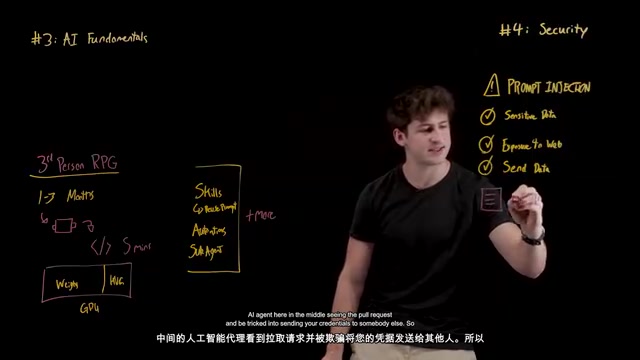
Therefore, the team's approach is to run coding agents in disposable sandboxes as much as possible, isolating the agent and the code it operates on in a separate environment, so that even if compromised, the attack surface can be reduced.
Prompt injection is difficult to defend against with traditional methods because the root cause is that LLMs encode "instructions" and "data" in the same natural language sequence, and the model cannot reliably distinguish the two the way a program distinguishes code from strings. Attackers can hide malicious instructions in web pages, issues, PR descriptions, dependency package READMEs, or even code comments; once read into the agent's context, they may be executed as system instructions. Indirect prompt injection is especially dangerous because attackers do not need direct contact with the user. Common mitigation methods include least privilege, human confirmation of high-risk operations, isolation marking of tool outputs, and the sandboxed execution mentioned in this article.
The Future: AI Is the New Electricity
The presenter quotes Andrew Ng—"AI is becoming the new electricity." The significance of electricity is not just lighting lamps and charging phones; behind it there is an entire industry and thousands of people maintaining the power grid, repairing streetlights, and ensuring everyone has access to electricity. AI is likely to follow a similar path: it will need engineers to maintain systems, ensure connectivity, and make AI systems safe, reliable, and quality-controllable.
So the conclusion for developers is optimistic: engineering will not disappear; it will simply shift from hand-writing code to designing and orchestrating systems and agents. Those who excel in architecture and critical thinking will become more valuable as coding agents continue to get stronger.
One-line Summary
AI coding has crossed the inflection point; developers are shifting from writing code to conducting agents, and must master context engineering and the security boundary.
Paragraph Summary
Based on IBM Technology's presentation, this article outlines five progressively layered changes brought by AI coding agents: the development paradigm has reached an inflection point, moving from autocomplete to whole-feature delegation, with spec-driven development replacing repeated error correction; the developer role is shifting from implementer to conductor, with value concentrated in architectural decisions, goal definition, and milestone breakdown; commanding agents requires two capabilities—context engineering and loop engineering—supported by a toolbox including skills, automation, subagents, and MCP servers; understanding that LLMs lack a human-like sense of time and how weights and KV cache are laid out in GPU VRAM can significantly improve results; finally, prompt injection is a real threat, and agents should run in disposable sandboxes by default. The conclusion is that engineering will not disappear; it will only shift toward system design and orchestration.
Related articles

Chain of Thought Isn't Just for AI: How Humans Can Use CoT to Improve Thinking Quality
Chain of Thought isn't just a prompt trick for large models. Starting from a Hacker News discussion, this article analyzes why CoT works for human thinking too, breaks down actionable ways to transfer it, and highlights the key differences between human CoT and machine CoT.
Cloudflare Teams Up with OpenAI: Closi…
Cloudflare Teams Up with OpenAI: Closing the Loop from Vulnerability Discovery to Defense with AI
Cloudflare uses OpenAI Daybreak to investigate security vulnerabilities and generate reviewable remediation plans, while developers use Codex to boost coding efficiency and quality.

Orca Multi-Agent Orchestration in Practice: A Guide to Parallel Collaboration with Claude and Codex
Orca is Stable AI's free open-source agent workbench supporting 34 agents like Claude Code and Codex in parallel. Learn its Git worktree isolation, multi-model orchestration, and mobile management.