5 Rules for AI-Assisted Writing: Lessons from the Druckenmiller Controversy

5 practical rules for AI-assisted writing, drawn from the Stanley Druckenmiller op-ed controversy.
When Stanley Druckenmiller's WSJ op-ed was flagged as 100% AI-generated, it sparked a fierce debate over AI writing legitimacy and disclosure. Druckenmiller and the editor were unapologetic, comparing AI to a calculator. The industry split: one camp called disclosure demands outdated moral theater; the other insisted readers deserve transparency. From this debate, five rules emerge: different writing types need different AI rules; quality standards outlast purity tests; perceived effort shapes perceived credibility; brevity beats length; and writing is fundamentally thinking. Applied by scenario, emails are safe, strategy memos and marketing copy carry hidden risks, and op-eds demand an effort–AI–effort sandwich structure.
When legendary investor Stanley Druckenmiller published an op-ed in The Wall Street Journal criticizing Treasury policy, he probably didn't expect the conversation to center not on his arguments — but on whether the piece was obviously written by AI.
AI detection tool Pangram gave it a 100% probability of being AI-generated. Some called it a scandal and demanded mandatory disclosure. But Druckenmiller and the WSJ opinion editor's response was remarkably uniform: of course AI was used — why would that be a secret? This debate over the legitimacy of AI writing, disclosure obligations, and quality standards became one of the hottest topics in AI circles recently.
An Old Ghost-Writing Debate With a New Face
Druckenmiller's status in finance is legendary — the hedge fund he managed had no losing years from 1981 to 2010, a record that stands alone. His op-ed, "Let the Bond Market Speak," cut straight to the heart of current macro monetary policy and should have been a debate about substance.
Instead, the piece was riddled with telltale "AI-speak": cascading "not X, but Y" constructions, like "If the 30-year Treasury must clear at 5.5%, that's not a crisis — it's a bill coming due." These sentence patterns were instantly recognizable.

Faced with criticism, Druckenmiller didn't apologize. He doubled down: "Bro, of course I used AI. There's a reason I switched from English to economics. I use AI for everything I write now — like using a calculator for math." WSJ opinion editor Paul Jai Goh backed him up: AI is a fact of modern life; people use it to assist with research, check grammar, and edit copy. What matters is whether the published content reflects the author's original argument, and whether the author is qualified to make that claim.
For context, Bloomberg's Joe Weisenthal pointed out that long before AI, many op-eds attributed to prominent figures were ghost-written by staff, with little outcry. Journalist Sharon Goldman confirmed she'd ghost-written dozens of op-eds for executives — standard practice, no byline required. In other words, ghost-writing has always existed. AI just made it cheaper and more visible.
Pangram Labs is an AI content detection company whose tools analyze text "perplexity" and "burstiness" to determine whether content was AI-generated. Perplexity measures how "surprising" a text is to a language model — AI tends to choose high-probability words, resulting in lower perplexity. Burstiness measures variation in sentence length — human writing mixes long and short sentences, while AI output tends to be more uniform. However, AI detection tools are widely contested in the industry: they have higher false-positive rates for non-native English writers, and their reliability drops sharply against AI text that has been manually revised. This means a "100% AI-generated" verdict carries inherent uncertainty — one reason why some argue that mandatory disclosure standards are technically unenforceable.
The Core Divide: Is Writing Art, or a Functional Tool?
The debate split industry observers into two clear camps.
Investors like Scott Phillips and Andrew Steinwald argued that opposing AI writing is "old-fashioned thinking" that will be irrelevant in two years. Chamath Palihapitiya was blunter: do you disclose every article that shaped your thinking when you post on X? No. Demanding AI disclosure is "a stupid new form of moral performance."
The other camp insists disclosure is necessary. All In podcast's Jason Calacanis argued: any publicly published AI-assisted piece should say so in the first sentence. Not disclosing is plagiarism — because readers can't tell what came from your thinking versus what came from a black box.
Spectrum Markets' Brent Donnelly distilled the question most precisely: the AI writing debate ultimately comes down to one thing — is writing art, or is it a functional communication tool like code? It's like asking whether a car exists to get from A to B or to enjoy the drive. There's no universal answer. It depends on the person.
Chamath Palihapitiya is a prominent Silicon Valley venture capitalist, founder of Social Capital, and a regular on the All In podcast. He's known for sharp critiques of the tech industry and his anti-establishment stance. His framing of AI disclosure requirements as "moral performance" reflects a typical tech-accelerationist attitude: tools are neutral; moral judgment of tool use is hypocrisy; only outcomes matter. This position stands in stark contrast to journalism and academia's emphasis on source transparency — and is one of the deep reasons this debate remains unresolved.
Five Rules for AI-Assisted Writing
Drawing from this discussion, the host of The AI Daily Brief offered a practical framework. Here's my take on why it holds up.
Rule 1: Different Types of Writing, Different Rules
An email is not a strategy memo. A strategy memo is not a LinkedIn post. A LinkedIn post is not an op-ed. Each has a different purpose, so how you collaborate with AI should differ accordingly. "Can AI write this?" is the wrong question in most cases.
Rule 2: The Purity Test Will Fade — The Quality Test Won't
The moral judgment of "did you use AI?" will eventually become obsolete. But lowering the barrier to entry raises the bar for output quality. People accepting AI-assisted writing doesn't mean they'll accept bad writing.
Rule 3: Quality Corresponds to Effort (or the Perception of Effort)
What made the Druckenmiller op-ed rankle wasn't that AI was used — it was that the AI-isms were so glaring, so easily fixable, and yet untouched. It made readers feel he couldn't be bothered to clean up a few sentences. If you won't polish the prose, why would anyone believe you thought carefully about the underlying argument? Perceived lack of effort on the writing gets mapped onto perceived lack of effort on the reasoning.
Rule 4: Longer Doesn't Mean Better
AI models over the past two years are good at "saying a lot" but not at "saying the right thing concisely." This is a truth good writers have always known. Pascal wrote it in the 17th century: "I have made this letter longer than usual because I have not had time to make it shorter."
Pascal's famous line ("Je n'ai fait celle-ci plus longue que parce que je n'ai pas eu le loisir de la faire plus courte") comes from his 1657 Lettres provinciales and has been cited for centuries. The core insight: brevity is a quality that requires extra effort; wordiness is usually the direct expression of unorganized thinking. This has special relevance for AI writing — large language models are naturally inclined toward "complete coverage" rather than "precise trimming," because comprehensive answers tend to score higher in human feedback. That's why unedited AI text so often has a "covers everything, misses the point" quality — exactly the lazy verbosity Pascal described.
Rule 5: Writing Is Thinking
Identifying an argument, organizing evidence, constructing a narrative — the real purpose of these exercises isn't the words on the page. It's the quality of reasoning beneath them. Using AI to write doesn't necessarily mean outsourcing your thinking, but it's a risk you have to stay constantly vigilant about, because it's so easy to slip into.
Worth noting: a KPMG and University of Texas at Austin study surveying 500+ early-career professionals found that top performers were "AI amplifiers" — they won not through raw knowledge, but through how they guided, evaluated, and refined AI output. This maps directly onto Rules 3 and 5: human value lies in control over what AI produces.
The KPMG/UT Austin study used a controlled experimental design, having participants complete identical work tasks with and without AI assistance, then assessing the correlation between output quality and individual capability. The core insight of the "AI amplifier" category: while AI tools level the playing field on baseline skills, they amplify the importance of metacognitive ability — knowing what you don't know. People who could accurately judge when AI output was going off the rails and when human intervention was needed dramatically outperformed both pure AI-reliant and AI-rejecting participants. This finding pushes back against fears that AI will homogenize everyone — judgment and discernment remain scarce resources that are hard to automate.
Scenario-by-Scenario: What to Hand Off, What to Keep
Building on Rule 1, the appropriate use of AI varies significantly by writing context.
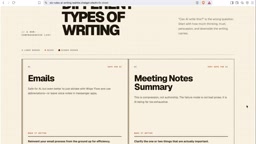
Emails and meeting notes: Relatively safe. Emails are rarely judged on prose quality, and meeting notes are fundamentally compression, not creation. The failure mode for meeting notes, though, is that AI is so thorough it buries the one or two things that actually mattered — worth adding a human sentence to draw that out.
Internal strategy memos: Looks like a fit for AI, but hides real risk. This is ground zero for "writing is thinking." Unless you define the strategic content and off-limits areas with extreme precision, AI will easily drift — substituting generic training-data advice for your organization's specific context. A better approach: separate thinking from writing entirely. Use AI to help build the outline and iterate on ideas first; once the outline is solid, let AI draft the prose.
Social media copy: Mixed results. The shorter the medium, the better AI performs — a single-line tweet is harder to detect than a long LinkedIn post. But the bigger issue is that social media rewards engagement, not eloquence. AI can help you push content out, but it can't substitute for authentic human interaction signals. Managing expectations matters.
Marketing copy: Surprisingly poor. This is exactly where you most want AI to work well — and where AI-speak runs rampant. Perhaps because marketing demands distinctiveness and differentiation, while AI naturally trends toward homogeneity. One classic failure mode: you tell it "don't make too many assumptions about the reader," and it turns that editing instruction into copy, producing a headline like "We make no assumptions about our readers." A better current use is treating AI as a rapid iteration engine — ask it to generate 20 headlines to spark ideas.
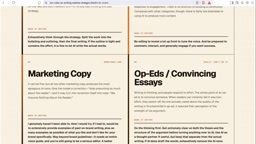
Op-eds and persuasive pieces: This is where the controversy started. The entire point of an op-ed is to persuade. When readers can almost instantly tell it's a low-effort output, they instinctively disengage — if you can't be bothered to make the argument compelling, why should they care about the argument? Before handing anything to AI, you need to think through your thesis and supporting points with extreme clarity — the five-paragraph essay from grade school, no shortcuts. After AI drafts it, go back and clean out the glaring AI-isms. The structure is: effort → AI → effort. A sandwich.
Conclusion: The Tools Changed. The Standards Didn't.
AI writing isn't going away. It will unlock enormous opportunity, letting people who've never communicated in writing begin to do so. But it won't change one thing: laziness at work will ultimately present itself as laziness.
There are no shortcuts to doing something well, even if new tools let us do good things faster and better.
The real lesson of the Druckenmiller controversy may be this: nobody actually cared about the prose quality of that op-ed. What they cared about was the perceived carelessness — and how it undermined the weight of the argument itself. Once writing is understood as thinking, AI can write your words, but it can't think your thoughts for you.
Related articles
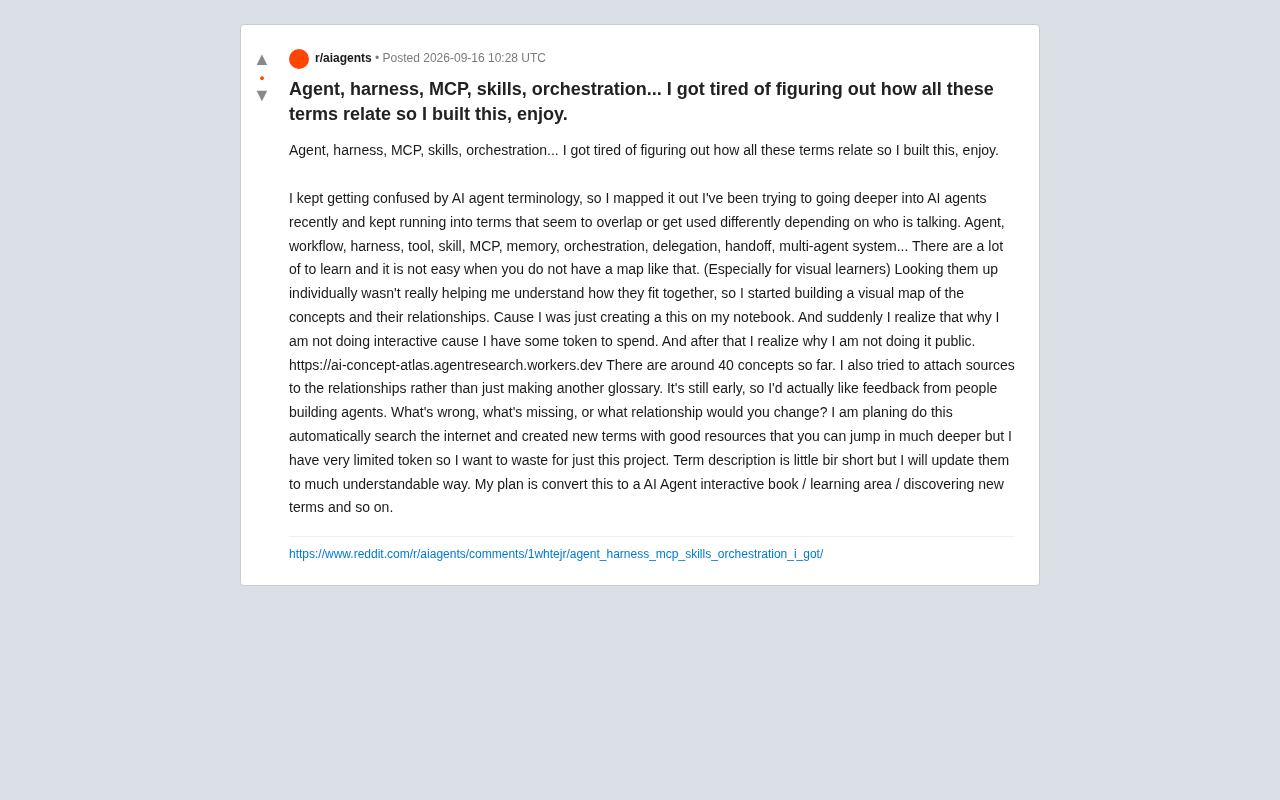
AI Agent Terminology Too Confusing? One Interactive Concept Map to Untangle 40+ Core Terms
Confused by AI Agent terms like MCP, harness, orchestration, and skills? AI Concept Atlas is an interactive map visualizing 40+ concepts and their relationships, with cited sources.
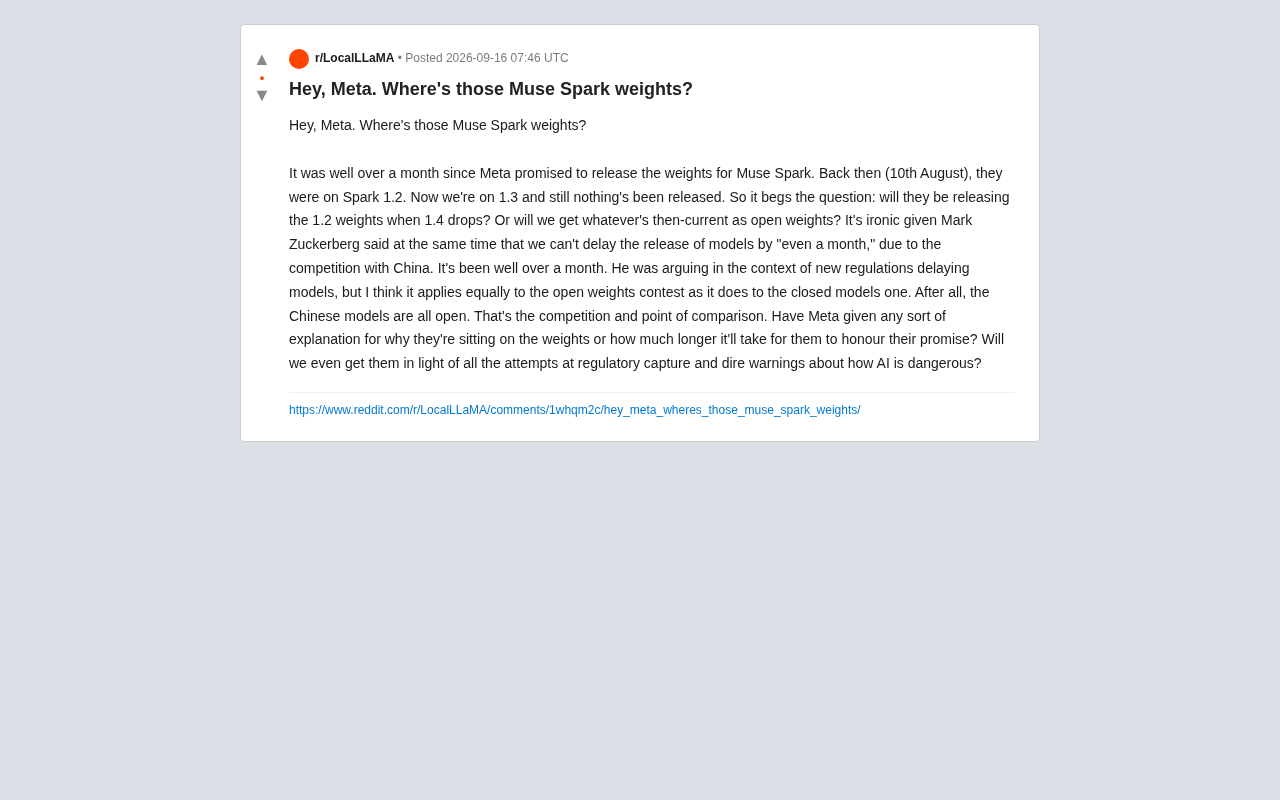
Meta's Broken Promise: Community Demands to Know Where the Muse Spark Weights Are
Meta promised to open-source Muse Spark model weights over a month ago, but still hasn't delivered. The community questions how this squares with Zuckerberg's "can't delay even a month" stance.
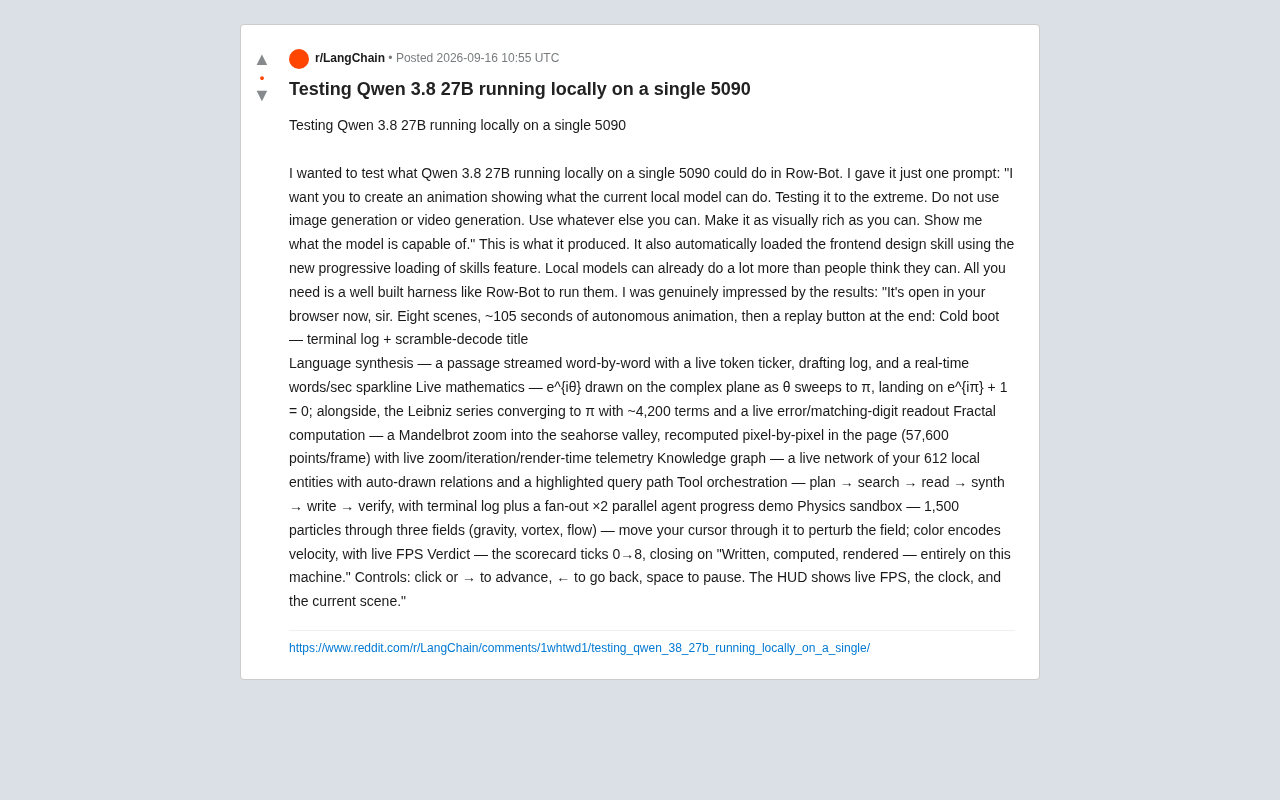
Running Qwen3 27B Locally on a Single RTX 5090: What Can It Actually Do?
A developer runs Qwen3 27B locally on a single RTX 5090 via the Row-Bot Agent framework, generating an 8-scene, 105-second interactive animation from one prompt — including real-time math, fractals, and physics.