5 Tips to Cut Claude Opus 5 Costs by Up to 80%

5 practical strategies to cut Claude Opus 5 API costs by up to 80% without sacrificing performance.
As Claude Opus 5 shifts to API-only billing, developers need cost control strategies. This guide covers five proven techniques: lowering the Effort Level (saves 80%+ on complex tasks), using Opus 5 as an architect while cheaper models execute, applying token compression tools like Ponytail, front-loading research with Deep Research workflows, and leveraging Advisor Mode for on-demand escalation — collectively forming a systematic framework for cutting costs while maintaining top-tier output quality.
As Claude Opus 5 is set to be removed from Pro and Max plans, users will have to pay API prices and face usage caps. In this context, reducing token costs without sacrificing model capability has become a top concern for many developers. According to hands-on analysis from technical creators, a combination of strategies can cut Opus 5 usage costs by up to 80% while still outperforming Opus 4.8 on certain benchmarks. Here are five practical techniques, explained in detail.
Tip 1: Lower the Effort Level for Immediate Cost Savings
Anthropic introduced an adjustable "reasoning intensity" mechanism (Effort Level) in Claude's reasoning models. It essentially controls the computational budget the model spends on its internal Chain-of-Thought before generating a final answer. Higher Effort means the model runs longer, deeper internal reasoning paths — similar to a human "thinking a few more steps" through a complex problem — but at the cost of more tokens. This includes both hidden reasoning tokens and visible output tokens, both of which are billed. This design traces back to the "slow thinking" paradigm popularized by OpenAI's o1 series, which Anthropic followed with Claude 3.7 and later models.
It's worth clarifying how token billing works for reasoning models like Claude: your bill includes both "visible tokens" and "hidden reasoning tokens." Visible tokens are what you see in the response; hidden reasoning tokens (sometimes called "thinking tokens") are the compute consumed during the model's internal chain-of-thought — you never see the reasoning process, but you pay for it. With Opus 5 at Extra High Effort, a single complex task can generate tens of thousands of hidden reasoning tokens, often costing several times more than the visible output. This is the main hidden driver of runaway bills, and it's precisely why adjusting Effort Level can deliver such dramatic cost reductions.
The key insight is that reasoning intensity and task complexity are not linearly correlated. For tasks with clear structure and well-defined requirements, Low or Medium settings often reach the model's effective capability ceiling. Extra compute budget at that point just re-validates conclusions that were already reached — generating cost, not value.
This is the simplest and most impactful tip: lower Opus 5's Effort Level from the default High. Many users habitually push it to Extra High or Max, but most tasks simply don't require that level of reasoning intensity.
In the DiD Suite benchmark — focused on long-horizon agent tasks — the data reveals a striking finding: Max Effort showed no meaningful improvement in pass rate compared to Extra High, yet average cost per task was $22. Switching to Low dropped the per-task cost to just $3.76 — a reduction of over 80%.
More striking is the performance comparison: Opus 5 at Low Effort achieved a pass rate of roughly 60%, surpassing Opus 4.8 at Max level (59%), which cost $13 per task. In other words, you get better-than-top-tier Opus 4.8 performance at less than one-third the cost.

The Frontier Code accuracy-vs-cost benchmark (based on official Anthropic data) confirms the same trend: at low settings, spending roughly $5 achieves about 11% score, while Opus 4.8 Max requires around $11 for the same score. Bumping to Medium raises accuracy from 60% to 65%, still at a fraction of Extra High cost.
Practical recommendation: For routine tasks like web design, setting Medium or Low significantly cuts both cost and usage. The change is straightforward — open your terminal, type /forward-effort, and set your target value. If you can only remember one thing, run one task at Medium and one at Low and compare results yourself.
Tip 2: Make Opus 5 the Architect, Not the Executor
The "architect-executor" multi-model collaboration pattern is one of the most widely adopted approaches in LLM application engineering today, known academically as Multi-Agent Orchestration. Its theoretical basis comes from cognitive science's dual-process theory (System 1 / System 2) — fast, intuitive execution and slow, deliberate planning are fundamentally different mechanisms that should be handled separately.
In LLM implementations, the flagship model (e.g., Opus 5) acts as the Planner/Orchestrator, handling task decomposition, dependency mapping, and cross-step decision-making. Cheaper, less capable models (e.g., Sonnet, Haiku) handle concrete tool calls, code execution, and information retrieval. The cost advantage comes from the "capability matching" principle: using a $15/M token model to read and write files versus a $0.25/M token model for the same operation yields functionally equivalent results at 60x lower cost.
This architecture needs to address three core engineering challenges: context handoff (how to efficiently pass the Orchestrator's plan to sub-agents), error handling (rollback and retry logic when a sub-agent fails), and cost tracking (how to consolidate billing across mixed model calls). Claude Code's Advisor Mode lowers this barrier through standardized context-switching protocols, but in custom systems, developers still need to manually design the plan-execute interface to prevent execution models from drifting from the intended plan — which would ironically increase correction costs.
The core idea of Tip 2 is: don't let Opus 5 handle both planning and execution. Instead, have it play the role of architect. Let Opus 5 create the plan, then route specific execution to the most appropriate model based on task complexity — that could be Opus, Sonnet, GPT 5.5, or a local model.
Opus 5 is smart enough to judge which model is best suited for a given task. You can even have it explicitly specify in the plan: Part 1 uses Opus, Part 2 uses Sonnet, Part 3 goes to GPT 5.5. This pattern works especially well in Claude Code with tools like the Codex plugin. Claude Code's Advisor Mode is the productized implementation of this architecture.

If you don't want the overhead, there's a simpler approach: enter Plan Mode, have Opus 5 generate a Markdown plan file and scaffold the codebase, then open a separate Opus session to execute what Opus 5 planned. This prevents Opus 5 from burning large amounts of tokens on low-level tasks.
Tip 3: Use External Tools Like Ponytail to Compress Tokens
Token compression tools like Ponytail and Keyman operate at the intersection of Prompt Engineering and Output Constraints. Their technical approach typically spans three layers: first, system-level constraint rules that instruct the model to output more compact code (e.g., omitting redundant comments, avoiding defensive boilerplate); second, context management through summarizing conversation history to compress input tokens; third, output format constraints that force the model to express changes as diffs rather than full rewrites.
It's worth noting that Claude models are billed on both input and output tokens, with significant price differences across models — Opus 5's output token rate is tens of times higher than Haiku's. This means compressing output tokens has a far more dramatic cost impact on premium models than on lower-tier ones, which explains why real-world results often exceed official benchmarks that were measured against cheaper models.
That said, token compression tools come with quality tradeoffs that shouldn't be ignored. Overly aggressive output constraints can cause models to skip necessary error handling logic or boundary condition checks, introducing risks in production code. The recommended best practice: enable aggressive compression for low-risk scenarios like utility functions and glue code, preserve appropriate verbosity for core business logic and security-sensitive code, and add an independent code review step after compression.
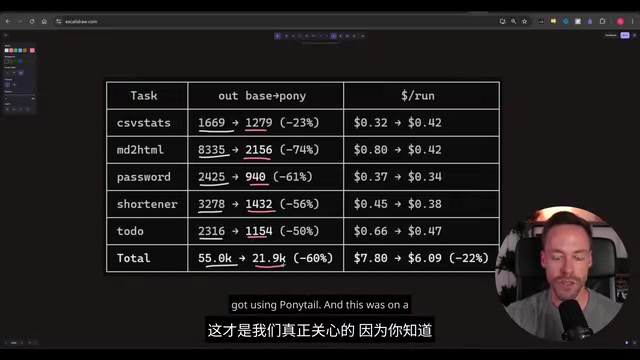
Tip 3 is to bring in external tools like Ponytail specifically designed to reduce token consumption. The core idea is to give the model a set of rules that constrain it to produce the same results with less code.
It's worth noting that Ponytail's official benchmarks were only run on Haiku 4.5. Independent re-testing on Opus 4.8 showed even better results — less code, fewer tokens, faster responses. Running the same benchmark on Opus 5 at Medium settings showed noticeably reduced output token counts, with costs about 22% cheaper — actually better than the official Haiku numbers.
Beyond Ponytail, tools like Keyman claim similar results. The underlying logic: Opus 5 is an expensive model. Any external tool that delivers a ~20% improvement is worth trying. When you're spending thousands of dollars, 20% is not a trivial number.
Tip 4: Use Deep Research for Upfront Research
Deep Research represents the "Dynamic Multi-Agent Workflow" paradigm, distinct from traditional static pipelines. In a static pipeline, task steps and model assignments are hardcoded upfront. Dynamic workflows allow the Orchestrator to decide at runtime whether to split subtasks, how many parallel agents to spin up, and which model each agent should use — based on intermediate results.
Cost control in these workflows hinges on "model tiering": cheap models for I/O-intensive information retrieval, mid-tier models for summarization and inference, and flagship models only for final strategic decisions. The existence of a knowledge cutoff makes Opus 5's marginal value in real-time information retrieval essentially zero — it can't access information newer than its training data, yet you pay flagship prices for every retrieval request. This further validates the "research with small models, plan with large models" division of labor — not merely a cost consideration, but a capability-matching necessity.
Tip 4 may seem to contradict Tip 2 on the surface, but it approaches the problem from a different angle. The key point here: many solutions require research before planning, and the research phase doesn't need to consume Opus 5's expensive reasoning capacity at all.
One of the best ways to handle research is to use dynamic workflows like Deep Research. In one content preparation session, 109 sub-agents were spun up at once. If every sub-agent used Opus 5, the quota would evaporate instantly — pointlessly.
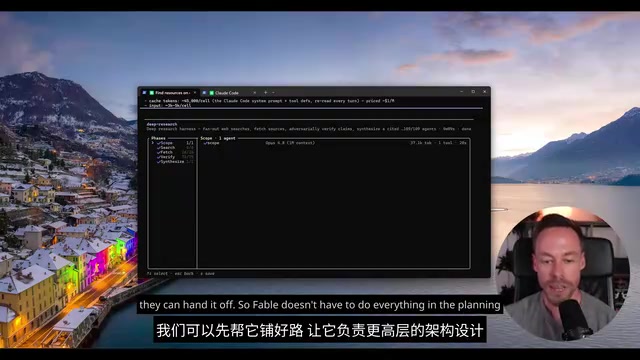
A more rational division: use lower-cost models like Opus or Sonnet to gather information online and run basic adversarial checks to validate reasonableness, then hand the results to Opus 5 for planning. Research doesn't require Opus 5's extreme reasoning power, and since its knowledge cutoff limits it anyway, external information is needed regardless. This way, Dynamic Workflows, Ultra Code, and Deep Research preserve Opus 5's compute for the architectural decisions that truly matter.
Tip 5: Advisor Mode — Let Opus 5 Be the Consultant
Tip 5 leverages the Advisor Mode feature. Its original showcase involved Opus and Sonnet collaborating: Sonnet acts as the direct execution layer handling read/write tools, and whenever it gets stuck, it passes context back to the smarter advisor model (Opus), which provides guidance on the next step. This design mirrors the "escalation pattern" in software engineering — routine issues handled at the base level, complex decisions escalated up the chain, balancing response efficiency with decision quality at critical junctures.
From a system design perspective, the elegance of Advisor Mode lies in its "on-demand trigger" mechanism: the advisor model doesn't participate continuously, but only when the execution model explicitly requests it. This means Opus 5's expensive reasoning budget is consumed only at genuine decision forks, not on every routine tool call. For steps with clear success criteria — code generation, file operations — the execution model can proceed autonomously. Only when ambiguity, conflict, or out-of-scope situations arise does it escalate to Opus 5. This "quiet most of the time, vocal at critical moments" pattern is why Advisor Mode can dramatically reduce costs without significantly sacrificing output quality.
Although Anthropic hasn't published official data on using Opus 5 as advisor with Opus or Sonnet as executor, the classic Opus vs. Sonnet 4.6 comparison charts suggest the pattern holds: Sonnet performs better with an Advisor, at a lower price, for a better overall value proposition.
Key configuration: In Advisor Mode, the currently selected model is the execution model. If you want Opus 5 as the advisor and Opus as the executor, set the primary model to Opus, then use /forward-advisor to set Opus 5 as the advisor. This way Opus 5 only directs what Opus should do — ideal for users who want Opus 5 focused purely on the architect role.
Summary: Put Expensive Compute Where It Counts
The common thread across all five tips: treat Opus 5 as a costly, high-value resource. By lowering the Effort Level, implementing smart model division of labor, introducing compression tools, front-loading research, and using Advisor Mode, you keep Opus 5 focused on the architecture and planning work that genuinely demands high intelligence — while offloading routine execution and research to lower-cost models.
From a broader perspective, these five techniques are different-dimensional implementations of the same "capability matching" principle: Effort Level adjustment matches reasoning depth in the time dimension; the architect-executor split matches task complexity in the model dimension; token compression tools reduce redundancy in the output dimension; upfront research avoids Opus 5's knowledge gaps in the information dimension; and Advisor Mode enables on-demand escalation in the decision dimension. Together, they form a systematic cost control framework.
Underlying this framework is a deeper engineering philosophy worth noting: LLM application cost optimization is fundamentally a resource scheduling problem, not simply a parameter tuning problem. Just as distributed systems don't use the highest-spec servers for every request, AI application engineering requires a "task-capability-cost" matching mindset. As model capability tiers become clearer and inter-model collaboration tooling matures, this tiered scheduling approach will become a core competitive advantage for AI application developers.
With Opus 5 leaving the subscription plans and moving to API billing, this combined strategy can help developers meaningfully extend their weekly quota and keep spending under control.
Related articles
SoulFlow-Orchestrator: A Self-Hosted, Vendor-Lock-In-Free AI Agent Runtime
SoulFlow-Orchestrator is an open-source, self-hosted AI agent runtime with no vendor lock-in. Supports 9 neutral backends (Claude, OpenAI, Ollama), 141-node workflow engine, multi-agent loops, and HITL gates.
Chinese Full-Stack Agent Skills: A Skill Library Tailored for Domestic AI-Assisted Development
chinese-fullstack-skills is an Agent Skills library for Chinese full-stack development, covering Vue/React, Node/Go, and domestic cloud deployment best practices. Compatible with Claude Code, Cursor, Kiro, and Codex.
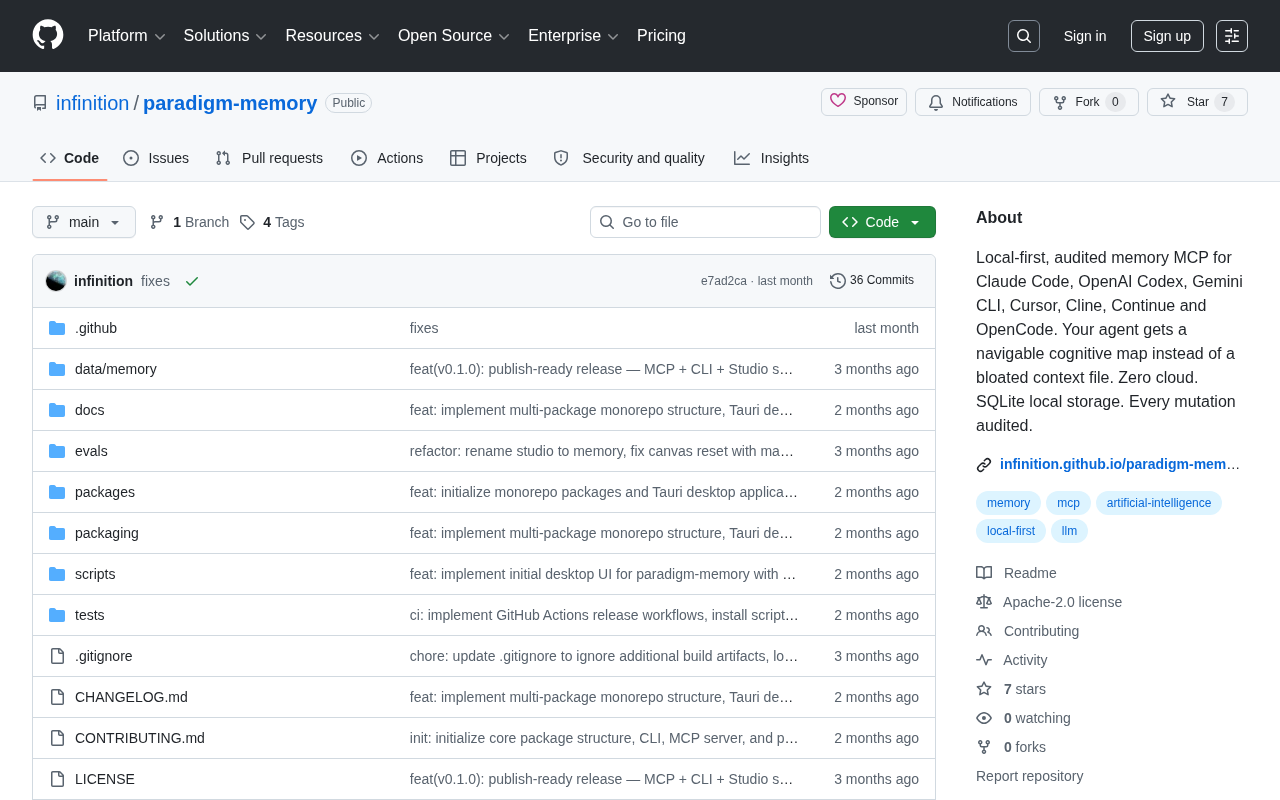
Paradigm Memory: A Local-First Memory System for AI Coding Assistants
paradigm-memory is a local MCP memory tool for Claude Code, Cursor, and Cline. It uses SQLite local storage, zero cloud, full audit trails, and a navigable cognitive map instead of bloated context files.