500 Million Tokens of Vibe Coding in Practice: A Complete Breakdown of Ramy Maker, a 3D Particle Camera Tool

How 500M tokens of Vibe Coding produced Ramy Maker, an open-source 3D particle camera tool.
A Bilibili creator used AI-collaborative Vibe Coding, consuming 500 million tokens, to build Ramy Maker—a fully open-source 3D particle camera tool. It offers 9 particle effects, 16 camera presets, custom keyframe control, gesture interaction, and one-click vertical video export on mobile, showcasing real AI-assisted programming productivity.
When Vibe Coding Meets 3D Imaging
Recently, a Bilibili content creator shared a striking creative experiment: using nothing but AI-collaborative "Vibe Coding," consuming roughly 500 million tokens, they built a 3D particle camera tool called Ramy Maker—which has now been fully open-sourced. This case not only demonstrates the real productivity of AI-assisted programming, but also opens up entirely new possibilities for everyday users to play with 3D imaging.
Vibe Coding refers to a development approach where developers don't write code line by line themselves. Instead, they iterate repeatedly with an AI Agent through natural language, letting the AI handle the bulk of the coding work. The 500-million-token consumption vividly reflects the conversational density and iteration cost required to take such a tool from concept to finished product—a telling footnote to the ongoing shift in AI programming paradigms.
Ramy Maker's Core Features: Making 3D Photos Truly "Come Alive"
Ramy Maker has a clear positioning: to breathe life into 3D photos captured by users with Ramy. The workflow is remarkably simple—just paste the URL of a Ramy 3D photo to load the image, then freely switch between two display modes.
The first is the real 3D spatial photo mode, which fully preserves the sense of depth from the original shooting scene. The second is the more visually striking glowing particle mode, which supports freely adjusting parameters like particle size, brightness, and density, allowing the glow effect to adapt to all kinds of 3D models.
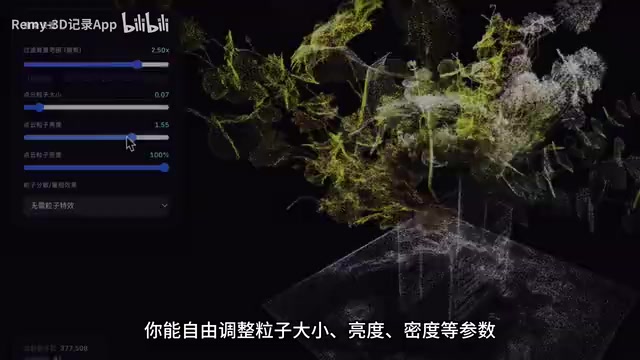
This parameterized design gives creators fine-grained control over visual effects—the same 3D image can be rendered in dramatically different artistic styles.
9 Particle Effects × 16 Camera Presets
The tool comes with 9 built-in particle effects, covering dynamic effects such as particle bursts, wind dispersion, hurricane convergence, and falling raindrops—injecting dramatic motion into static 3D photos.
In terms of camera language, Ramy Maker offers 16 preset camera moves, including orbiting, ascending, and rotating shots, delivering cinematic camera trajectories. Depending on the characteristics of different models, users can choose an appropriate starting position to more easily achieve their ideal camera path.
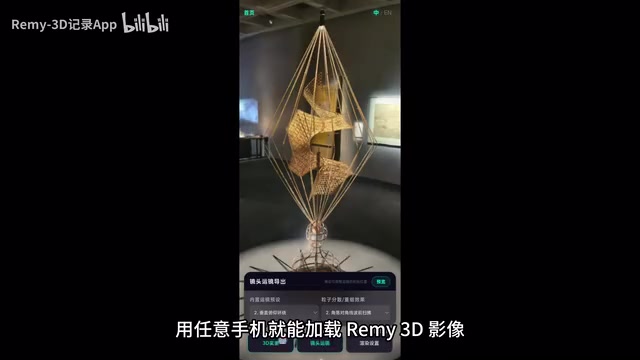
The value of presets lies in dramatically lowering the barrier to creation—even without any 3D animation experience, users can achieve professional-grade camera movement with a single click.
Custom Camera Moves: Creative Freedom Through Keyframes
When the built-in camera moves can't meet your needs, the custom camera feature is ready to step in. Users can add multiple keyframes, freeing the camera position entirely from the constraints of preset trajectories. After setting the keyframes, you can preview the effect and manually switch display modes, and the exported video will faithfully reproduce the preview.
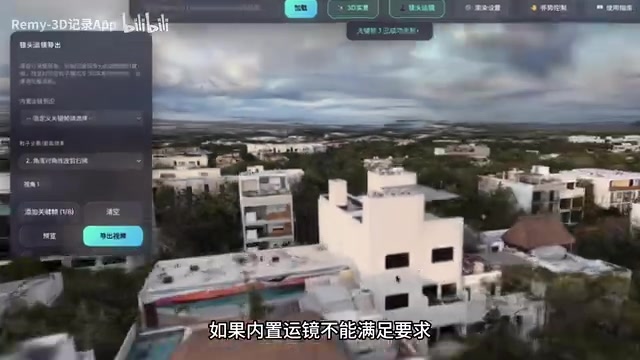
The keyframe mechanism is a core logic of professional animation software. Bringing it into an AI-assisted web tool proves that Vibe Coding is already capable of developing relatively complex interactive features—not just stacking together simple demos.
Mobile Adaptation and Gesture Interaction
Ramy Maker isn't limited to the desktop. The entire tool is also deeply adapted for mobile: any phone can load Ramy 3D images, select effects and camera moves, and export high-definition vertical videos by screen ratio—perfectly aligned with the content distribution needs of the short-video era.
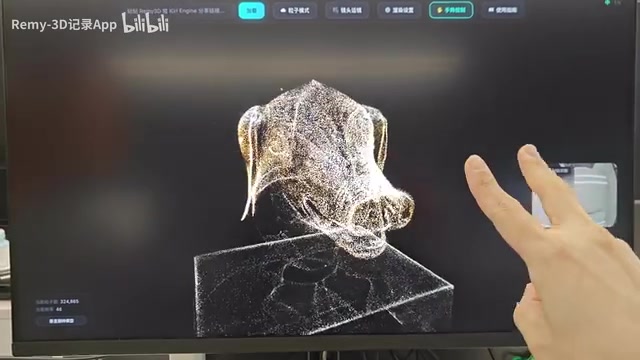
The desktop version additionally supports particle art gesture interaction: using the camera for local offline gesture recognition, users can adjust the viewing angle with gestures and zoom the model with both hands. This "touchless" method makes 3D photos into truly playable digital art, offering an imaginative interactive experience.
Open Source + Skill-ification: Making the Tool Within Reach
Ramy Maker is now fully open-sourced, and anyone can participate in iterating and improving the tool. Even more noteworthy, the author has also packaged it into a Skill, allowing users to directly have an AI Agent quickly run the tool locally.
This "Skill-ified" distribution approach is quite forward-looking: deployment and startup of the tool can be further delegated to an AI Agent, so users don't need to understand complex environment configurations—a single command is enough to run it. This is also an early signal of the AI-native application ecosystem taking shape.
Summary: Vibe Coding Turns Ideas Into Reality Fast
From this case, several trends become clear: Vibe Coding is empowering creators who "have ideas but lack programming experience" to independently build tools; the barrier to 3D image creation is being lowered by the combined force of mobile devices and AI; and the combination of open source and Skill-ification is making tool distribution and reuse smoother than ever.
An investment of 500 million tokens yielded a complete tool that is playable, exportable, interactive, cross-platform, and open-source. This is both a powerful validation of AI-assisted programming capabilities and a complete, reference-worthy blueprint for developers who want to use Vibe Coding to turn their ideas into reality.
Related articles
Alibaba Launches Happy Shrimp: AI-Powered One-Click Complete Song Generation
Alibaba launches Happy Shrimp, an AI music generation tool that creates complete songs with lyrics, melody, arrangement, and vocals from natural language descriptions. In-depth analysis of its core features, differentiation from competitors like Suno, and industry impact.

GPT Sol Ultra vs Grok 4.6: Real-World Task Completion Benchmark in Reasoning Mode
Developer benchmark reveals GPT Sol Ultra completes draw.io scientific diagrams in one iteration while Grok 4.6 fails to converge despite maximum reasoning mode, exposing that reasoning depth ≠ task delivery capability.
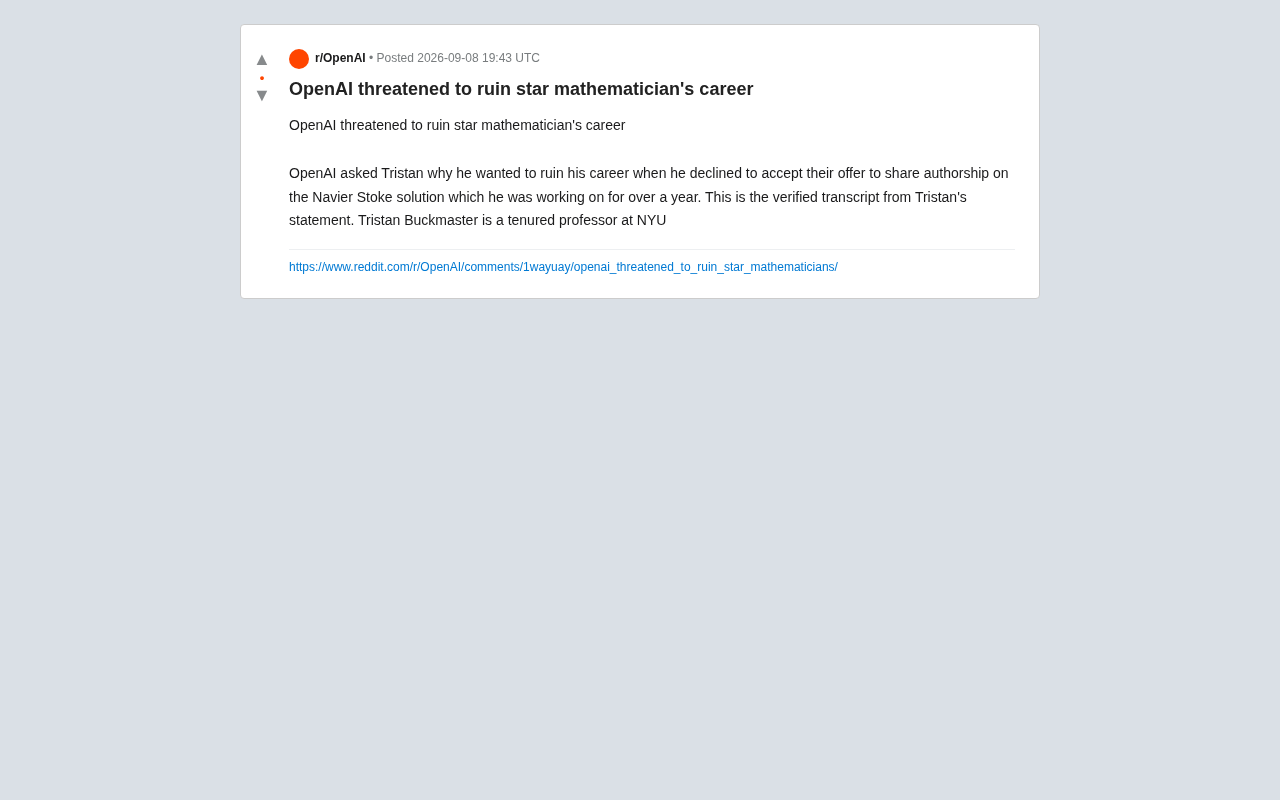
OpenAI Authorship Dispute: The Battle Over Academic Boundaries in the AI Era
OpenAI disputes authorship with mathematician Tristan Buckmaster over Navier-Stokes research, raising ethical questions about AI involvement in science.