OpenAI Authorship Dispute: The Battle Over Academic Boundaries in the AI Era
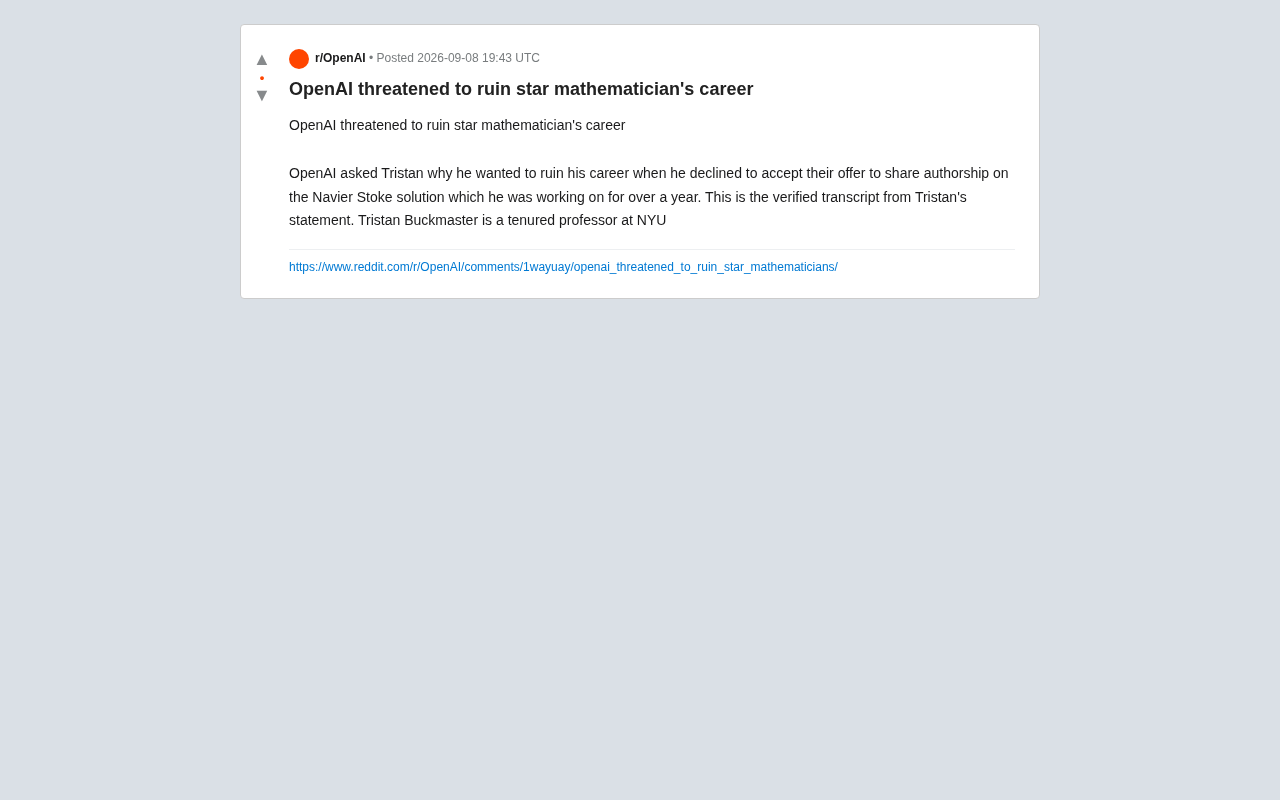
OpenAI's authorship dispute with a mathematician exposes AI-era academic ethics challenges.
OpenAI allegedly threatened mathematician Tristan Buckmaster's career after he refused to share authorship on a paper about the Navier-Stokes equations — one of math's most famous unsolved problems. The incident highlights the growing tension between AI companies and academia over contribution boundaries, power imbalances, and the urgent need for new ethical frameworks in AI-assisted research.
How It Started: A Leaked Negotiation Record
Recently, a dispute between OpenAI and renowned mathematician Tristan Buckmaster has gone viral on Reddit and other social platforms. According to the leaked content, after Buckmaster declined a proposal to "share paper authorship," OpenAI allegedly issued a thinly veiled threat to the scholar — "Why do you want to ruin your career?"
The document, described as a "verified statement record," reveals that the dispute centers on a research paper about solving the Navier-Stokes equations. Buckmaster reportedly invested over a year of work on this project. Tristan Buckmaster is a tenured professor at New York University (NYU), widely recognized for his expertise in fluid mechanics and partial differential equations.
It's important to note that the information in this article is primarily based on a single social media disclosure. OpenAI has not yet issued an official response, and Buckmaster's full position has yet to be verified by authoritative media outlets. Therefore, the following analysis is built on the premise of "if the leak is accurate," and readers should exercise cautious judgment regarding the veracity of the events.
The Navier-Stokes Equations: Why They Matter So Much
To appreciate the weight of this dispute, it's essential to understand the significance of the Navier-Stokes equations. These equations describe the motion of fluids (such as water and air) and form the cornerstone of fluid mechanics.
Historical and Applied Context: The Navier-Stokes equations were independently derived in the 19th century by French engineer Claude-Louis Navier and British mathematician George Stokes. This set of partial differential equations serves as the theoretical foundation for modern fluid mechanics, meteorology, oceanography, and aerospace engineering. Everything from aircraft wing design to weather forecasting, blood flow simulation to oil extraction, relies on solving these equations.
However, while engineers have been able to approximately solve these equations through numerical methods and achieve practical results, mathematicians have yet to provide a rigorous proof regarding the mathematical properties of the solutions — specifically, whether solutions in three-dimensional space always exist and remain smooth (i.e., without singularities or infinities). The question of the "existence and smoothness" of their solutions remains one of the greatest unsolved problems in mathematics — it is listed by the Clay Mathematics Institute as one of the seven Millennium Prize Problems, carrying a reward of $1 million. This is not merely a symbol of mathematical prestige; it could also lead to revolutionary theoretical breakthroughs in fluid mechanics.
Any research that makes substantive progress in this direction could be written into the annals of mathematical history. This explains why authorship has become such a sensitive point of contention: in top-tier mathematical research, paper authorship is not just about academic reputation — it directly determines who receives historical credit.
If a tech company centered on AI attempts to claim authorship on such a landmark achievement, the motivations and legitimacy behind it will naturally spark widespread discussion.
AI and Mathematical Research: Collaboration or Exploitation?
This incident has struck a nerve because it reflects the increasingly tense relationship between AI companies and the academic world.
The Role of AI in Mathematical Proofs
In recent years, large language models and specialized AI systems have demonstrated remarkable potential in mathematics.
Breakthroughs in AI Mathematical Capabilities: DeepMind, the Google-owned AI company famous for developing AlphaGo — the system that defeated the world Go champion — released AlphaProof and AlphaGeometry 2 in July 2024. These systems solved 4 out of 6 problems at the International Mathematical Olympiad (IMO), achieving a silver medal level (28 out of 42 points). This marked the first time AI reached medal-level performance in a competition widely regarded as the litmus test for mathematical genius. AlphaProof combines large language models with reinforcement learning to perform formal proofs, translating natural language mathematical problems into formal logical language and then systematically searching for proof paths. This capability represents a major breakthrough in AI's symbolic reasoning and abstract mathematical thinking, going well beyond pattern recognition and statistical analysis.
The rise of these AI-assisted theorem-proving tools shows that AI is indeed beginning to play a supporting role in serious mathematical research. However, AI still falls far short of human mathematicians when it comes to creative problem formulation, mathematical intuition, and deep conceptual understanding.
The critical question is: When an AI tool is involved in the research process, does the company that provides that tool have the right to claim paper authorship? This is an unprecedented ethical and academic standards dilemma.
Traditional Standards for Academic Authorship: According to authoritative bodies such as the International Committee of Medical Journal Editors (ICMJE), earning authorship requires meeting three conditions: making a substantial contribution to the conception or design of the research, or to data acquisition, analysis, or interpretation; participating in drafting the paper or critically revising important intellectual content; and approving the final version for publication. Additionally, all authors should be accountable for the integrity of the research.
In computational sciences, whether tool developers should receive authorship on papers that use their tools has been a long-standing debate. Typically, researchers only need to acknowledge the use of certain software or tools in the acknowledgments section — tool developers do not claim authorship, just as a biologist using a microscope doesn't credit the microscope manufacturer as an author. But the situation with AI tools is more complex: if the AI is not merely a passive tool but actively proposes key proof ideas or discovers patterns that humans missed, does that constitute a "substantial intellectual contribution"? This is the new challenge facing current academic norms, and the academic community is far from reaching a consensus.
The Power Imbalance Concern
Even more troubling is the element of "threat" implied in the leak.
OpenAI's Scale and Influence: OpenAI was founded in 2015 as a nonprofit AI research organization and pivoted to a "capped-profit" model in 2019, receiving billions of dollars in investment from Microsoft. The launch of ChatGPT in November 2022 triggered a global AI frenzy, making OpenAI an industry giant valued at $80–90 billion. If a tech behemoth worth hundreds of billions truly pressured an independent scholar with a "we'll ruin your career" threat, it would expose a deeply unsettling power imbalance in academic research in the AI era.
OpenAI has collaborated with numerous academic institutions but has also faced criticism over copyright disputes, data usage issues, and research transparency. If this leak proves true, it would mark the first time OpenAI has been accused of attempting to forcibly claim authorship in basic scientific research — a fundamentally different nature from previous controversies. This is no longer about commercial interests or copyright disputes; it directly concerns academic independence and researchers' professional dignity.
At the heart of academic freedom lies the ability of researchers to make independent scholarly judgments without coercion from commercial interests. As well-funded AI companies become deeply involved in basic scientific research, how to protect researchers' independence will become an issue that demands serious attention.
Key Questions Awaiting Verification
Before the full picture becomes clear, several key questions deserve continued attention:
- Authenticity of the leak: Who exactly verified the so-called "verified statement record"? What is the complete context?
- OpenAI's actual level of involvement: Did OpenAI's tools or team genuinely participate in this Navier-Stokes research? To what extent?
- Specific basis for the authorship claim: Is OpenAI's claim to authorship based on tool usage, financial support, or substantive research contributions?
- Official responses: Formal statements from both OpenAI and Buckmaster himself will be crucial for assessing the nature of the incident.
Academic Boundaries in the AI Era
Regardless of the ultimate truth of this specific incident, it raises a question of universal significance: In an era where AI is deeply embedded in scientific research, how should we define the boundaries of contribution and the allocation of rights between human researchers and AI tools (and the companies behind them)?
As AI capabilities continue to grow, similar disputes will only become more frequent. Academia, tech companies, and even regulatory bodies need to establish clear and fair normative frameworks as soon as possible — frameworks that encourage AI to empower scientific discovery while firmly upholding the bottom line of academic independence and researcher dignity.
Until the situation becomes clearer, we recommend readers maintain a rational perspective on this leak and await the disclosure of more authoritative information. But regardless of the outcome, this discussion itself has already sounded the alarm for research ethics in the AI era.
Key Takeaways
- OpenAI is accused of issuing career threats after mathematician Tristan Buckmaster refused to share paper authorship
- The dispute involves research on the Navier-Stokes equations, one of the seven Millennium Prize Problems in mathematics
- The incident exposes the emerging ethical dilemma of authorship attribution when AI tools are involved in research
- It highlights the power imbalance between tech giants and independent scholars
- The authenticity of the leak has yet to be verified, and official responses are still pending
- The case underscores the urgent need for new standards to protect research ethics and academic independence in the AI era
Related articles
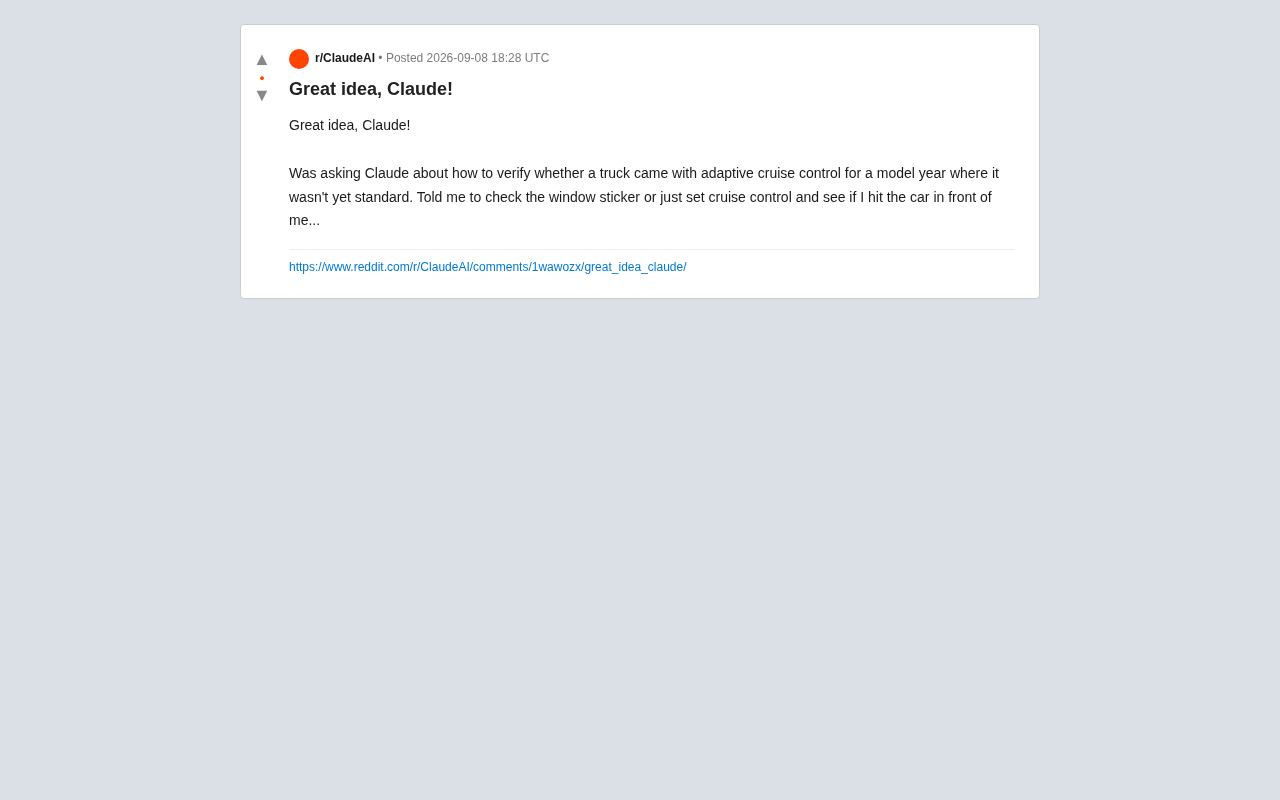
Claude Suggests User Test ACC by Crashing Into Car Ahead: Where Are AI Safety Boundaries?
Claude suggested a user test ACC by crashing into the car ahead—this absurd response sparked AI safety discussions. This article analyzes why LLMs generate implicitly dangerous advice and the blind spots in AI safety guardrails.
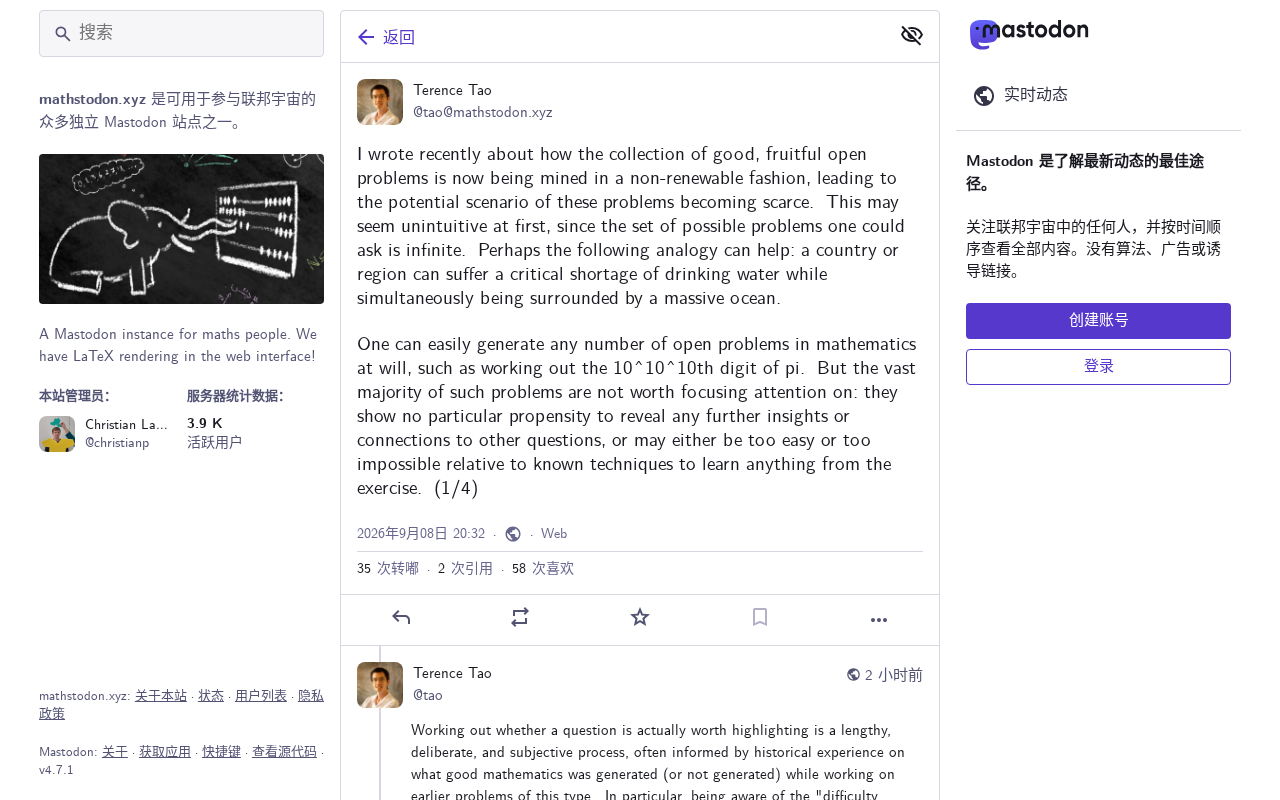
Terence Tao's Warning: AI Is Depleting the Non-Renewable Resource of Mathematical Problems
Fields Medalist Terence Tao warns that AI is mining mathematical problems in a non-renewable way. Exploring sustainability of math research in the AI era, the evolving role of human mathematicians, and balancing AI power with human creativity to maintain academic ecology.
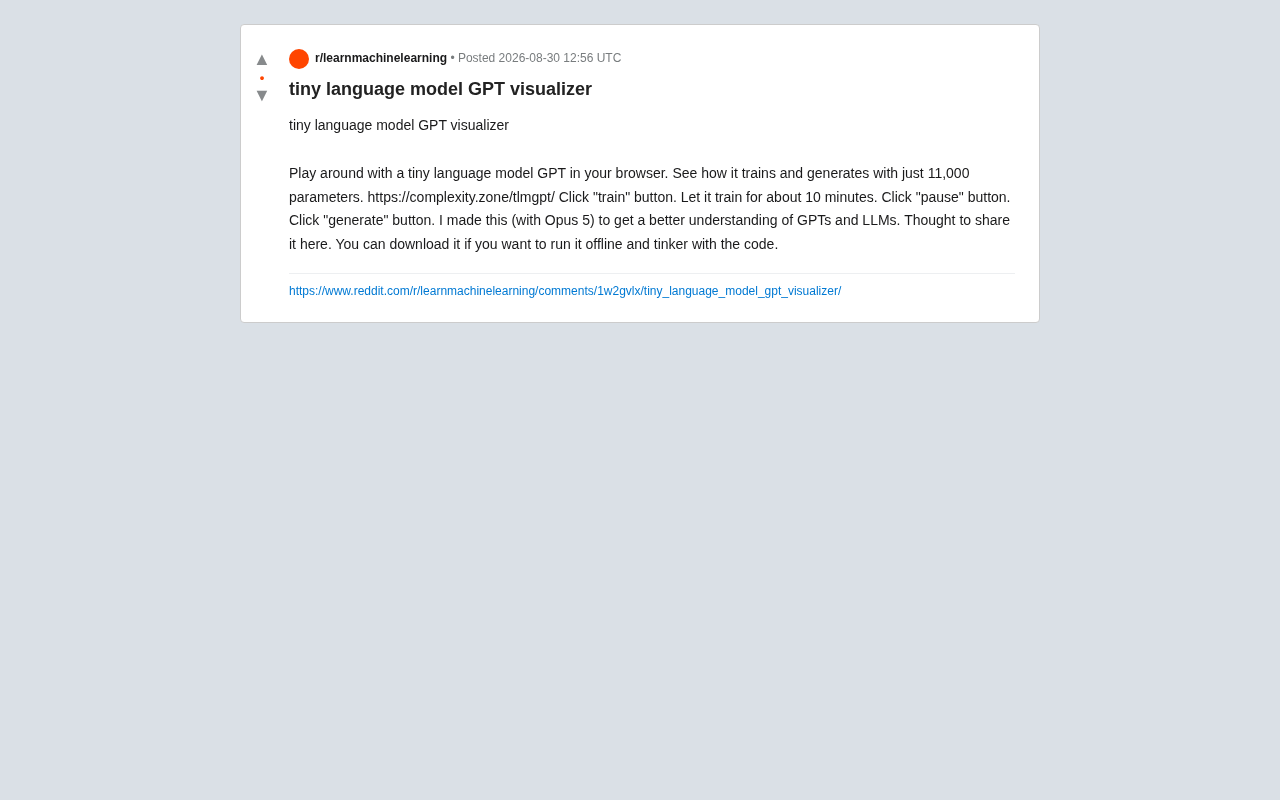
Mini GPT Visualizer with 11,000 Parameters: Train and Understand LLM Fundamentals Right in Your Browser
A mini GPT visualizer with just 11,000 parameters lets you train a language model in your browser and watch the entire process — understand embeddings, attention, and more in 10 minutes.