GPT Sol Ultra vs Grok 4.6: Real-World Task Completion Benchmark in Reasoning Mode
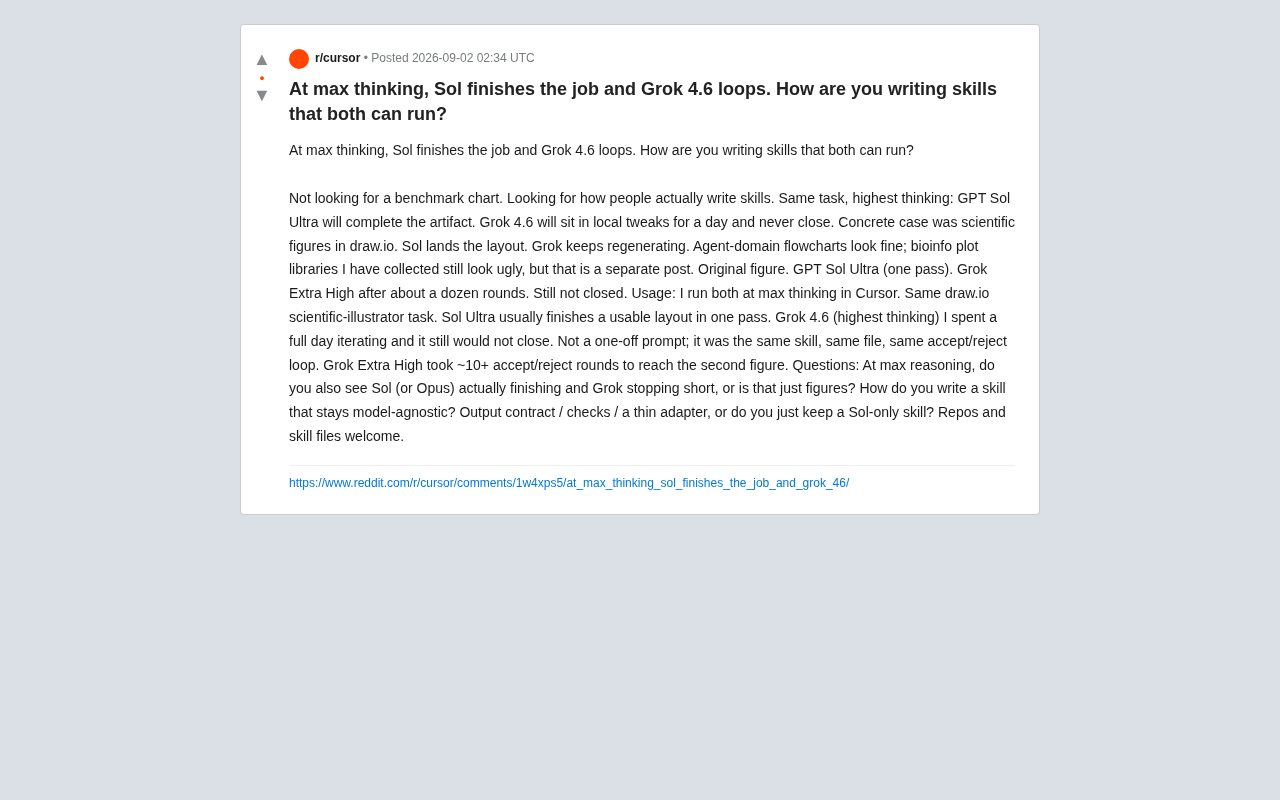
Sol Ultra beats Grok 4.6 in task completion despite both using max reasoning—depth doesn't equal delivery.
A real-world test comparing GPT Sol Ultra and Grok 4.6 on draw.io diagram generation revealed a striking gap: Sol completed the task in one iteration while Grok, even with maximum reasoning enabled, couldn't converge after a full day of attempts. This exposes that reasoning depth and task delivery are separate capabilities.
Introduction
In AI-assisted programming, a model's reasoning capability directly determines the quality and efficiency of task completion. AI-assisted programming refers to the technical paradigm of using large language models (LLMs) to help developers complete tasks like code writing, debugging, and refactoring. These tools typically rely on Transformer-based generative models that understand natural language instructions and code context to produce solutions. Reasoning capability is a core metric for model quality—it measures a model's ability to derive answers through multi-step logical inference given an input. Unlike simple pattern matching, high reasoning capability requires models to perform causal analysis, constraint solving, and multi-objective optimization. However, reasoning depth and task completion rate are not linearly related—excessive reasoning can lead to overfitting on local details, preventing convergence to a deliverable solution within a reasonable timeframe.
A noteworthy discussion recently emerged in the Reddit developer community: at maximum reasoning mode, GPT Sol Ultra and Grok 4.6 exhibited stark performance differences on complex tasks. Developers found that Sol could complete scientific visualization tasks in a single iteration, while Grok, even with its highest reasoning mode enabled, became trapped in repeated iterations without convergence. This phenomenon sparked deep reflection on reasoning depth, task delivery capability, and model-agnostic skill engineering.
Real-World Case: draw.io Scientific Diagram Generation Task
A developer ran GPT Sol Ultra and Grok 4.6 simultaneously in the Cursor environment, executing the same task—generating scientific illustrations using draw.io. draw.io (now diagrams.net) is an open-source diagramming tool widely used for flowcharts, UML diagrams, network topology diagrams, and other technical documentation. It stores graphic elements and layout information in XML format, making it an ideal target for AI code generation—models need to generate structured XML code defining node positions, connection relationships, style properties, and more. Scientific visualization tasks are particularly challenging because they require not only syntactically correct graphics but also domain-specific aesthetic standards: bioinformatics diagrams must follow specific symbol systems (like SBGN standards), and network topology diagrams need optimized node distribution to minimize edge crossings. These tasks test a model's multi-constraint optimization capability—ensuring both functional completeness and visual clarity—making them a litmus test for evaluating the practical capabilities of AI-assisted tools.
Test conditions were identical: same task description, same files, same accept/reject iteration flow, and both models running at maximum reasoning mode.
GPT Sol Ultra's performance was impressive: it generated a usable layout solution in just one iteration. GPT Sol Ultra is a code-generation-optimized model variant from OpenAI, likely employing reinforcement learning (RLHF) and task-oriented fine-tuning strategies that give it strong performance on engineering tasks like code completion and architecture design. The screenshot provided by the developer shows that Sol's output featured clear diagram layouts and reasonable element arrangement, essentially meeting publication standards.
By contrast, Grok 4.6 (with Extra High reasoning mode enabled) showed a significant performance gap. Grok 4.6 is a large language model developed by xAI, known for high reasoning depth and long-context processing capabilities. Even after a full day of iterations—over a dozen accept/reject cycles—the model still couldn't produce a satisfactory final version. The developer mentioned that while Grok performed reasonably well on agent-domain flowcharts, its output quality in specialized domains like bioinformatics drawing libraries fell far short of expectations.
The Essential Difference Between Reasoning Depth and Task Convergence
This comparison exposed a critical issue: maximum reasoning mode does not equal task completion capability. Reasoning depth and task convergence are two fundamentally different dimensions.
"Maximum reasoning mode" typically means the model uses more computational steps during inference, greater Chain-of-Thought depth, or enables self-verification mechanisms. Technically, this might be achieved by increasing decoding steps, using beam search instead of greedy search, or running internal evaluation-correction loops. However, higher reasoning depth isn't always beneficial: on one hand, it significantly increases latency and computational cost (potentially 10x or more); on the other hand, for generation tasks with clear constraints, excessive reasoning can lead to "analysis paralysis"—the model weighs multiple viable options repeatedly but can't make a decisive choice. This resembles the "paradox of choice" in human decision-making, where too many options actually reduce decision quality.
Sol Ultra's advantage likely lies in its reasoning process being more focused on final delivery goals. The core difference between the two lies in training objectives and inference strategies: Sol emphasizes "one-shot quality," learning to approach optimal solutions on the first attempt through extensive code-result paired data during pre-training. It can weigh multiple constraints—graphic aesthetics, information density, readability—in a single inference step, directly generating near-optimal solutions. This "one-and-done" capability is crucial for development scenarios requiring rapid iteration.
Grok 4.6's predicament reflects a different mode: Grok may focus more on "exploratory reasoning," gradually approaching answers through internal multi-step inference and self-verification mechanisms. High reasoning depth can lead to over-optimizing local details while neglecting global convergence. The developer's description of it being "stuck in local tweaks" is vivid—the model may continuously attempt to fine-tune certain elements but never escape local optima, ultimately preventing task completion.
How to Write Model-Agnostic Skill Prompts
This case raises a deeper engineering question: how to design prompts or skills that achieve stable output quality across different AI models? The developer community has proposed several viable approaches.
Output Contracts and Programmatic Validation
Output Contracts are a software engineering design pattern borrowed from Design by Contract principles. In AI-assisted programming scenarios, they refer to pre-defining formal specifications that model outputs must satisfy, such as JSON Schema, type signatures, or custom validation rules. Define strict output contracts for tasks, not relying on the model to self-judge "completion," but using programmatic checkpoints to verify whether output meets minimum deliverable standards.
Unlike relying on models to self-assess task completion, programmatic validation verifies output correctness through automated testing: for code generation tasks, run unit tests; for config files, use schema validators; for draw.io XML, check for the existence of all required elements and connection completeness. For example, in the draw.io task, you can verify that all required elements are placed, connection relationships are complete, and bounding boxes are reasonable. When checks fail, explicitly tell the model which parts don't meet standards, avoiding free-form improvisation. This method's advantage is transforming the definition of "complete" from fuzzy semantic judgment into executable boolean checks, dramatically reducing dependence on model self-evaluation capabilities while providing clear feedback signals for iterative optimization.
Thin Adapter Strategy
Adapters are a parameter-efficient fine-tuning technique in deep learning, but in prompt engineering context, they refer to pre-prompts or post-processing logic designed for different model characteristics. Since AI models differ in training data, architectural design, and instruction-following capabilities, identical prompts may produce vastly different output quality. Build thin adapters targeting different model reasoning characteristics, designing different pre-prompts or post-processing logic.
The core idea of the thin adapter strategy is: keep core task logic unchanged, only adjust the interface for model interaction. Specific implementations might include: for models prone to divergence like Grok, add "constraint-first" instructions in prompts to force task completion within limited steps; add encouraging language for conservative models; adjust information density based on context length limits; or supplement necessary background information based on model knowledge cutoff dates. For overly conservative models, encourage bold attempts and rely on subsequent iterations for correction. This approach strikes a balance between maintenance cost and performance optimization, offering a practical path for building cross-model AI applications.
Model-Specific Skill Libraries
Some developers chose a more pragmatic path: maintaining separate skill libraries for different models. Acknowledge fundamental differences between models, optimizing one set of prompts for Sol and Claude Opus, and another for Grok. While maintenance costs are higher, it fully leverages each model's advantages on specific tasks.
Community Feedback and Core Unanswered Questions
This discussion sparked widespread resonance in the developer community, with many sharing similar experiences. Several key questions remain worth exploring:
-
Boundaries of reasoning mode applicability: Is maximum reasoning mode suitable for all task types? For generation tasks requiring quick convergence, would reducing reasoning depth actually work better?
-
New dimensions needed for model evaluation: Traditional benchmarks often focus on accuracy and inference speed, but "task completion rate" and "convergence stability" are equally important—even more critical—in real engineering scenarios.
-
Best practices in skill engineering: Does a universal set of design patterns exist that maximizes cross-model compatibility? Should future AI development toolchains have built-in model adapter layers?
Conclusion: Reasoning Capability ≠ Task Delivery Capability
This real-world test case reveals a core contradiction in AI-assisted programming tool development: improvements in reasoning capability don't automatically translate to improvements in task delivery capability. Developers need not just AI that "can think," but AI that "can deliver."
For tool developers, this means finding a new balance between model selection, prompt engineering, and task orchestration. For AI researchers, beyond pursuing reasoning depth, task convergence and output stability deserve equal focus.
As more AI models enter market competition, model-agnostic skill engineering will become developers' core competitive advantage. Solutions like output contracts and adapter layers that the community is exploring will likely evolve into standard components of next-generation AI-assisted development tools.
Key Takeaways
Related articles

Alibaba Launches Happy Shrimp: AI-Powered One-Click Complete Song Generation
Alibaba launches Happy Shrimp, an AI music generation tool that creates complete songs with lyrics, melody, arrangement, and vocals from natural language descriptions. In-depth analysis of its core features, differentiation from competitors like Suno, and industry impact.
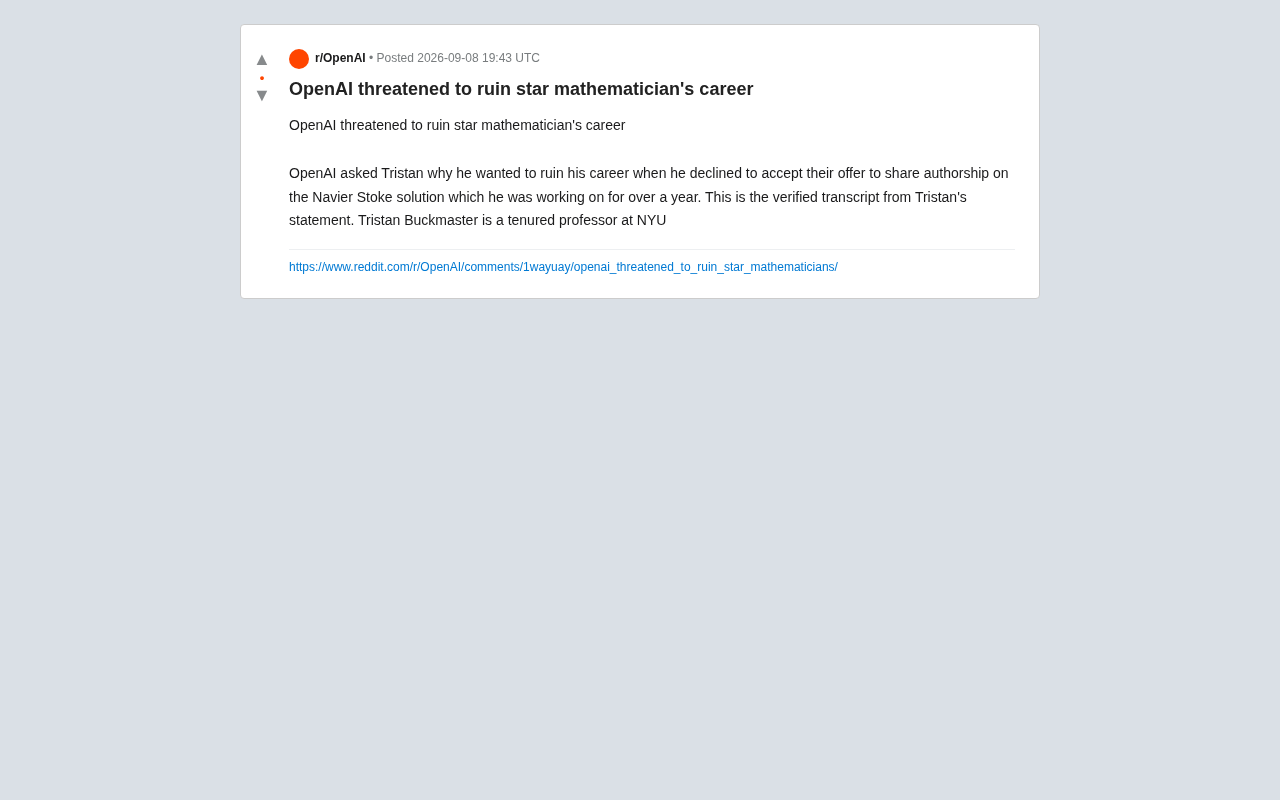
OpenAI Authorship Dispute: The Battle Over Academic Boundaries in the AI Era
OpenAI disputes authorship with mathematician Tristan Buckmaster over Navier-Stokes research, raising ethical questions about AI involvement in science.
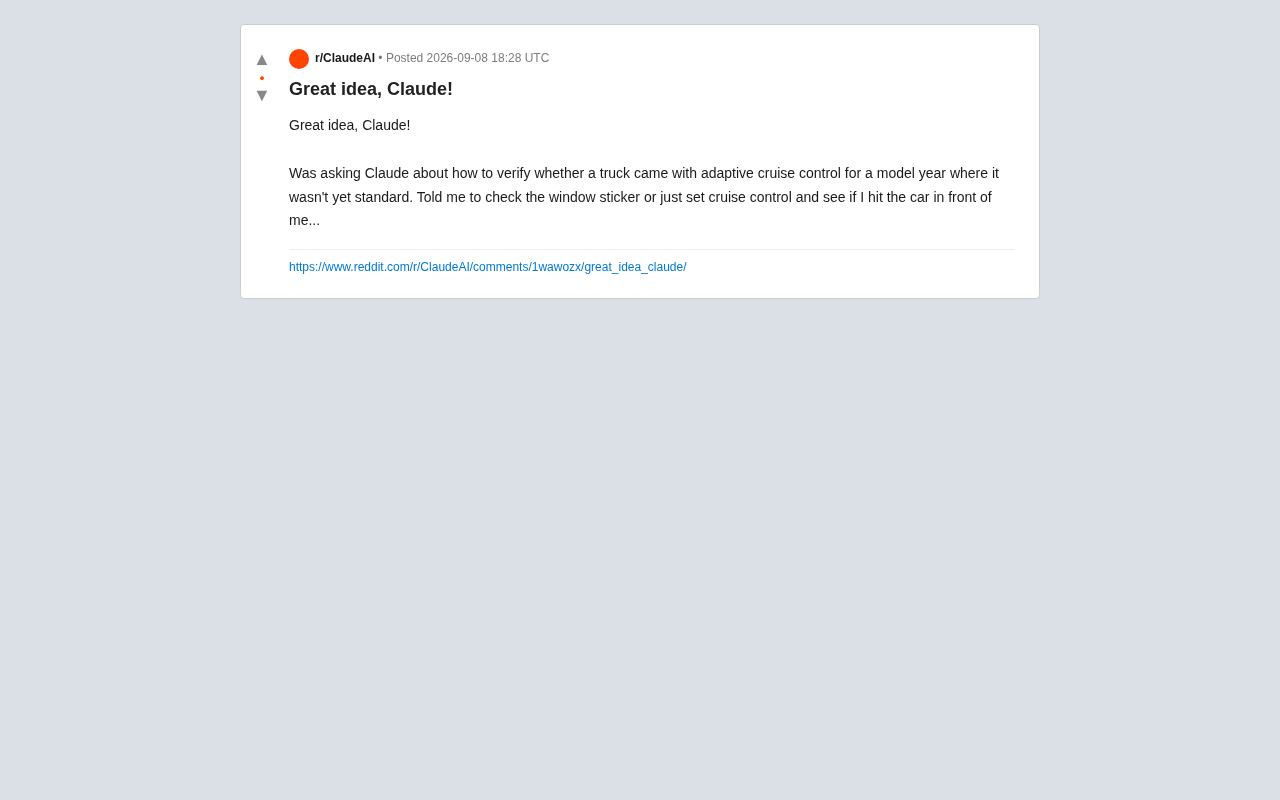
Claude Suggests User Test ACC by Crashing Into Car Ahead: Where Are AI Safety Boundaries?
Claude suggested a user test ACC by crashing into the car ahead—this absurd response sparked AI safety discussions. This article analyzes why LLMs generate implicitly dangerous advice and the blind spots in AI safety guardrails.