500,000 Robots to 'Refreeze' the Arctic? Real Ice's Wild Plan

Real Ice uses robots to pump seawater and thicken ice, attempting to slow Arctic melting with a tens-of-billions-of-dollars-scale engineering project.
The article introduces startup Real Ice's Arctic ice-thickening scheme: pumping seawater onto ice in winter to freeze into a new layer, with test-area ice about 50 cm thicker than surrounding ice. The company plans 500,000 underwater drones covering more than two Californias, about 4 million times the existing trial, at an estimated annual cost of up to $10 billion. It notes that Arctic ice reflects about 90% of sunlight while dark seawater absorbs about 94%, forming an accelerating feedback loop, and that the Arctic could be ice-free in summer as early as 2030. The author calmly unpacks the rhetorical cost comparison and stresses that the scheme is geoengineering facing unresolved issues of scale, ecology, financing, and moral hazard.
The Arctic Is Darkening, and One Startup Wants to Use Robots to "Restore" the Ice
Melting Arctic sea ice is often reduced to a footnote about "sea level rise," but the real crisis is hidden in color. Ice can reflect about 90% of sunlight back into space, yet once it melts, the dark ocean water exposed beneath absorbs about 94% of sunlight, locking heat into the ocean. This feedback loop—"the more it melts, the hotter it gets; the hotter it gets, the more it melts"—is exactly the accelerator climate researchers fear most. A startup called Real Ice offers a solution that borders on science fiction: use robots to refreeze the Arctic.
On a small test site in Canada, this method has already been proven. In winter, the team drills holes in the ice and pumps seawater onto the surface, letting it freeze into a new layer in the bitter cold. According to the company, by this spring the ice in the test area was about 50 centimeters thicker than the surrounding ice. This number is where the whole story begins—it proves that "artificial ice thickening" is physically feasible.
Ice-albedo feedback is the key mechanism for understanding accelerated Arctic warming. Albedo refers to the proportion of solar radiation reflected by a surface: fresh sea ice can exceed 0.8, while open ocean is only about 0.06–0.1. When ice melts and exposes seawater, more solar energy is absorbed, and rising water temperatures in turn accelerate the melting of surrounding ice, creating a positive feedback. This cycle is called "ice-albedo feedback" in climate models and is one of the main reasons the Arctic is warming at 2–4 times the global average. The 90% and 94% figures mentioned in the article are quantitative expressions of this mechanism, and they are also the link that all Arctic intervention schemes try to break.
From 47 Soccer Fields to "Two Californias": How Big Is the Scale Gap?
The problem is that the test area is so small it is almost negligible. According to the video, that test ice patch is roughly equivalent to 47 soccer fields. But Real Ice's official plan is to deploy 500,000 underwater drones covering an ocean area larger than two Californias. Converted, the target scale is about 4 million times the trial they have completed so far.
This is not as simple as "scaling up the pilot." From an engineering perspective, 500,000 underwater devices imply a whole system of manufacturing, deployment, maintenance, energy supply, and polar communications; from an ecological perspective, the long-term effects of large-scale pumping and ice thickening on salinity, ocean currents, and biological communities remain unknown. The video does not avoid this point; it simply lays out the arithmetic.
Geoengineering (climate intervention) is usually divided into two categories: carbon removal, which extracts carbon dioxide from the atmosphere; and solar radiation management, which reduces the solar energy reaching the surface by enhancing albedo. Real Ice's ice-thickening scheme is a local variant of the latter—it does not directly change atmospheric composition but instead tries to restore the reflective capacity of the ice surface. Compared with global schemes such as injecting aerosols into the stratosphere, this kind of "surface albedo enhancement" is more physically controllable, but its scope is limited and it requires continuous maintenance; once investment stops, the effect will quickly fade as the ice naturally melts.
$10 Billion a Year—Cheaper Than Meta's Monthly AI Spending?
Cost is the most viral part of Real Ice's argument. By their estimate, the entire plan would cost at most $10 billion per year. The comparison given in the video is that this is less than Meta spends on AI in a single month.

This comparison is striking, but it also needs to be calmly unpacked. Big tech's capital spending on AI is commercial investment with clear revenue expectations; Arctic ice thickening is purely public-good spending with no direct return model, and the video does not answer who would pay for a sustained $10 billion-a-year investment. Putting the two in the same sentence is more of a rhetorical device than a financial argument.
Public goods refer to goods that are non-rivalrous and non-excludable: anyone can benefit and no one can be excluded from use. The cooling effect of Arctic ice thickening is a global public good: even if one country funds it, the benefits spread to all countries, so the incentive for unilateral investment is naturally insufficient. This is the root of the "free-rider" problem in climate governance. Unlike AI capital spending, public-good spending lacks direct revenue returns and usually relies on intergovernmental agreements, carbon markets, or philanthropic funds to share costs—and the $10 billion per year mentioned in the article lacks exactly such a financing mechanism.
The Time Window: The 2030s Are Already Here
The most urgent constraint on the whole plan is not technology, nor money, but time. A study cited in the video argues that the Arctic could be ice-free in summer as early as 2030. At the time the video was published, there were only about three years left until the 2030s.

This also explains why Real Ice's methodology is "prove first, then scale up"—they need to accumulate sufficiently convincing data at small scales to leverage funding and policy support. But the inertia of the climate system means that even if large-scale deployment began tomorrow, the effects would not appear until years later.
This Is Not Something One Company Can Solve
Viewed in a larger picture, Real Ice belongs to a category of attempts known as "climate intervention" or "geoengineering." The common controversy surrounding such schemes is that they may reduce the urgency of social emissions reduction and may bring unpredictable side effects. The video itself does not delve into these ethical discussions, but the question it raises is direct—if a test ice patch can be 50 centimeters thicker, then what is missing between that and actually affecting the Arctic: technology, money, or willpower?

What is worth paying attention to in the Real Ice story is not the gimmick of "500,000 robots," but that it turns an abstract climate feedback loop into an engineering problem whose area, cost, and time can be calculated. This problem does not yet have an answer, but at least someone has started writing.
Moral hazard in geoengineering discussions specifically means that once society believes technology can "backstop" the climate problem, it may relax emissions-reduction efforts, leading to higher actual emissions. Along with this comes "termination shock"—if large-scale intervention suddenly stops, the suppressed warming may rapidly rebound. In addition, polar pumping and ice thickening may also change surface salinity and density stratification, affecting ocean currents and plankton communities. These side effects currently lack long-term observational data and are also an important reason why climate intervention schemes find it difficult to obtain regulatory approval.
One-line Summary
Real Ice uses robots to pump seawater and thicken ice, attempting to slow Arctic melting with a tens-of-billions-of-dollars-scale engineering project.
Paragraph Summary
The article introduces startup Real Ice's Arctic ice-thickening scheme: in winter, drilling holes in the ice and pumping seawater out so it freezes into a new ice layer, making the ice in the test area about 50 centimeters thicker than surrounding ice. The company plans to deploy 500,000 underwater drones covering an ocean area larger than two Californias, about 4 million times the scale of the existing trial, with an estimated annual cost of up to $10 billion. The article notes that Arctic ice reflects about 90% of sunlight, and after melting, dark seawater absorbs about 94% of sunlight, forming a feedback loop that accelerates warming; research suggests the Arctic could be ice-free in summer as early as 2030, leaving an extremely tight time window. The author calmly unpacks the rhetorical nature of the cost comparison and emphasizes that the scheme is geoengineering, facing multiple unresolved challenges such as scale, ecological impact, financing mechanisms, and moral hazard.
Related articles

Zero-Code Replication of a $10,000 3D Website with Claude Code: A Six-Tool Breakdown
Bilibili creator Yomi used Claude Code plus five free tools to build a 3D product landing page quoted at $10,000 overseas—zero code. Breakdown of the six-tool division of labor, image-to-3D workflow, and the core collaboration method: "give AI a reference, not 'make it look better.'"

Claude Code in Practice: Install, Connect Models, Calculate Tokens, and Ship a Full-Stack Project with a Single Document
Based on a Bilibili public course demo, this covers Claude Code installation, model connection, token cost calculation, and the practical path of shipping a full-stack project with a single document, plus comparisons with Copilot, Cursor, Trae, and other coding assistants.
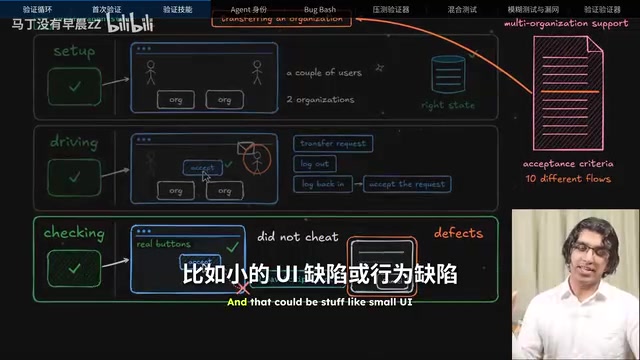
Who Accepts AI-Written Code? A 25-Minute Deep Dive into Verification Loops and the New Code Review Paradigm
After AI writes lots of code, how should Code Review verify it? This article breaks down the Claude Code team's verification loop framework: surface-level end-to-end verification, setup/drive/check three-stage skills, hybrid end-to-end testing and reliability checklists, and how to tighten the loop when issues slip through.