594B MoE Model Inkling 2 Small Lands on Ollama
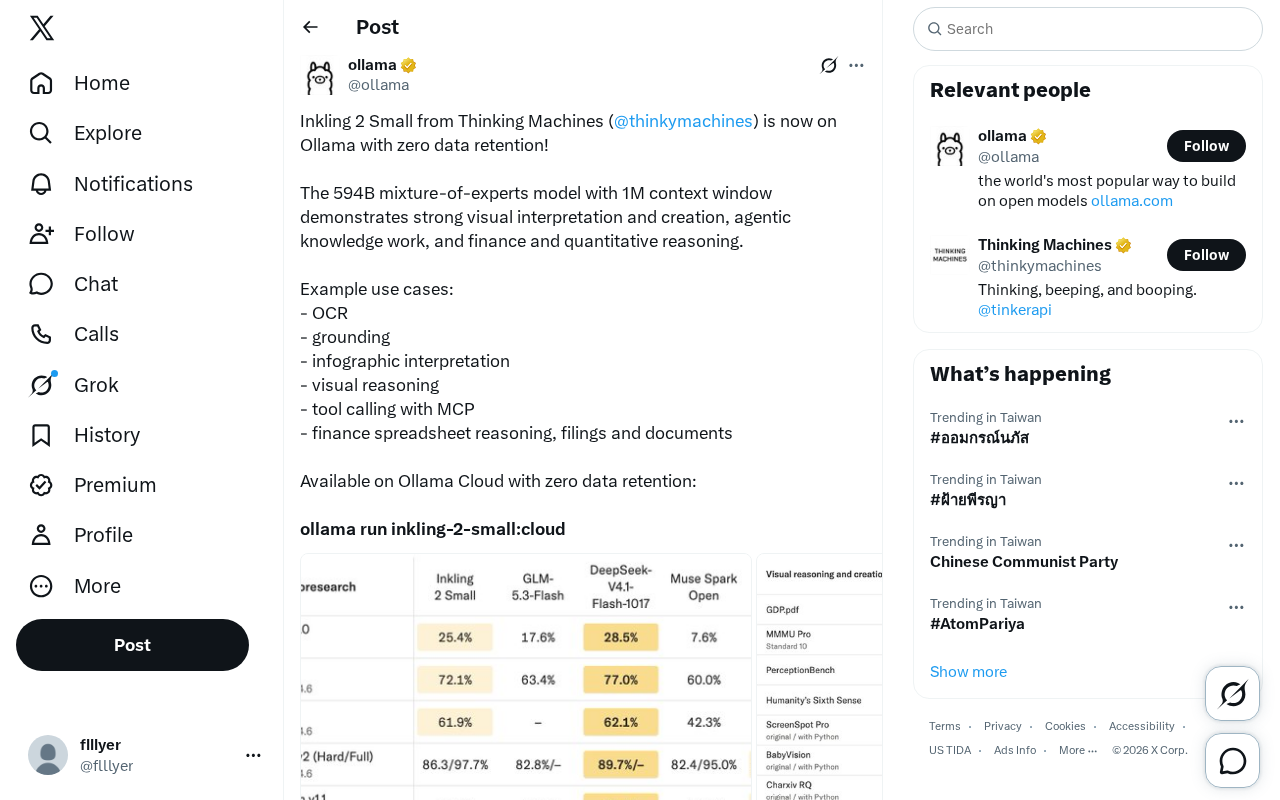
Thinking Machines' 594B MoE model Inkling 2 Small launches on Ollama Cloud, focusing on multimodal professional tasks and zero data retention.
Thinking Machines has launched its 594B-parameter MoE model Inkling 2 Small on Ollama Cloud with a zero data retention commitment. It features a 1M context window and covers OCR, grounding, infographic interpretation, visual reasoning, MCP tool calling, and financial table and earnings report reasoning, clearly targeting enterprise knowledge work. Developers can onboard with a single `ollama run inkling-2-small:cloud` command. Zero data retention eases compliance concerns in regulated industries, though local deployment of a 594B model has a high hardware bar. No official benchmarks have been released, so real-world performance still needs validation.

Thinking Machines' Inkling 2 Small model is officially available on the Ollama platform, and it comes with a promise that's quite attractive to enterprise users: zero data retention. The news comes from an official post by @thinkymachines, meaning developers can now call this sizable multimodal model directly through Ollama without worrying about inference data being retained.
A 594B-Parameter MoE Behemoth
Despite the "Small" in its name, Inkling 2 Small is no lightweight. It's a 594B-parameter mixture-of-experts (MoE) model equipped with a 1M context window. The point of the MoE architecture is that, while the total parameter count is enormous, only a subset of the expert networks is activated per inference, striking a balance between capability and inference cost. The 1M context window lets it process extremely long documents, codebases, or conversation histories in a single pass — especially critical for scenarios like financial document analysis and long report interpretation.
In terms of positioning, Inkling 2 Small is not a pure text model. The official description emphasizes strong performance in visual interpretation and creation, agentic knowledge work, and financial and quantitative reasoning. This indicates it targets professional tasks that require combining multimodal understanding with complex reasoning, rather than general-purpose chit-chat.
The core of the Mixture-of-Experts (MoE) architecture lies in splitting the model's feed-forward networks into multiple parallel "expert" subnetworks, paired with a learnable routing mechanism. During each forward pass, the routing network selects only a few experts to activate for each token (e.g., top-2 or top-8), while the remaining experts do not participate in computation. This allows the model's total parameter count to far exceed the compute of a single activation, thereby gaining large-model knowledge capacity while keeping inference costs relatively low. For this reason, MoE models are typically measured by two metrics: "total parameters" and "activated parameters" — the former reflects capacity, the latter determines actual compute overhead.
Capability Coverage: From OCR to Financial Table Reasoning
The official example use cases are quite specific and reveal the model's design orientation:
- OCR: extracting text from images, the foundational capability for document digitization.
- Grounding: mapping language references to specific regions in an image, the core of visual question answering and interface understanding.
- Infographic interpretation: understanding the structured information embedded in charts and infographics, not just recognizing text.
- Visual reasoning: performing multi-step inference based on image information.
- Tool calling via MCP: support for the Model Context Protocol means it can act as an agent connecting to external toolchains to complete more complex task orchestration.
- Financial spreadsheet reasoning, earnings reports and document processing: directly aimed at financial analysis and quantitative workflows.
The common thread among these use cases: they all require the model to handle visual information and structured reasoning simultaneously. Traditional text-only models often need external OCR or table-parsing tools for these tasks, whereas Inkling 2 Small internalizes these capabilities into the model itself.
MCP (Model Context Protocol) is an open protocol that standardizes how large models connect to external tools and data sources. It abstracts tool calling into a unified interface, enabling models to discover, invoke, and compose external capabilities in a consistent way — such as querying databases, executing code, or accessing file systems. For agentic workflows, MCP acts as a "universal plug" between the model and the tool ecosystem, so developers don't need to adapt tool-calling formats separately for each model and can plug Inkling 2 Small into existing toolchains.
What Zero Data Retention Means
In its release, Ollama specifically emphasizes "zero data retention." For teams in regulated industries like finance, legal, and healthcare, this is often the decisive factor in whether they can adopt a given cloud model. Zero data retention means inference requests and input content are not retained by the platform for training or other purposes, reducing the compliance risk of sensitive data leakage.
A note: this commitment applies to calls on Ollama Cloud. If teams have higher data sovereignty requirements, they still need to evaluate whether local or private deployment is feasible — though for a 594B-parameter model, the hardware bar for local operation is clearly high, making cloud calls the more realistic option.
Zero Data Retention (ZDR) is a data-handling commitment between cloud service providers and customers: the inputs and outputs of inference requests are not persistently stored after the request completes, nor used for model training or human review. In actual compliance frameworks, ZDR typically needs to be paired with audit logs, service-level agreements, and data processing agreements (DPAs) to form a complete chain of compliance evidence. Note that ZDR is not equivalent to data not leaving the country or complete isolation — it constrains retention behavior itself. Therefore, for scenarios with higher data sovereignty requirements, evaluation must still combine deployment region and private deployment options.
How to Get Started
Onboarding keeps Ollama's customary simplicity — a single command pulls and runs it:
ollama run inkling-2-small:cloud
The cloud suffix indicates this is a hosted version provided through Ollama Cloud. For developers already using Ollama workflows, migration cost is low — you can directly swap in or add this model to your existing toolchain for comparative testing.
What's Worth Noting
Inkling 2 Small's release reflects a current trend in model competition: vendors are no longer just competing on general benchmark scores but increasingly emphasizing specific high-value workflows — financial analysis, document processing, agentic tool calling. The combination of 594B MoE plus 1M context, paired with zero data retention as a compliance selling point, is clearly aimed at enterprise knowledge-work scenarios.
However, the official release does not provide specific benchmark data or comparison results with other models. The model's performance on actual tasks — especially precision-demanding scenarios like visual reasoning and financial table reasoning — still needs to be validated by developers with their own data. For teams considering adoption, it's advisable to run small-scale tests with real business samples first before deciding whether to incorporate it into production workflows.
Additionally, there's a contrast between the "Small" naming and the actual 594B scale, which may hint that Thinking Machines has larger-scale versions planned, or that "Small" refers to its positioning relative to other internal models. There's no further information on this at present, and it's worth watching.
One-line Summary
Thinking Machines' 594B MoE model Inkling 2 Small launches on Ollama Cloud, focusing on multimodal professional tasks and zero data retention.
Paragraph Summary
Thinking Machines has launched its 594B-parameter mixture-of-experts model Inkling 2 Small on Ollama Cloud, with a zero data retention commitment. The model has a 1M context window and capabilities covering OCR, grounding, infographic interpretation, visual reasoning, MCP tool calling, and financial table and earnings report reasoning — clearly targeting enterprise knowledge-work scenarios. Developers can onboard with a single ollama run inkling-2-small:cloud command, with low migration cost. Zero data retention reduces compliance concerns for regulated industries, but local deployment of a 594B model has a high hardware bar. No official benchmark data has been published, so actual performance still needs validation with real business samples.
Related articles
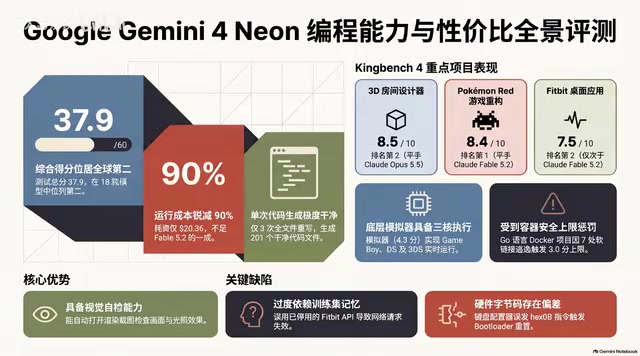
Gemini 4 Neon Hands-On: Value King or Confident Catastrophe?
Gemini 4 Neon review: 1M-token context, four thinking levels, 201 files in one KingBench4 pass at one-tenth Fable 5.2's cost—but it hallucinates fake data, leaves 7 symlink escapes, and bricks keyboards.

Google Gemini 4 Neon Hands-On: 6 3D Works That Impress and Fail
Hands-on with Google Gemini 4 Neon on a 3060 laptop: 6 3D works tested. Sunshower Fishing Harbor and mechanical keyboard impress; soft-body physics and faces fall short.
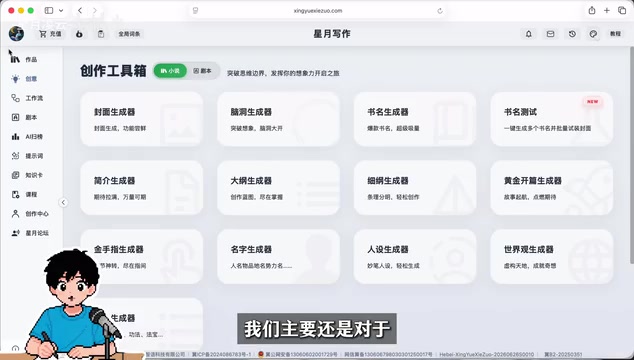
Gemini 4 Neo Web Novel Writing Test: Faint AI Flavor, Textured Dialogue
Bilibili creator's first-look review of Gemini 4 Neo for Chinese web novel writing: testing a Three Kingdoms transmigration opening with faint AI flavor, emotionally textured dialogue, and strong crisis building, plus comparison of 4A/4H/4C models and full workflow demos.