6 Dark Tales of Terror: TED-Ed Uses Animation to Illustrate Fables of Human Nature

TED-Ed uses six cross-cultural animated horror fables to explore the price of greed, betrayal, and crossing boundaries.
TED-Ed has selected six horror stories from England, Japan, Germany, Denmark, and elsewhere, presented as animated shorts. These stories are not merely frightening; they concretize the consequences of greed, cruelty, and recklessness, forming a lesson in fables about desire and its price. From the blurred line between wish and coincidence in The Monkey's Paw to the vengeful spirit of Japan's Oiwa to the inability of privilege to quarantine death in The Masque of the Red Death, each story follows the structure of transgressive act—reasonable justification—irreversible consequence. The animation replaces cheap scares with ambiguity and visual rhythm, making it suitable for classroom discussion.
TED-Ed's mission is to "ignite curiosity," but some lessons can only be learned through "hard lessons." They recently compiled a collection of their favorite horror stories, using animated shorts to confront viewers with the consequences of greed, cruelty, and recklessness. This is not a simple collection of scares, but a lesson in fables about desire and its price.
Why Horror Stories Deserve Serious Attention
Horror stories endure across cultures and eras because they concretize abstract moral dilemmas. TED-Ed's collection spans folklore and literary classics from England, Japan, Germany, and Denmark, and each story asks the same question: What happens when a person tries to cross a certain boundary?
These animated shorts preserve the core narrative skeleton of the originals while using visual language to heighten the atmosphere. For viewers who want to understand how different cultures use "fear" to transmit values, this is a dense introductory resource.
Six Stories, Six Fractures in Human Nature
The Monkey's Paw: The Wish Itself Is the Trap
The first story comes from the British classic "The Monkey's Paw." Mr. and Mrs. White sit by the fire with their son Herbert, waiting for the visit of their old friend Sergeant-Major Morris. The sergeant-major pulls from his pocket a dried monkey's paw—a fakir had imbued it with the power to grant three wishes to three men, as a lesson about "the consequences of interfering with fate."
The sergeant-major has already used his wishes, and his only advice is "be careful what you wish for." But Mr. White snatches the paw from the fire. Herbert jokingly tells his father to wish for two hundred pounds to pay off the mortgage. The next day, what the Whites receive is not money but the news that their son has been caught in factory machinery, along with the compensation payment the company sends.
The horror of the story lies not in ghosts appearing but in the blurred line between "coincidence" and "curse." When Mrs. White forces her husband to wish their son back to life, ten days later there is a knocking at the door from the cemetery, and at the last moment Mr. White uses his third wish to send away the "thing" outside—the audience never knows what it was. This kind of ambiguity is the highest craft of horror narrative.
"The Monkey's Paw" is the title story of a 1902 short story collection by British author W.W. Jacobs and is widely regarded as a foundational work of modern horror literature. Its narrative technique lies in "not showing": throughout the story, the paw is never directly proven to have supernatural power, and all disasters can be explained as coincidence. Through this ambiguity, Jacobs lets readers judge for themselves whether it is a curse or psychological suggestion. This technique of "restrained horror" influenced a generation of later writers, including Stephen King. The fact that Sergeant-Major Morris brought the paw back from India also reflects the era's mystified imagination of the colonies—exotic objects were often endowed with uncontrollable power.
Oiwa: The Mental Torture of the Betrayer
The camera turns to Japan. Oiwa's father is her only hope of escaping marriage to the cold-hearted samurai Iemon—and Iemon is the very man who murdered her father. A neighboring doctor, lured by a large sum of money, demands that Iemon abandon Oiwa, marry his granddaughter, and has someone dispose of Oiwa with poison.
The man sent to do the deed sees Oiwa's wretched state after poisoning—swollen eyes, hair falling out in clumps—and his conscience makes him reveal the plot. In her rage Oiwa lunges for a knife, but stumbles while confronting her husband, and the blade pierces her body. With her dying breath she curses Iemon. That very night Iemon arranges his remarriage, and also kills the servant Kohei who heard of Oiwa's death, nailing both corpses to a door and sinking it in the river.
Image: the most skilled storyteller of all

What follows is a chain of hallucinations: the bride's face becomes Oiwa's, and he kills his new wife; a figure in the corridor becomes the servant, and he kills his new grandfather-in-law. Fleeing to the river to fish, what he pulls up is the very door nailed with two corpses. Hiding in a mountain hermitage, the paper lantern bursts, and Oiwa's ghost appears in the flames. The story says that Oiwa's spirit killed his parents and friends in a very short time, tormenting him with rats, until he was utterly despairing and she completed her blood vengeance through the hands of another.
The cruelty of this story is that each act of Iemon's violence lands precisely on himself. The horror is not external but an echo of his betrayal.
The story of Oiwa is one of Japan's most famous kaidan, with roots traceable to the 17th century; it was later adapted by Tsuruya Nanboku into the kabuki play "The Ghost Story of Yotsuya on the Tokaido," one of Japan's three great ghost stories. At its core is the culture of the "onryō" (vengeful spirit): in traditional Japanese belief, those who die with a grudge become vengeful spirits who exact revenge on the living. Oiwa, poisoned and disfigured by her husband Iemon and then killed, unleashes a grudge that kills not only the betrayer but also the innocent. This "vengeful spirit" logic differs from the individual revenge of Western ghosts; it emphasizes the pollution and chain reaction brought by death itself, reflecting a deep fear of "unnatural death" in Japanese culture.
Death's Godfather: The Price of Cheating Fate
In a German legend, a couple has a thirteenth child and is so poor they cannot make ends meet. The father goes into the forest and encounters first God and then the Devil, both offering to be the child's godfather, and he refuses both—he will not entrust his child to a being who "judges the lives of men." Walking into the darkest depths, he meets Death, a lopsided grin on a skull face. The father thinks that "in Death's eyes all are equal," and agrees.
When the godson comes of age, Death brings him a vial that can cure all diseases, with a strict rule: if Death stands at the patient's head, the medicine will save them; if at the foot, the patient belongs to Death and the doctor is powerless. The godson gains fame and fortune, until the king falls ill—he sees Death at the foot of the bed, but for glory's sake turns the bed around and deceives his godfather. Death warns: cheat once more, and it will cost his life.
Later the princess falls gravely ill, and the doctor, moved by her beauty, fails to notice Death at her feet. He cures her, and Death takes his life on the spot. The doctor finds himself in a vast cavern where countless flickering candles each represent a life, and Death trims his candle down to the wick. He begs to transfer the dying flame to a new candle; Death lets go, the candle falls, and the doctor turns to a wisp of smoke.
The core question of the story is direct: What would you pay to control death?
Beowulf: The Hero and His Last Battle
King Hrothgar of Denmark's celebration awakens Grendel, a monster from the marshes. Every night thereafter, Grendel invades the hall to devour men and beasts, for a long time. Beowulf, a prince of the Geats, crosses the sea and waits in the hall for nightfall, wrestling the monster bare-handed and finally tearing off one of Grendel's arms.
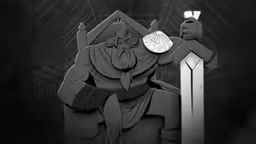
But a more dangerous enemy is yet to come—Grendel's mother comes for revenge and takes back her son's severed arm. Beowulf tracks her to a lair at the bottom of the lake, finds his sword useless against the demon and his fists nearly so, until on the edge of suffocation he sees a giant sword that only a worthy man can lift, and severs the monster's head in one stroke.
After the victory, King Hrothgar reminds him to stay humble and wary of evil—because he cannot stand alone against everything forever. Beowulf returns home and rules for fifty years, until in old age a sleeping dragon is disturbed. The elite warriors he summons all cower, and only the young warrior Wiglaf steps forward. The two dodge fire and claws; the dragon seizes Beowulf by the neck, Wiglaf pierces the dragon's belly, and with his last breath Beowulf finishes the dragon with a dagger, passing the throne to Wiglaf.
What makes this story special is that it does not stop at "the hero is invincible." Beowulf's life is a movement from victory to victory to death, and fear is replaced by the sober awareness that "all men must die."
"Beowulf" is one of the oldest surviving epics in English, composed around the 8th to 11th centuries, with a single surviving manuscript held in the British Library. At 3,182 lines, it tells the life of the Geatish hero Beowulf, who defeats Grendel, then Grendel's mother, then a dragon. The epic blends pagan heroic tradition with Christian values; King Hrothgar's admonition reflects the latter. "Fate" and "destiny" are core themes: the hero's victories will ultimately be ended by death. Structurally, Beowulf's youthful victories and his old-age death form a symmetry, suggesting the brevity of glory and the finitude of life.
The Masque of the Red Death: No One Can Quarantine Death
In Poe's story, the Red Death ravages the country; blood is its avatar, and the infected endure sharp pains, dizziness, and profuse bleeding within half an hour before dying. Yet Prince Prospero, when half his domain has died, withdraws with a thousand healthy and happy knights and ladies into a fortified abbey with high walls, completely shutting out the outside world.
Around the sixth month, he holds a grand masquerade. Seven rooms each have a strong color; the westernmost room glows blood-red, and no one dares enter. Each hour the ebony clock strikes a strange note, the revelry briefly stills, then laughter resumes.
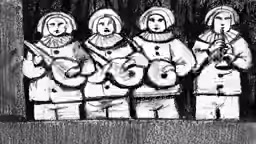
At midnight, a figure appears draped head to toe in funeral garb, its mask mimicking a stiff corpse and even the blood stains of the Red Death. The prince is furious and orders the mask removed so the figure can be hanged by morning, but no one dares touch it. The prince advances with a dagger; the figure, retreating into the westernmost room, suddenly turns, and with a scream the dagger falls and the prince drops dead on the spot. The crowd rushes forward and finds nothing beneath the shroud and mask—the Red Death is already present. One by one the guests fall in the blood-stained hall, the ebony clock's life goes out, the flames die, and darkness and decay reign over all.
In a very short space Poe delivers a precise social fable: privilege can build walls, but walls cannot stop death.
Hoichi the Earless: The Power of the Story Itself
The last story is about the power of storytelling itself, and the risks that come with it. Near a temple on the southern coast of Japan lies a battlefield where countless spirits of the Genpei War rest. The temple's finest storyteller is a blind monk named Hoichi, who plays the biwa and chants war tales, his voice rising and falling like soldiers, his music blending with the waves and swords.
One night a samurai knocks and says his master wishes to hear Hoichi perform. Hoichi follows the samurai along twisting roads to a great mansion where countless eyes watch him in the darkness. A voice orders him to tell the story of the fall of the Heike. He sings of the war that tore Japan apart, of the six-year-old emperor carried by his grandmother as she leapt into the sea. When he finishes, the hall is full of weeping, and a noble voice orders him to come for six consecutive nights and promises rich reward, on condition of secrecy.
The abbot discovers Hoichi's nightly disappearances, has him followed, and finds him sitting in the middle of the graveyard, ghost fires floating around him, playing and singing to the air. The abbot is alarmed and says Hoichi has been summoned by the Heike spirits and will die if he goes again. He writes Buddhist sutras all over Hoichi's body as protection and instructs him to stay still and make no sound no matter what happens.
At night the samurai comes for Hoichi; the sutras make the monk's body invisible, and just as the samurai is about to rage, he sees two ears suspended in the air—the abbot, in his haste, forgot to protect the ears. The samurai tears off both ears, and Hoichi endures the pain without moving or making a sound. When the story spreads, people flock to hear him tell of the Heike's suffering and his own experience. Hoichi never encounters ghosts again, but his performances make his listeners remember those sacrifices and sufferings.
This story occupies a special place in the collection: it acknowledges the value of horror stories and reminds the storyteller that touching the dead comes at a price.
The story of Hoichi the Earless comes from Lafcadio Hearn's "Kwaidan" (1904). Hearn, born Patrick Lafcadio Hearn, was an Irish-Greek writer who moved to Japan in 1890 and later naturalized as a Japanese citizen. He rewrote Japanese folk tales in English to introduce Japanese culture to Western readers. The stories in "Kwaidan" are mostly drawn from traditional Japanese kaidan but literary refined. The prototype of Hoichi's story circulates at Amida-ji in Shimonoseki, where Hoichi's grave remains today. Hearn's adaptation highlights the tension between "hearing" and "silence": Hoichi makes his living by chanting, yet ultimately loses his hearing when his ears are torn off—a paradoxical ending that intensifies the tragedy.
Why These Stories Belong in the Classroom
TED-Ed's self-introduction contains a line: curiosity has killed plenty of fools. This collection is material for letting viewers "learn from the greedy, the cruel, and the reckless." The six stories come from different cultures but share a highly consistent structure: a transgressive act, a seemingly reasonable justification, and an irreversible consequence.
The animation does not turn horror into cheap scares but uses visual rhythm to complement narrative ambiguity. In "The Monkey's Paw," for example, the door is never opened; beneath the mask in "The Masque of the Red Death" there is never a body. This approach is especially friendly to young viewers—fear comes from imagination, not from the screen.
Of course, the ending offers an exit: the cycle can be broken, and goodness can overcome selfishness and cruelty. And, ghosts do not exist. That line, placed at the end, is like the bell dismissing a class on fear.
One-line Summary
TED-Ed uses six cross-cultural animated horror fables to explore the price of greed, betrayal, and crossing boundaries.
Paragraph Summary
TED-Ed has selected six horror stories from England, Japan, Germany, Denmark, and elsewhere, presented as animated shorts. These stories are not merely frightening; they concretize the consequences of greed, cruelty, and recklessness, forming a lesson in fables about desire and its price. From the blurred line between wish and coincidence in "The Monkey's Paw" to the vengeful spirit of Japan's Oiwa to the inability of privilege to quarantine death in "The Masque of the Red Death," each story follows the structure of "transgressive act—reasonable justification—irreversible consequence." The animation replaces cheap scares with ambiguity and visual rhythm, making it suitable for classroom discussion, and the ending offers the positive exit that "goodness can overcome selfishness."
Related articles

The Only Video on Bilibili That Explains Harness Engineering? A Practical Analysis of Enterprise Multi-Agent Collaboration
Analyzing Harness Engineering's core components for enterprise multi-agent collaboration: orchestration, state management, security isolation, and observability. Based on Bilibili tutorial material, discussing why interviewers are starting to probe engineering constraints and how to rationally view "the only one that explains it" tech content.

AI Agent Full-Stack Practical Course: Master Dual-Framework Development from 0 to 1
An analysis of the Bilibili AI Agent full-stack practical course: four stages covering basic concepts, LangChain deep dive, single-Agent practice, and CrewAI multi-agent advancement, with zero-config tools and open-source code, suitable for developers with programming foundations.

Hand-Writing Agents.md Significantly Improves AI Coding Stability
A Bilibili creator compares two real projects—a video editor and a card game—showing that hand-written Agents.md and design docs significantly boost AI coding stability, explains how Agents.md differs from skill injection, and offers practical document-driven development methods.