AI Agent Full-Stack Practical Course: Master Dual-Framework Development from 0 to 1
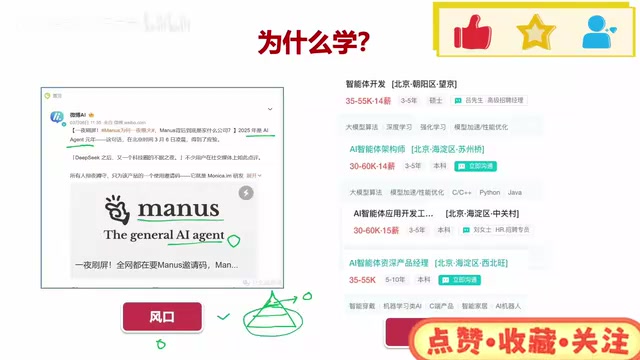
Bilibili AI Agent full-stack practical course breakdown: a four-stage path to help developers get started systematically.
Based on the introduction to Bilibili's "AI Agent Custom Development from 0 to 1 | Full-Stack End-to-End Practical Implementation" course, this article breaks down its design logic. The course uses "trend and jobs" to justify learning Agents and divides about 14 to 15 chapters into four stages: basic concept introduction, six refined LangChain chapters, single-Agent customer service "Little Wave Assistant" practice, and multi-Agent optimization with CrewAI advancement. Features include coverage of mainstream frameworks, a deliberately flattened learning curve, more than ten open-source practical cases, a zero-configuration online environment with 150 free API credits, and a chapter-passing mechanism driven by a testing Agent. The target audience is junior and intermediate developers with programming foundations. The article also reminds readers that the introduction comes from a promotional video, and its industry judgments and salary screenshots are the instructor's personal views and difficult to independently verify.
AI Agents are moving from concept to implementation, and what developers often lack is not enthusiasm but a path that can take them through the entire process. The course "AI Agent Custom Development from 0 to 1 | Full-Stack End-to-End Practical Implementation" launched on Bilibili attempts to solve this problem with a stepped teaching system. Based on the course introduction, this article breaks down its design logic and practical value.
Why AI Agents Have Become a Must-Win Area for Developers
The course opens without beating around the bush and directly presents two reasons: the trend and the jobs.
According to the instructor, an invitation code for a general-purpose AI Agent product was being resold on a second-hand platform for 100,000 yuan, and a demo video showed a fully autonomous task execution process, attracting widespread attention. This is regarded as a signal of the first year of AI Agents—according to the course, 2025 is the first year of Agents, and in 2026 this direction is accelerating its penetration. The instructor uses the "triangle theory" to explain the industry structure: at the top are a few capable large companies doing model training, while a large number of developers gather in the middle and lower parts doing application development, and application development cannot avoid Agents.
The other reason is more practical: salary screenshots on recruitment platforms show that demand for Agent-related positions is growing. As Agents extend toward robotics and embedded directions, the talent gap will further expand. Learning now means being in the window period.
AI Agent (Artificial Intelligence Agent) refers to a form of large-model application that can perceive the environment, make autonomous decisions, and execute actions to achieve goals. Unlike chatbots that only answer questions, Agents usually have capabilities such as planning, tool calling, and memory, and can decompose tasks and call external APIs or software to complete multi-step operations. Its technical foundation is the large language model (LLM), which extends model capabilities into executable workflows through prompts, Function Calling, and orchestration frameworks. The industry commonly uses the "degree of autonomy" to distinguish workflows from Agents: the former executes along a preset path, while the latter dynamically decides the next step by the model. This distinction is also the underlying logic for the course's subsequent progression from single-Agent to multi-Agent.
Course Architecture: Four-Stage Stepped Advancement
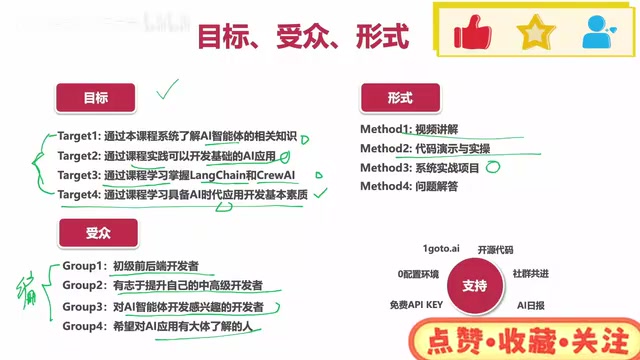
The course has about 14 to 15 chapters and is divided into four stages, covering a complete path from beginner to advanced.
Basic Introduction: Filling in Prerequisite Knowledge
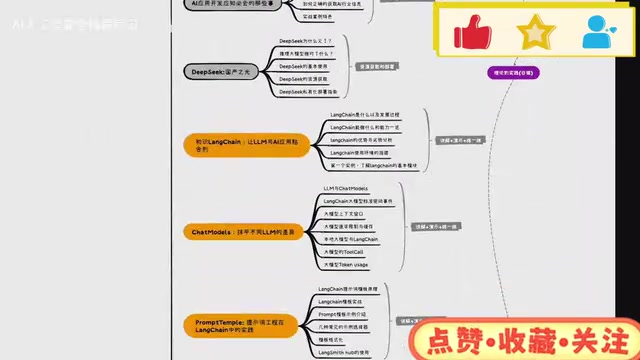
The first four chapters are the introductory part in a gray area, covering basic concepts of AI, large models, and Agents, as well as the use of AI programming tools and models such as DeepSeekAd. After finishing this part, developers will have a clear understanding of "what to do and what preparations are needed."
Framework Deep Dive: Six Refined Chapters on LangChain
The second stage uses six chapters to teach LangChain, but not by following the book rigidly. The instructor refines LangChain's massive ecosystem, retaining only the content most relevant to application development, and advances through three formats: explanation, demonstration, and practice. After completing the six chapters, learners basically have the ability to use the framework.
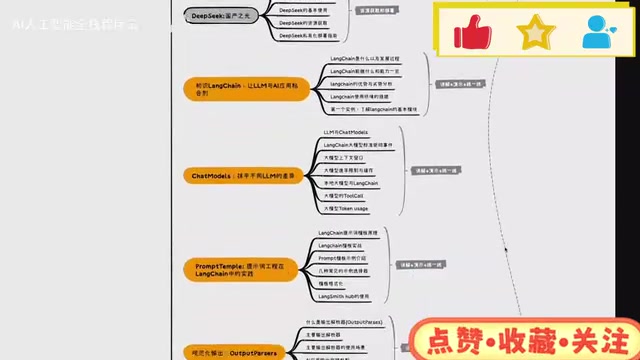
LangChain is an open-source LLM application development framework that has been popular since 2022. Its core value lies in abstracting capabilities such as model calls, prompt templates, tools, memory, and retrieval-augmented generation (RAG) into composable components, and connecting them through patterns such as Chains and Agent executors. Its ecosystem also includes LangGraph (orchestrating stateful, loopable multi-step processes with graph structures) and LangSmith (an observability and debugging platform). LangChain has many components and deep abstraction layers, so beginners easily get trapped in API details. Therefore, refining it in the course and retaining only the high-frequency parts for application development is a common way to lower the learning curve.
Golden Practical Combat: The Little Wave Assistant Single-Agent Case
The third stage is a complete practical project—the intelligent customer service agent "Little Wave Assistant," implementing an autonomous single-Agent bot. All breakdown segments are based on the framework knowledge from the previous six chapters, forming a closed loop. After this case, the course further introduces a multi-Agent evolution case, raising the difficulty to the next level.
Advanced Expansion and Diamond Tier
The fourth stage is divided into two parts: first, it covers the evolution and optimization of multi-Agent, including engineering content such as deployment and observability; then it introduces another more advanced multi-agent framework, CrewAI (mentioned by transliteration in the course), forming a contrast with LangChain. Mastering two to three mainstream frameworks in one course is the differentiation emphasized by the course.
CrewAI is an open-source framework for multi-agent collaboration, modeled as "Role + Task + Crew": each Agent is assigned a role, goal, and tools, and then the process (sequential or hierarchical) coordinates their division of labor to complete complex tasks. Unlike LangChain's lower-level component orchestration, CrewAI emphasizes declarative role-based collaboration and is suitable for quickly building multi-Agent pipelines. The course compares it with LangChain to help learners understand the differences between single-Agent orchestration and multi-Agent collaboration paradigms, rather than binding to a single technology stack.
Course Features: Lowering the Learning Curve and Engineering Support
The course summarizes several selling points that developers should note.
Mainstream frameworks + front-end/back-end friendly: It uses mainstream frameworks such as LangChain, LangGraph, and CrewAI, aligns with the future direction of AI application development, and is relatively smooth for front-end and back-end developers to transition roles.
Deliberately flattened learning curve: The instructor admits that the Agent field has many terms and a high threshold, and the course tries to flatten the curve as much as possible, making it suitable for non-CS or cross-domain developers.
High practical density: It includes more than ten practical cases of varying sizes, and all source code is open source. Unlike fragmented tutorials, it emphasizes systematic comprehensiveness.
Zero-configuration environment tool: Addressing the common problem that beginners get stuck in environment configuration, the course provides an online tool for zero configuration and offers 150 free API call credits, reducing the starting cost.
Agent-driven learning tests: The accompanying tool has a built-in testing Agent. After finishing a small chapter, learners must pass questions set by the Agent before moving to the next chapter. Support such as progress tracking, AI daily reports, and community co-learning is also included.
Who It Is For, and a Reminder
The target audience is divided into three categories: junior full-stack developers, intermediate and senior developers aspiring to improve, and beginners interested in Agent development. The prerequisite is having some programming foundation—this is a development course, not a tool-usage course.
It should be noted that the introduction content comes from a course promotional video. The instructor's industry judgments (such as "Agents will reconstruct the Internet" and "2025 is the first year") are personal views, and the recruitment salary screenshots and invitation code prices cannot be independently verified. However, the design of the course structure itself—from basics to frameworks to practical combat and then to multi-Agent advancement—is logically clear and has reference value for developers who want a systematic introduction.
If you are looking for a non-fragmented Agent learning path, the four-stage design of this course is worth including in your comparison list.
Related articles
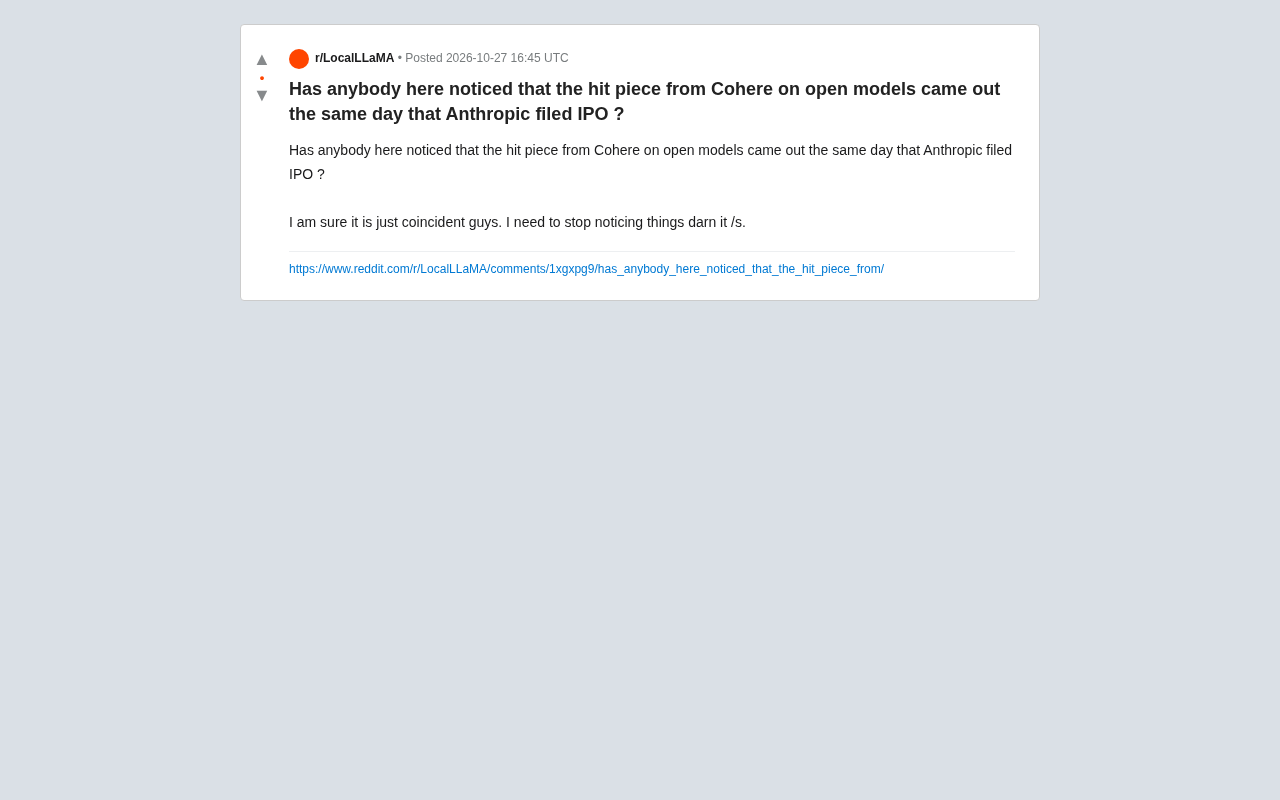
Cohere's Open-Source Critique and Anthropic's IPO on the Same Day: Coincidence or Strategy?
Reddit users spotted that Cohere's critique of open-source models was published the same day Anthropic filed for IPO, sparking debate over closed-source vendors' public comments and commercial motives.
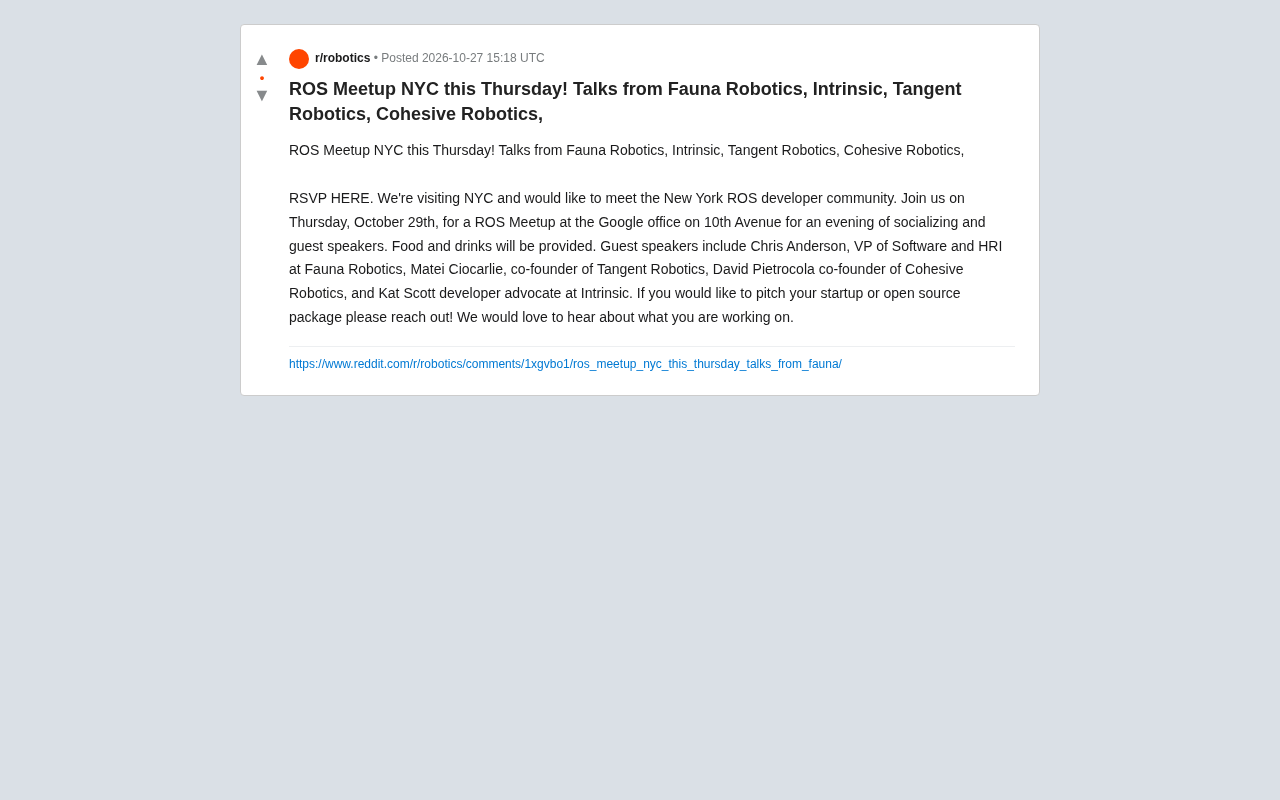
NYC ROS Developers Meetup: Talks from Four Robotics Companies
The NYC ROS developer meetup takes place Thursday at Google's office, featuring talks from Fauna Robotics, Intrinsic, Tangent Robotics, and Cohesive Robotics. Free, with food, open RSVP and call for speakers.

Local AI King: The Compute Gap and Competitive Anxiety Behind 12M Tokens a Day
A Reddit developer jokes about being a local AI king using 12M tokens a day—then gets humbled by someone using 34M tokens per minute. Exploring the compute gap, token anxiety, and how developers balance local vs. cloud automation.