9 Open-Source AI Agent Tools Roundup: From Workflow Orchestration to Skills Distribution

9 open-source tools covering workflow, Skills, model gateway, and memory to build modular AI Agent pipelines.
This article reviews 9 open-source tools for deploying AI Agents in production, covering workflow orchestration (Dify), domain Skills distribution (Skills CLI, Skillseekers), unified model access (Vercel AI Gateway), UI rule libraries, Hugging Face integration, mobile app generation, and shared memory (MemU). The "Skills" mechanism is the standout trend — packaging domain best practices into installable rule sets that can be distributed to 40+ AI Agents with a single command, compensating for general-purpose LLMs' lack of specialized knowledge.
AI Agents are moving from concept to production, powered by a rapidly evolving ecosystem of open-source tools. This roundup covers 9 open-source projects built around AI Agents, spanning workflow orchestration, Skills distribution, memory management, UI generation, and more. Together, they point to a clear trend: AI coding assistants that go beyond code completion to carry real domain knowledge and reusable workflows.
Lightweight Workflow Orchestration: Dify
Dify is designed for low-barrier, production-grade AI workflows. According to its documentation, it can run production workflows on a machine with just 2 CPU cores and 4GB of RAM, spinning up a local server in seconds via Docker Compose.
Its core strength is a visual canvas where developers can build workflows and debug prompts in a built-in Prompt IDE. For teams that don't want to manage infrastructure themselves, Dify also offers Dify Cloud for quick feature evaluation. The tool's rapid GitHub star growth reflects genuine enterprise demand for self-hostable Agent platforms.
Skills: Installing "Domain Knowledge" into AI Agents
The most recurring concept in this roundup is "Skills." Multiple tools share a common premise: general-purpose LLMs lack domain-specific best practices, and Skills are how you package those rules and feed them to Agents.
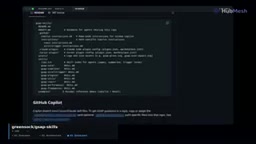
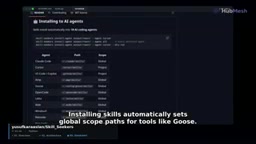
One Skills CLI tool can distribute official rules for animation frameworks (such as SAP/GSAP-style animations) to over 40 AI Agents. These rules teach models how to correctly structure production-grade animations, down to syntax choices like the ordering of stagger and position parameters. AI assistants use these rules to generate standardized code patterns and automatically register required plugin imports. The folder structure keeps workspace configuration separate from individual framework modules, and developers can adjust optional instructions so GitHub Copilot receives full repository-level guidance.
Another tool, Skillseekers, focuses on "knowledge transformation" — converting 18 source types into structured knowledge assets across 22 target formats. It supports one-click skill building from documentation URLs (such as the official Django docs), producing chunk documents with rich metadata that can be used directly by RAG tools like Haystack. It works by checking a site's llms.txt first, then scraping and building clean skill packages.
Unified Model Access: Vercel AI Gateway
When Agents need to flexibly switch between multiple model providers, a gateway layer becomes essential. Vercel AI Gateway allows instant routing of prompts to major model providers. This framework-agnostic library standardizes how Agents are created across different frontend frameworks.
Installation requires Node 22 and a local setup via npm install. Its unified API enables seamless calls to models from Anthropic, Google, and other providers, and generates structured Zod outputs to ensure data reliability when building autonomous Agents. Integrating this capability into editors like Cursor gives coding Agents instant access to context.
Zod is a TypeScript-first schema declaration and data validation library that plays an important role in AI Agent scenarios. Since LLM outputs are essentially unstructured text, using them directly carries risks of type unsafety and inconsistent formatting. Zod lets developers define output data structures (Schemas) upfront and automatically validate model responses at runtime — for example, ensuring a field is a number rather than a string, or that a nested object contains required keys. In the context of Vercel AI Gateway, "generating structured Zod outputs" means the Gateway enforces model outputs that can be validated against a Zod Schema, allowing downstream Agent logic to safely consume model results without runtime crashes from malformed output. This is especially critical for autonomous Agents that require multi-step reasoning or Tool Calling.
A Rule Library That Gives UI Generation Better Taste
A pain point that keeps coming up is this: Agents generating interfaces often lack aesthetic sensibility and tend to make poor easing choices. To address this, one tool packages Vercel and Linear's UI standards into Skills, helping Agents automatically build clean, production-ready UIs. Developers can install the latest rule sets into their workflows via npx, quickly gaining domain expertise in interface animation through these curated rules.
Taking this further, UI UX Pro Max ships with 192 reasoning rules, claiming to produce professional-grade interface designs across multiple web platforms. It can be installed directly from a plugin marketplace or deployed via a recommended CLI command, activating automatically when design tasks are requested in chat.
Platform and Mobile Connectivity: Hugging Face and Mobile App Generation
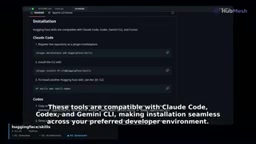
Ecosystem connector tools give Agents the ability to call external platforms. A Hugging Face-related Skill grants coding Agents full access — searching models, launching Spaces, running Jobs, and supporting complex tasks like dataset creation and model evaluation through standardized definitions. These tools are packaged as self-contained folders containing prompt instructions, scripts, and resources, and are compatible with Claude Code, Codex, and Gemini CLI, with a consistent installation experience across dev environments.
Another tool targets mobile: using a monthly allowance of 20,000 AI credits, it can automatically generate mobile app UI layouts within a developer's workflow, producing interfaces in minutes and giving Agents the ability to create screens and manage entire app projects. Usage requires meeting account requirements with trial credits first, then configuring an API key to unlock continuous generation.

One practical detail to watch: when the output token limit is set to 0 or exceeded, you need to export a higher limit before restarting, or generation will be interrupted.
Shared Memory: MemU
The final piece of the toolchain is memory. MemU compresses core memory logic into roughly 500 lines of code, providing Agents with a shared "wiki." Personal memories are stored in wiki form and can follow users across devices; its automatic skill extraction feature converts raw Agent history into reusable Markdown workflows.
For deployment, MemU runs as a sidecar binary alongside desktop coding Agents via a dedicated host adapter, with memories stored in a shared database that Agents can query automatically or manually. Its configuration is flexible, resolving settings in order of "process environment variables → defaults."
Sidecar is a common design pattern in microservices and cloud-native architectures, where auxiliary functionality is deployed as a separate process alongside the main application — sharing the same runtime environment but with distinct responsibilities. MemU's sidecar binary deployment means the memory service runs as an independent lightweight process alongside the desktop coding Agent, rather than being embedded directly into the Agent itself. The advantage of this design is decoupling: the memory module can be upgraded or replaced independently without affecting the Agent's main process, and multiple different Agents can share the same memory sidecar, enabling cross-tool knowledge reuse. This is a concrete expression of the "modular" design philosophy emphasized throughout — each capability unit stays independent and collaborates with other components through standard interfaces.
Takeaway: The Agent Toolchain Is Taking Modular Shape
Looking at these 9 tools together, the division of labor in the AI Agent ecosystem is becoming clear: Dify handles workflow orchestration, Vercel AI Gateway unifies model access, various Skills tools inject domain knowledge and UI sensibility, Hugging Face/mobile tools extend external capabilities, and MemU fills the gap in persistent memory.
The shared design philosophy across these projects is "modular, installable, and reusable" — injecting capabilities into existing Agents via CLI or npx rather than rebuilding a closed system. For developers looking to raise their automation game, the better approach isn't to search for a single all-in-one tool, but to compose this open-source toolchain on demand.
Background: Key Concepts
RAG (Retrieval-Augmented Generation) is currently the most mainstream technical approach for injecting external knowledge into LLMs. The core idea: before generating a response, retrieve the most relevant document chunks from an external knowledge base and concatenate them into the prompt, allowing the model to answer based on real knowledge rather than its static training memory. The "chunk documents with rich metadata" produced by Skillseekers are exactly the standard input format for a RAG pipeline — chunks are small segments of split documents, and metadata (such as source URL, section title, update timestamp) helps retrieval systems rank and filter results more precisely. Haystack is an open-source RAG framework providing a complete pipeline from document ingestion and vectorization to retrieval. Skillseekers' direct compatibility with Haystack means the barrier to building domain knowledge bases is significantly lowered.
Related articles

JobRunner MCP Server: AI Agents Can Now Fix Failed Java Jobs
JobRunner launches an open-source MCP server enabling AI agents to view cluster status, diagnose failures, and recover Java jobs—incident response from any cloud coding environment or existing agent.

MLAI Digital Launches 9 Security Agents: MCP Server Safeguards the Full Lifecycle of Agentic AI
MLAI Digital launches Security MCP Server with nine built-in specialized security agents covering vulnerability discovery, attack simulation, prompt injection detection, API and infrastructure assessment, and accelerated remediation—embedding security validation across the full Agentic AI lifecycle from development to production.

Running Isaac Lab on H100 GPUs: Exploring Better Approaches
Exploring optimization methods for running Isaac Lab on NVIDIA H100 GPUs, including MIG configuration, mixed precision, TensorRT acceleration, and community experience to improve robotics simulation and reinforcement learning efficiency.