A $300 Embroidery Machine Locked Behind a Subscription — He Built His Own App to Break Free

A developer built an open-source control app after his embroidery machine's software was locked behind a subscription, sparking debate on hardware ownership and business models.
After buying a $300 embroidery machine, a developer found the official software required a paid subscription for core features, so he built the open-source control app zigzag to bypass it. The project gained 268 points and 113 comments on Hacker News. The article analyzes the business logic and user costs of subscription hardware, the conflict between users' expectation of "buy it and own it" and software locks, the technical challenges of reverse-engineering protocols and proprietary file formats, and why open source is becoming a counterbalance to unreasonable vendor restrictions.
When Hardware Becomes a Gateway to Subscriptions
A developer shared his experience on Hacker News' Show HN section: he bought a $300 embroidery machine, but the official companion software required a paid subscription to access core features. This "buy the hardware, rent the software" model is becoming increasingly common, but users are pushing back — he decided to write his own control app to bypass the official subscription.
The project gained 268 points and 113 comments on Hacker News, showing that the resonance around subscription-based hardware goes far beyond one case. In the comments, many users complained about similar experiences: printers, robot lawn mowers, smart locks — even basic functionality gets tied to cloud services.
The Business Logic and User Cost of Subscription Hardware
Vendors usually have straightforward reasons for pushing subscriptions: a recurring revenue stream, sharing the cost of cloud services, and funding R&D for feature iterations. But for users, this means that after purchasing hardware, they still don't have full ownership. Once the subscription stops, the device may degrade into a "brick" or offer only extremely limited functionality.
Take the embroidery machine as an example. The official app typically handles key steps such as pattern design, parameter adjustment, and device control. The subscription model splits these steps into paid tiers: a basic subscription might include only a limited number of embroidery file transfers, while only a premium subscription unlocks advanced editing features. For occasional home users, the subscription cost could exceed the price of the hardware itself within a few years.
This model has long been established in the software industry, but when transplanted to hardware, user resistance is noticeably stronger. Because hardware is a tangible asset, users naturally expect "buy it and own it." When vendors use software locks to restrict hardware functionality, it easily triggers a sense of deprivation.
The Technical Path and Challenges of Building Your Own App
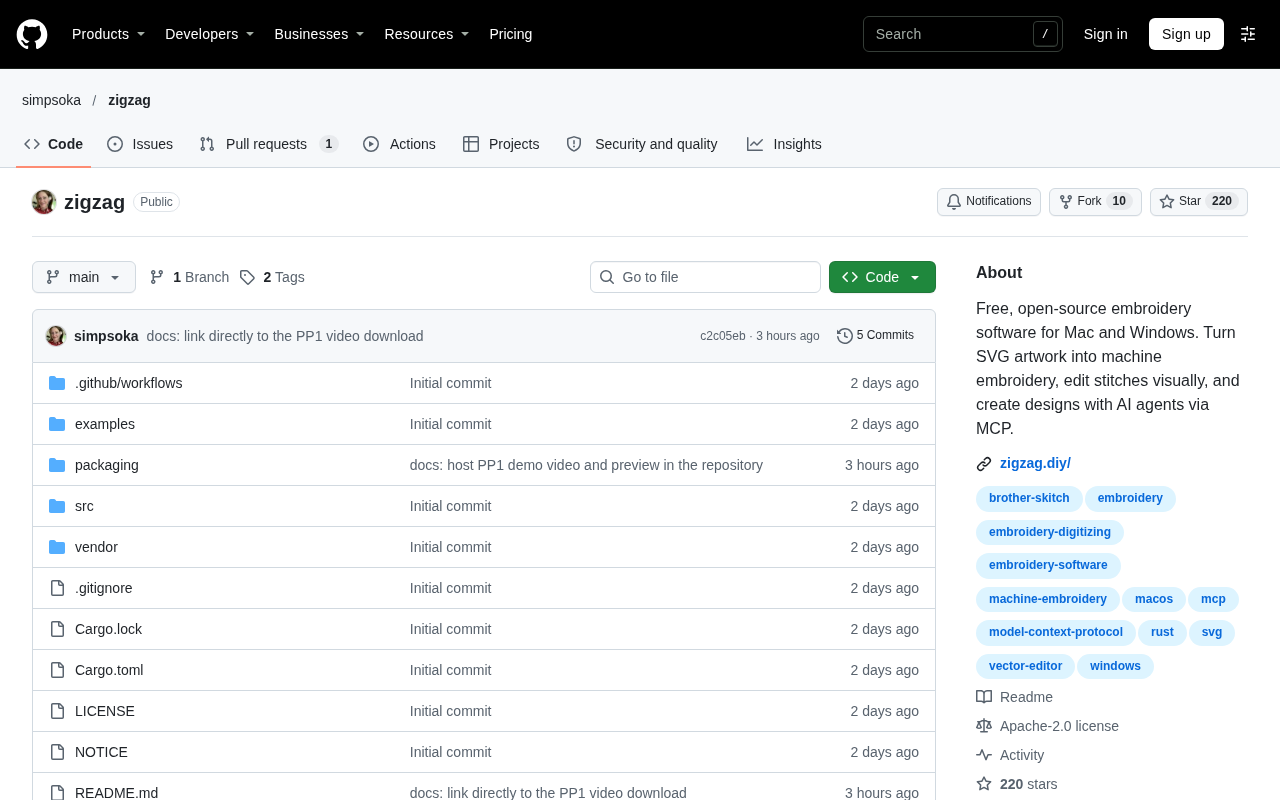
The developer's project is called zigzag and is hosted on GitHub. Judging from the nature of the project, it needs to achieve direct control of the embroidery machine, which may involve reverse-engineering the official communication protocol, parsing embroidery file formats, and reimplementing the device instruction set.
Embroidery machines typically communicate with a computer via USB or serial port, and the official software is responsible for converting design files into machine-recognizable instruction sequences. The core difficulties of a self-built app are:
- Protocol reverse engineering: You need to capture and analyze the communication data between the official software and the device to understand the instruction structure.
- File format compatibility: Embroidery design files often use proprietary formats, which need to be parsed and converted into common formats (such as DST, PES, etc.).
- Device compatibility: Different models of embroidery machines may have different instruction sets, so generality is a major challenge.
The discussion in the comments also confirms these difficulties. Some users mentioned that similar projects require a lot of trial and error, especially when dealing with vendor-defined checksums and handshake processes. However, once the protocol is cracked, a self-built app often provides more flexible features, such as batch processing, custom parameters, and offline use without cloud services.
Reverse engineering a communication protocol refers to the process of inferring instruction formats, checksum methods, and state machine logic by observing and analyzing the data exchange between a device and the official software without having access to the device firmware source code. Common methods include using a USB protocol analyzer or software packet capture tools (such as Wireshark's USBPcap plugin) to record communication data, then comparing packet differences under different operations to locate key fields. For devices like embroidery machines, vendors often use custom binary protocols and add checksums, serial numbers, or handshake authentication to increase the difficulty of cracking. Developers often need repeated trial and error, and may even use firmware extraction and static analysis to help understand the protocol structure — which is also the main reason such projects take a long time.
Embroidery file formats are a key part of the embroidery machine ecosystem. Common universal formats include DST (Tajima format, an industry standard that stores only stitch instructions), PES (Brother proprietary, including colors and embroidery parameters), EXP, JEF, and others. Different formats vary greatly in how they encode instructions such as colors, thread trimming, and jumps, and some vendor formats include encryption or compression. A self-built app needs to implement format parsing and conversion, usually relying on open-source libraries (such as pyembroidery) to read and write multiple formats, and then generate the corresponding control sequences according to the target device's instruction set. File format compatibility directly determines whether the self-built app can handle users' existing design resources, and it is an important foundation for the project's usability.
Community Reaction: From Resonance to Action
The 113 comments on Hacker News show clear emotional resonance. Highly upvoted comments generally believe that subscription hardware erodes consumer rights, especially when the subscription is only used to unlock local functionality — in that case, users have every reason to seek alternatives.
Some comments offer a different view from a business perspective: vendors do incur costs to maintain the software ecosystem, and subscriptions can ensure long-term updates. But the disagreement lies in whether users should have to pay again for "features they already purchased." Most comments lean toward a compromise: vendors should offer a one-time purchase option or allow users to self-host services.
Such discussions are not isolated. In recent years, smart home devices, agricultural equipment, and car feature subscriptions have all sparked similar controversies. The behavior of developers building their own alternatives has, to some extent, created a counterbalance to vendors — when official services are unacceptable, the open-source community can always provide an alternative.
Lessons for Hardware Vendors
This case serves as a reminder to hardware vendors: subscriptions can be a business model, but not at the expense of user ownership. If basic functionality is locked behind a subscription, users will not only churn but may also spur competing open-source solutions. Once an open-source project matures, the vendor's software moat may instead be weakened.
A more reasonable approach is to distinguish between "local functionality" and "cloud services": local control, file transfer, and basic editing should work out of the box with a one-time purchase; value-added services such as cloud storage, AI design assistance, and remote monitoring can be subscription-based. This both ensures the user's basic experience and preserves room for vendors to generate ongoing revenue.
For ordinary users, the value of this story is that when facing unreasonable subscription restrictions, the technical community often has alternatives. Whether it's an embroidery machine, a printer, or a smart home device, searching for open-source projects first may be more cost-effective than simply renewing a subscription.
Conclusion
A self-built app project sparked by a $300 embroidery machine reflects the core contradiction of the subscription hardware era: vendors seek recurring revenue, while users expect full ownership. The speed and creativity of the open-source community are becoming an important force in balancing this contradiction. When official software becomes a paywall, code becomes the best key.
One-line Summary
A developer built an open-source control app after his embroidery machine's software was locked behind a subscription, sparking discussion about hardware ownership and business models.
Paragraph Summary
After buying a $300 embroidery machine, a developer found that the official software required a paid subscription to use core features, so he decided to build his own open-source control app, zigzag, to bypass the official subscription. The project gained 268 points and 113 comments on Hacker News, resonating widely. The article analyzes the business logic and user cost of subscription hardware, pointing out the conflict between users' natural expectation of "buy it and own it" and software locks. A self-built app requires reverse-engineering the communication protocol and parsing proprietary file formats, creating a high technical barrier, but the community has already seen successful precedents. Comments generally agree that subscriptions erode consumer rights and that a reasonable model should distinguish local one-time-purchase features from cloud service subscriptions. The open-source community is becoming an important force in counterbalancing unreasonable vendor restrictions.
Related articles

ChatGPT Plus Subscription Pitfall Guide: Go/Plus/Pro Tier Comparison and Quick Activation
A complete ChatGPT Plus subscription guide based on a Bilibili tutorial: from registering an account, comparing Go/Plus/Pro tiers, to the practical steps for quickly completing your subscription.

GPT-6.2 Sol/Astra Released! A Step-by-Step ChatGPT Plus Subscription Guide and Tier Comparison
GPT-6.2 Sol/Astra is out—here's a ChatGPT Plus subscription guide: register an account, compare Go/Plus/Pro tiers, and subscribe in a minute.

Comparing Three Channels for Subscribing to GPT Plus in China: Is Website Top-Up the Easiest?
How to subscribe to GPT Plus in China? This article compares website top-up, credit card, and mobile top-up channels—process, cost, and risk—with steps and tips to help you choose wisely.